As day trips from Porto, I visited Braga, Guimarães, and Vila do Conde. All are less than 1.25 hours from Porto by either an “urban” train or the metro (and about 45 miles away each for the first two and 33 for the last). Braga and Guimarães are relatively close to each other (if I’d had a car I would have visited both in a day but the buses between them are not good — and I had the time to take two relaxed day trips). They are also competitive with one another. So I’ll talk about them sort of together and will start with V. d Conde. 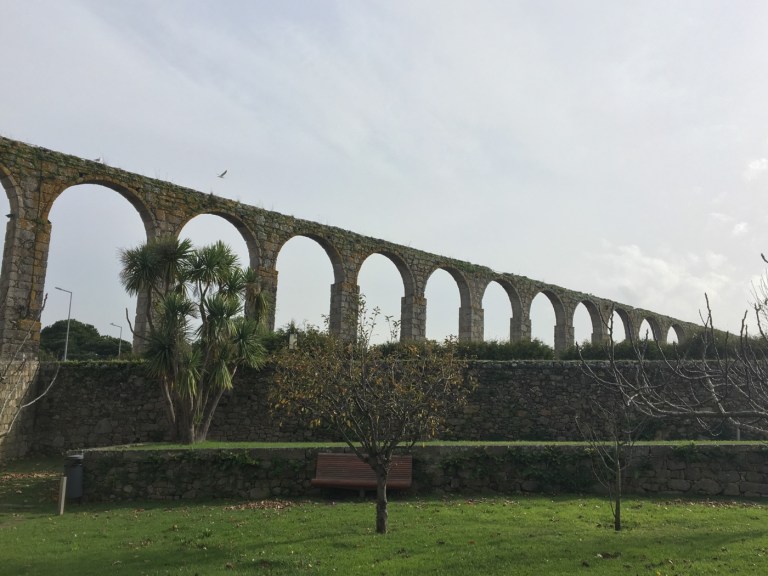 The woman at the info ctr suggested I visit Vila do Conde if I had the time because it’s “very Portuguese.” Not knowing what that meant and having a free day, I thought I’d take the trip. (I could’ve done musems or more parks in Porto but with nine days here I thought I’d go to the seashore again). I’m still not sure exactly what makes it Portuguese but I know it’s a popular beach weekend or day trip for Porto locals.
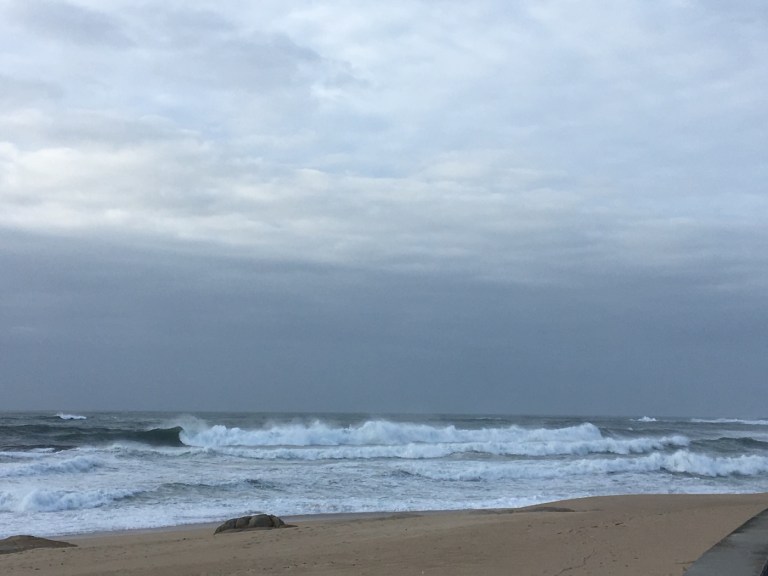
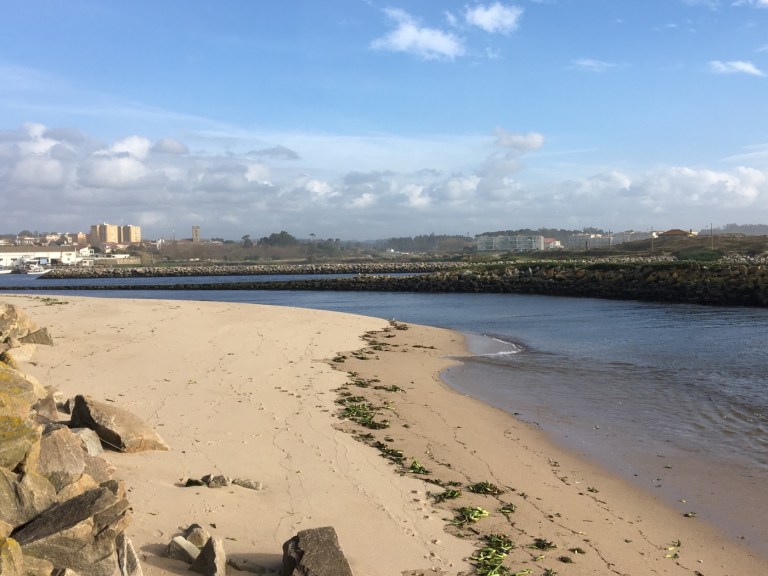 Its beaches aren’t the most beautiful, but it’s an easy ride and the water is OK. Situated at the mouth of the River Ave and the Atlantic, it was historically a big fishing, sailing, and shipbuilding village. Many ships (and nets — and apparently related, lace) were made here for Portugal.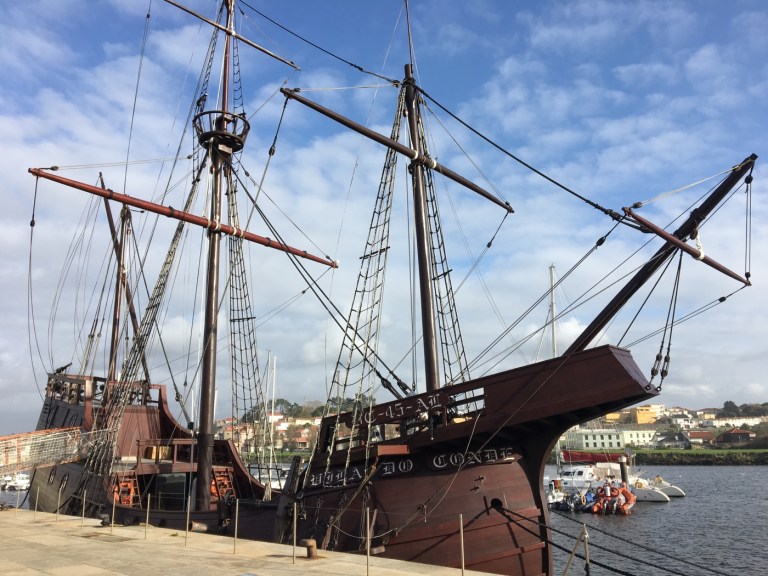
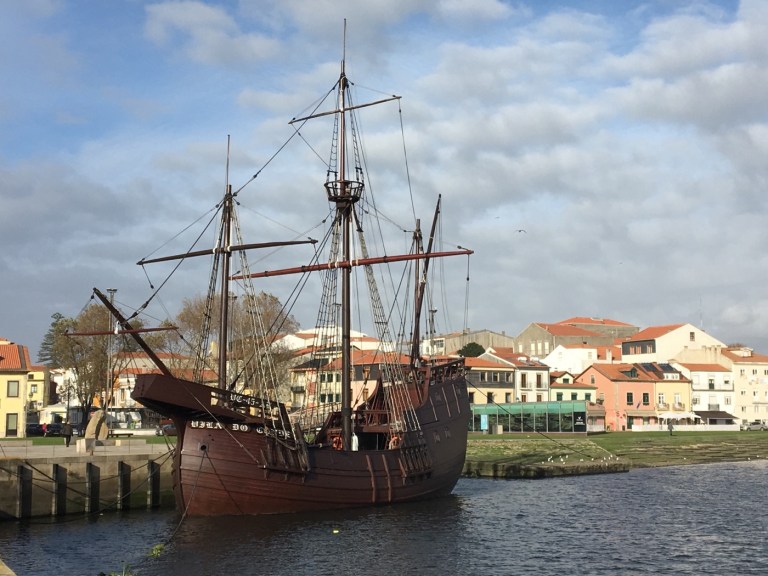
This ship (carrack) is a recently created replica of the 16th century Portuguese ships, using techniques and materials known then, that were used to explore the world. Really hard to imagine sailing to India for spices on something this small but they did!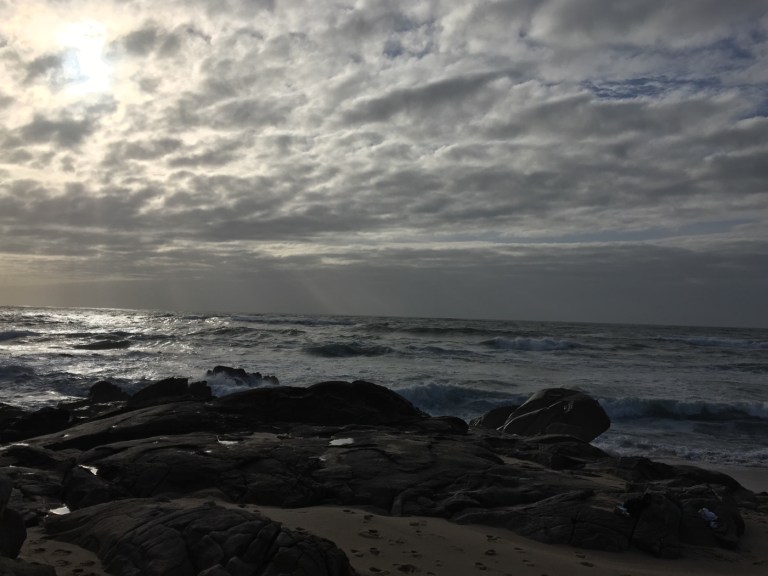
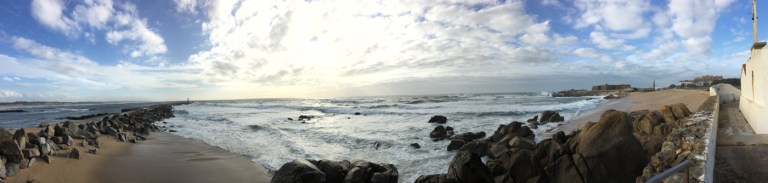
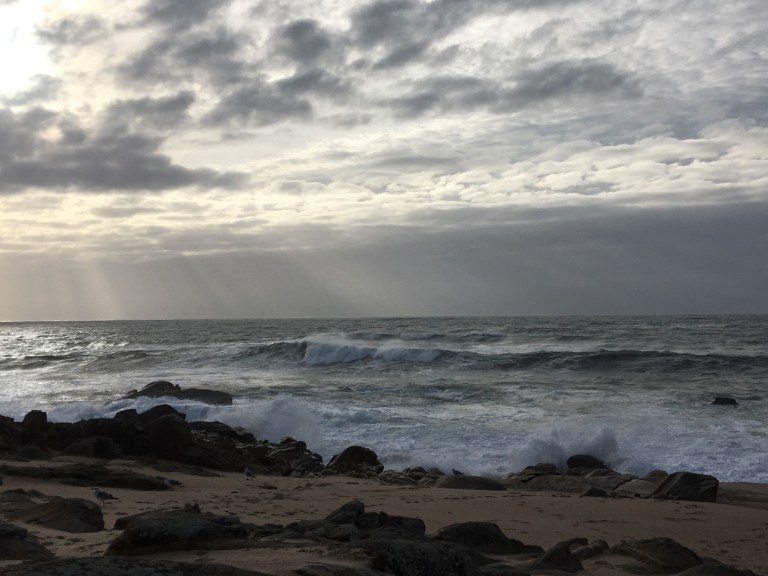
I walked along the river to the Atlantic where the water was incredibly wild. And there’s a ton of rocks off the shore. It was only 14 mph winds but I cannot imagine how those sailors were able to go out in those boats on those waves and around those low (hidden) rocks. Seriously I didn’t like standing on some of the steps over the piers and rocks because the wind, waves and spray felt pretty out of control. 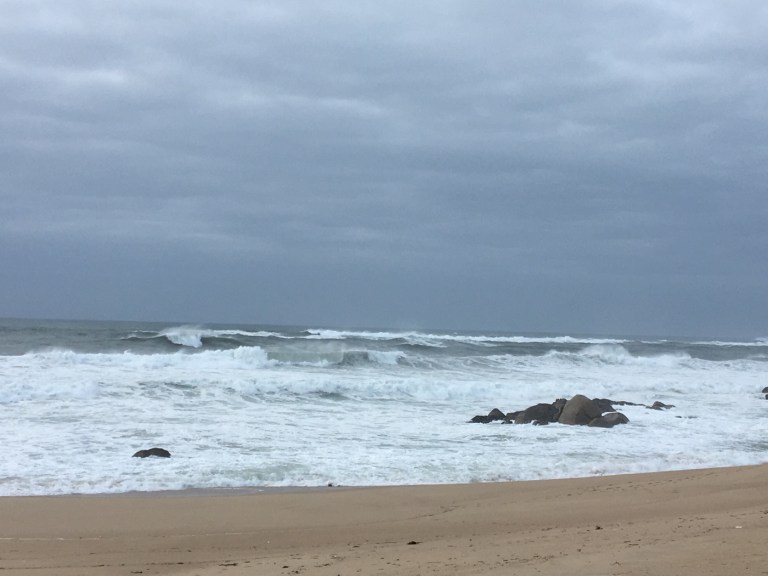
 Meantime in the middle of nowhere is this tiny church. Felt pretty desolate. It’s called the Capela de Nossa Senhora da Guia. It’s pretty plain outside but has frescoes and a fancier interior.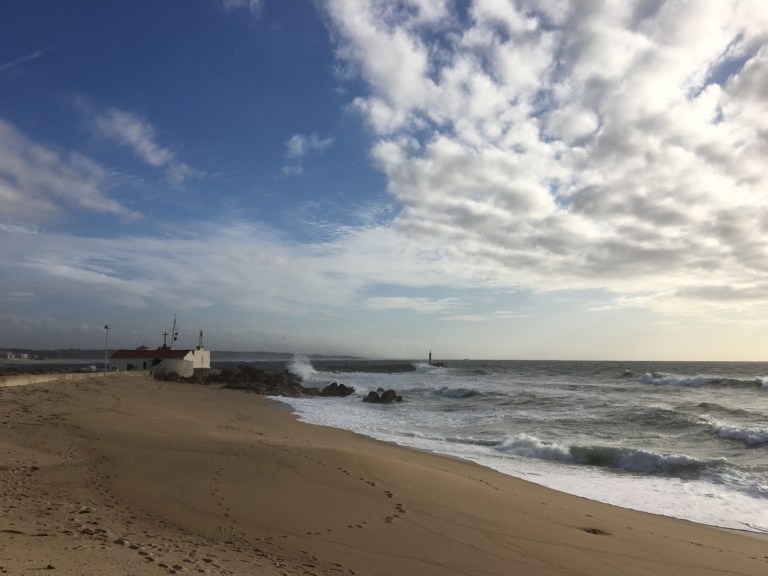
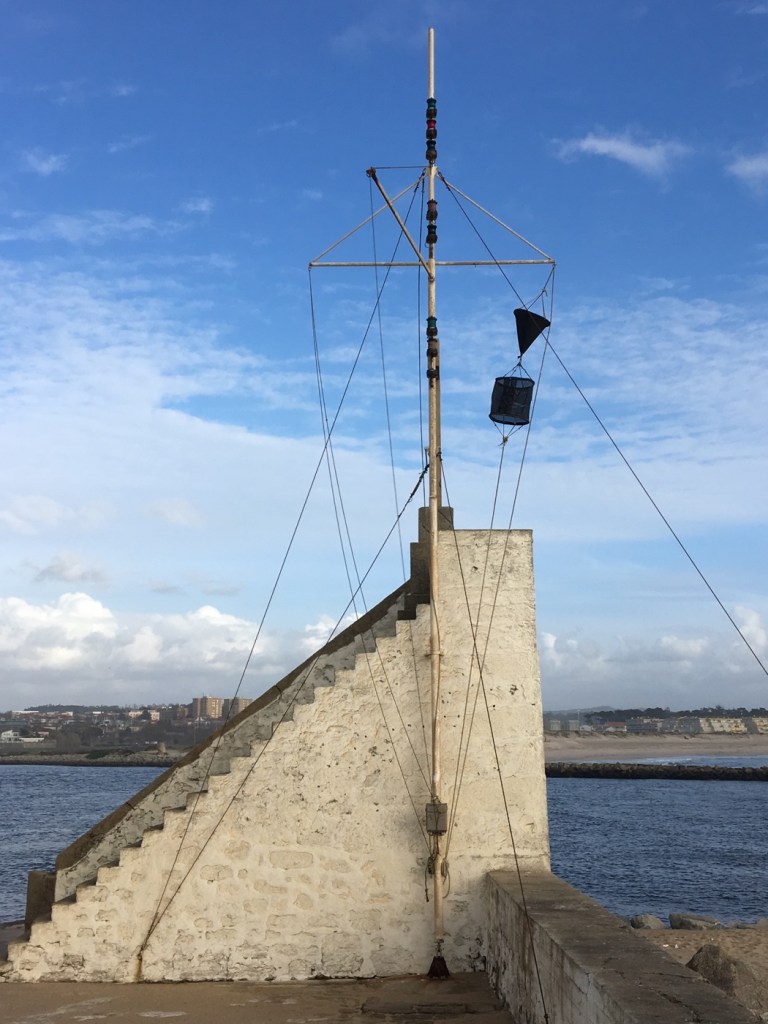
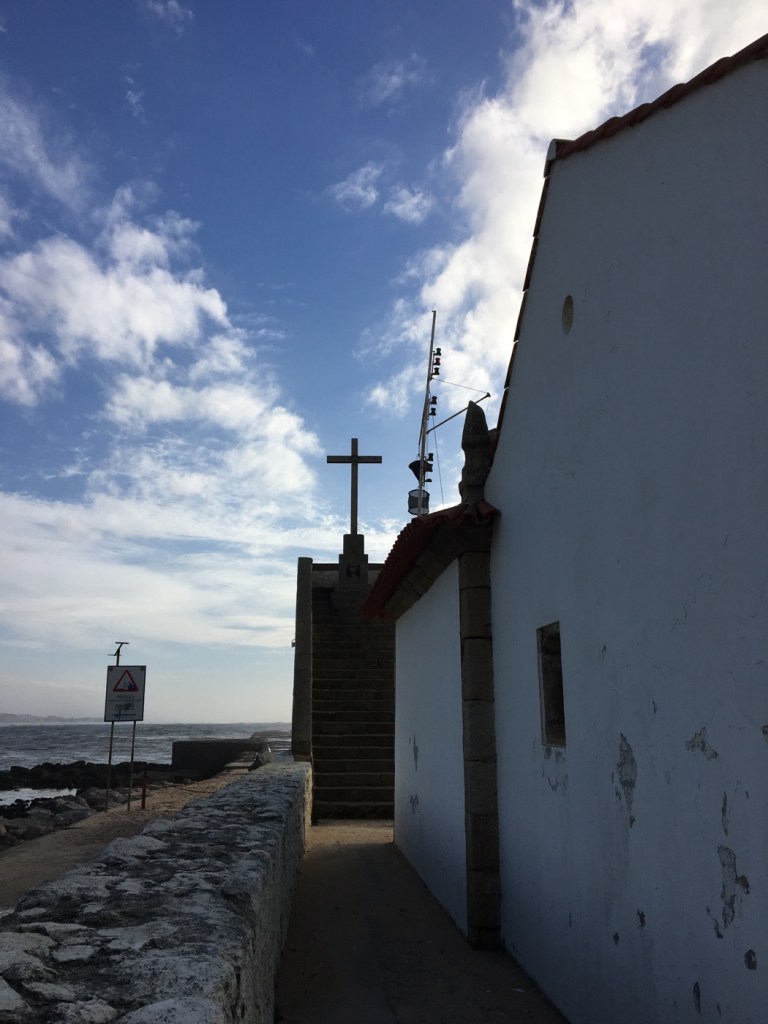 And with this set of stairs to nowhere. Everything kind of had a naval look to it in that town (understandably). Honestly with all the wind and as you can see, no railings (!) I was afraid to go up those stairs so I didn’t!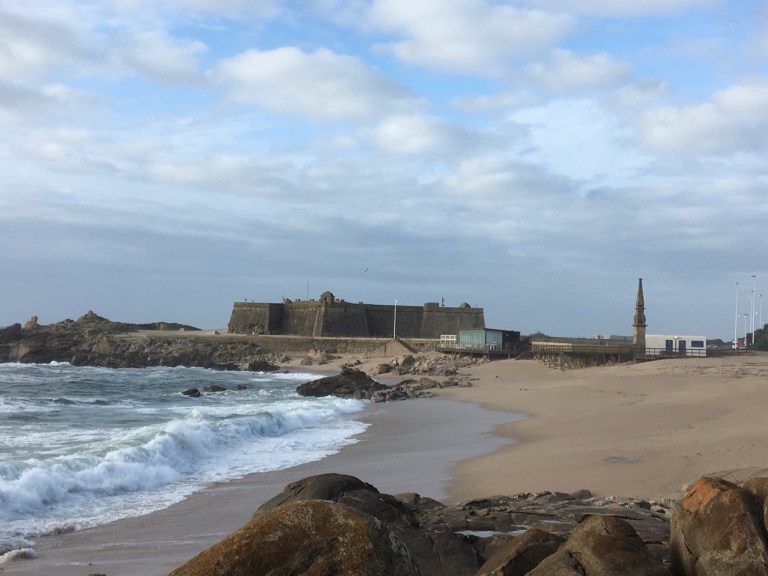
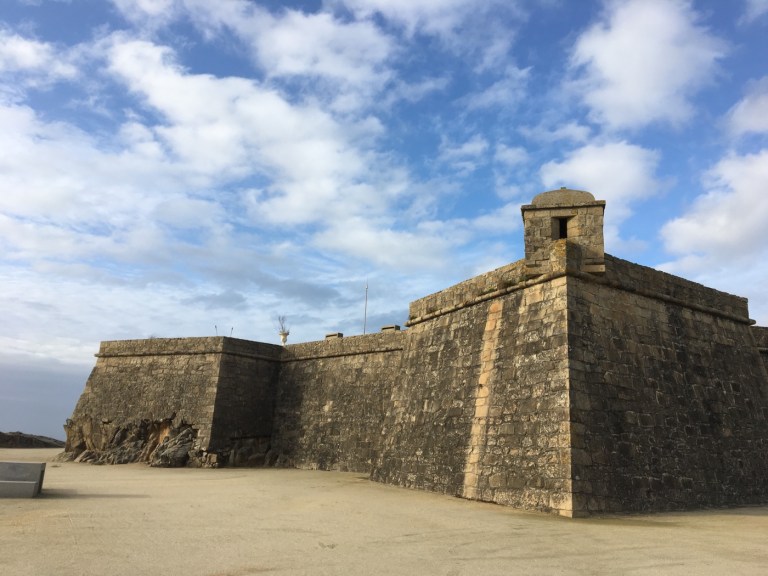 Just past the church is this fortress. It wasn’t open the day I went although it’s apparently been turned into a small boutique hotel. It was originally built to protect the shipyards that were so important to Portuguese exploration and power.
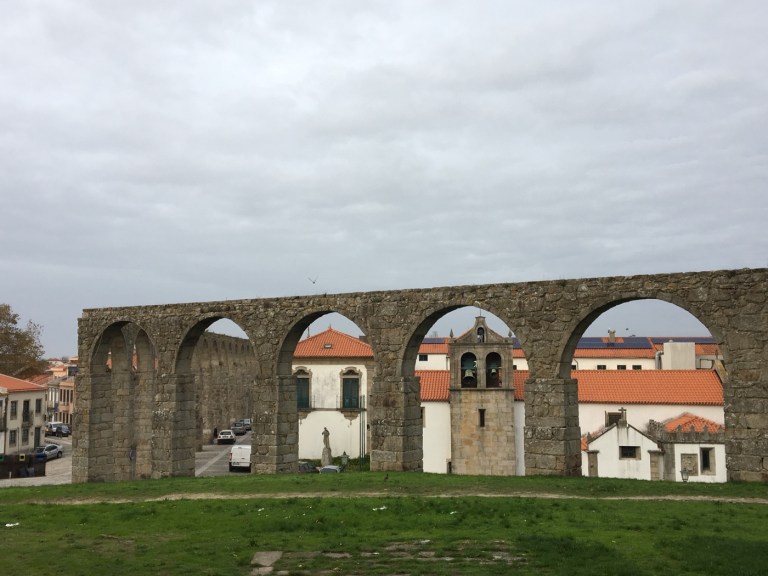
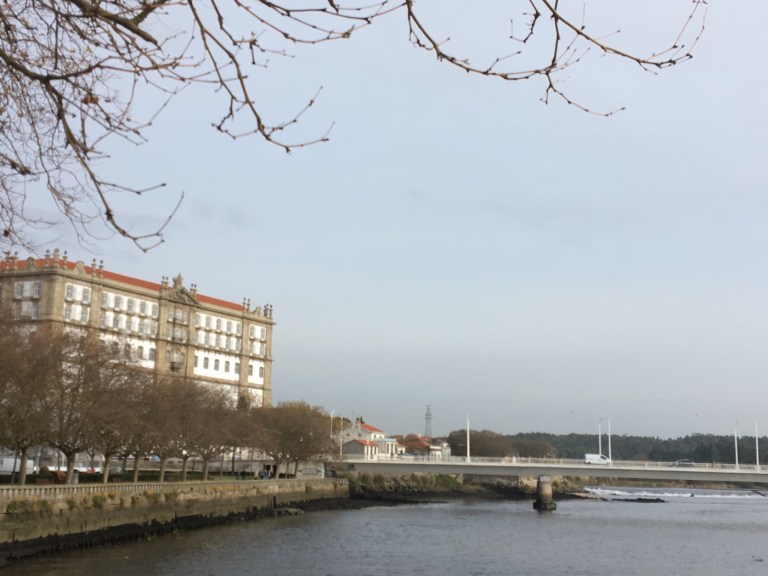 The Santa Clara convent, currently closed, was very wealthy and powerful in its day and commissioned its own aqueduct to bring in fresh water from the nearby mountains.
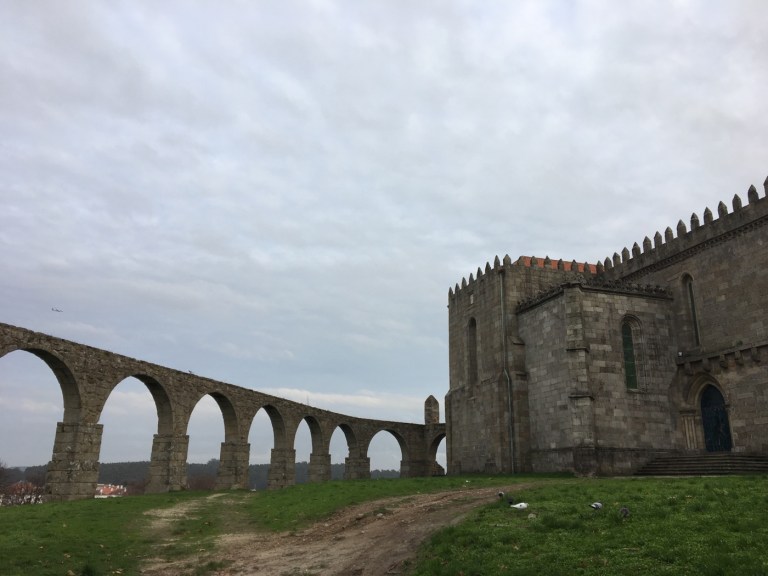
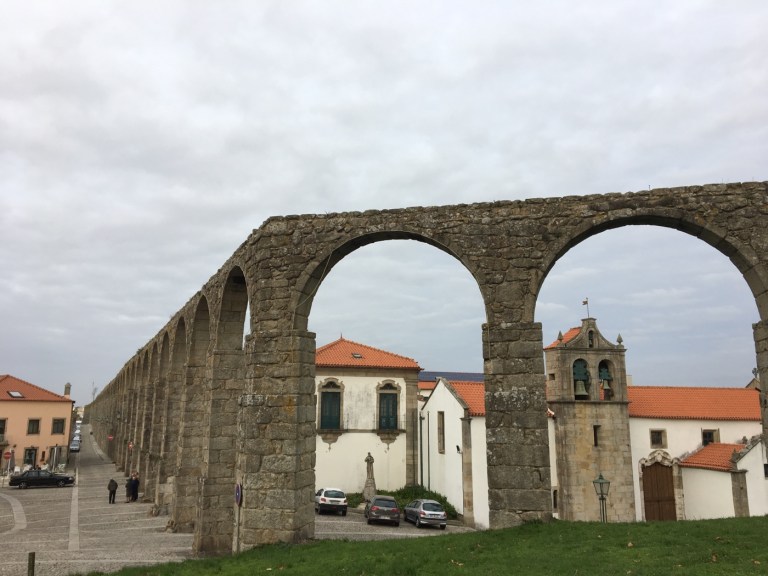
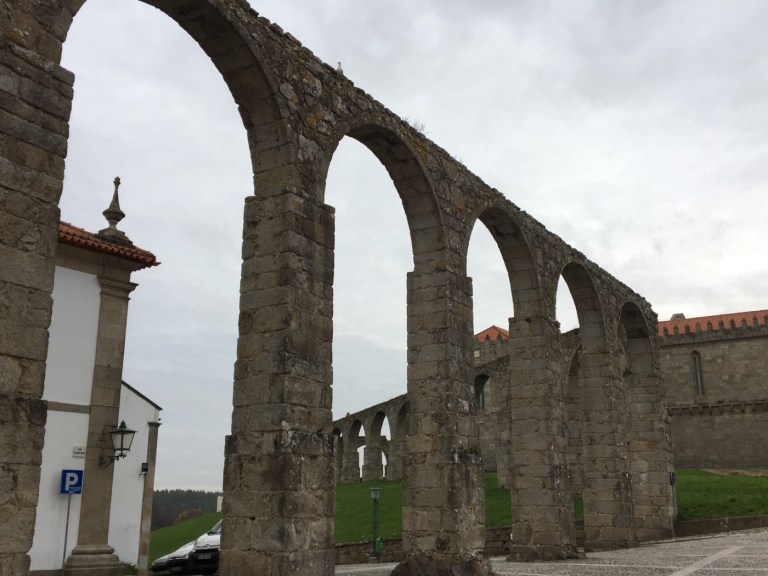 Originally 999 arches, it’s the largest remaining aqueduct outside Italy. Although hardly built in Roman times, it’s a pretty cool backdrop. The convent and church itself had impressive views over the river and city.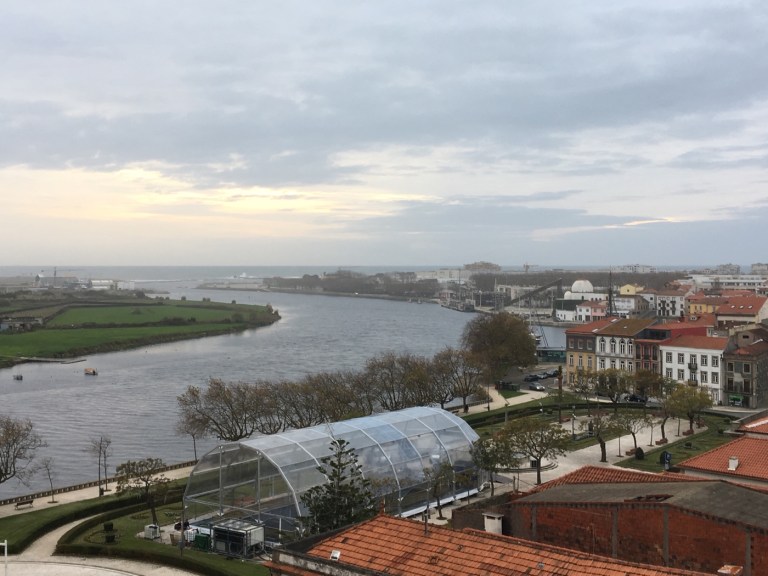
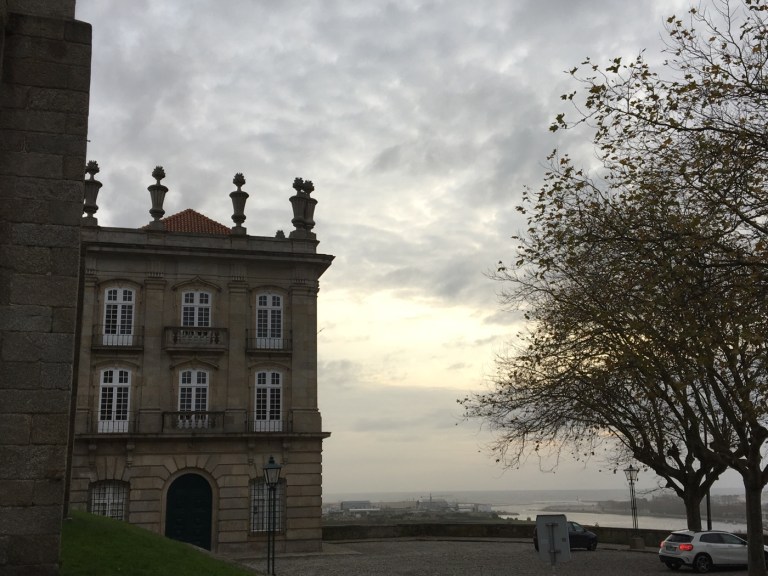
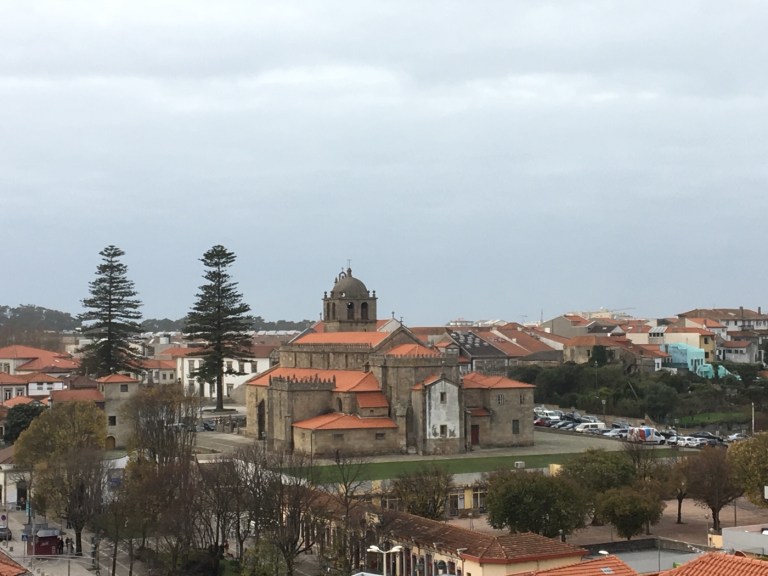 While I was there, they had a funeral procession to the monastery and cemetery next door.
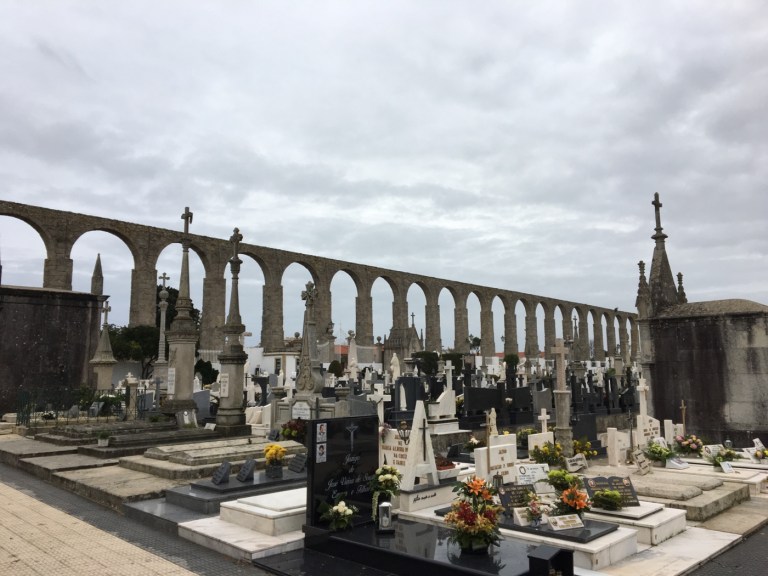
 OK another bit of history because we know I’m fascinated by these things so I’m sharing … about the monasteries and convents. There were a ton all over Portugal. But if I understood correctly they’re no longer in use by the church. The churches remained for the most part but the convents and monstaries were all taken over by the government in the late 1800s. So they’re now used as municipal buildings — libraries, hospitals, museums, train stations, schools, government administration, day care and senior centers, police stations, etc… I don’t know what happened to the nuns and monks but it’s a nice bit of reuse because the buildings were massive and well made.
I also went inside a few churches and had a lovely relaxed lunch (they’re famous for fish and hospitality). 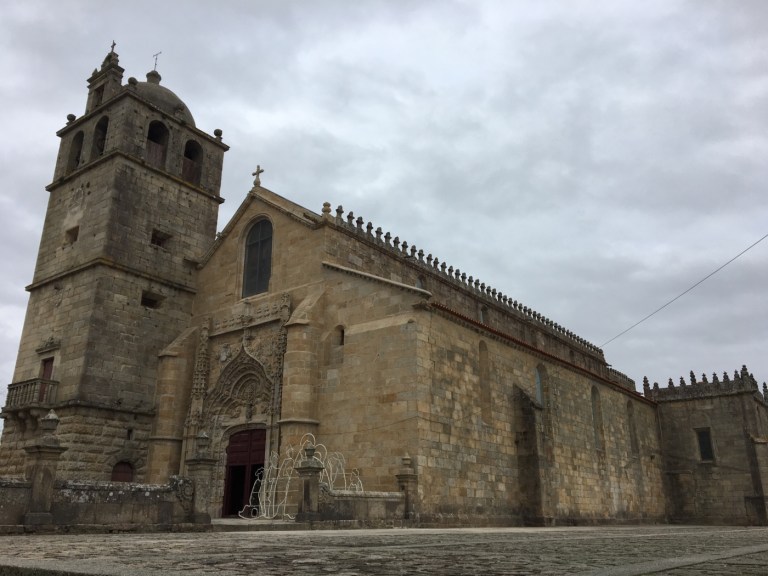
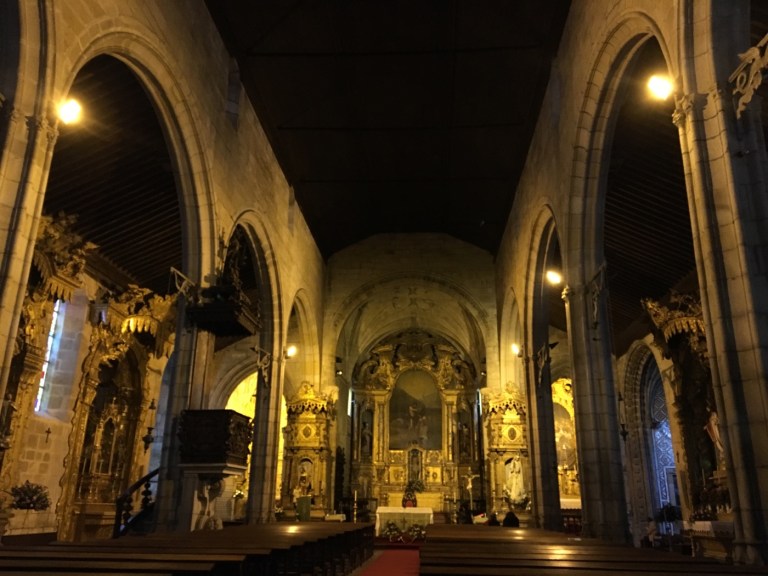 But on to Braga and Guimarães. They are both considered old cities in Portugal and are quite north in the country. Braga’s claim is that they are the first city to embrace Christianity, where a local who had heard apostle St James (Santiago — had no idea that was St James ?!) preach, was converted, and returned to Braga as an evangelist himself. This was in 44-45 AD so only a dozen years after Christ died. Talk about early adopters.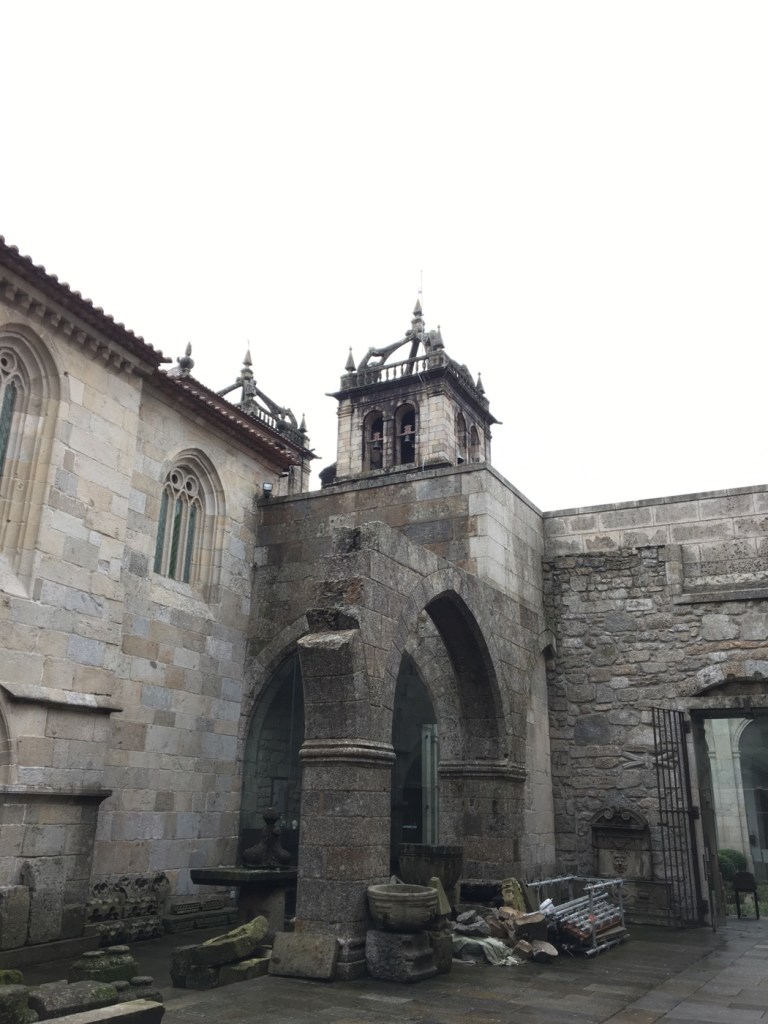
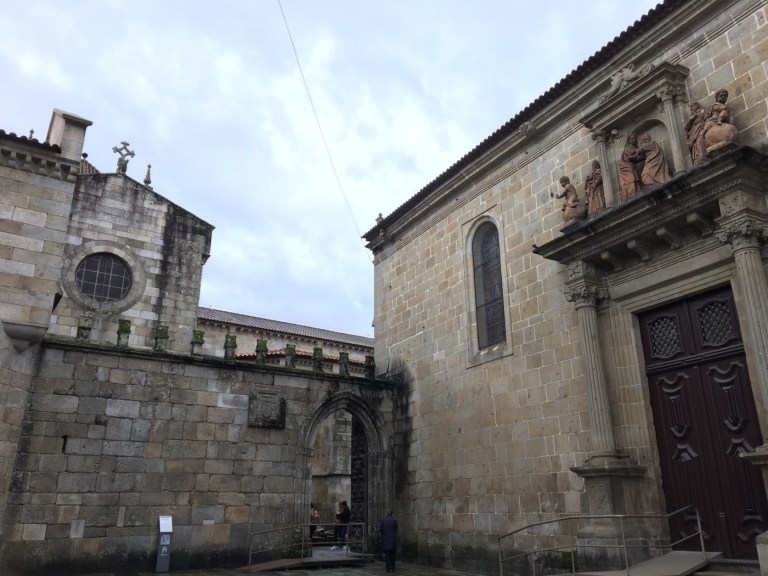
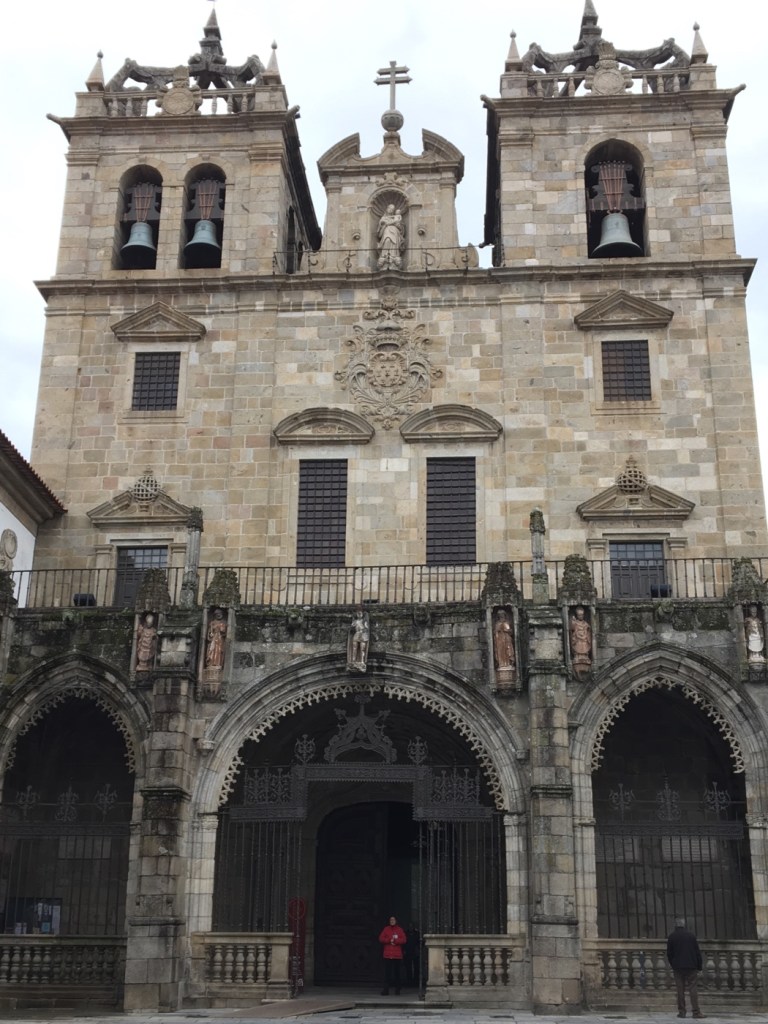 Obviously there are a lot of churches here. Plus an archdiocese which was (and is) unusual for an area this small. Although Braga is the third largest city in Portugal, it’s under 200K people and we mostly toured the historic center so it felt pretty compact — though I heard they have both an IKEA and a Costco?!
There are signs of pre-Roman, including Celtic, occupation of the region although we didn’t get out there (oh, I’m saying we because I took the trip with Radhika, the woman I met in my Porto tour and hung around with until she left for her work trip to Madrid).
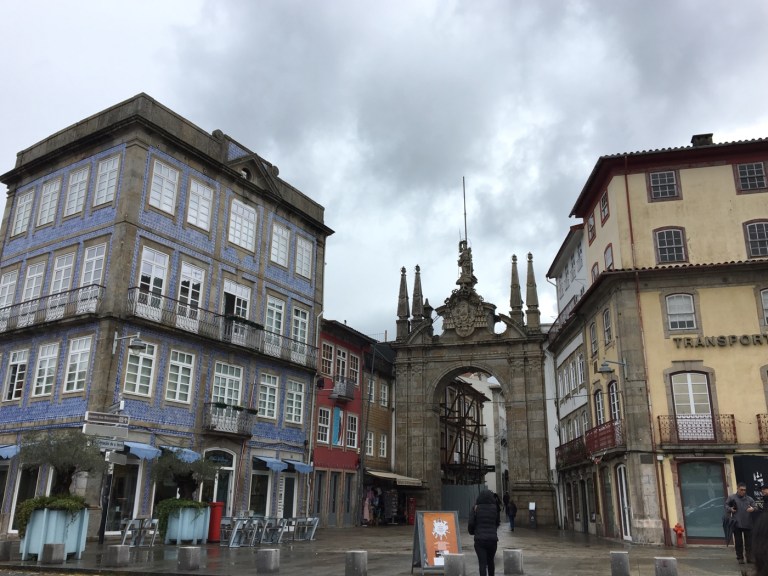
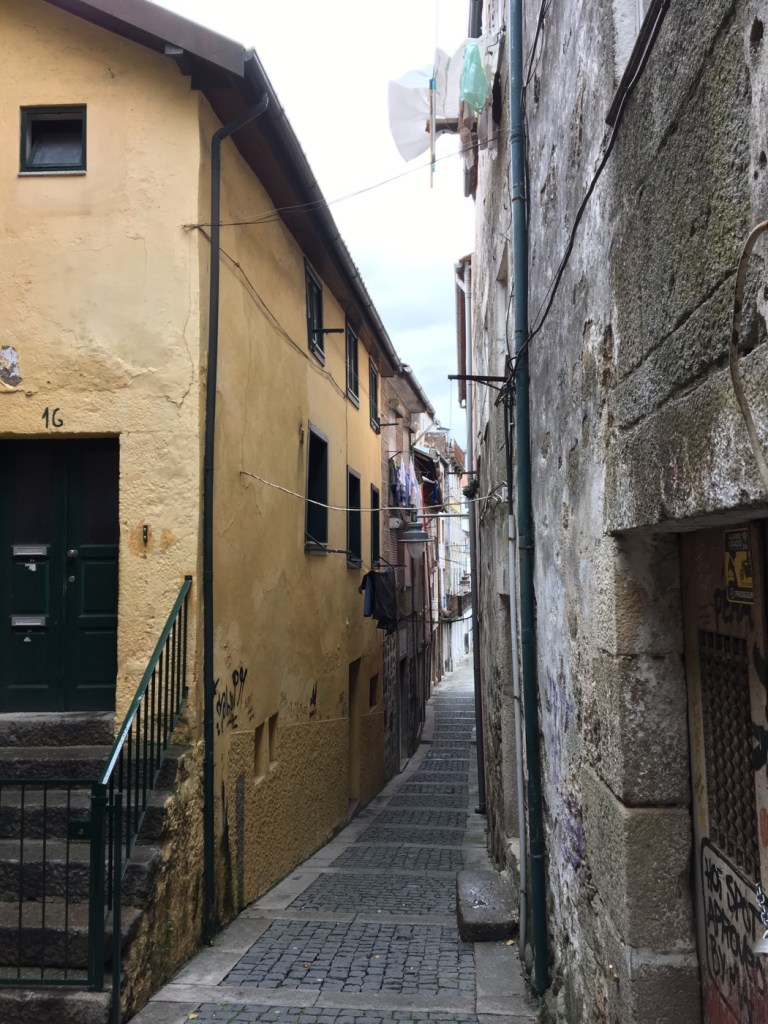 Braga was a fairly important city to the Romans, who made it the administrative center of a large region in what was then Galicia. (These photos show what little is left of their city walls/gates but it’s not Roman, rather medieval.) The city was subsequently vanquished by a Germanic tribe (Suebi) and later Visigoths, both of whom the church managed to convert to Christianity. The Moors briefly conquered the area but the Christian armies quickly ousted them and reclaimed Braga as a Christian center around the time Portugal was becoming its own nation (11th-12th centuries).
Their archbishop even got the pope to recognize the first king of Portugal and thus lay their claim to helping form the new nation. Although nearby Guimarães has as its slogan that it is the birthplace of Portugal. 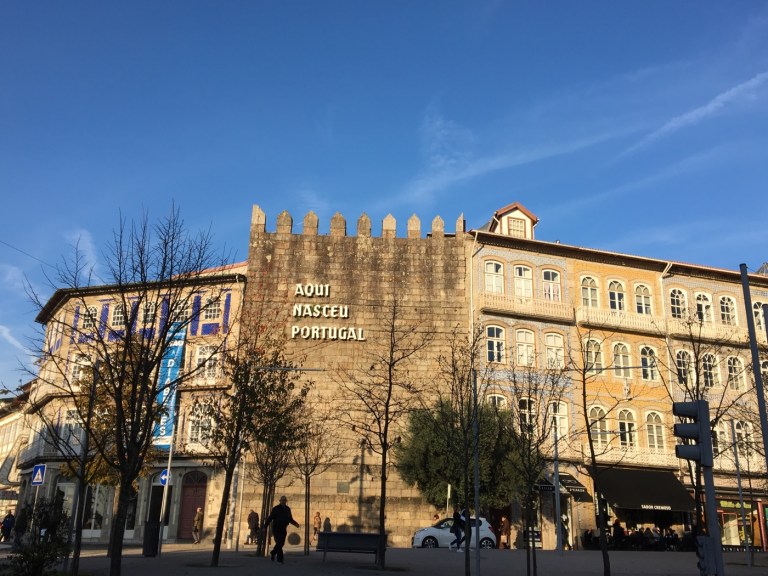
But back to Braga. Of course at one time it was a walled city. However, most of the walls, like in Guimarães, were knocked down because they thought the walls hindered city growth. In retrospect not the best idea but it was the 18th century and they went all out broke for baroque (tee hee). 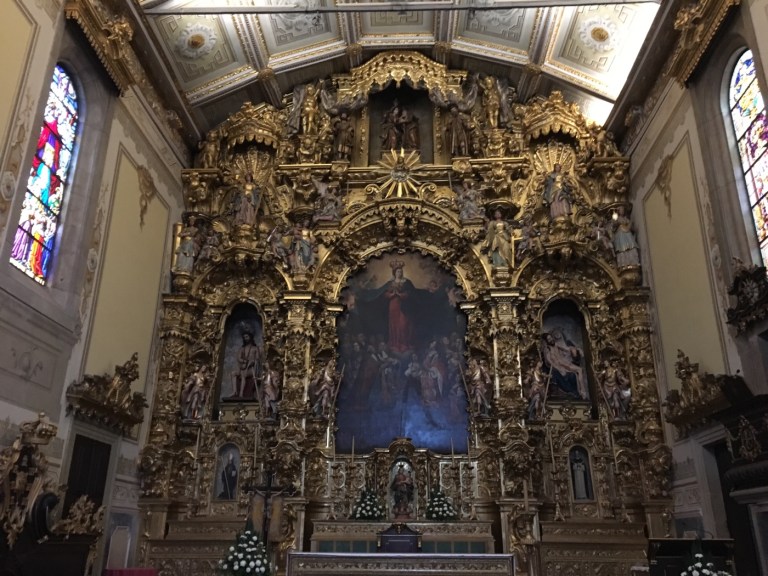
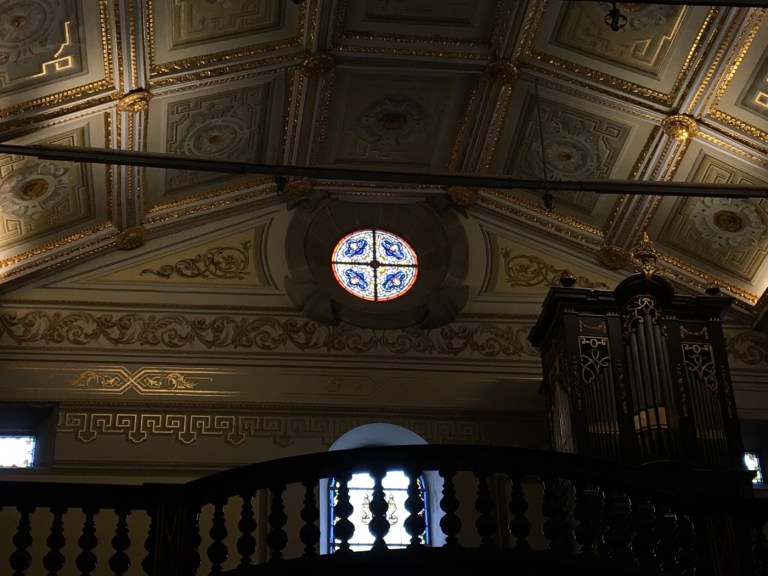 And um, I just want to point out the stained glass window in this cathedral. Is it just me or does it look like four little quidditch golden snitches??! Maybe another HP reference that people haven’t yet discovered?? (Someone call JK Rowling — though if she admits anything then Braga and the cathedral will be overrun with crazed HP fans so best not to find out!)
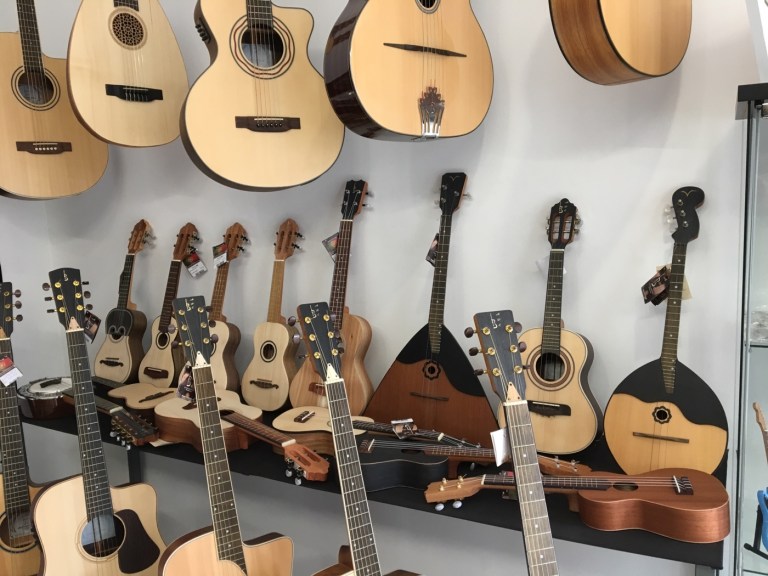
Finally, for my brother … I was told that Braga invented the precursor to ukulele? They still have a tradition for creating guitars and we went into a shop with fado and classical guitars, ukuleles, and a new kind of guitar invented by the shop owner where the hole is on the side … 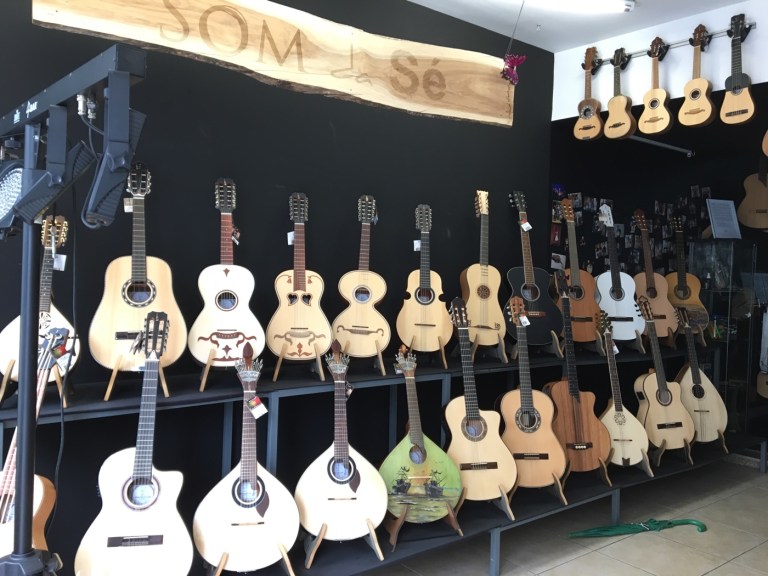
Anyway, Perhaps the most iconic sight for Braga is this. 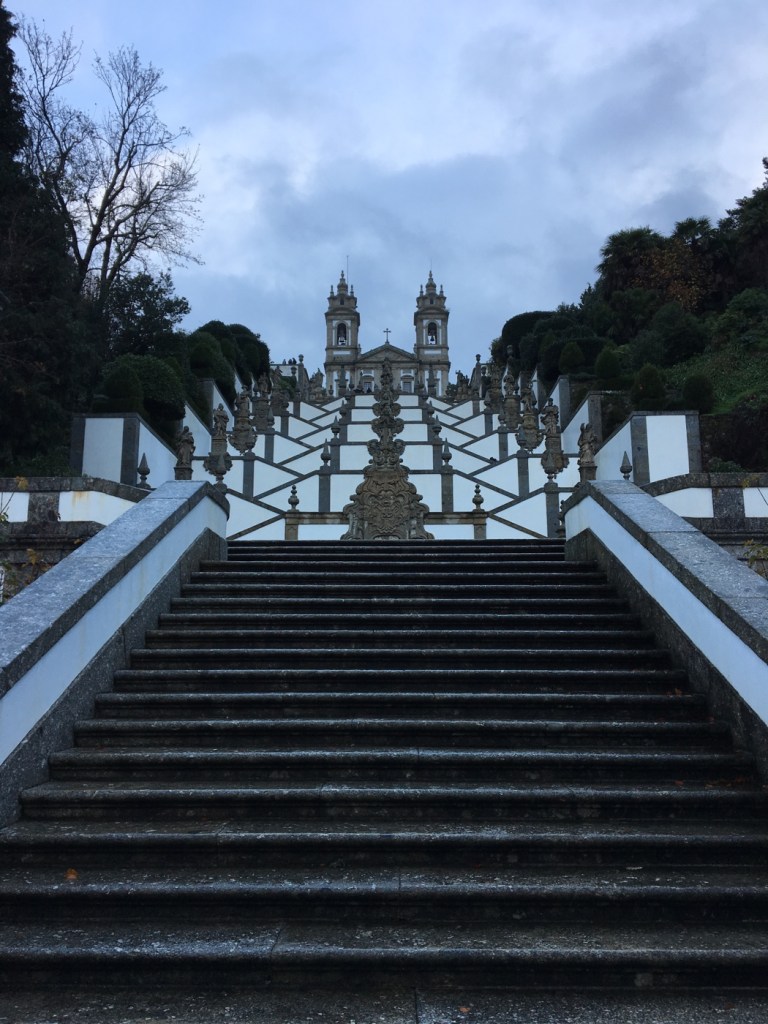 Started in the 1720s under orders of the archbishop of Braga, the Bom Jesus do Monte was built on a hill overlooking the town. There is a fountain at every stair platform, which represents each of the senses (water flows out of eyes, ears, mouth, etc.) at the top levels. More zig-zagging stairs were added by another archbishop, along with more fountains, chapels, a new church and park area. It’s pretty extensive.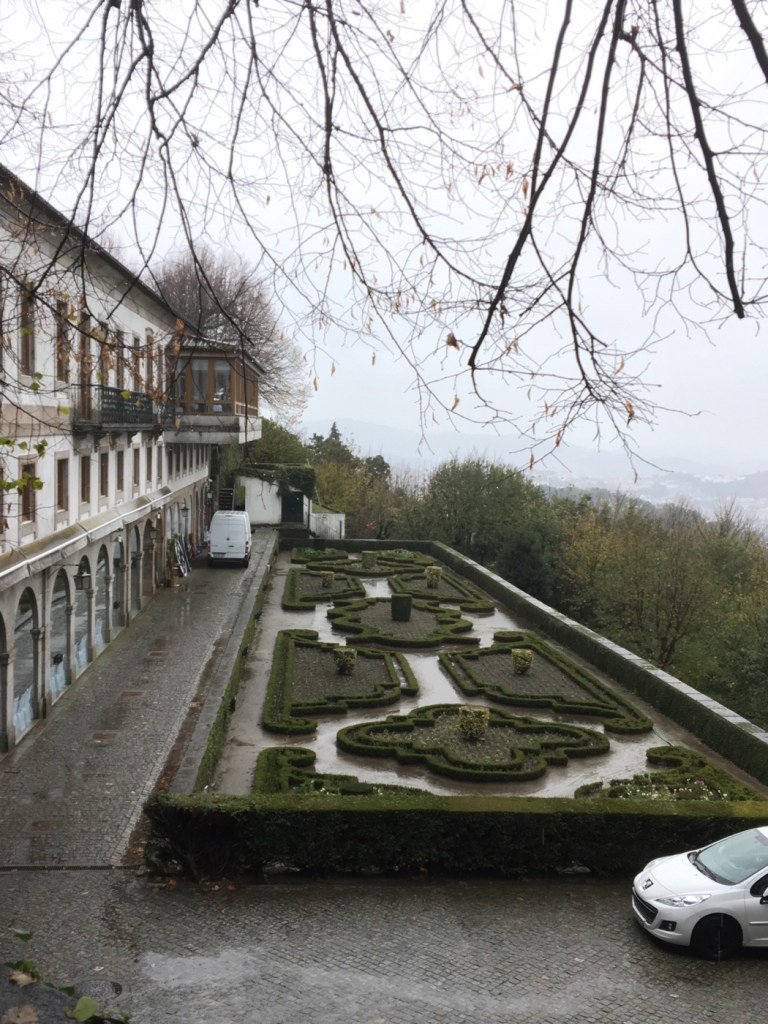
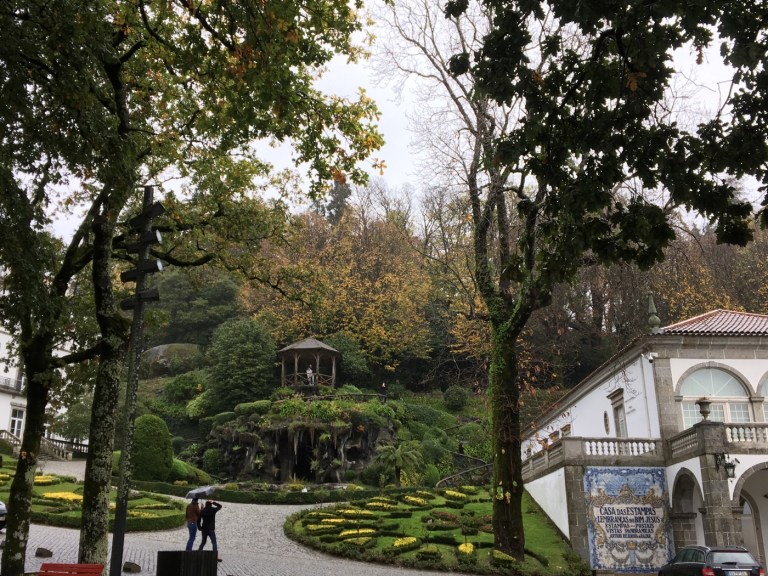
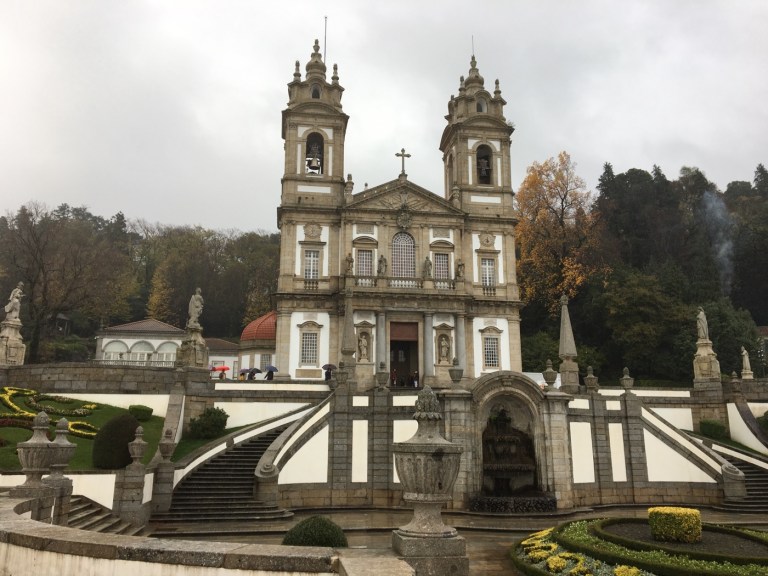 Our guide said the archbishop was very short and was overcompensating with the size of this sanctuary but I’m honestly not sure which archbishop he meant. Anyway rather amusing. And it is pretty though we had heavy rain the whole time (along with bad bus times), so we Ubered to the top and walked down the stairs (in the rain).
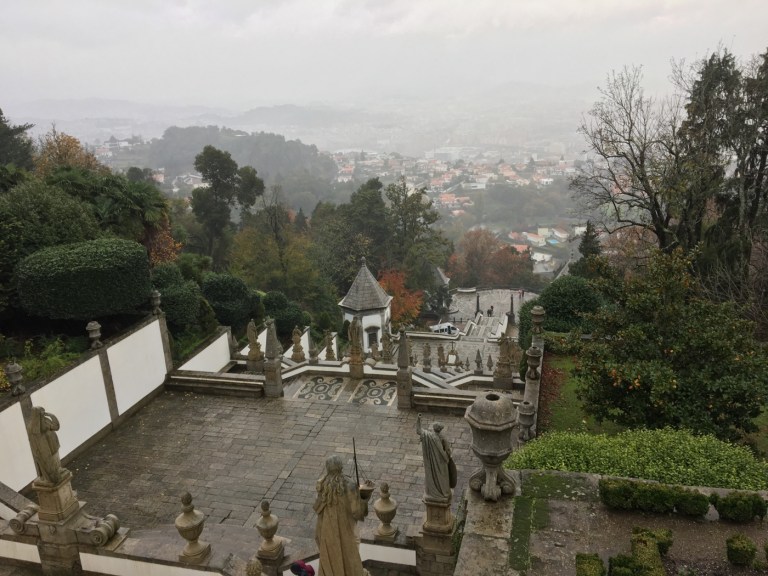 It didn’t even seem like a lot of stairs with all the levels and breaks for fountains and photos. Although pilgrims were encouraged to crawl up the stairs on their knees. (Btw I had no idea, but apparently many of the cities I visited are on the holy pilgrimage route to Santiago in Spain. In fact I think all major cities I’ve visited so far are on the route —Lisbon, Porto, Coimbra and all three in this post. There are little yellow arrows or carvings in the stone indicating the way. Who knew?!)
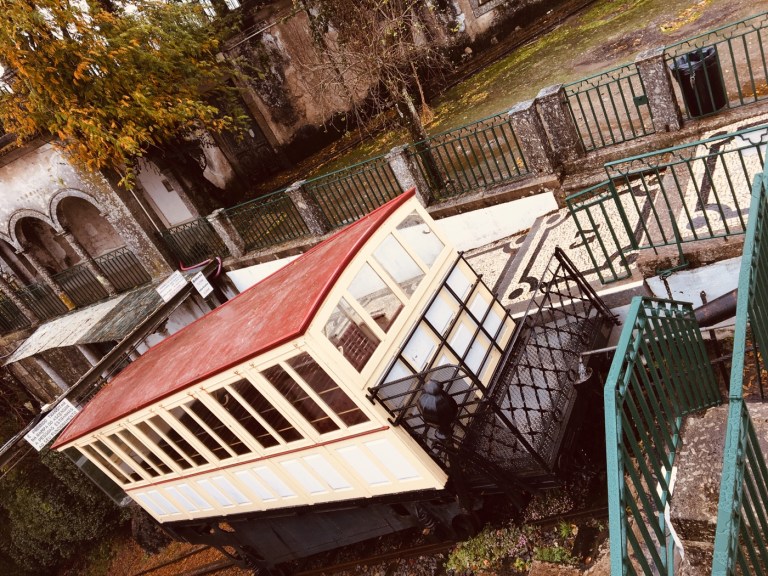
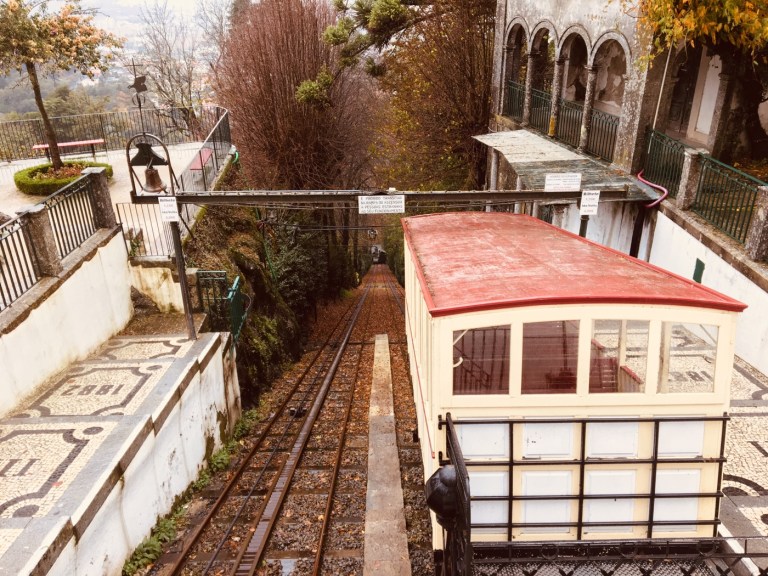 For the lazy non-pilgrims, there’s a funicular that will take you up/down between the bus stop at the base of the park area and the church. It’s actually water-balance driven and was the first of its kind in Iberia. The engineer in me was fascinated although we didn’t take it. (In this sideways picture you can see the water being poured in but that doesn’t mean I know how it works?!)
And finally, proof that I did indeed walk down all those stairs in the pouring rain. Can you tell I’m wet and cold? Perhaps it’s no surprise I caught a cold since then. 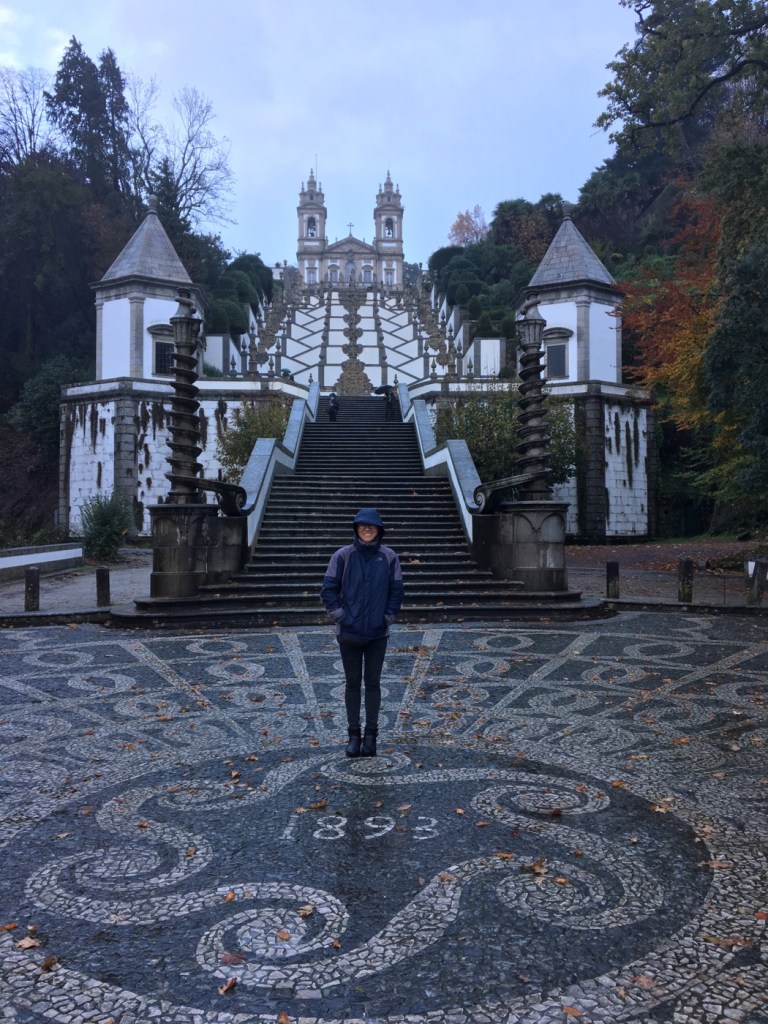
Finally to Guimarães. It’s less touristy — I could only find one “free tour” online and turns out it was just started a month ago by a 21-yo tourism student (who knew this was a major? — she’s actually getting her masters in Lisbon after getting an undergrad degree in Coimbra). It was only me so I had a personal tour. She grew up in Guimarães and wrote her own script of things to cover. 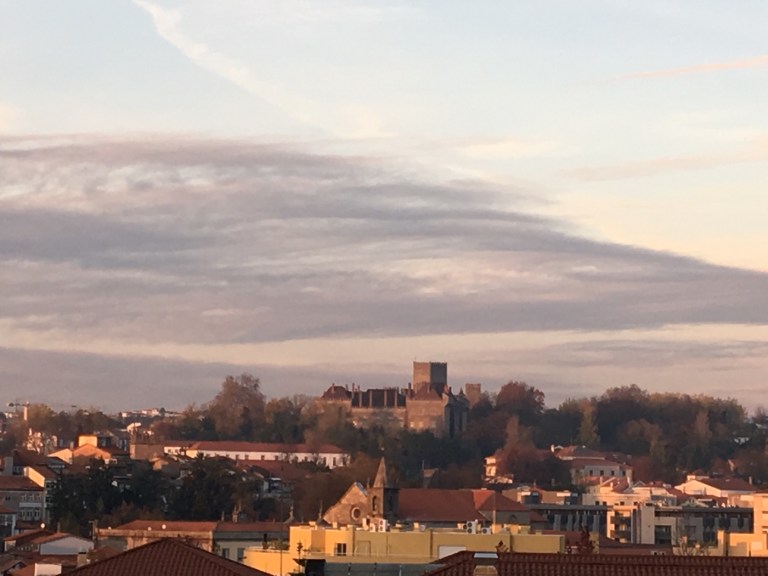 It was maybe less on history/politics and more on local festas (parties, festivals, traditions) and sights but I absolutely enjoyed it. She was very sweet. I think many tour groups bundle Braga and Guimarães together into a day bus tour from Porto and for some reason Guimarães is less popular on its own. Anyway I heard that had I been there the next night (11/29), I’d have seen the tradition at the start of a Nicolinas festival (in honor of Sao Nicolau) for students (secondary school but includes former students) where they have a bull drag up a large pine tree into town, which they erect in this Largo Republica do Brasil. All to the beat of drums by people in the parade.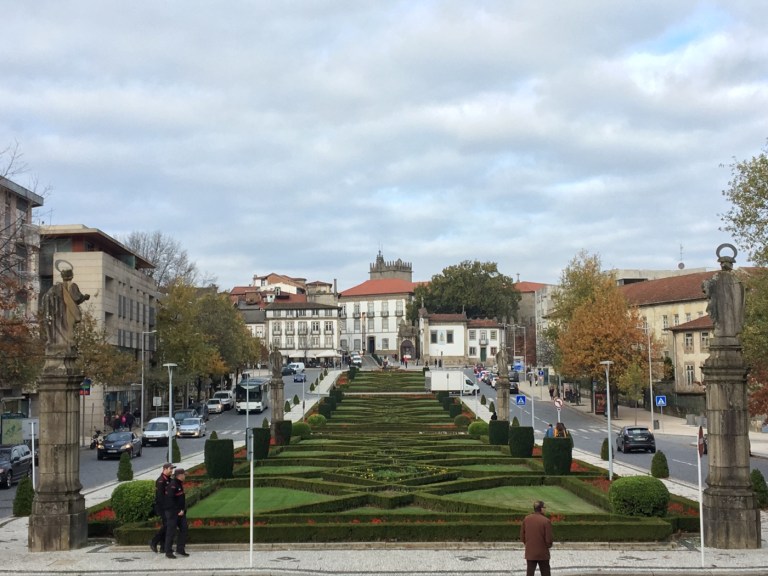
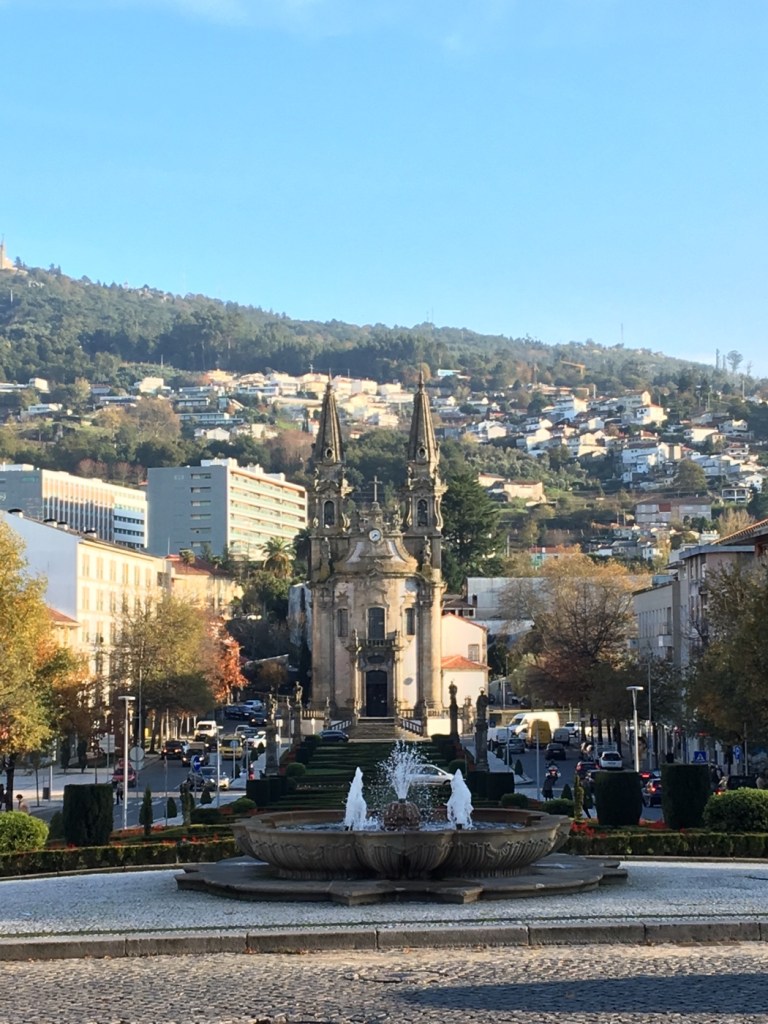 Sort of puts the tree lighting ceremony at Rockefeller center into a new perspective. Pretty crazy.
It’s followed by 10 days of festivities concluding with the young men putting apples on long stakes that they offer up to women they are interested in – who stand on balconies in the Sao Tiago square. Even though the balconies may be privately owned, they allow locals to use their balconies in the name of tradition. 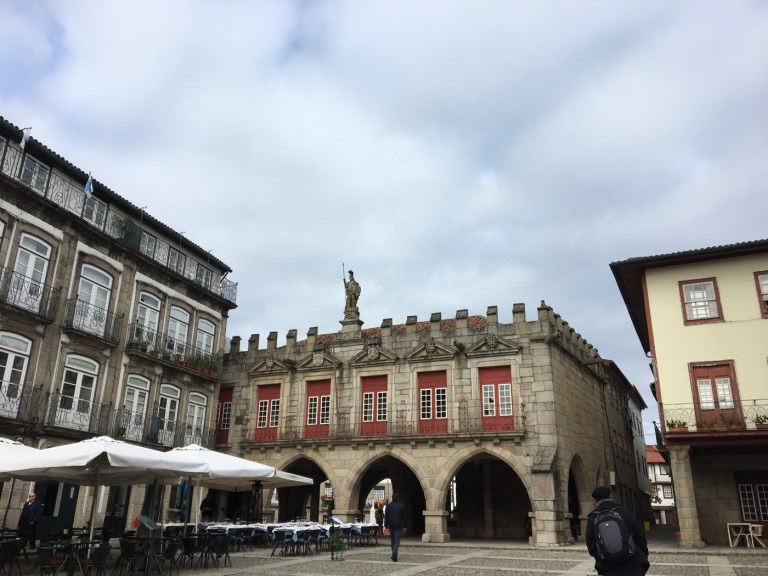
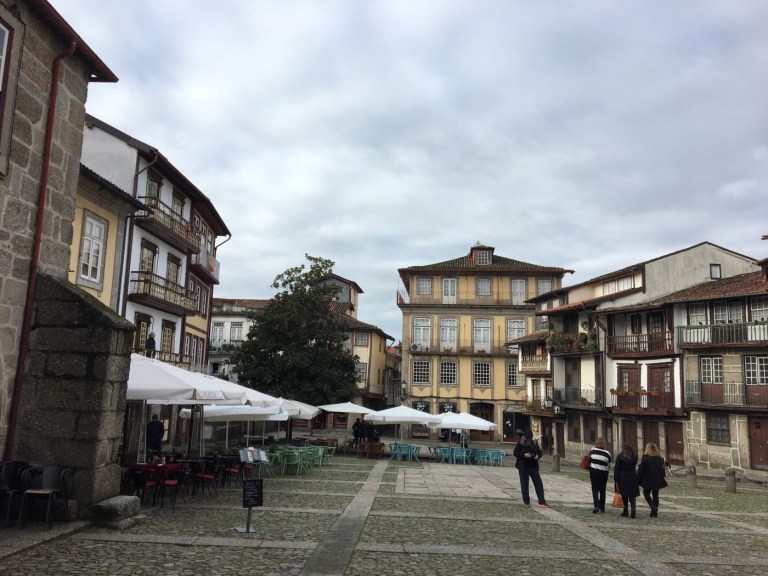 Given that it’s close to Christmas and St Nick, pine trees, (bobbing for) apples, and students/children all have Christmas connotations, I wondered if there was a historic (likely pagan) ritual that Nicholas somehow represented but my guide didn’t know anything and I don’t have a good WiFi connection to look this up on my train! Just curious.
Back to Guimarães. It claims to be Portugal’s birthplace because its first king was born— or at least baptised here. In the tiny church to the right of the palace in the photo here. 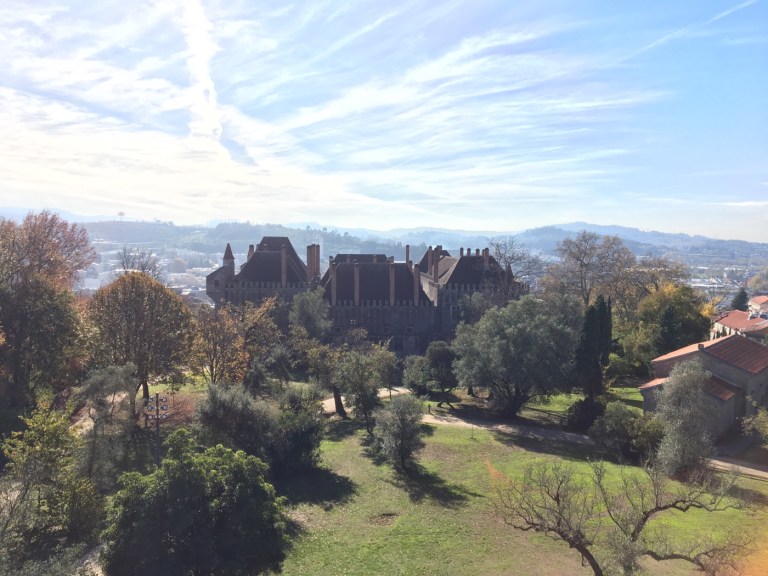 Afonso Henriques, son of a Burgundy royal father and Spanish princess mother, was a count of the county of Portugal, then under Spain. His father was named a count of Portugal because of his support of the Spanish king. After his father’s death, Afonso Henriques fought against his remarried mother (to a Spanish noble) to stay regent of Portugal (he was 11). Clearly a determined and ambitious young man. His outnumbered troops won the battle near Guimarães, outside his castle walls.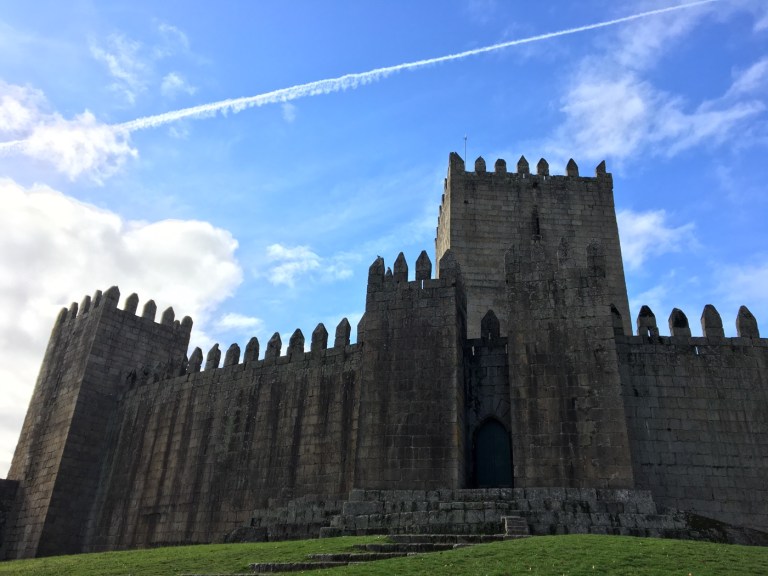
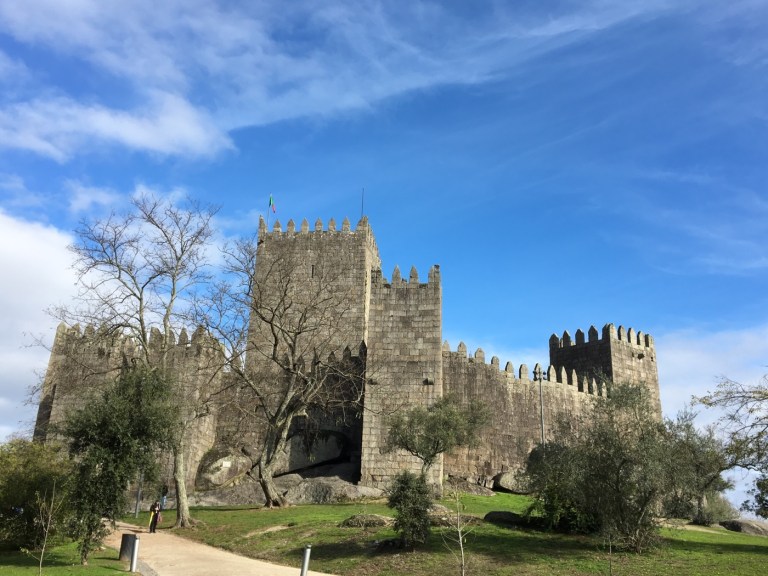 He became prince of Portugal in 1129 and called himself King in 1139. And Spain recognized him as such in 1143. (Following more battles of course.) And though Afonso Henriques moved the capital to Coimbra after a few decades, Guimarães still takes credit as Portugal’s birthplace. (BTW here’s just a few photos of what’s currently inside the castle fortress.) The fortress was built in the 11th century to protect the convent, monastery, and collegiate.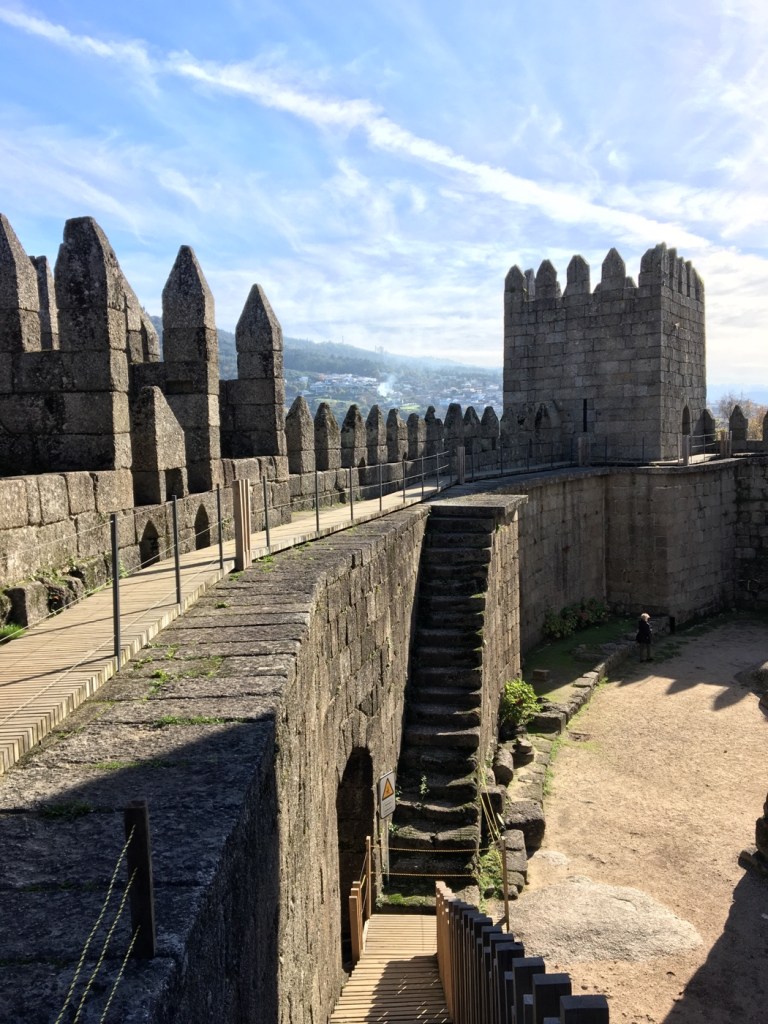
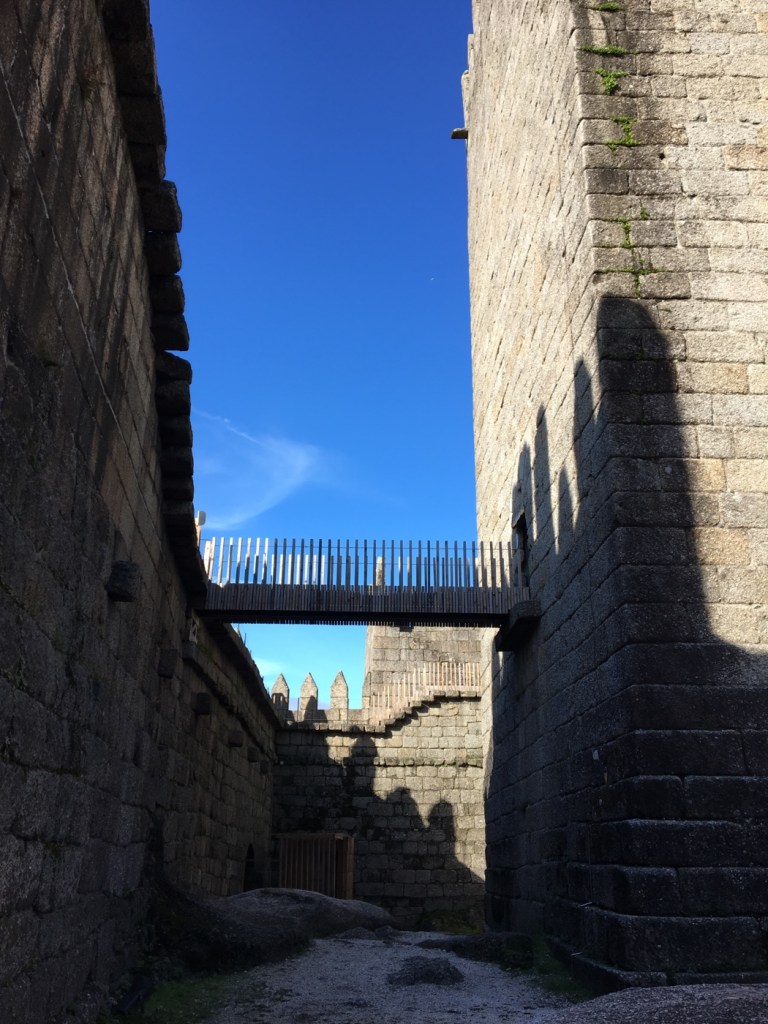
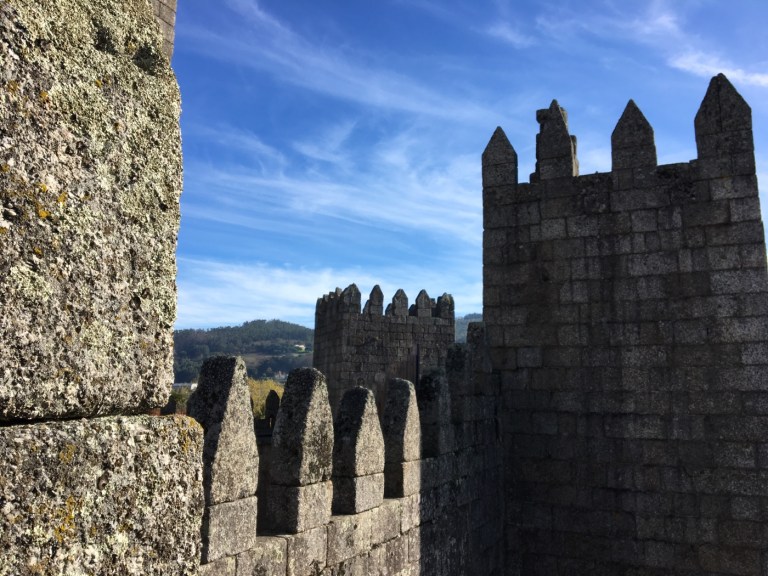
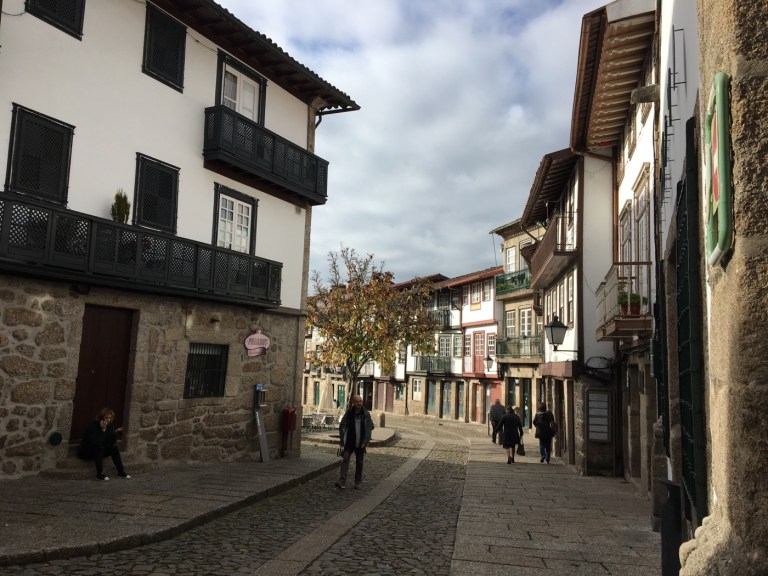
It’s a pretty city. As already said, they knocked down its city walls but work was done to fix up the medieval streets, buildings and palace/fortress. So it looks old but not dilapidated.
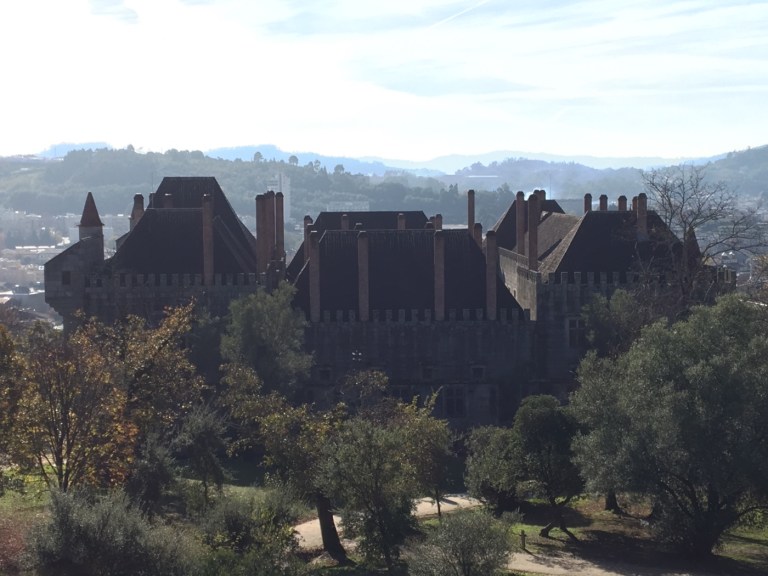
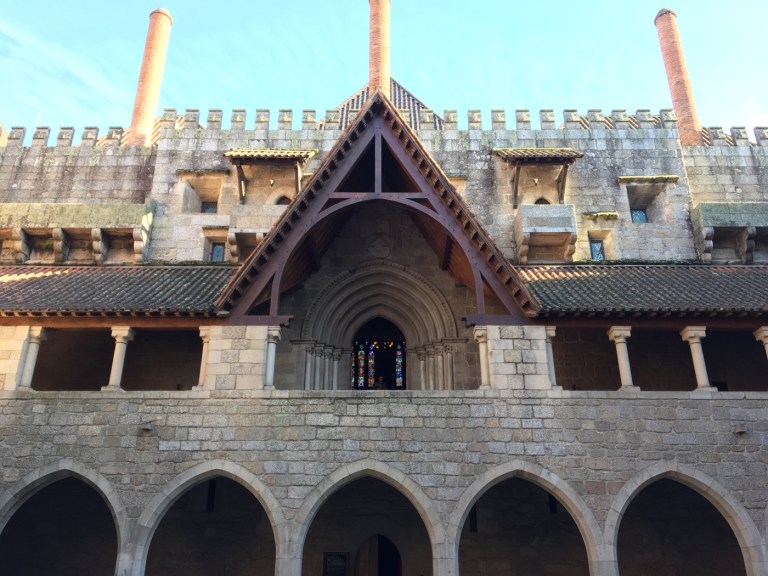
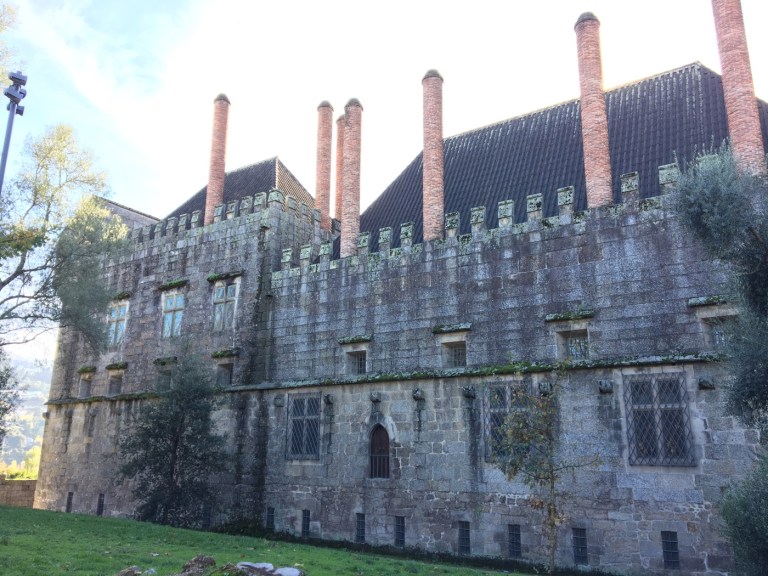 The Palace of Duques de Bracanca was refurbished in the 1900s with contents that represented the best of Portugal in its heyday (1800s, when gold was coming in from Brazil and their trade routes were still very fruitful). So think Chinese porcelain (I saw Ming and Xing dynasty stuff), Spanish cabinetry, Flemish tapestries, and Persian rugs. The kings lived in this palace for 100+ years and unlike the fortress it was meant to be comfortable and styled like French chalets. They had tons of chimneys/fireplaces for warmth and a great hall. And banqueting rooms that were truly impressive.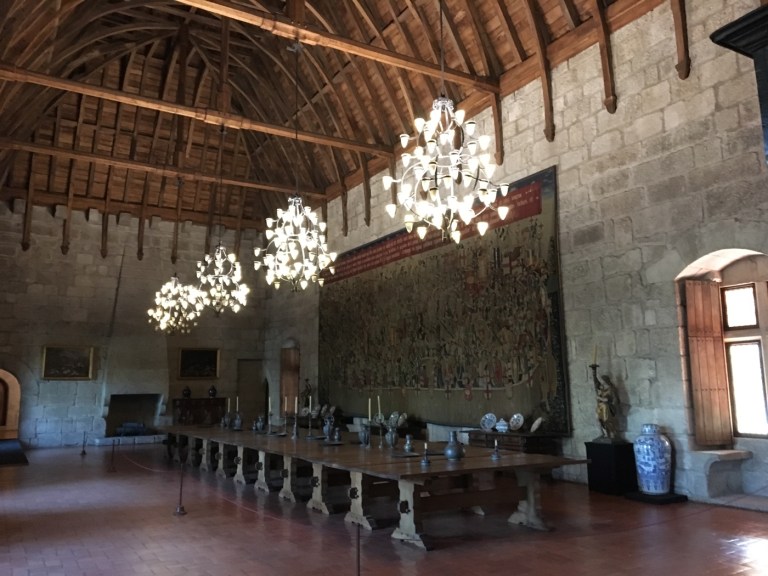
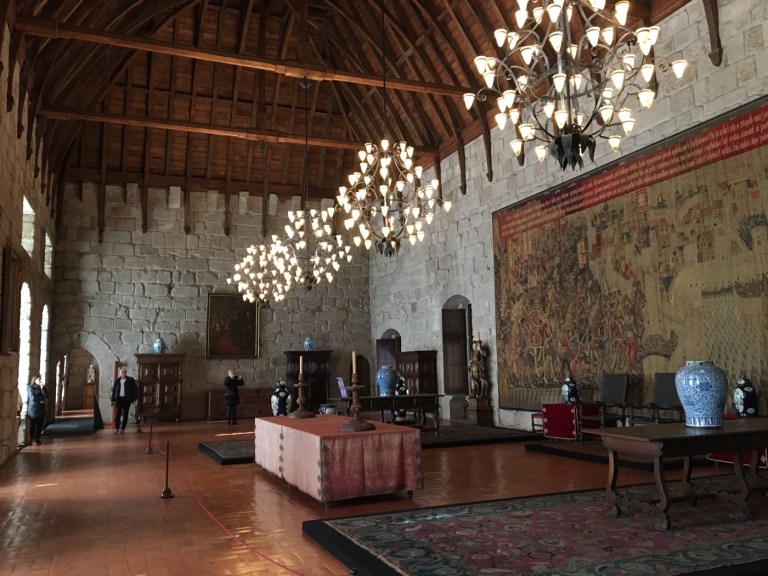
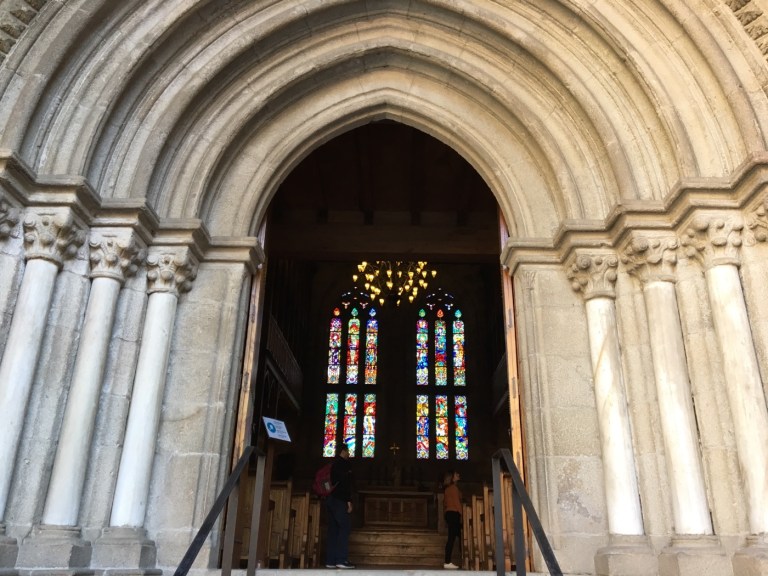
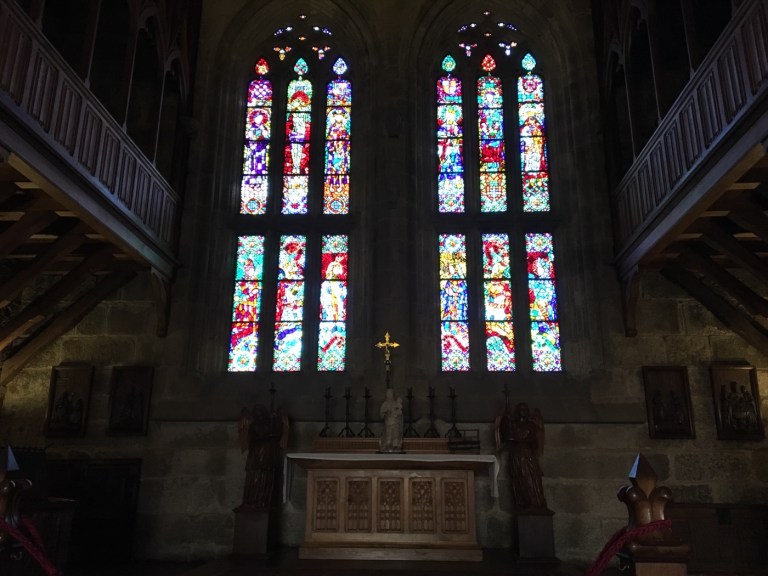
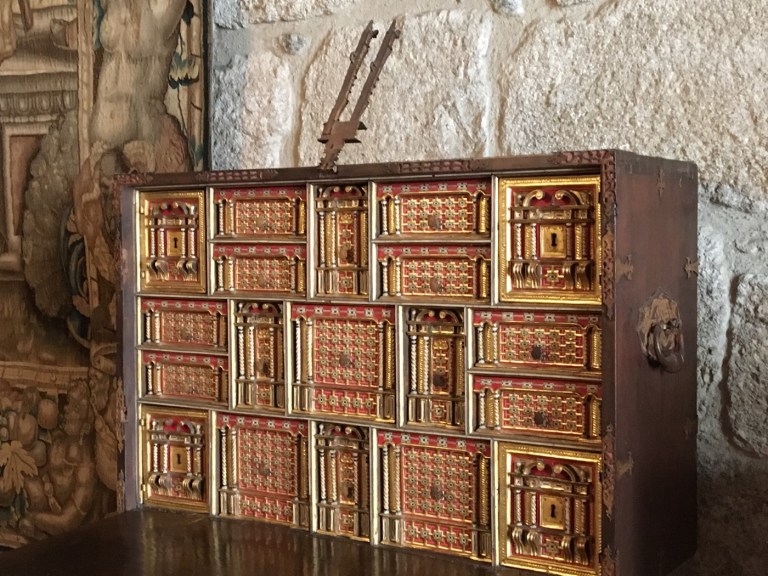 The original tapestries were removed (these are all expensive copies) but you get the idea. The palace’s inside is built around a courtyard with a lovely chapel inside.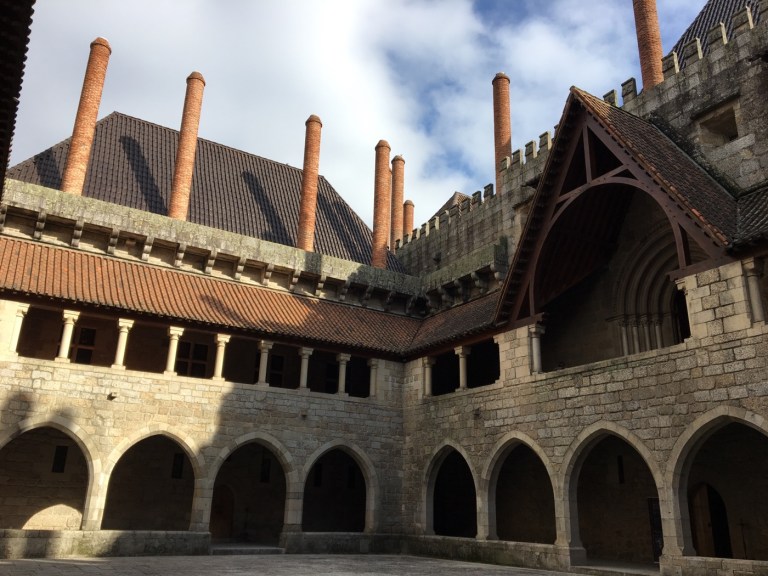
 Connecting the original fortress (and later the palace) up on the hill with the town and its major churches (Igreja de Nossa Senhora da Oliveira — Our Lady of the Olives — but more on that later) and convents and collegiate was the road, Rua de Santa Maria.
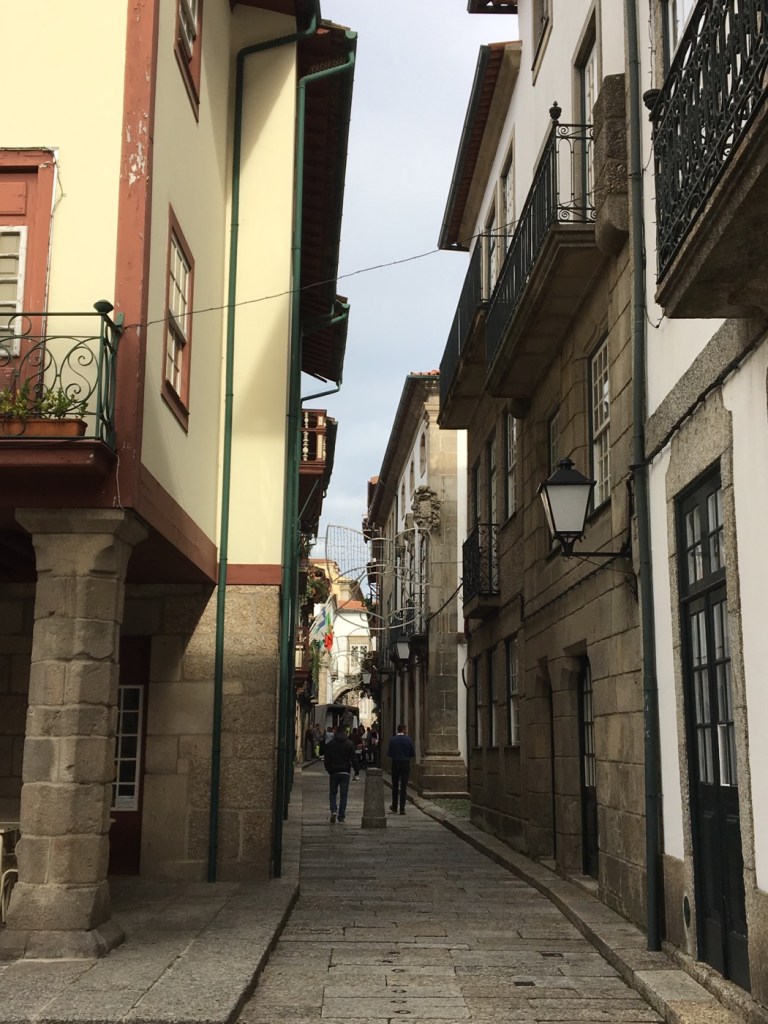 It still resembles the street that medieval nobles built their homes on although it’s mostly shops now. It’s all very charming. There are also old areas where the leather workers used to tan the leather and open areas where the women (of course women) bring their laundry to wash (and some still do?!).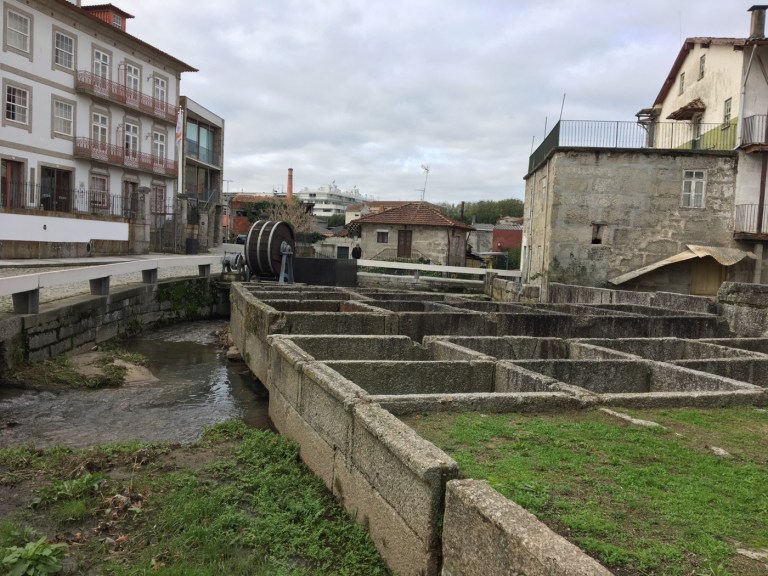
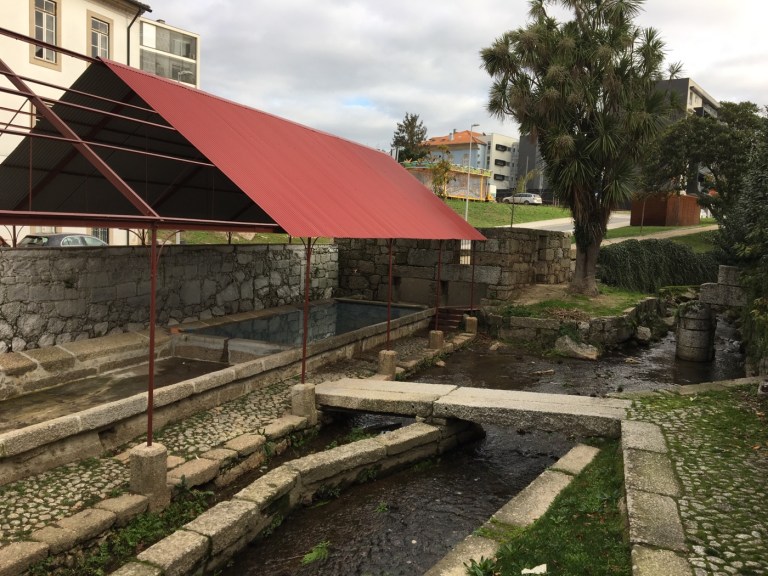 As my guide said, it’s a town of traditions.
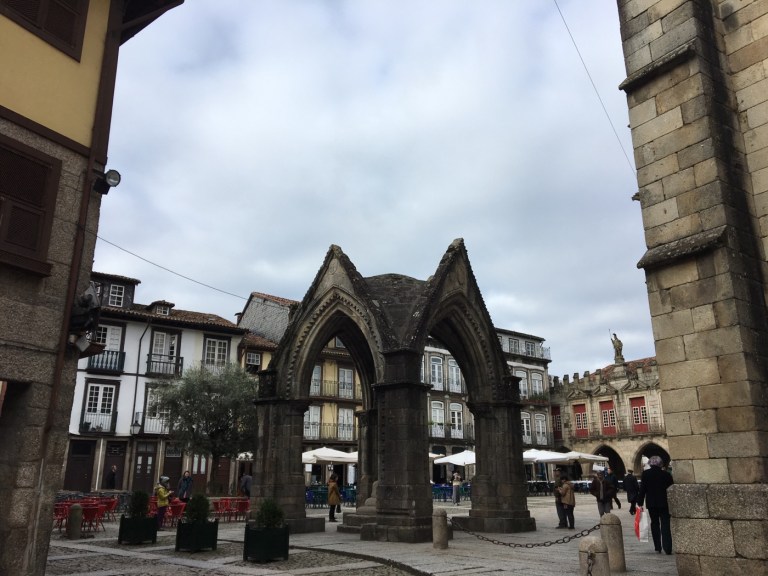
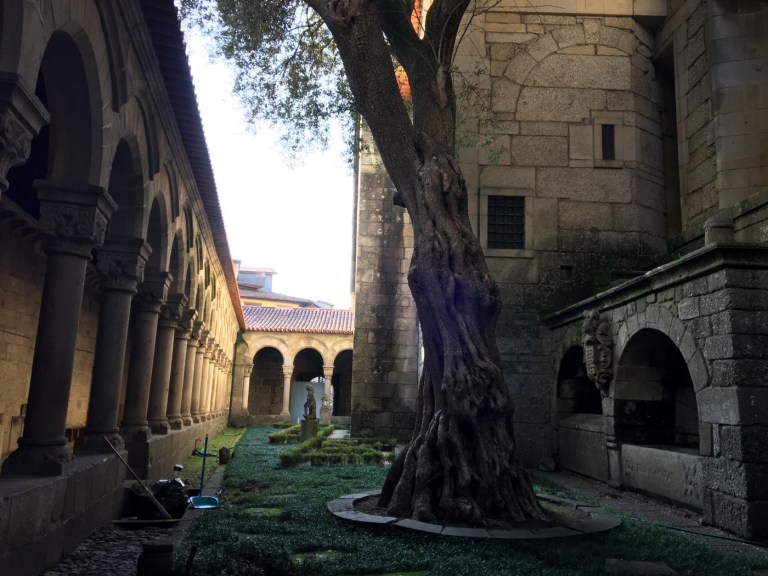
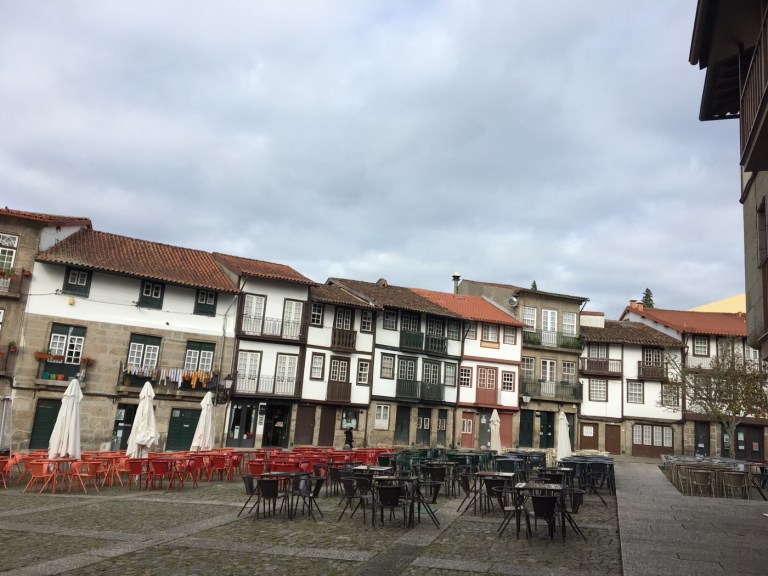
Anyway a word on two squares in the old town that were notable. One, the aforementioned Largo de Oliveira which has the church on it … based on an old story (or stories) about an olive tree that stood for a long time in the city and protected it. But it started dying and not until they built this structure and prayed to Mary did it recover — and has lived there happily ever after. 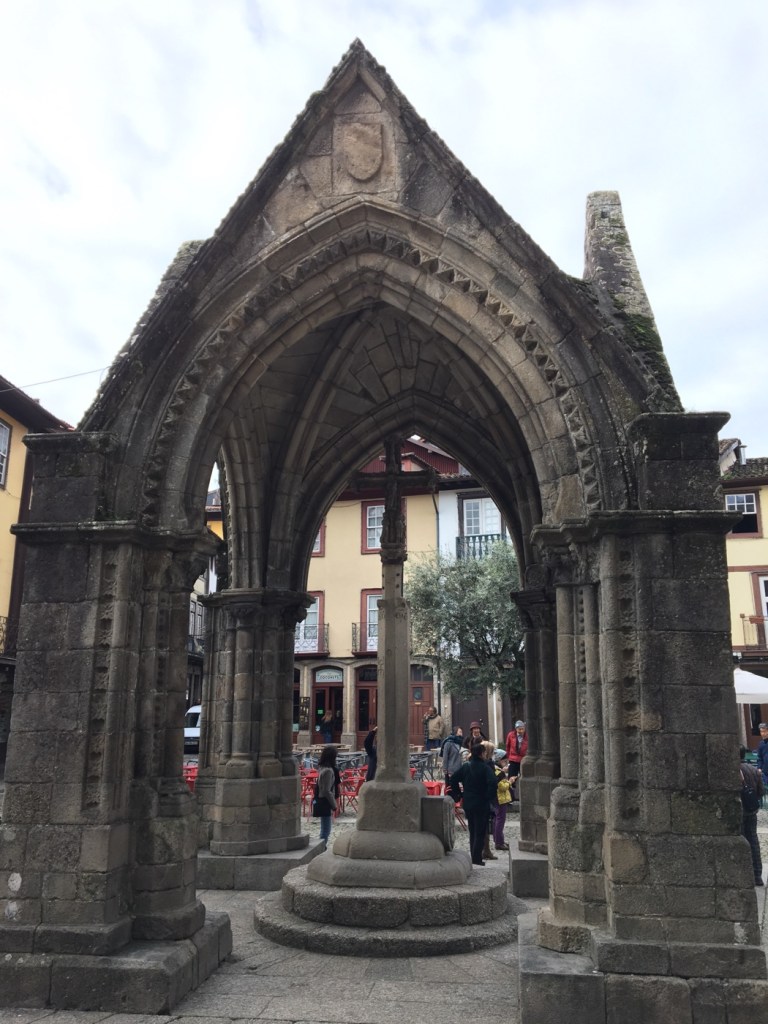
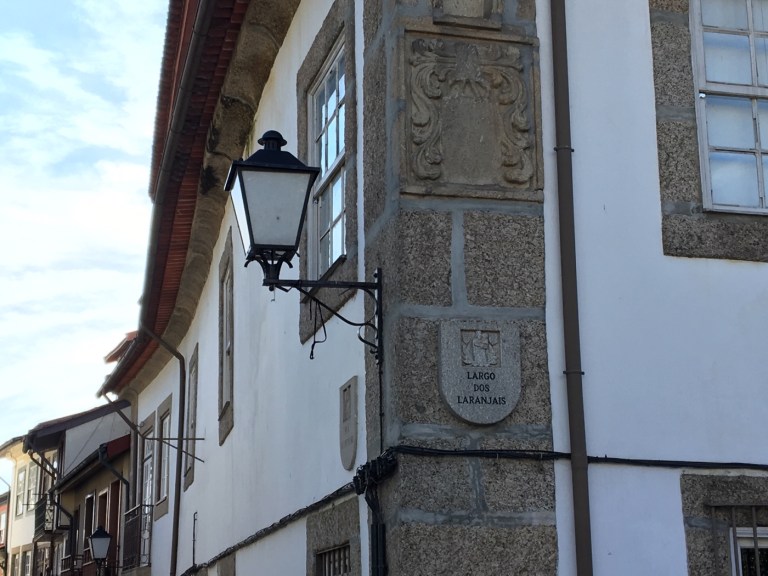
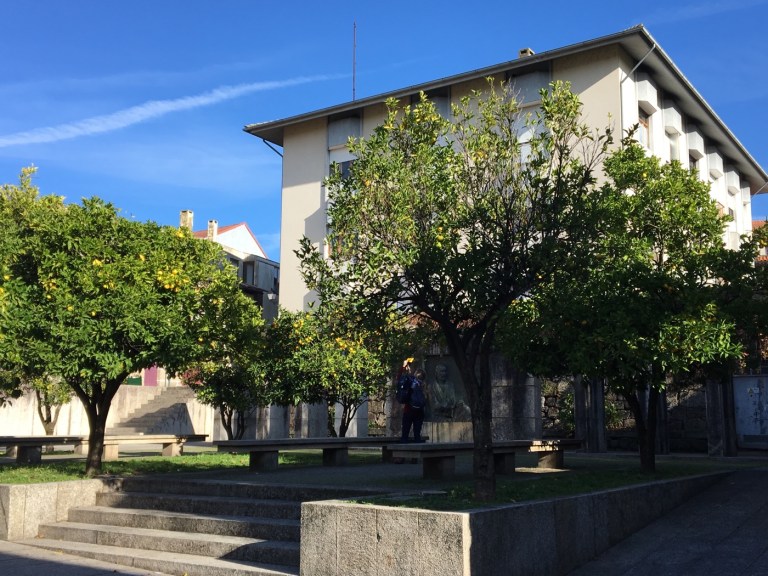
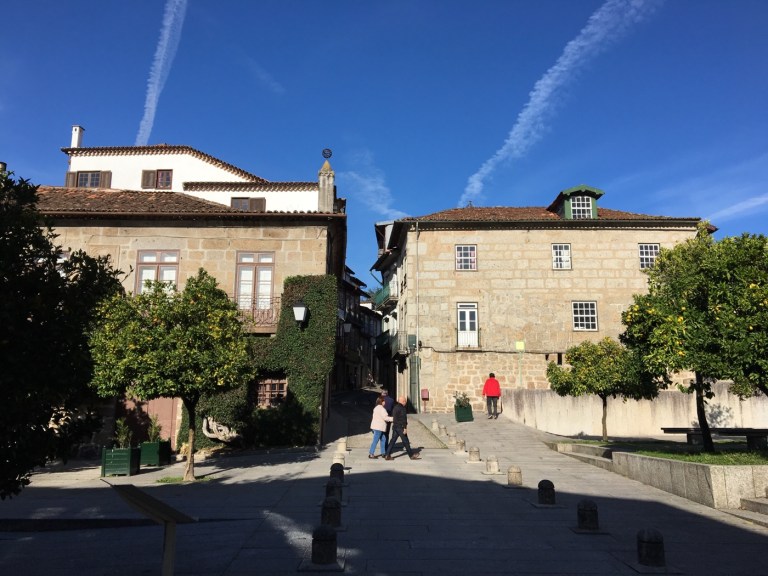
 There was also a square of orange trees. You could just pick them for your snack. (As Elaine pointed out, it seems odd that we see cacti and citrus trees all over Portugal but it doesn’t seem that hot or that dry?! But clearly they all grow well here even in northern Portugal?!)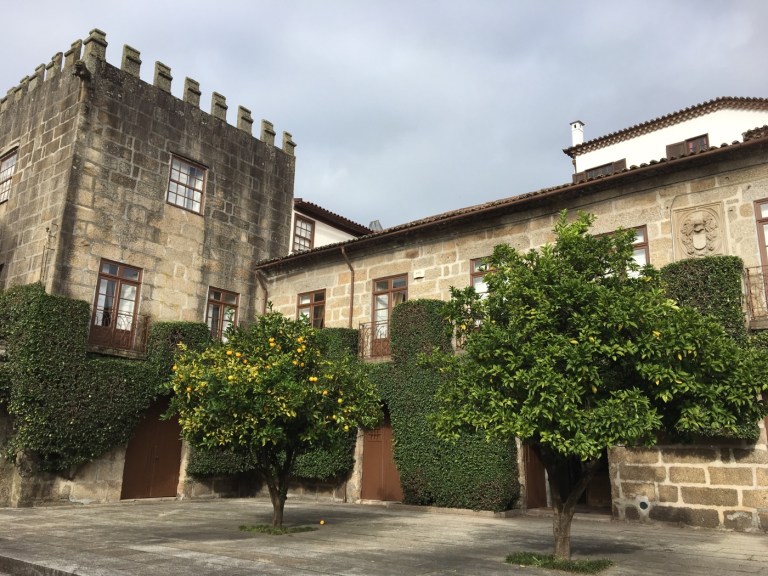
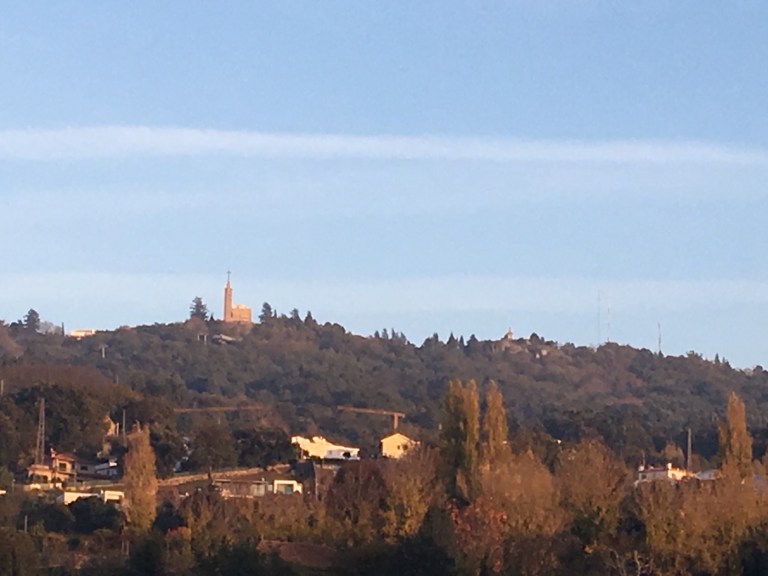
 There’s also a great viewpoint that I didn’t make it to. It was accessible via a gondola ski lift and overlooks the town. There’s a church up there as well but I wasn’t feeling it. (By then I had caught a cold after having that stomach bug. I’m still coughing and congested but trying to sleep it off. And I hope the warmer and drier southern weather will help cure it!)
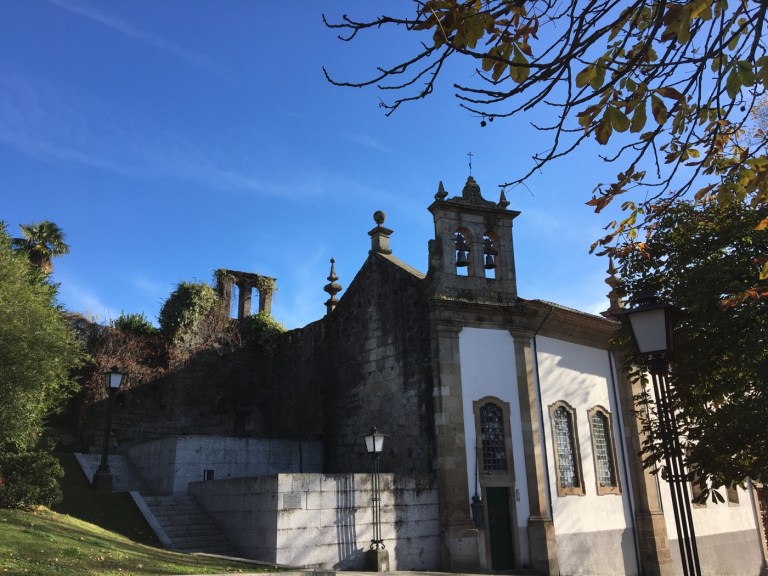
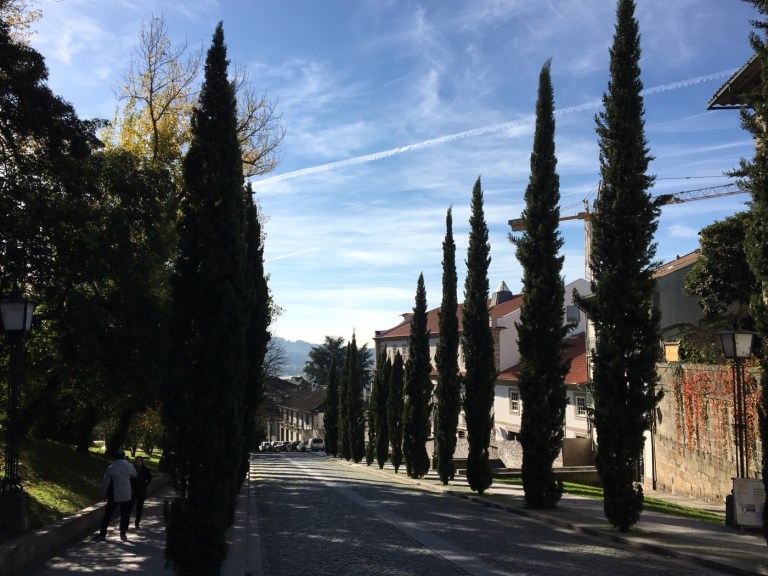
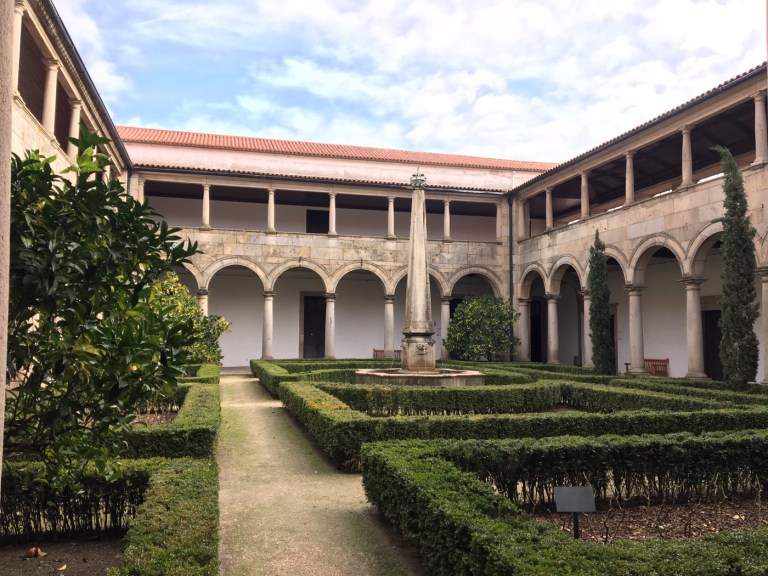
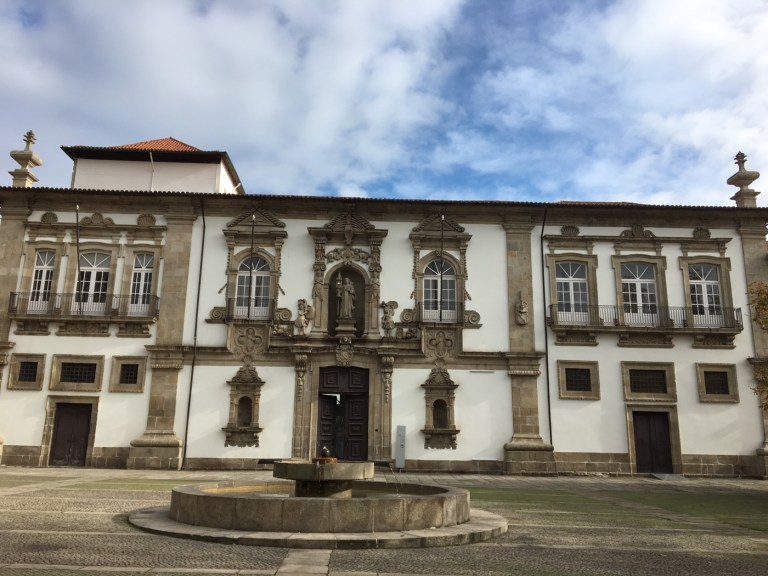
  Anyway that’s it for the birthplaces of Portugal and some of its traditions. I visited a cool museum of relics from the churches in Guimarães but didn’t take many photos. Here are my final shots …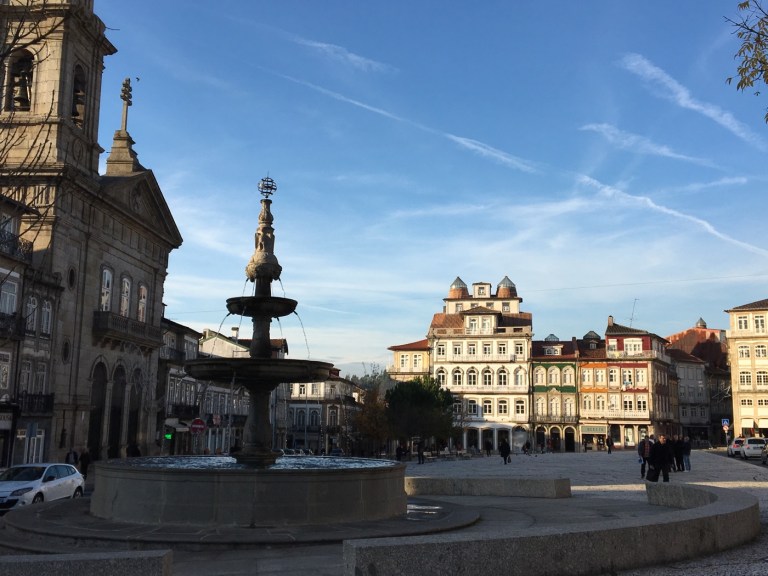
 Cynthia's Trip