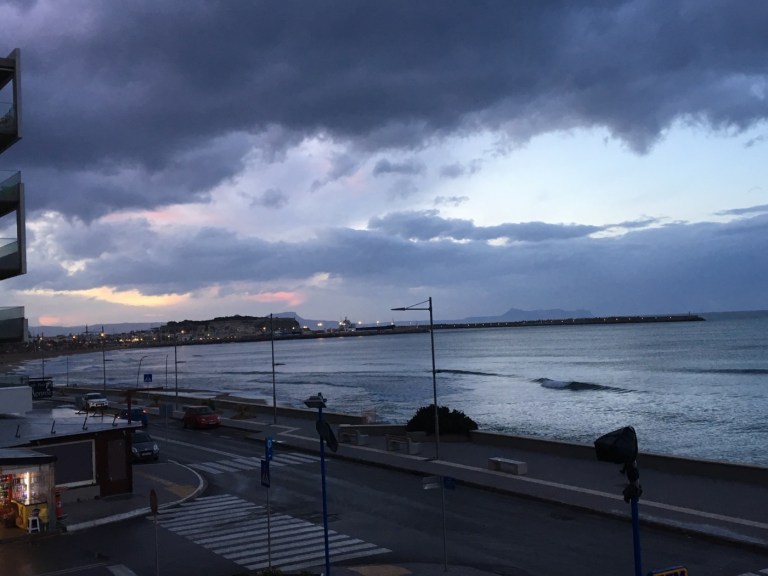
Rethymno is a cute town with one of Europe’s longest beaches (where I’m staying — it’s like being at Myrtle Beach). But it’s quite dead in winter although it’s the third largest Cretan town.
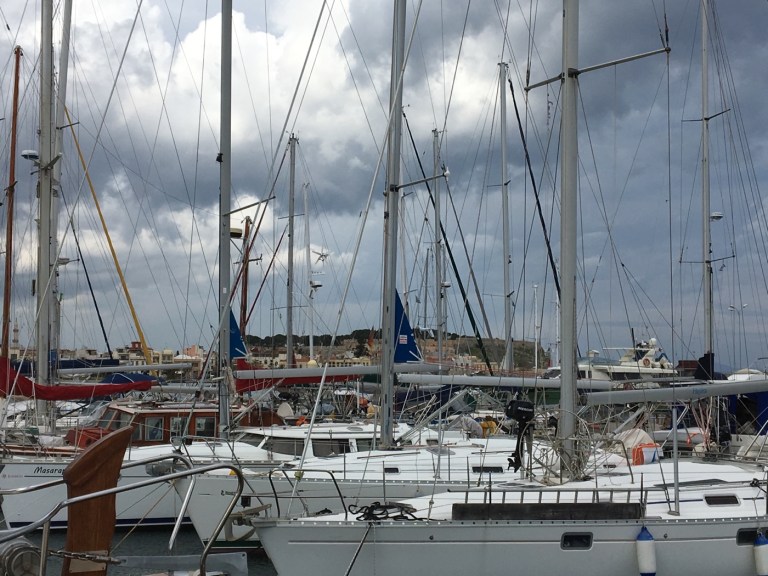
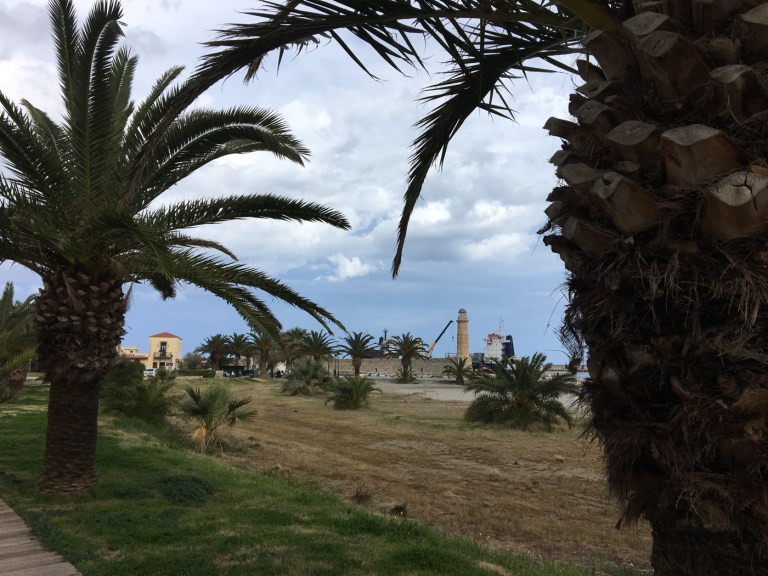
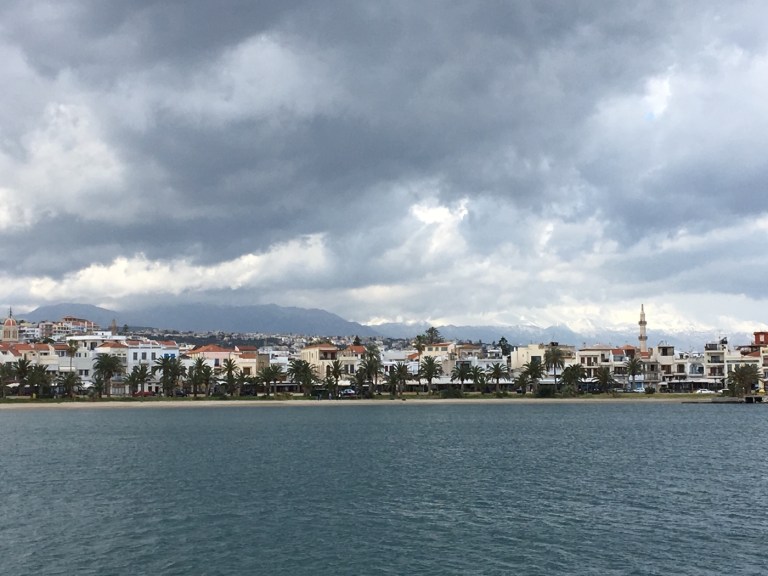
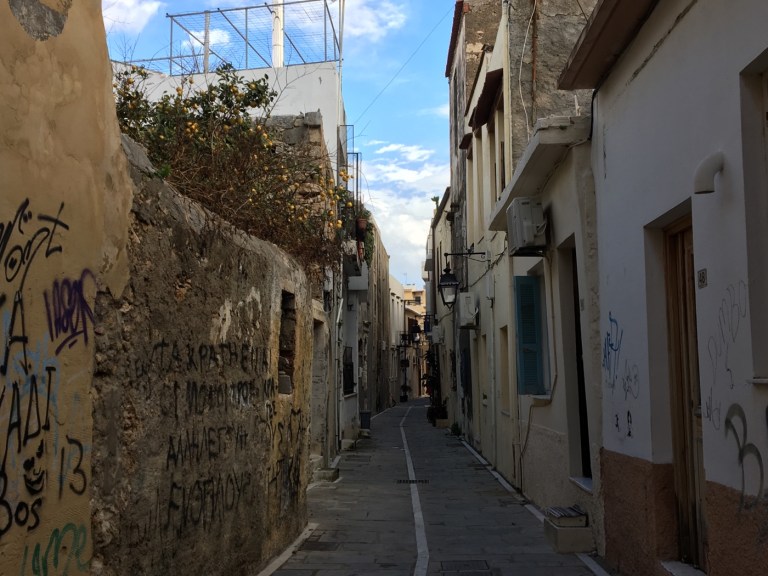
 Some stores and restaurants are open in the old town— more are open in the regular parts of town I think as it’s less tourist driven. But the old town has those narrow streets that are so picturesque.
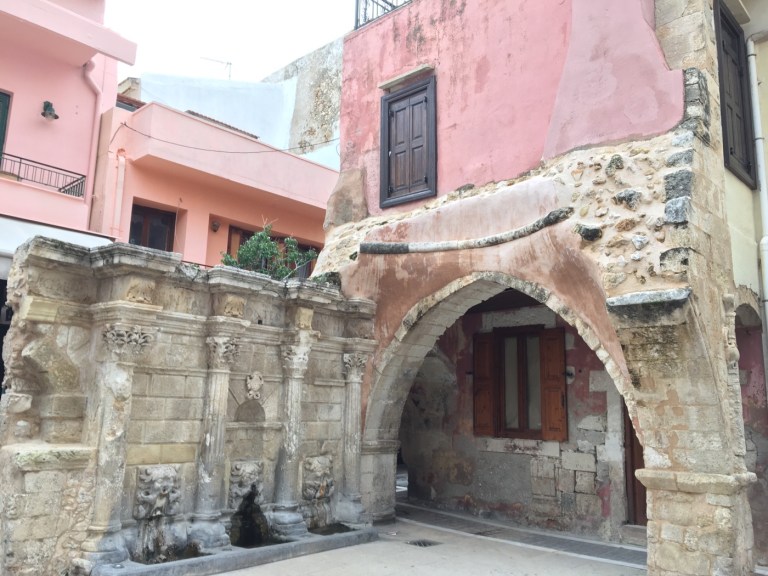
And a few ruins from Venetian days.
As well as the Venetian harbor.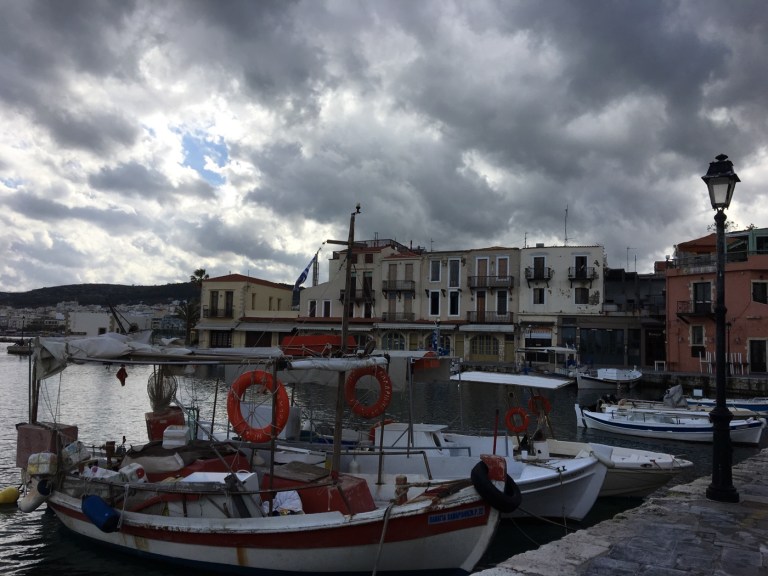
The fortezza, another Venetian leftover, is a major tourist draw but when I went in no one was at the ticket booth though the gates were open.
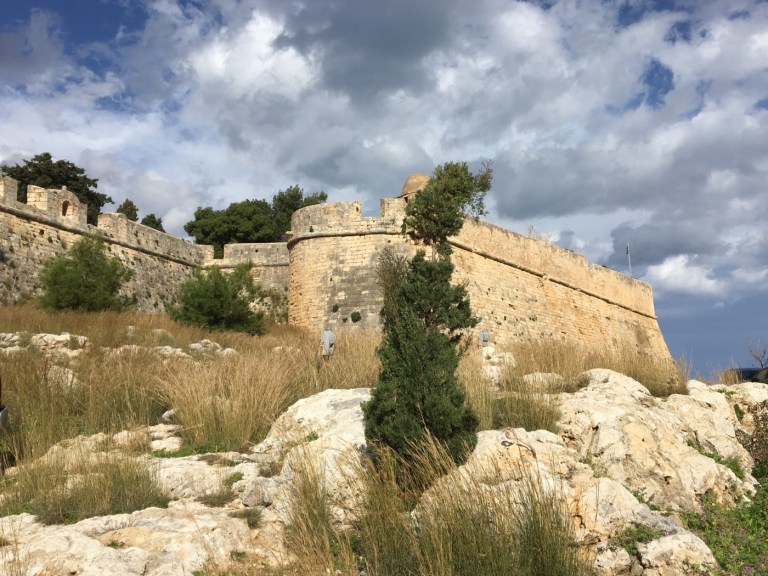
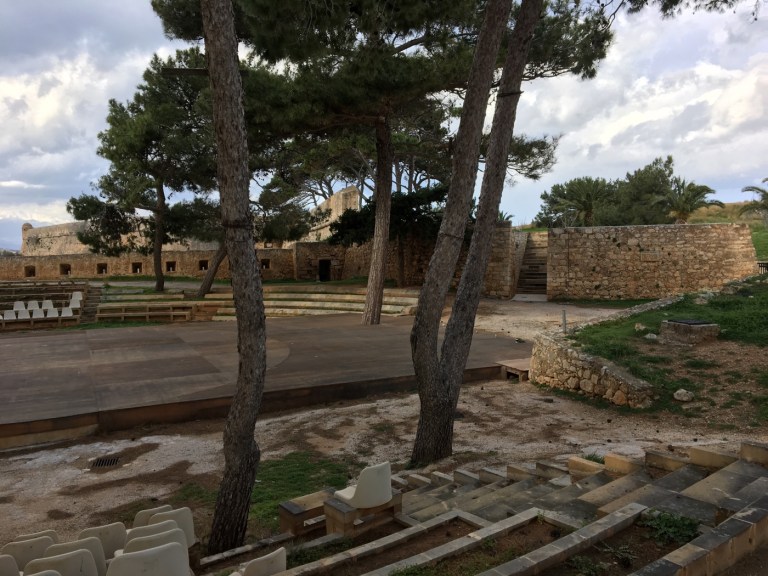 So I got in free. But many of the buildings were closed up that I think might be open in season. It was quite huge inside. They clearly had troops living in there for long term. And there were great views from there.
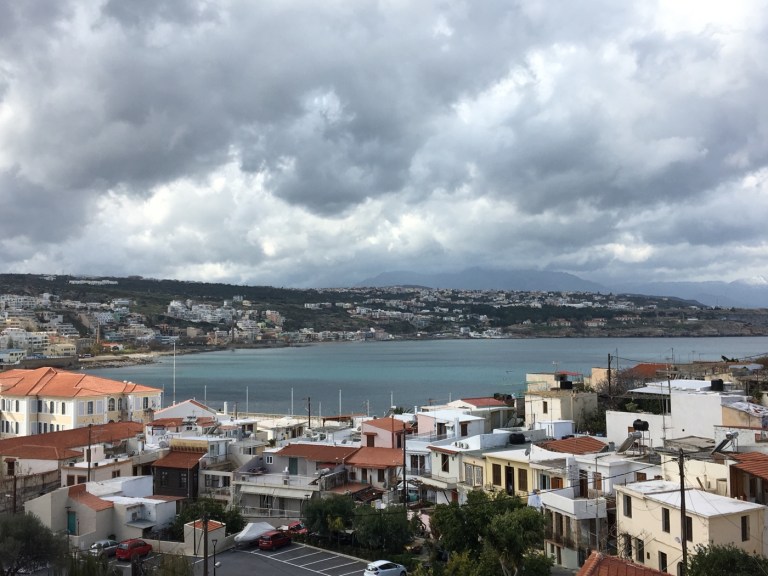
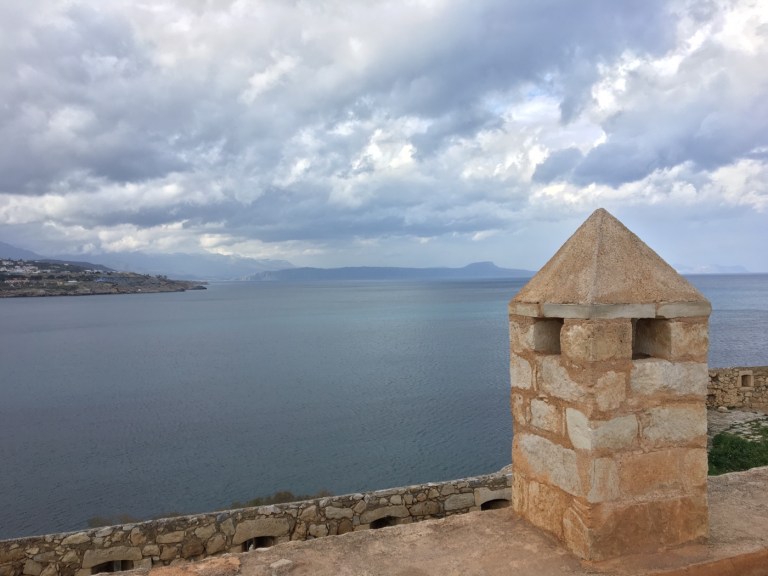
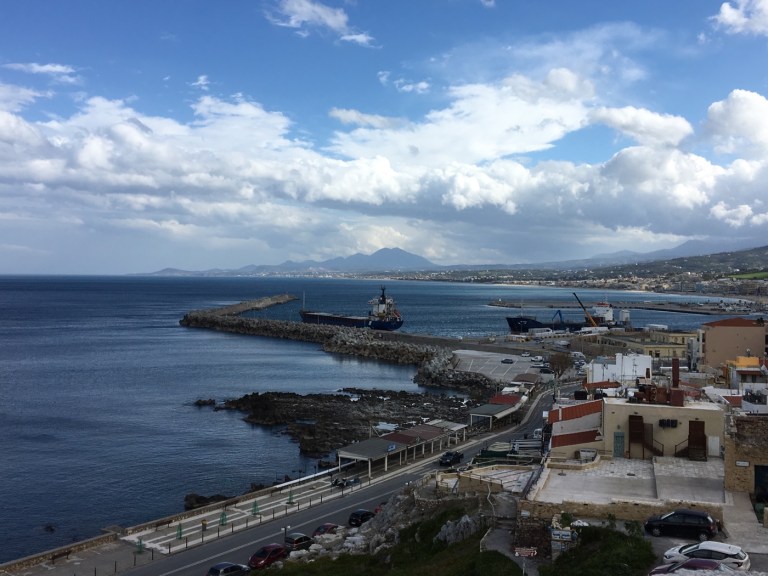 And a very friendly cat who followed me around and kept trying to pounce on my feet to stop me I guess?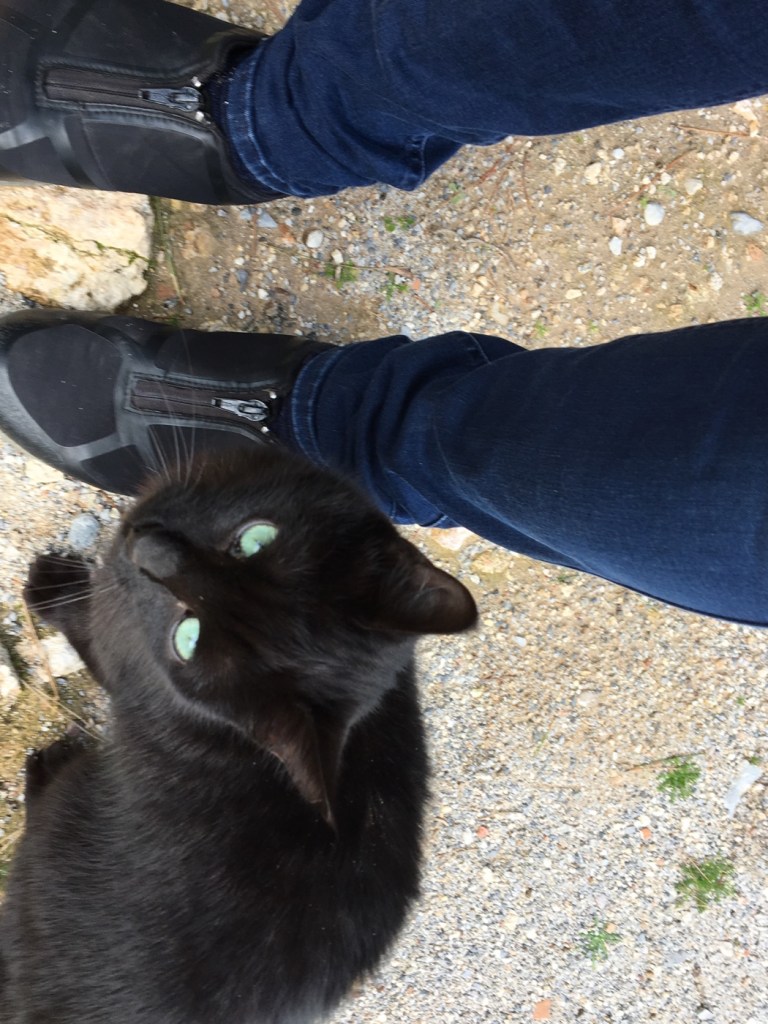
I admit I did pet her. She was very funny. When I stopped to look over a view, she would jump up and look out too. (By the way you’d think that just the flimsy chain would freak me out a bit but either I’m getting used to scary heights or it just wasn’t that scary — or a chain really is enough). And she was one of many cats there but the only one that followed me around.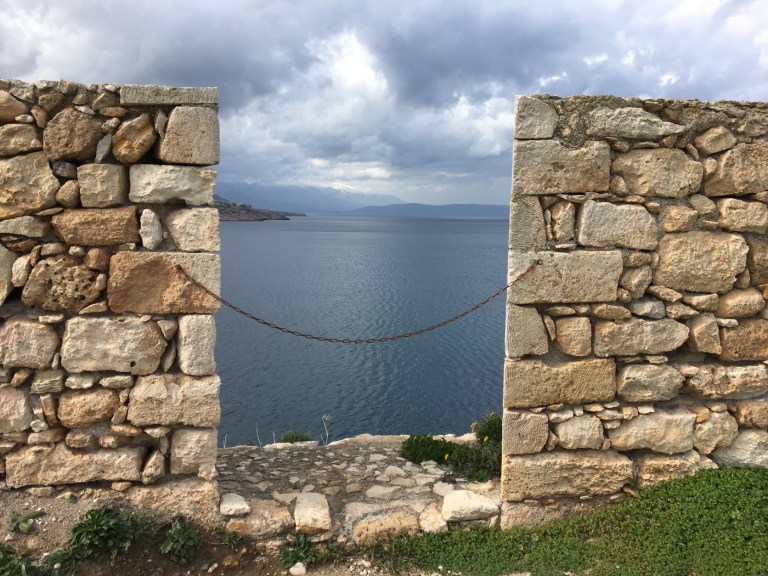
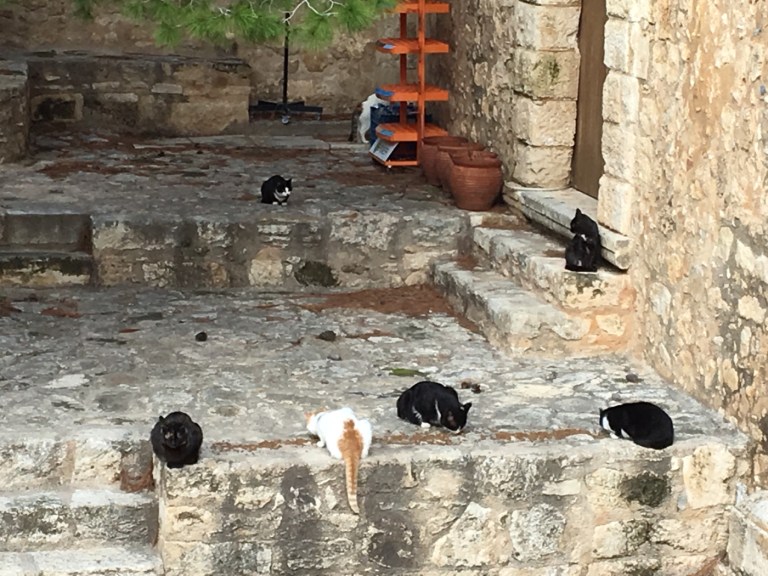 That’s pretty much it for Rethymno. I took a ton more photos at the fortezza both inside and out but my WiFi is weak here and it’s taking forever to upload photos.
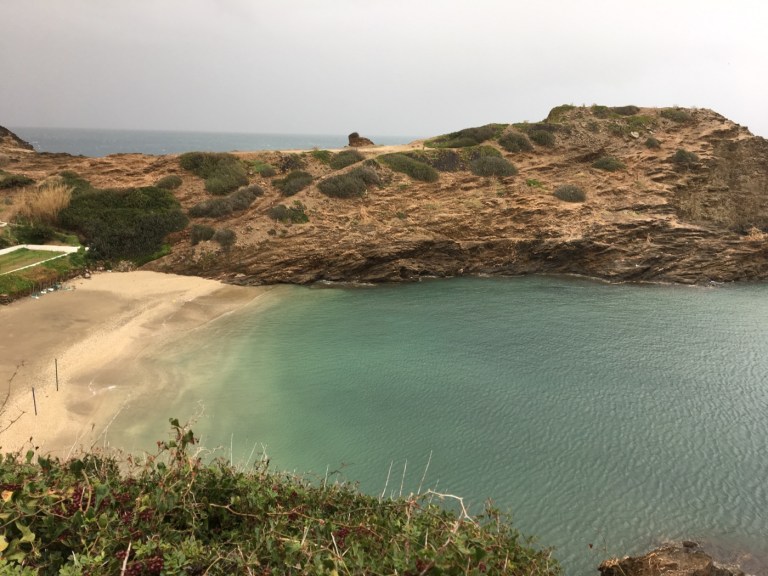
There are many prettier beaches outside the town but you’d need a car to get there. I drove, on a terribly rainy day, to the Bali beaches (I admit the name made me curious but I don’t think there’s any relationship to the Bali islands.) It was windy and rainy so I pretty much stayed in the car but I am a sucker for beautiful water.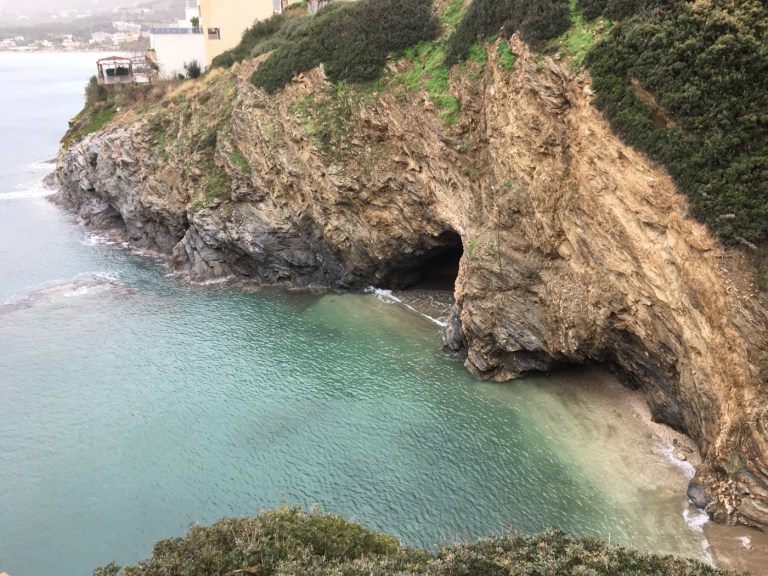
The amazing secluded beaches are on the south side of the island. But I’m getting afraid to go! One write up actually said if you were concerned at all about sharp drop offs and hairpin turns it might not be the thing for you to have to drive down there. Plus they said if you can’t get back before dark to think about staying out there because driving back in the dark on mountain passes that don’t always have a railing isn’t the best idea. Talk about scaring the pants off of this driver!!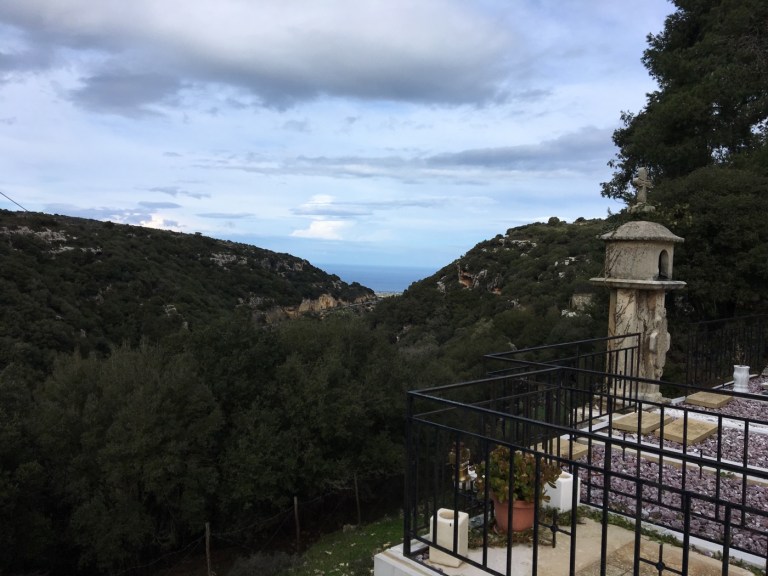
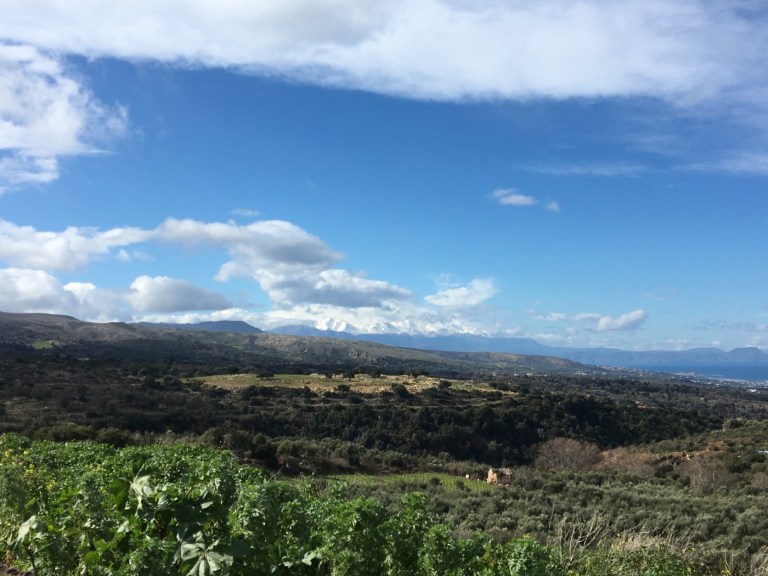
I’ve already been doing my fair share of gorge-edge driving. It seems to be a thing here. And while the gorges are gorgeous (tee hee), it is pretty unsettling. I can’t seem to capture the steep drop offs in any of my photos so you’ll have trust my word for it.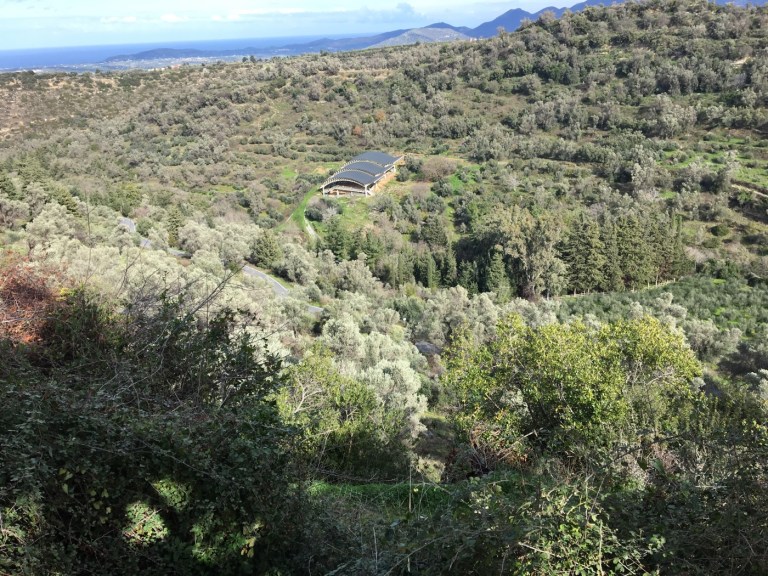
Right now there’s a lot of rain which leads to rock slides so there are quite a few piles of rocks off the side of the roads. Oh and I read (thankfully) a post on driving in Crete — the two way roads are often pretty wide with shoulders on both sides so the custom here is for the slow driver to drive on the shoulder in order to let the faster driver pass. Works pretty well I must say except that around a curve (and there are a LOT of them in the mountain passes), you really don’t want to drive on the shoulder in case there’s a stopped car around the corner that’s actually had an emergency. So it’s a bit of a driving game. And then there are those who apparently did not get the memo…. they drive slow and refuse to move to the side. I’ve gotten annoyed with them and I’m driving a Fiat Panda with no oomph.
It all makes for interesting driving. I’ve definitely been gripping the wheel a lot more and trying to reduce my peripheral vision!!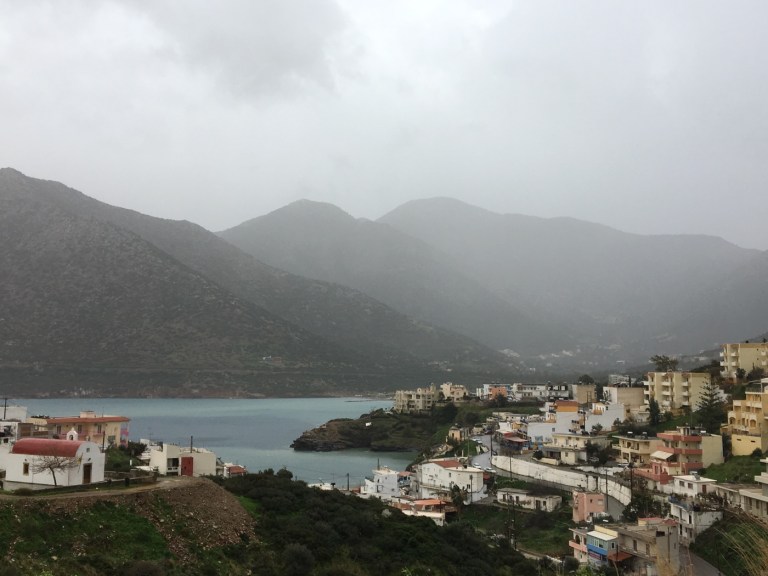
Anyway, since getting to Rethymno I’ve just taken a few drives around this area. One to the aforementioned Bali beaches (which has more really narrow and hilly roads though it all looked straight and normal on the map).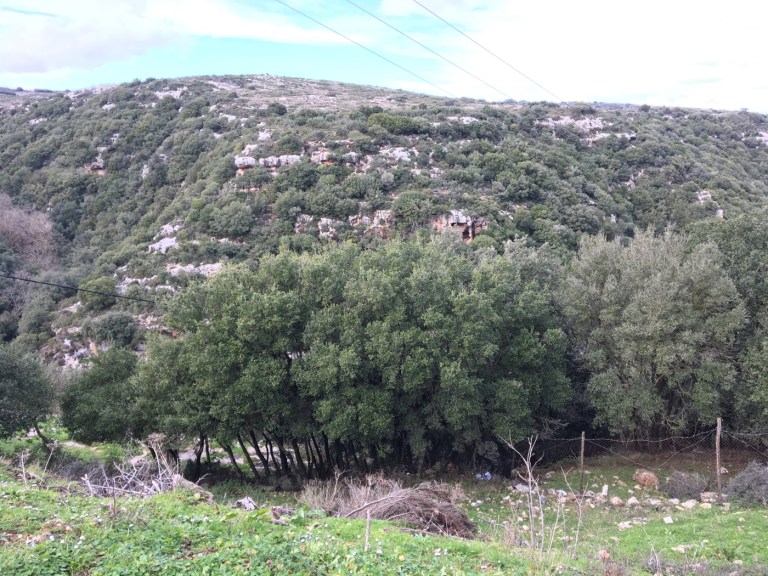
And the other around the edges of Crete’s largest mountain, Ida (aka Psiloritis). This was to go to the Arkadi Monastery. Of course it meant things were uphill and curvy everywhere. Sigh.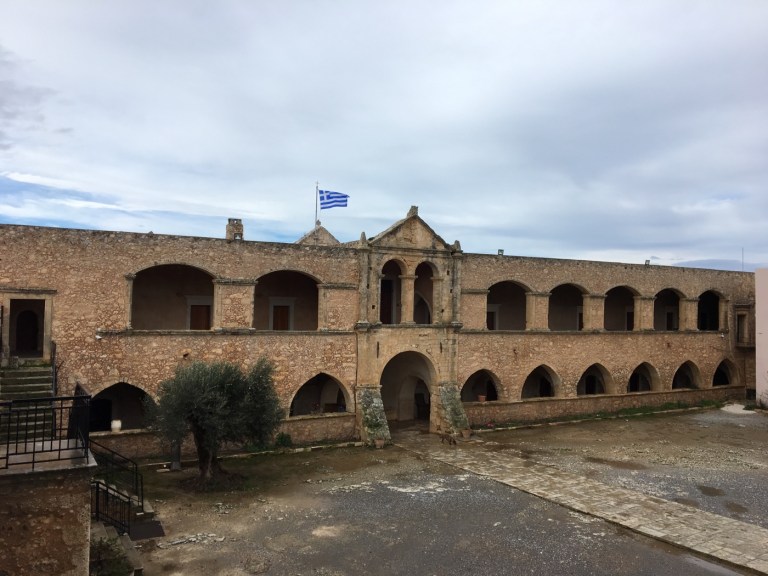
There are a lot of monasteries in Crete but this one is particularly famous. Not only is it 500m above sea level and a still operating monastic place, but it was also the site of a famous tragedy in 1866.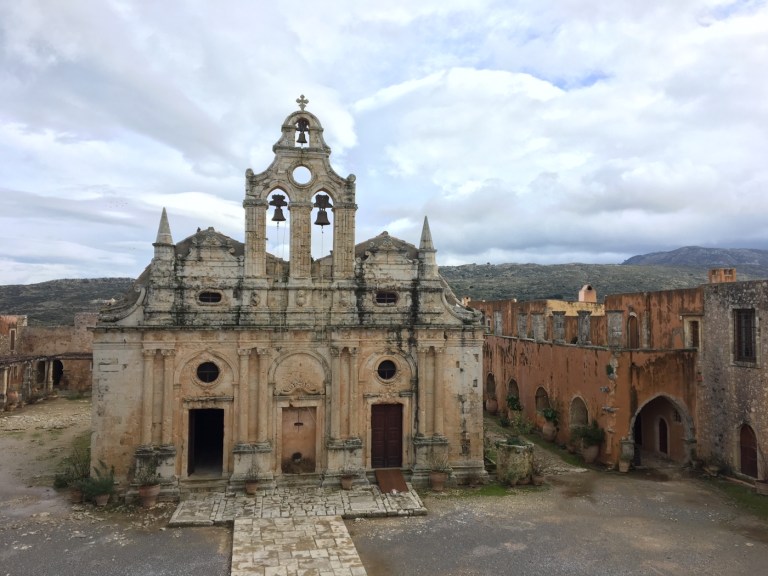
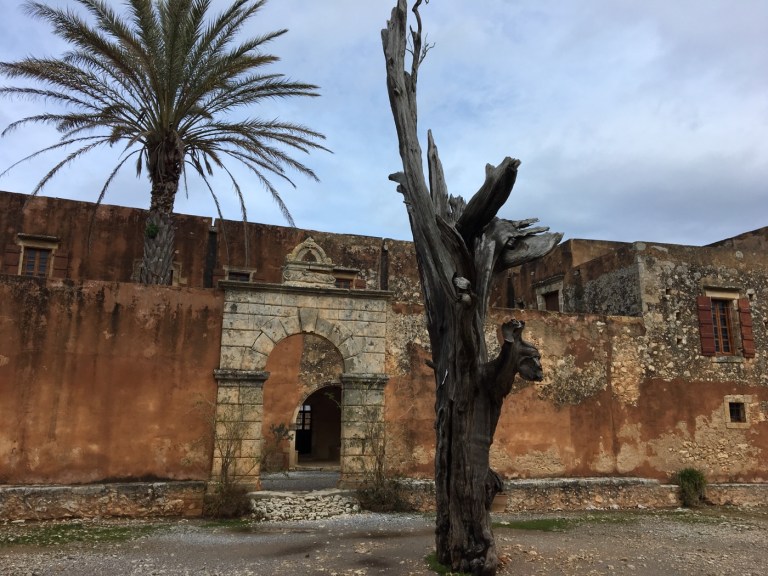
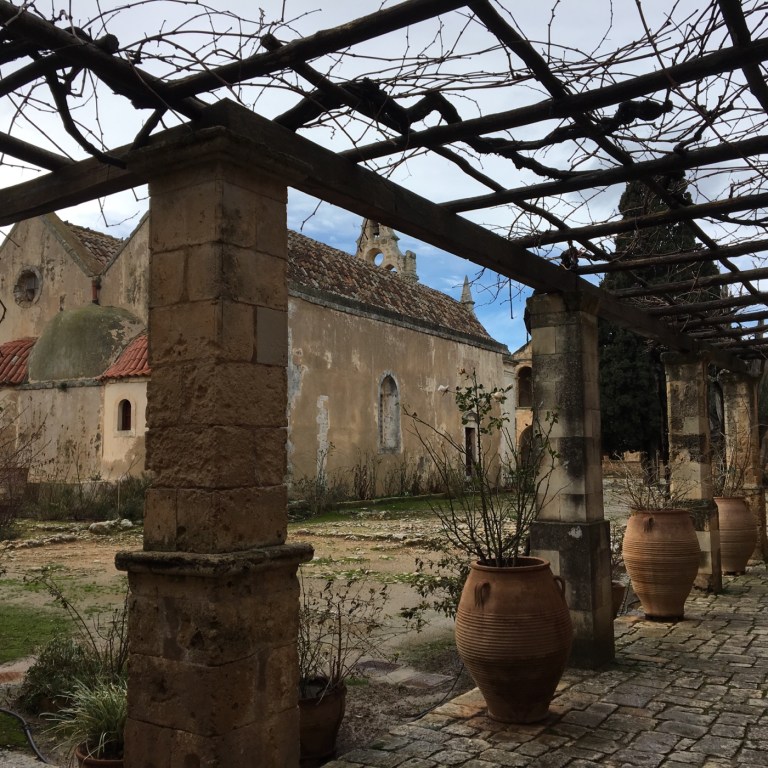
During the Cretan revolution against the Turks, the locals, mostly women and children since the men were off fighting, fled to the monastery for protection. The monasteries across the island were providing safe havens and were also the centers for the revolt. However 15,000 Turks had been dispatched to take over the island; they stormed and laid seige to the monastery. The Cretans were unable to hold out more than a few days until finally, hiding in the former wine cellar, which now housed their ammunition, the monks, women and children blew themselves up in order to spare themselves lives of slavery and also to take out as many Turks as they could on their way out.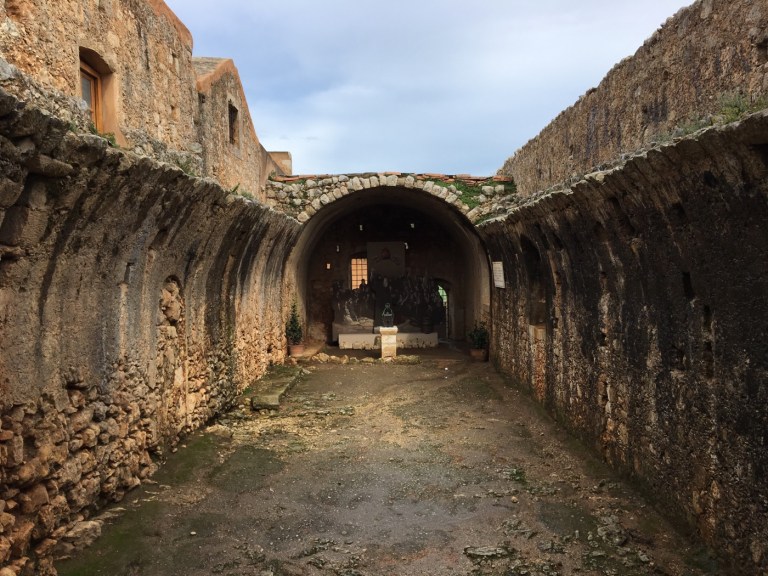
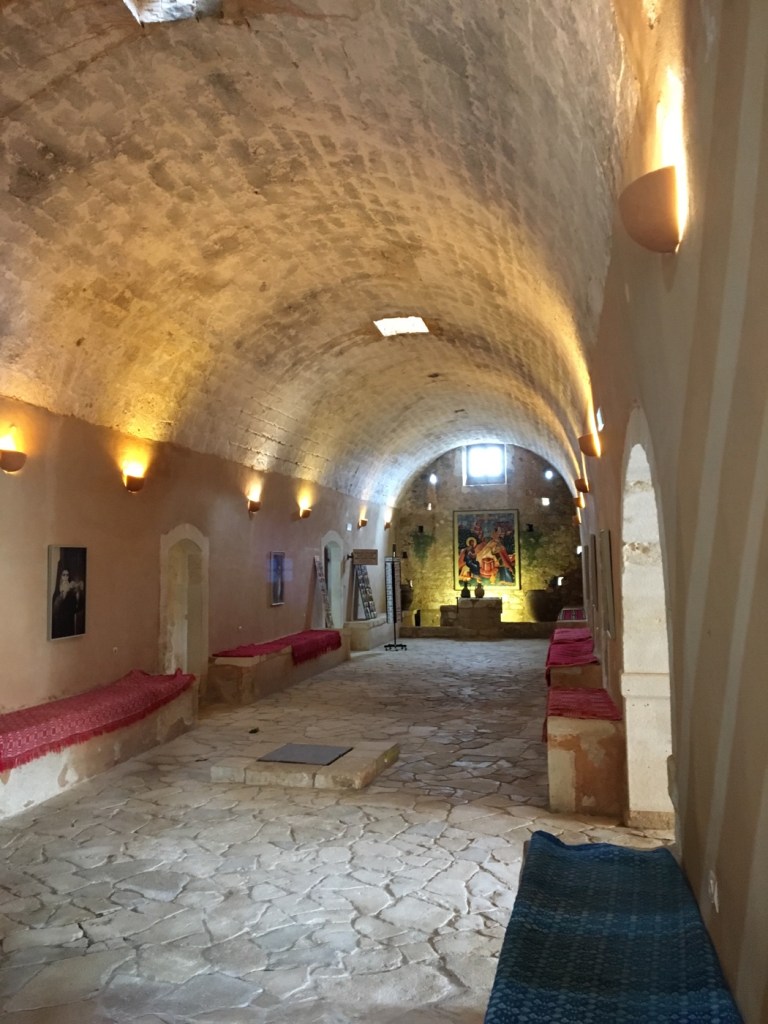
This is the wine cellar/powder magazine. The “Arkadi tragedy” or “holocaust” of 1886 made the news and mobilized national and international support of the Cretans (including by Victor Hugo, who wrote about it). Eventually they overthrew the Turks but it took many years. Today the monastery is a symbol of Crete and their struggles. There’s a museum and still a church.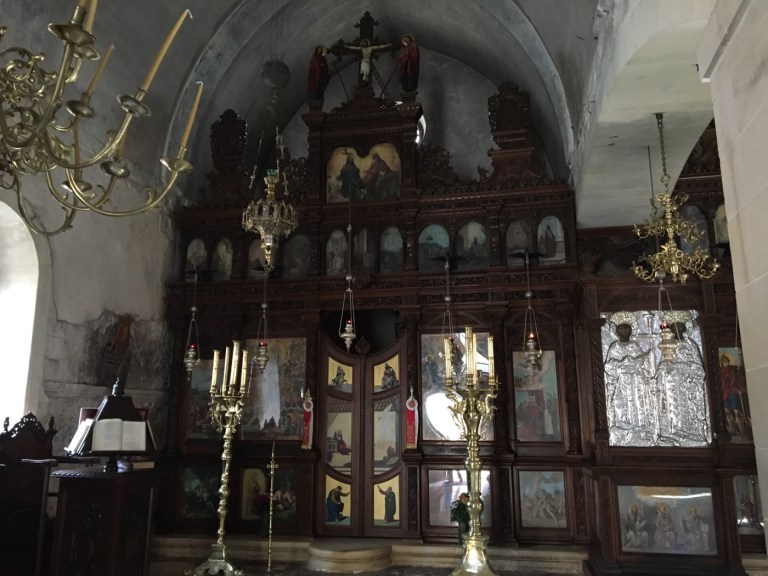
There’s a tree still standing that survived with a bullet hole (funnily identified on the tree with that big arrow). And an ossuary outside with bones of the fighters.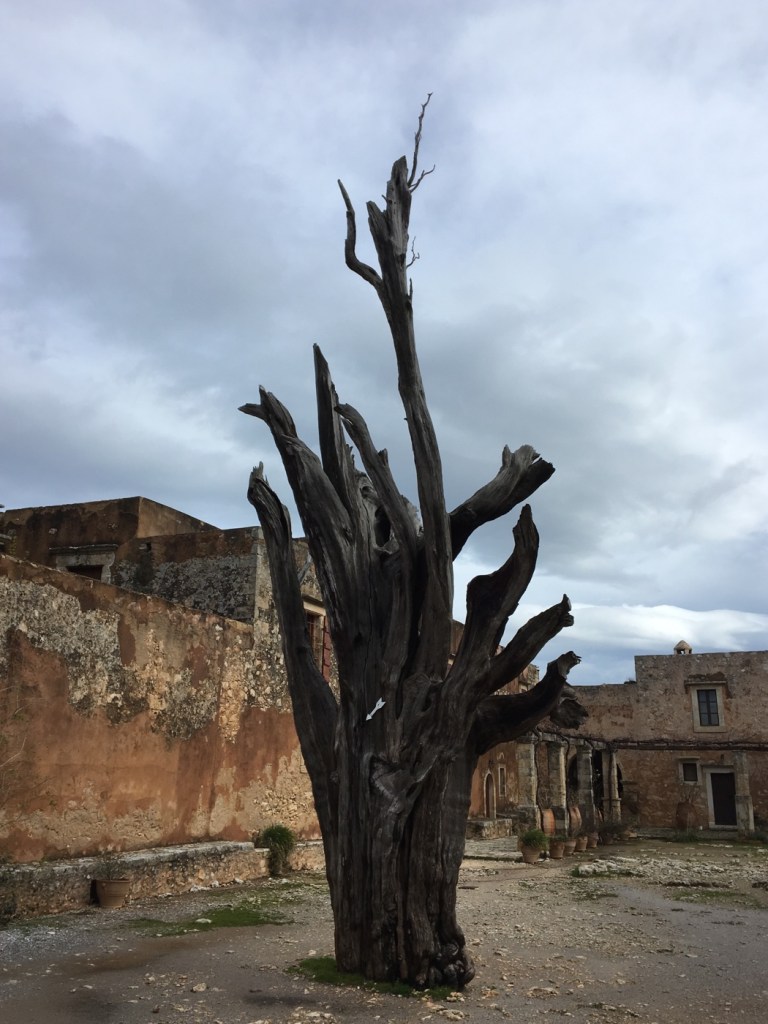
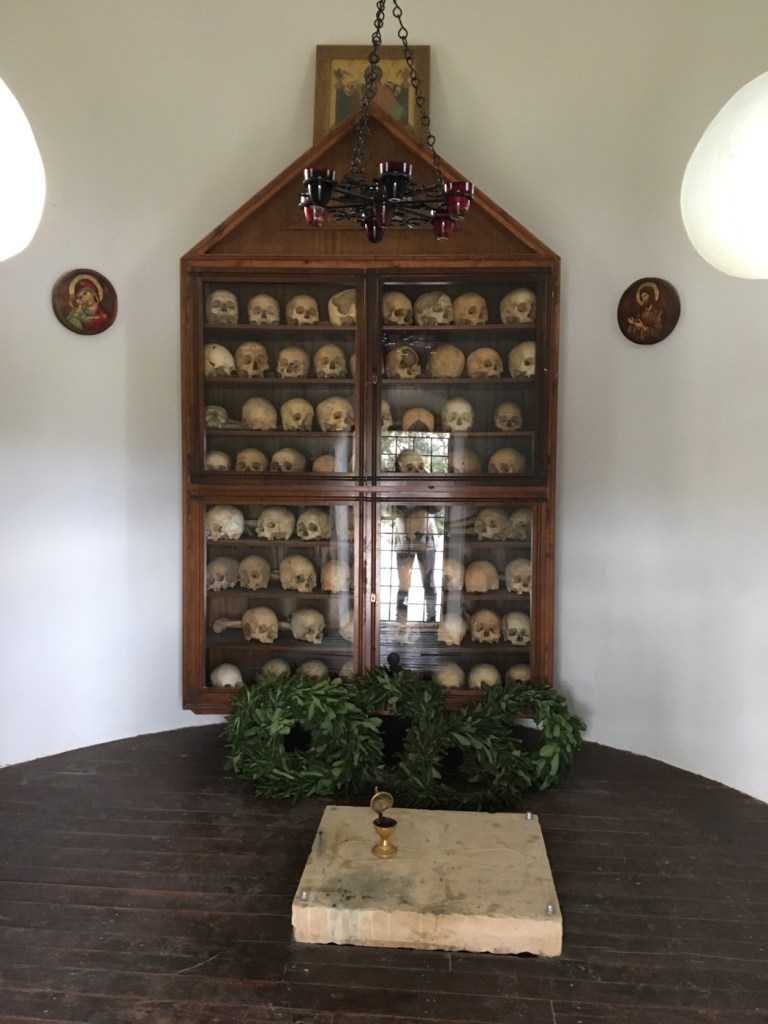
I found that creepy but the other stuff was moving. It’s in a beautiful area in the mountains. And very quiet. Felt mystical. Almost no one was there.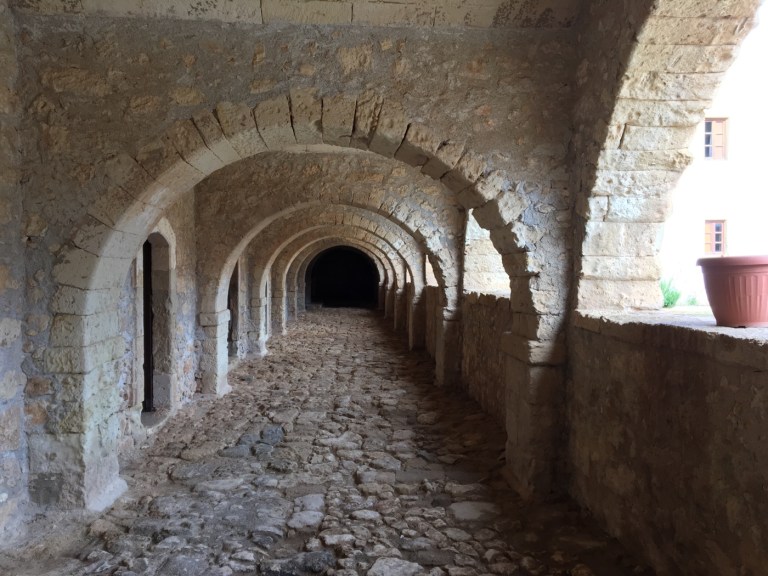
Once again no one was at the ticket desk but I left my €3 with a woman in the icon shop. I felt like they could use the donation. There were monks around but I guess they don’t handle the money?!
Afterwards I stopped at Ancient Eleutherna. It’s a huge archeological park that’s a former village with remains from 3000 BC though their primary ruins are from the 9th to 5th century BC range. Around Homer’s time.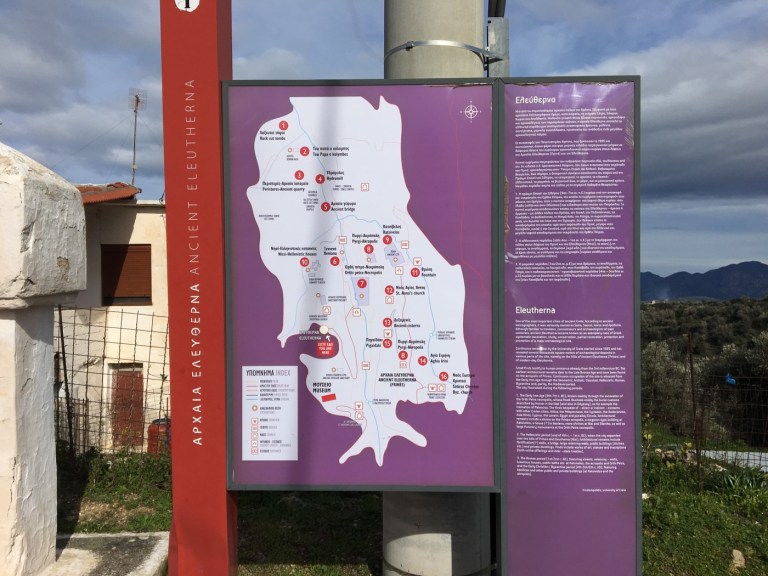
I tried to drive down and then walk to the various sites. But after some walking … down hills, through fields … when I hit water I stopped.
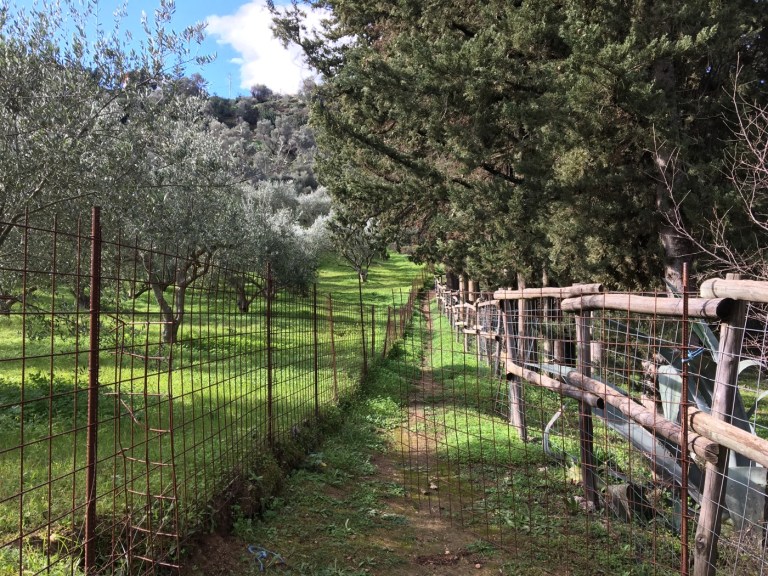
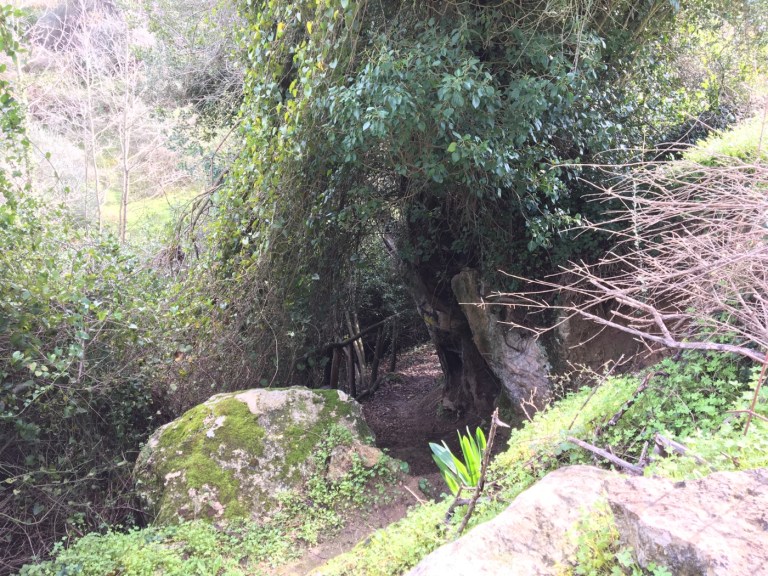
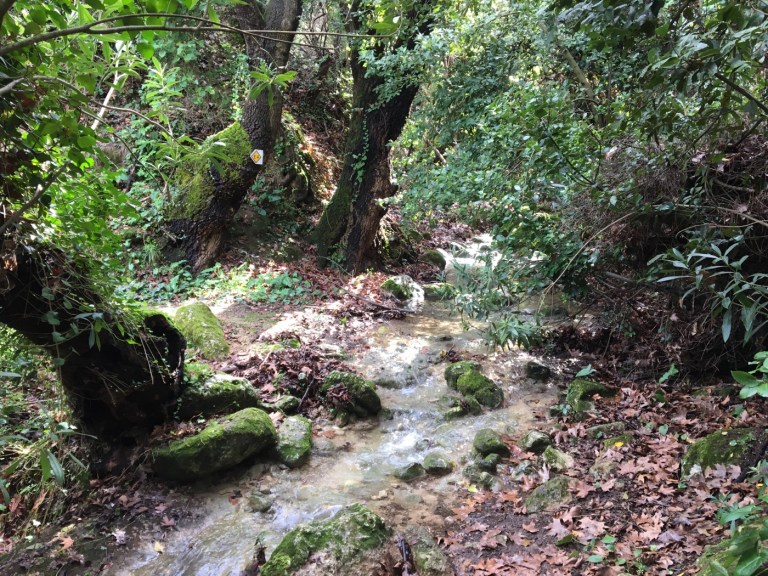 Good thing. Not sure how much longer I’d have had to walk to see that the gates to individual sites were closed. I’m sure it’s cool when it’s all open as I saw in their museum (which was open).
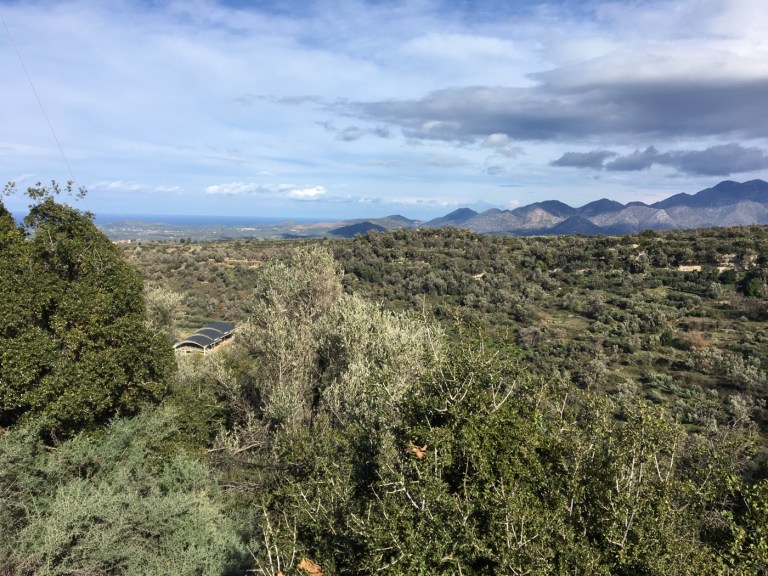 Their claim to fame is the big necropolis which validates Homer’s description of funeral pyres and human sacrifices (think when Achilles has Patroclus burned after his death in Troy). In the photo above there’s a covered area in the middle left. It’s where the Orthi Petra necropolis is being excavated. All around is the village area with the mill, cisterns, bridge, houses, etc… it’s quite a huge place and they will continue to find things.
Moving on, I headed to Margarites which is a quaint village that specializes in handmade pottery made in the traditional (and some modern) way. 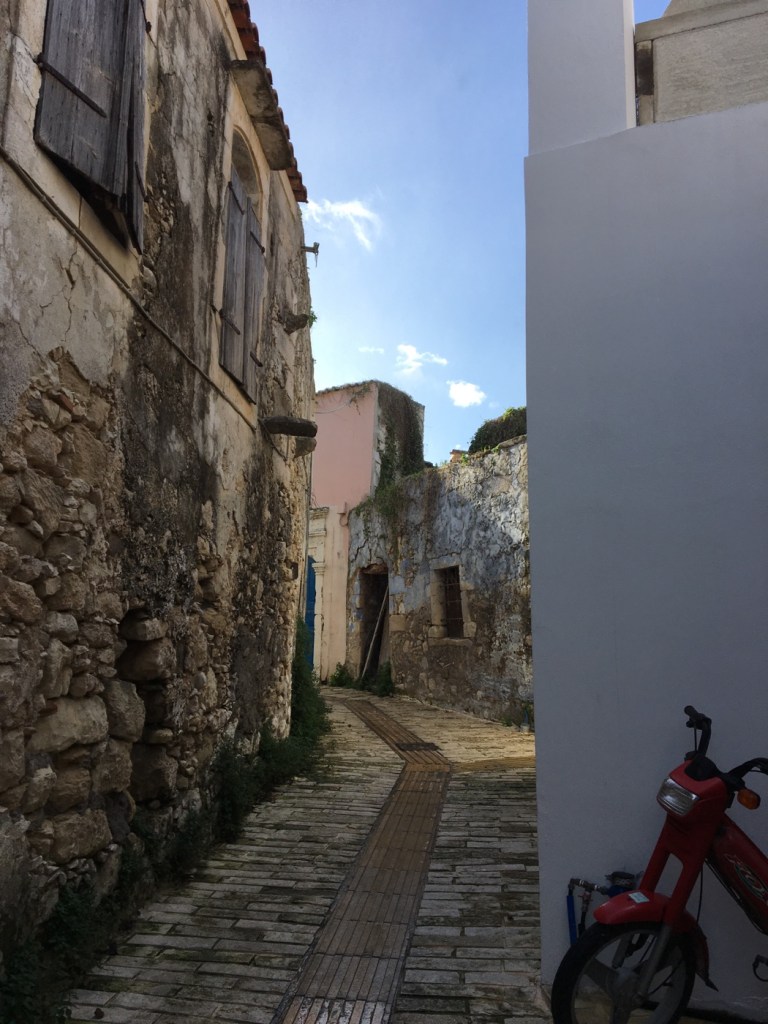
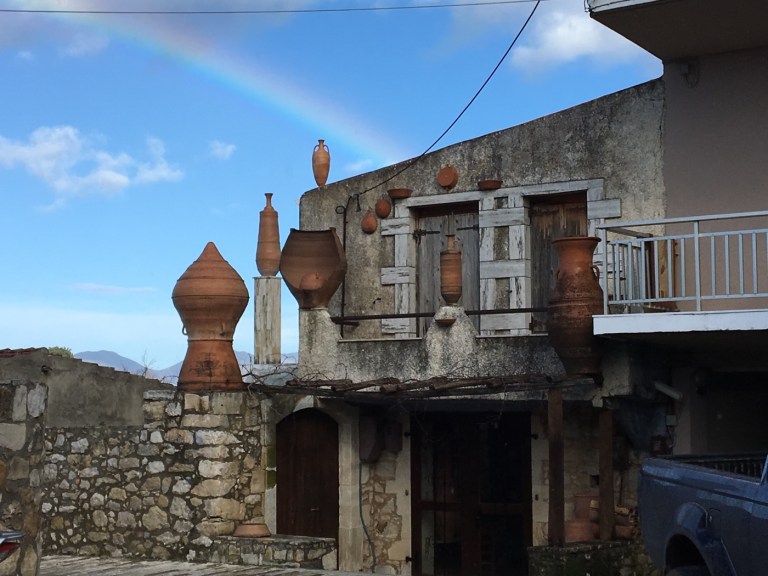
Of course most of the shops were closed. And it started raining. But stayed sunny sometimes and made amazing rainbows.
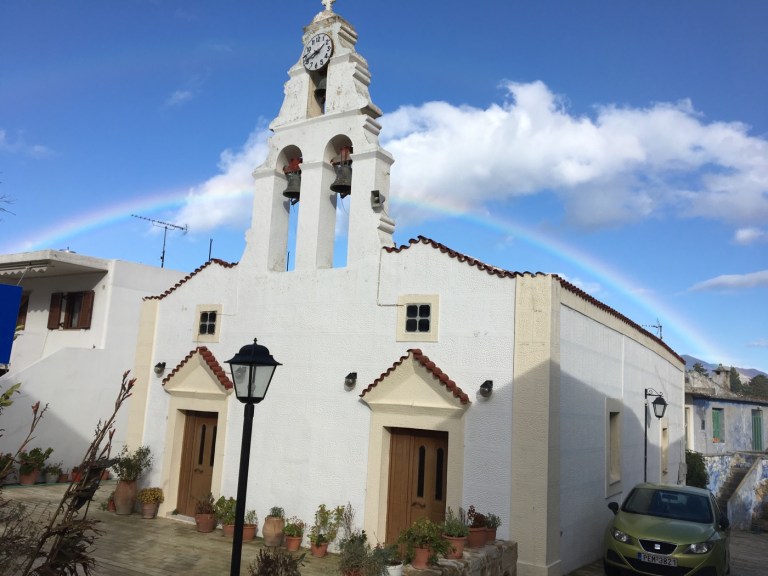
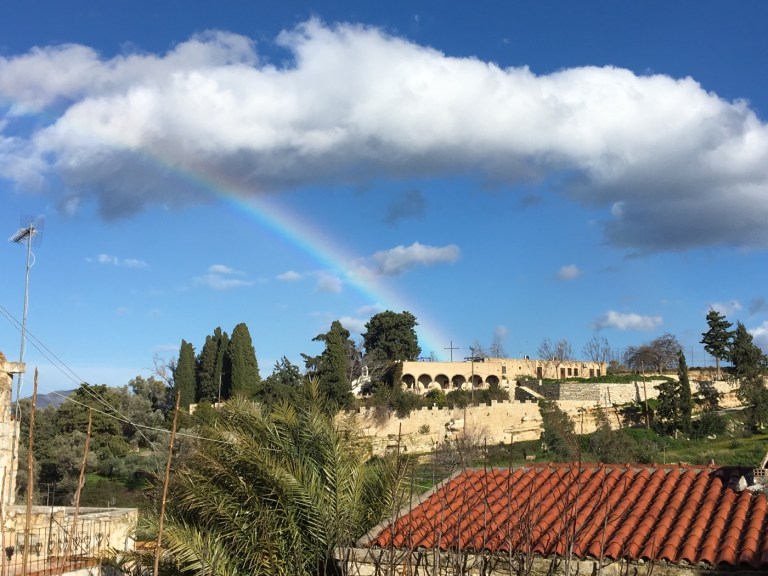
I walked up to the monastery at the end of one rainbow. It wasn’t as impressive as the Arkadi one but seemed the thing to do. 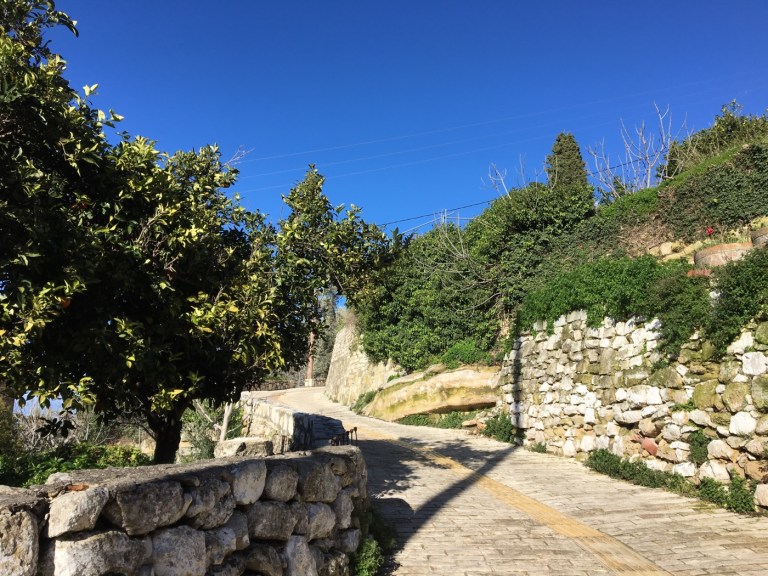
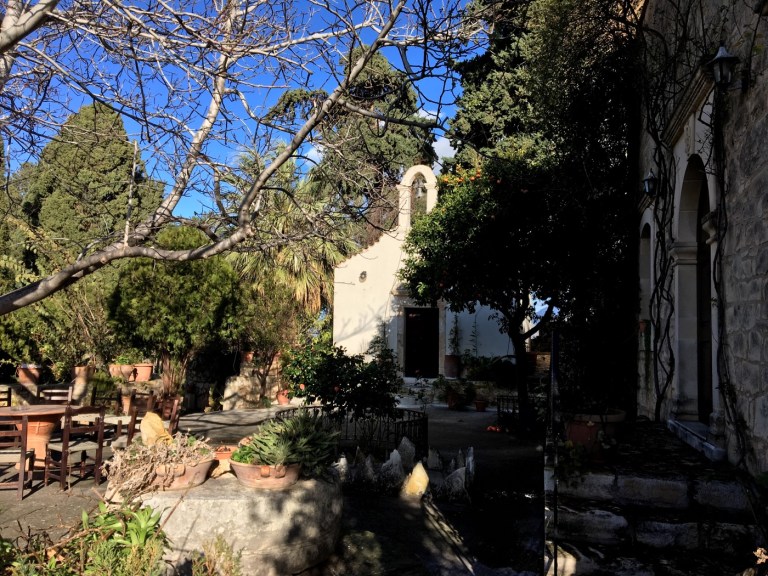
That was pretty much that day! I’ve had bad weather in Rethymno and am headed to Chania region next. The weather is supposed to clear so we’ll see how things go. But I did see even more rainbows on the beach near my hotel/Airbnb. 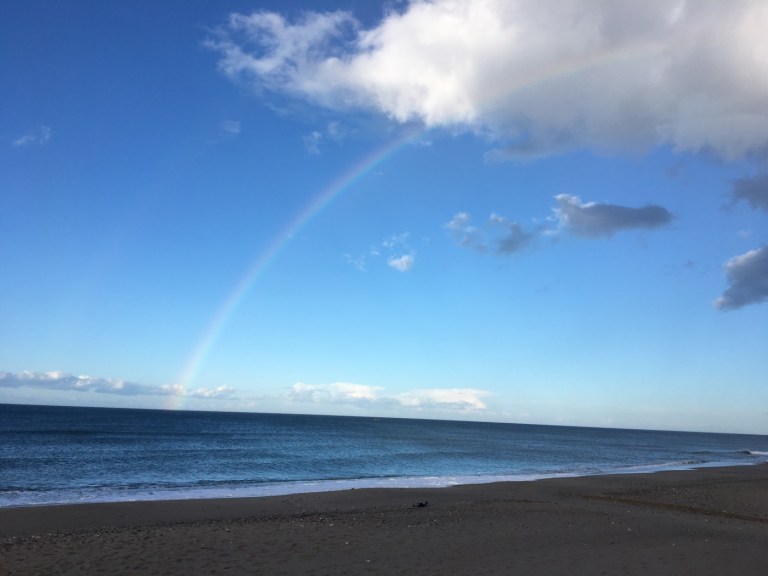
 Cynthia's Trip