When in Rome—or in my case, on Crete … there are actually two sites that lay claim to being the birthplace of Zeus. Mythology has it that he was hidden in a cave by his mother (and raised by a goat, who he awarded a magical horn — thus, cornucopia), to hide him from his child-eating father, Kronos.
Both the largest mountains on Crete have caves (apparently 3000 of Greece’s 8500 caves are on Crete) and both say theirs is the one. And both contained a lot of evidence that the caves were sacred to locals. They found many offerings and remains of altars and sacrifices within both sets of caves.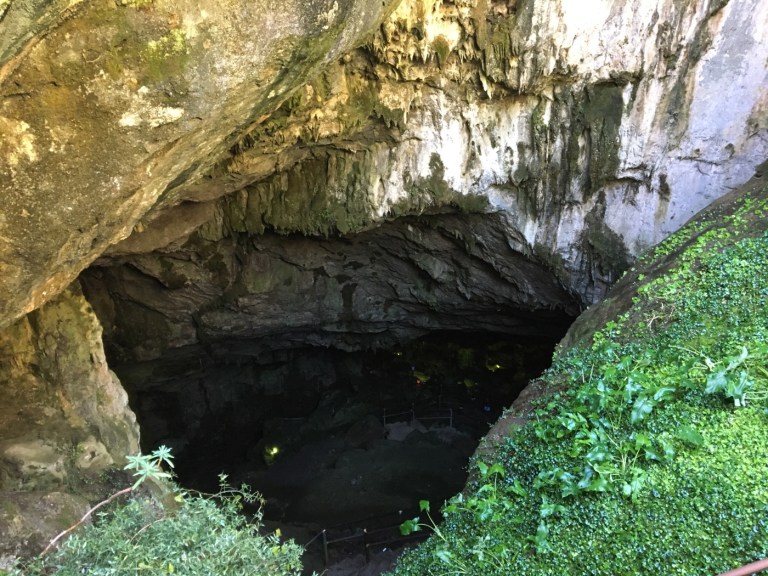
I went to the Psychro Cave, in the Lasithi Plateau (the other cave is on Mount Ida but I was told this is the “real” one), also known as Dikteon’s Cave. It’s confusing because everything here seems to have a ton of names/spellings, depending on how the Greek is translated. It was quite a drive with hairpin turns and scary drop offs and gorges below me. Definitely sweaty palms but I persevered. Then there was a bit of a rocky uphill walk to get to the cave from the parking lot (but all the internet guidebooks warn you about it and it wasn’t that bad). Thankfully I’m in ok shape after all these hills and stairs!
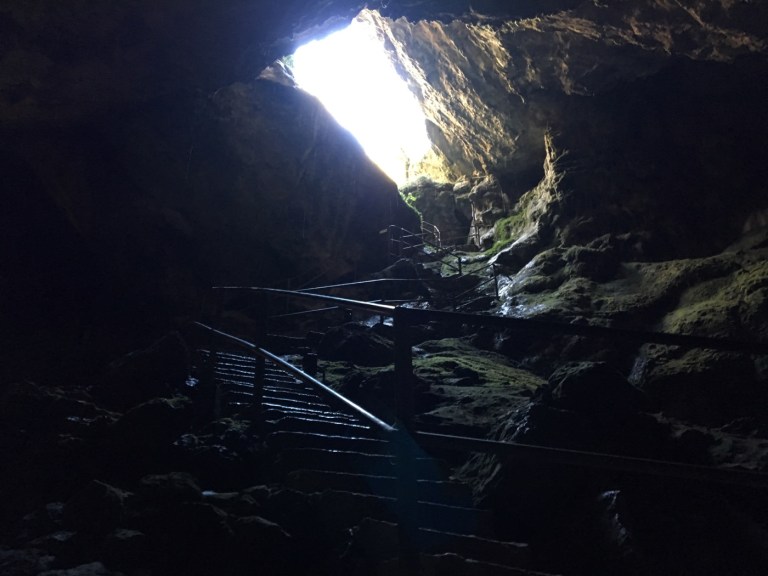
Once in the cave, there’s a lot of stairs down and of course back up. Honestly if you just want to try to see where Zeus was born it might not be worth all the effort. But the drive itself, while scary, showed some beautiful views.
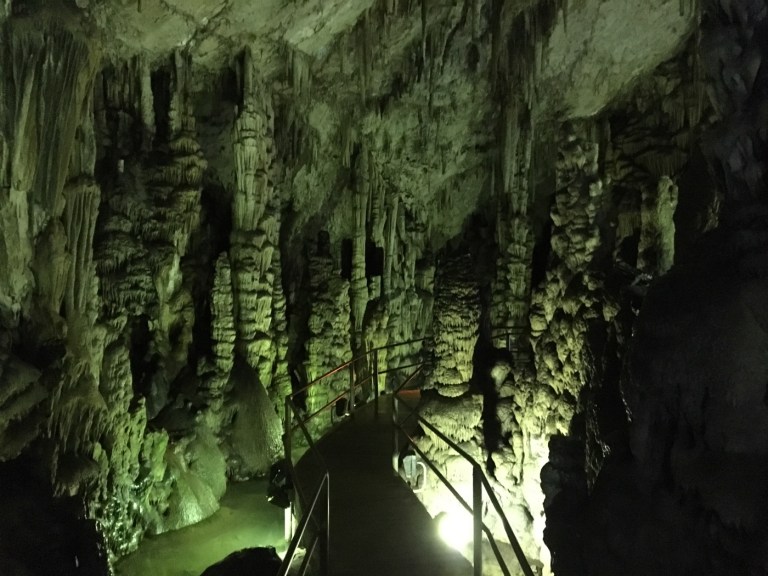
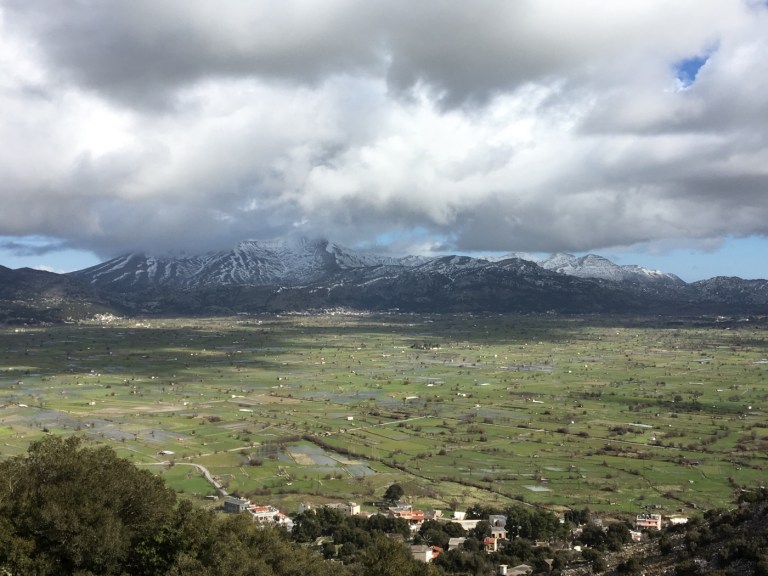
The plateau itself is lovely also. The exercise was good for me. And imagining a baby Greek god at the lake in the bottom of the cave was cool.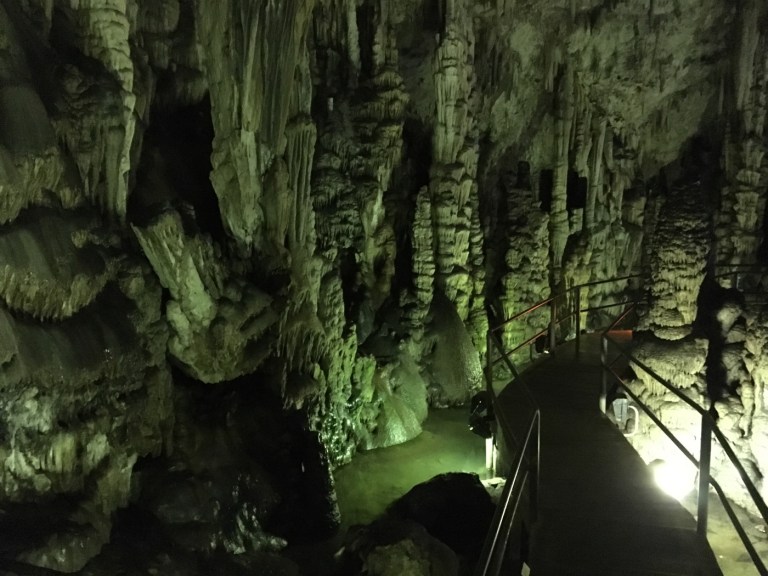
Not to mention a lot of stalagmites and stalactites, including one that is apparently called Zeus’ cloak but I’m honestly not sure which one it was!
After Zeus’ Cave, I headed to Ancient Gortys (or Gortyn or Gortyna), which no longer exists except in ruins. It was where the Romans had made their capital when they occupied Crete. It’s now outside the town of Agioi Deka.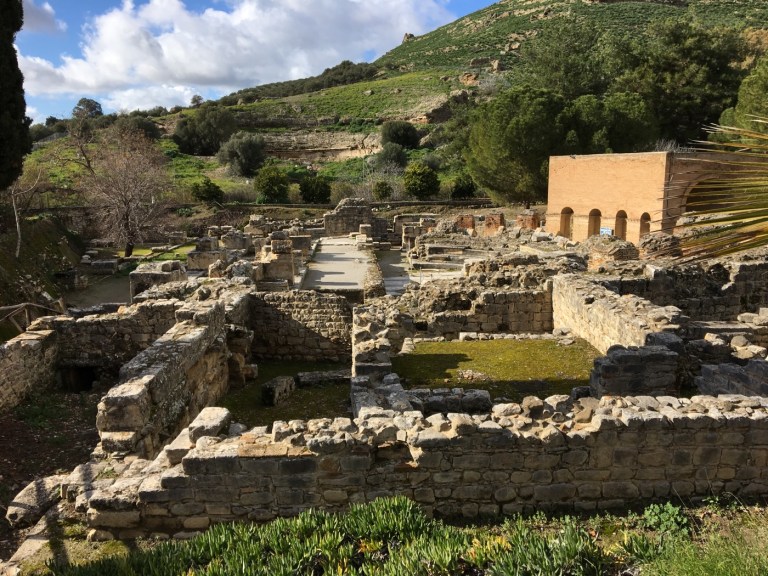
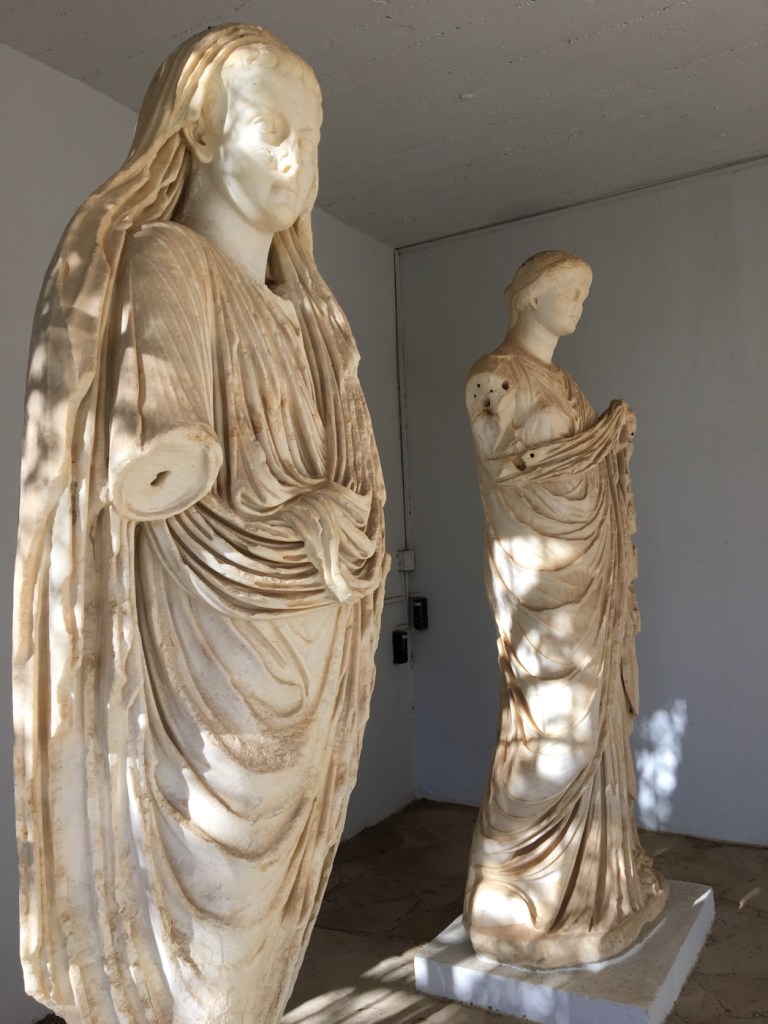
I of course got majorly turned around trying to find the actual ruins and lost 20 precious minutes driving through towns until I saw a huge parking lot in the middle of olive groves. A definite clue-in! Sadly they were closing in 30 minutes (again things close early in off season. It was only 2:30). But I literally ran through a bunch of Greek/Roman ruins.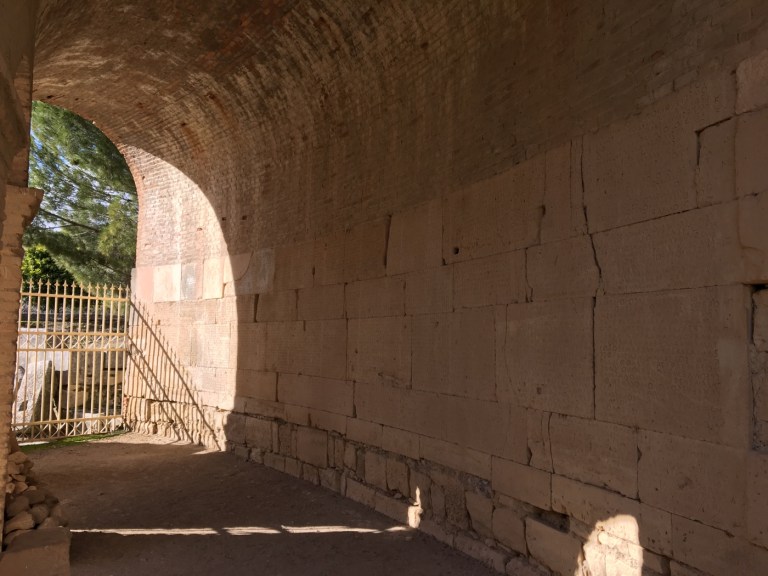
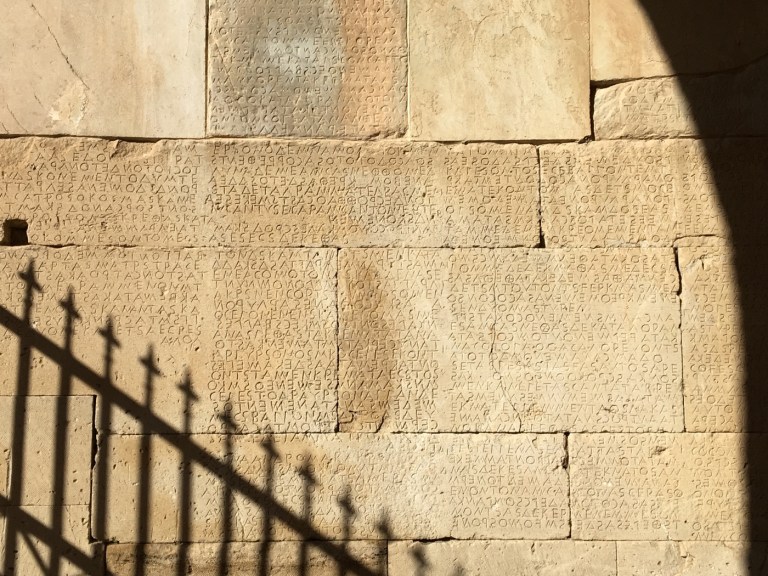
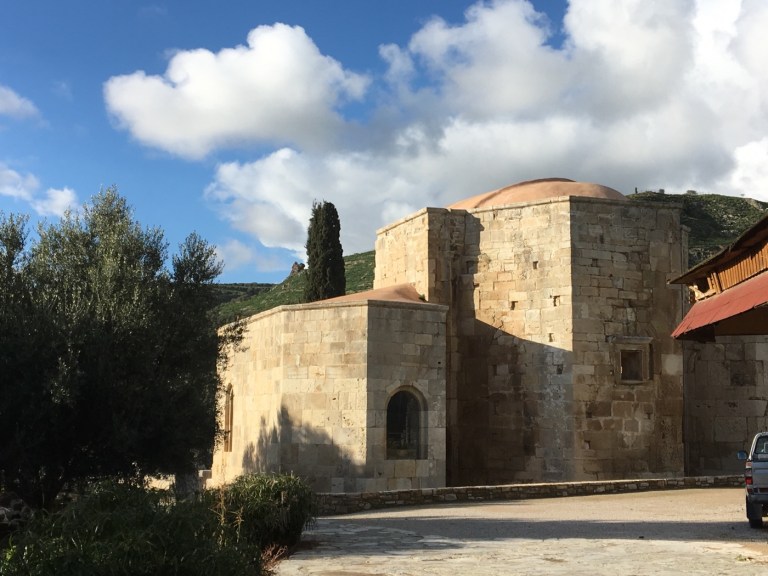
And a really cool building that houses the Law Code of Gortys. It’s hard to see in the photos but there’s Greek writing all along the inside walls. They document the laws of the area from the 1st century BC. Wow.
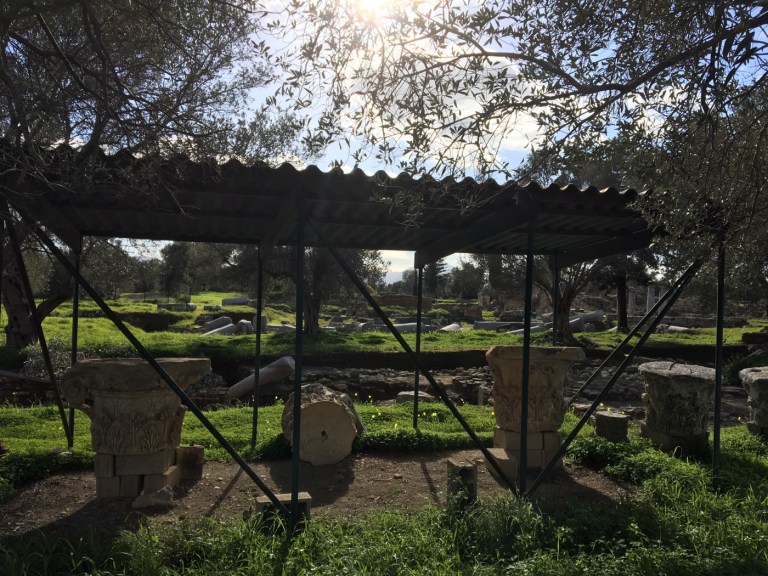
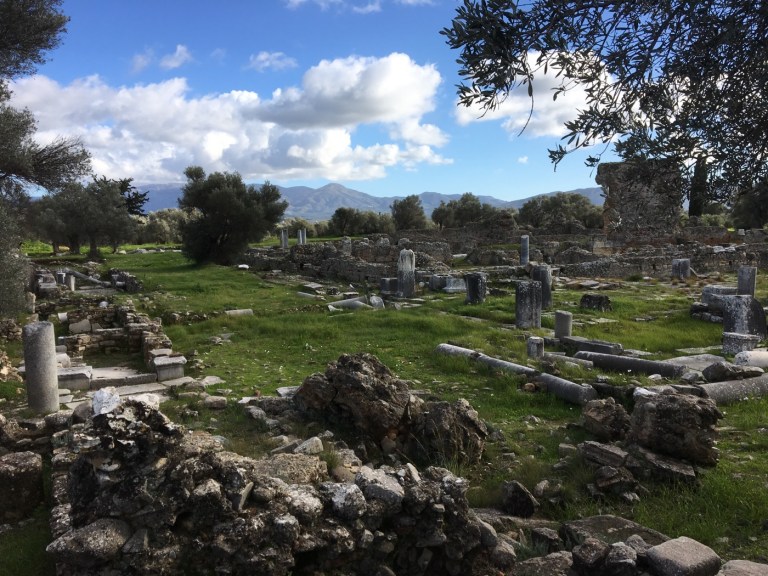
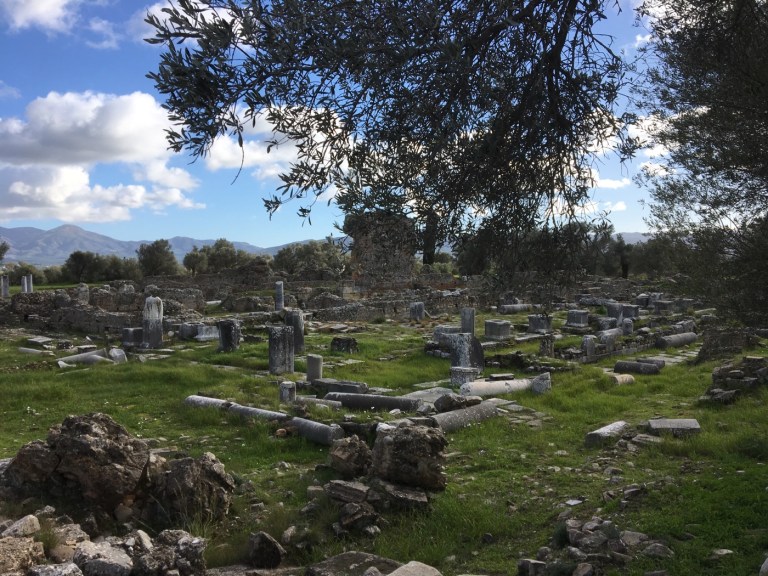
I then ran across the street to find the praetorium but now I know I needn’t have rushed. Turns out those are fenced off even though I’d bought my ticket to the archeological site. I think, this time of year anyway, it’s all open access behind the fencing. And it’s all literally in olive groves.
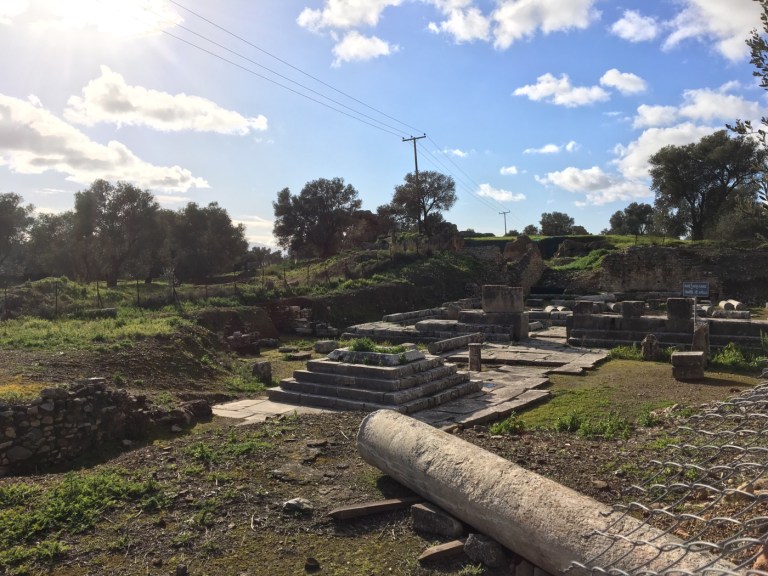
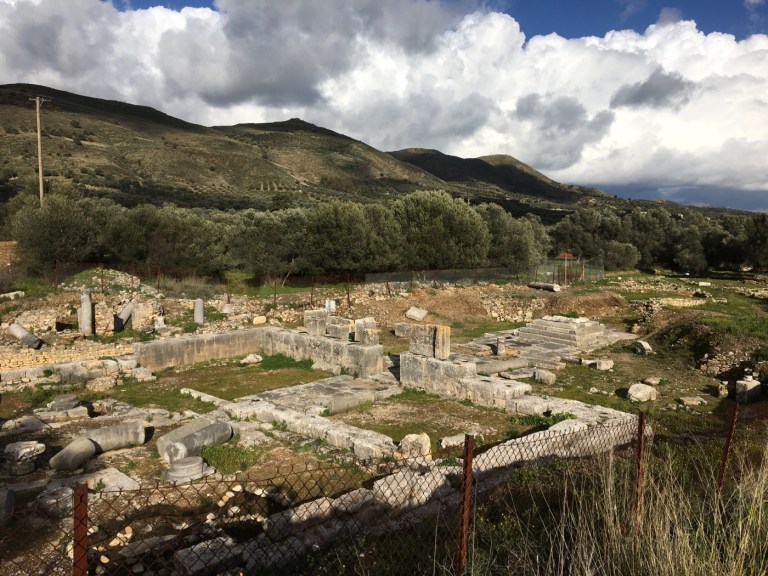
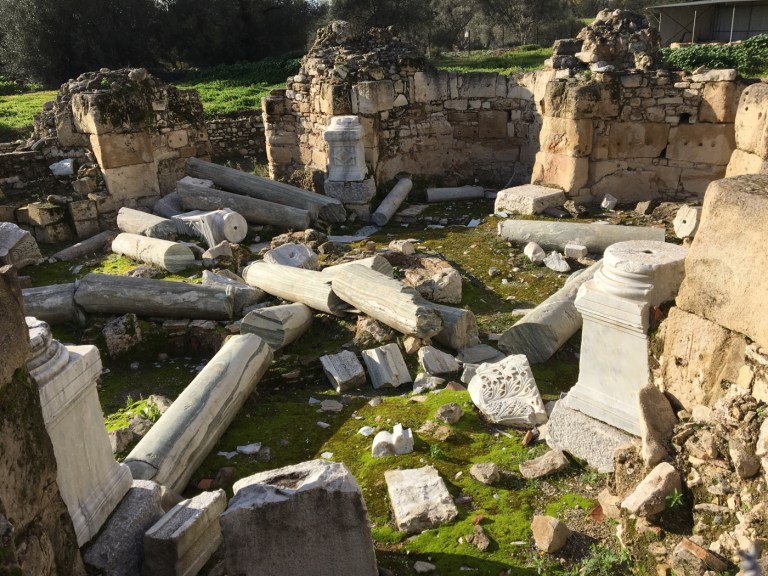
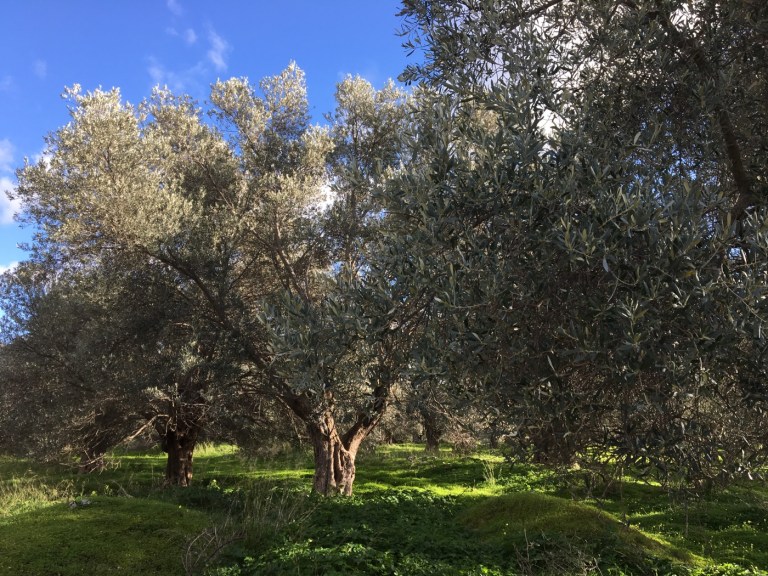
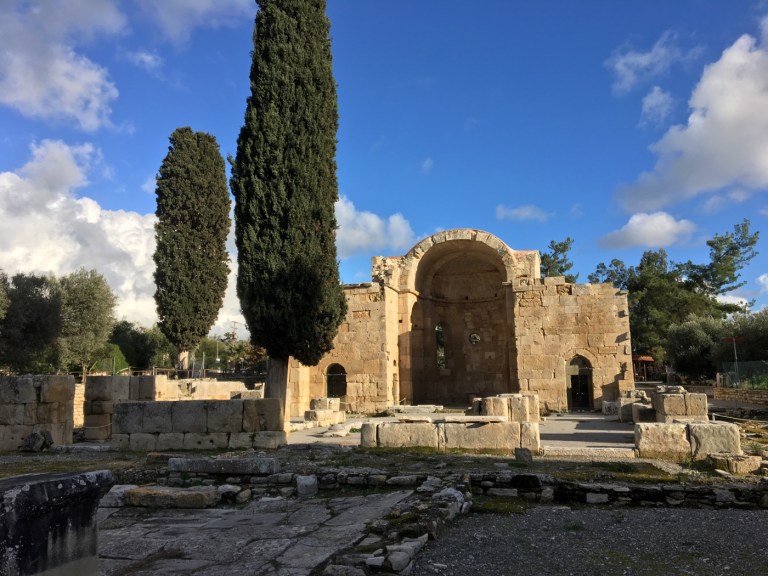
A little surreal. But there’s also a temple to Apollo. And a bombed out church to St Titus (obviously post Roman!).
I had a great Airbnb experience staying with a family in a tiny village afterwards. I had views of the mountains out my balcony window and could actually see the stars. I paid a few extra euros and had a great dinner with the family (good thing cause there weren’t any restaurants in that town – and nothing but olive groves all around). I left the place with olive oil that the father made (I think — the mother didn’t speak much English and I mostly got that he works in the olive groves though I doubt he actually presses the oil? Anyway it’s their fresh oil from local trees).
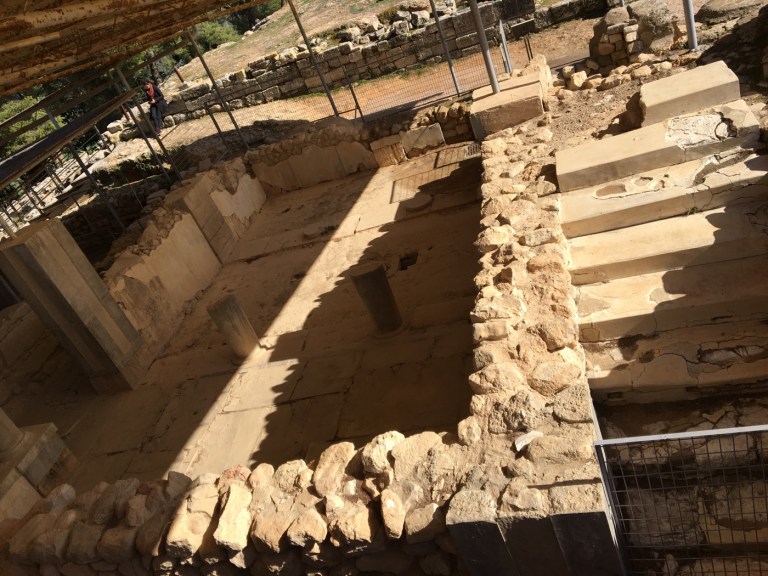
The next day I was back to Minoan ruins. This time to Phaistos (or Festos or Phaestos, among other spellings). Legends have it this was the smaller palace of King Minos’ younger brother, Radamanthys.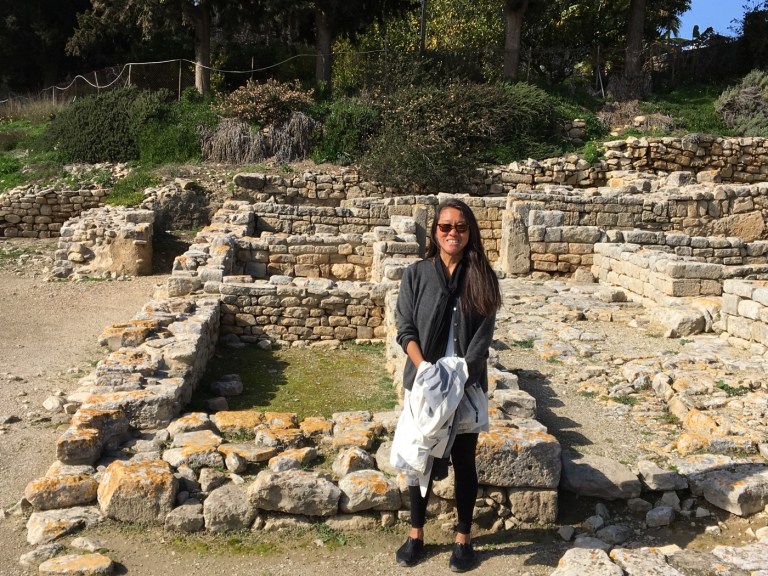
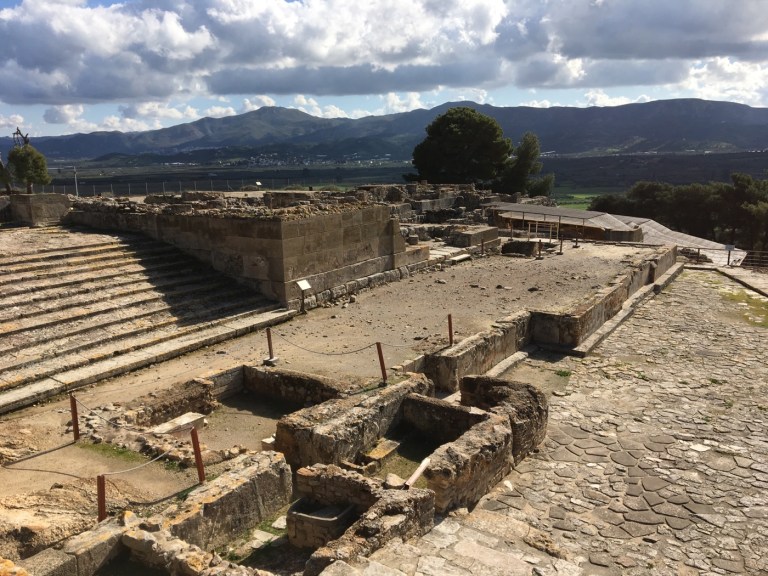
It’s built into a hill overlooking plains. It’s actually more complete than Knossos but wasn’t rebuilt so although it’s more pure, there aren’t the helpful but fake structures to help you visualize. And it’s actually in the general location identified by Homer –so he was really creating poetry out of local true stories, not creating myths!!
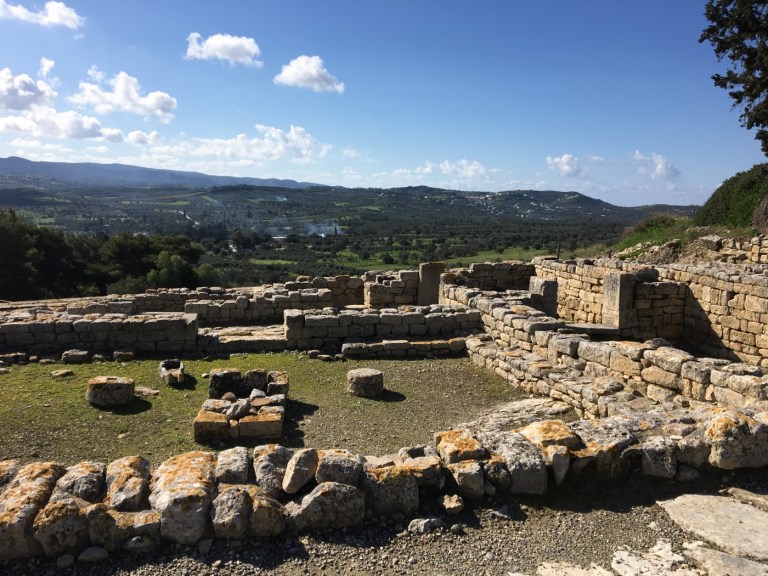
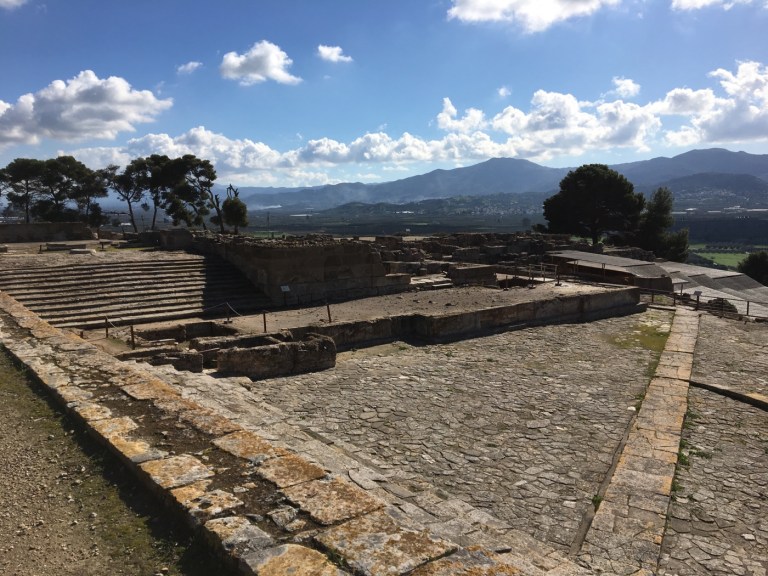
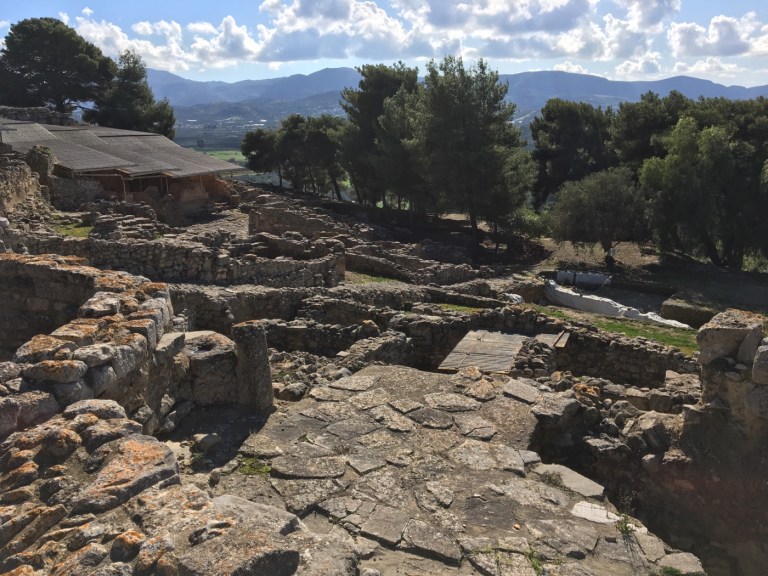
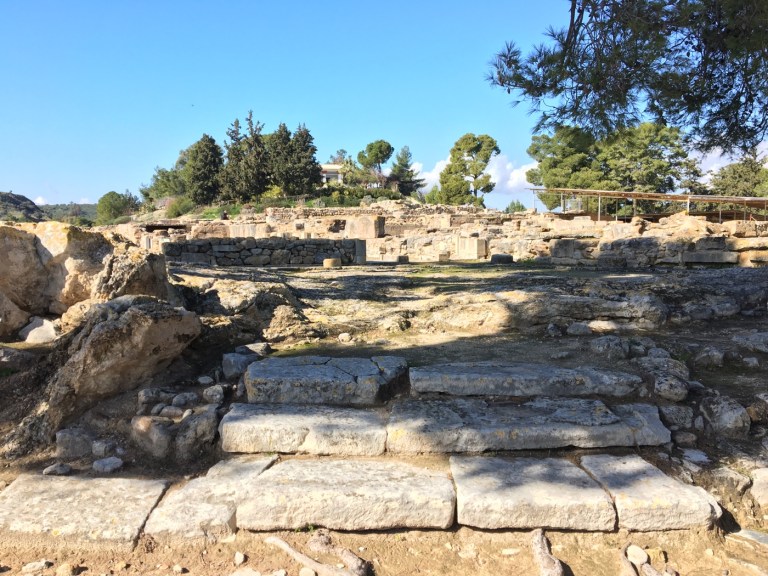
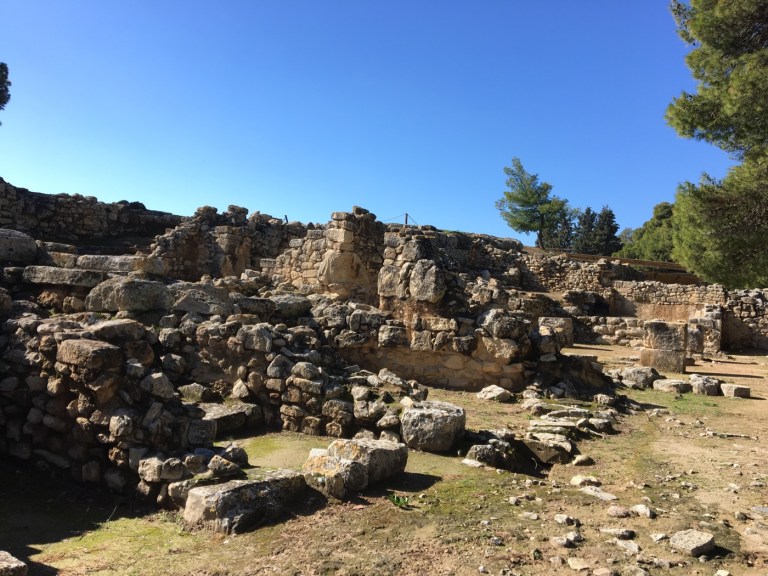
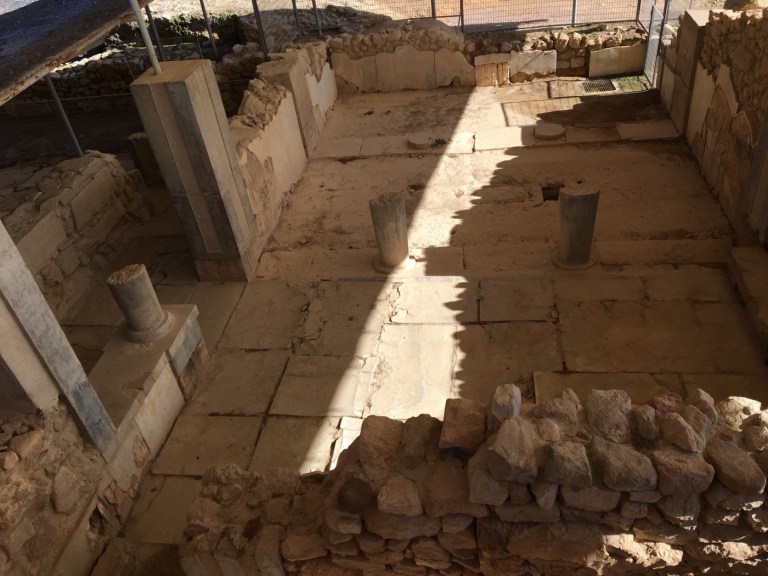
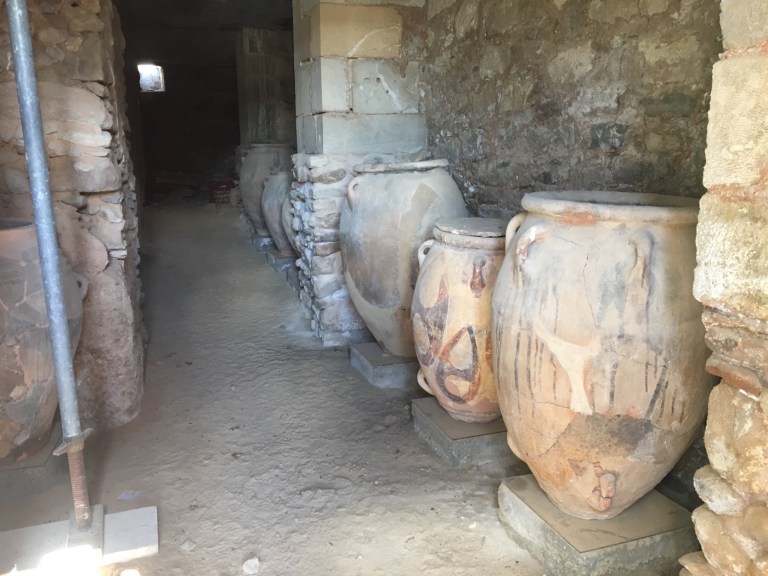
I liked it a lot. But I was glad I had already been to both the archeological museum and had a guided tour at Knossos. It seemed this palace was built in almost the exact same way — with central court, royal apartments, theatre, magazines, vaults and craftspeople rooms. So I could recognize stuff. The famous Phaistos disc was found there.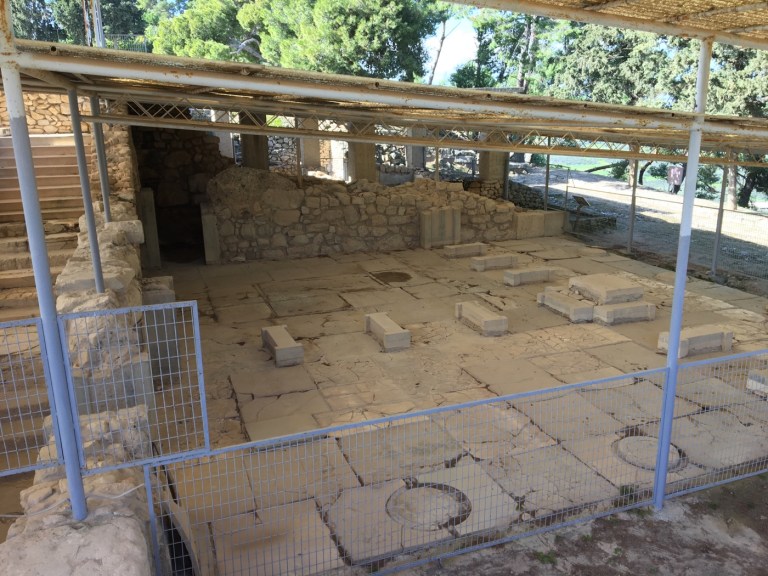
It’s still not been translated although I heard they’re getting close (of course it’s in the Heraklion museum). 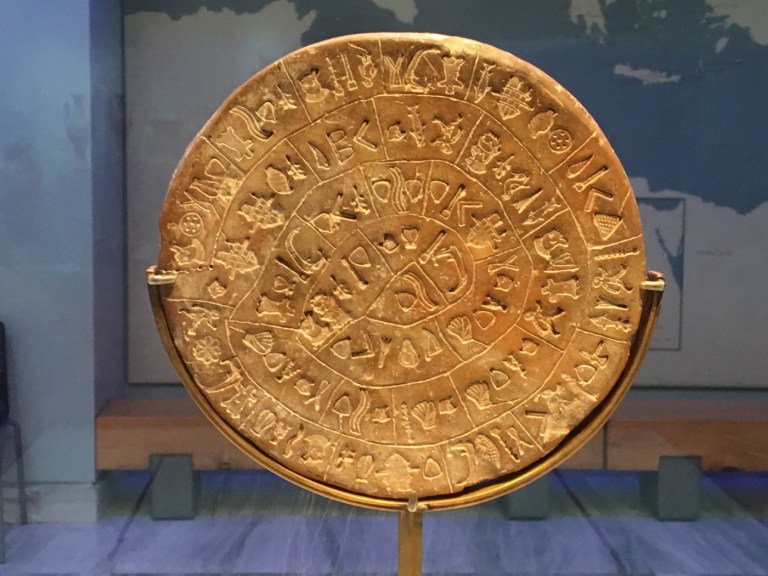
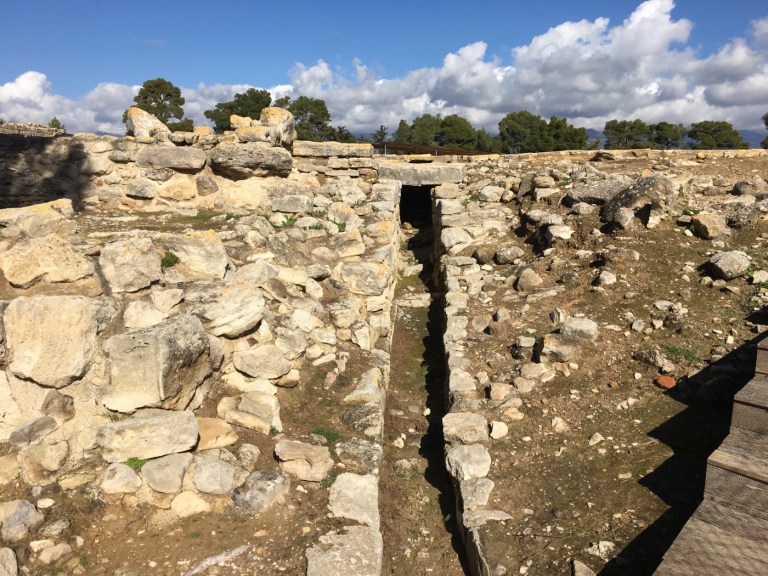
It also had two palaces built on top of each other after a major disaster. And was oriented in the same way. And had channels for running water, etc.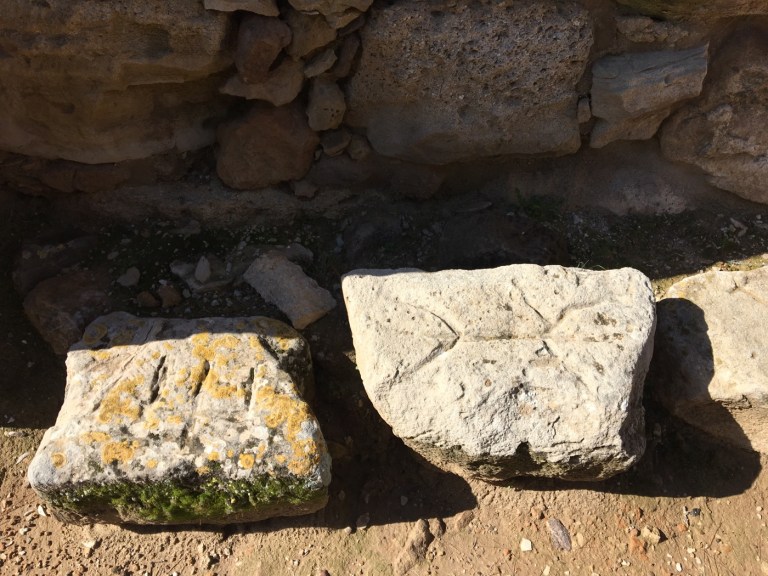
After Phaistos I drove out to Matala, famous for its man-made caves. Originally thought to have been carved in Neolithic times, the Romans repurposed them as crypts (some speculate for a mass disease like leprosy because so many were buried contemporaneously). But they’re really famous for having been a hippie hangout in the late 60s/early 70s.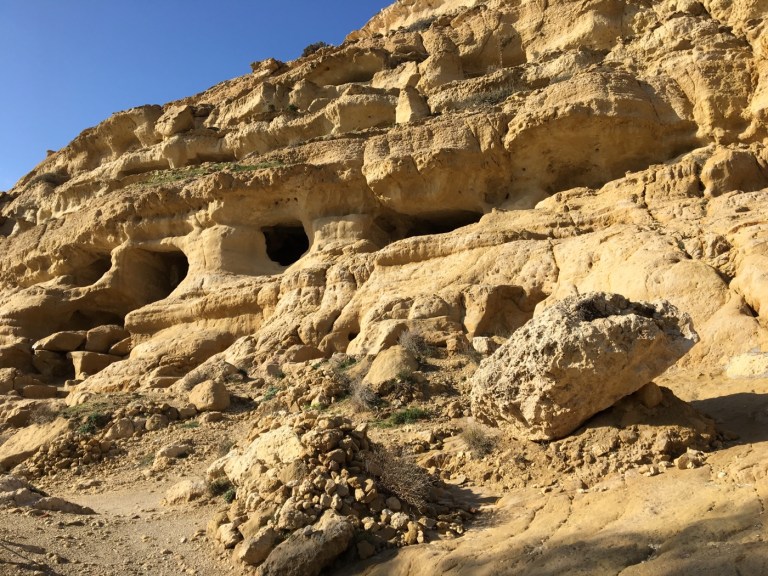
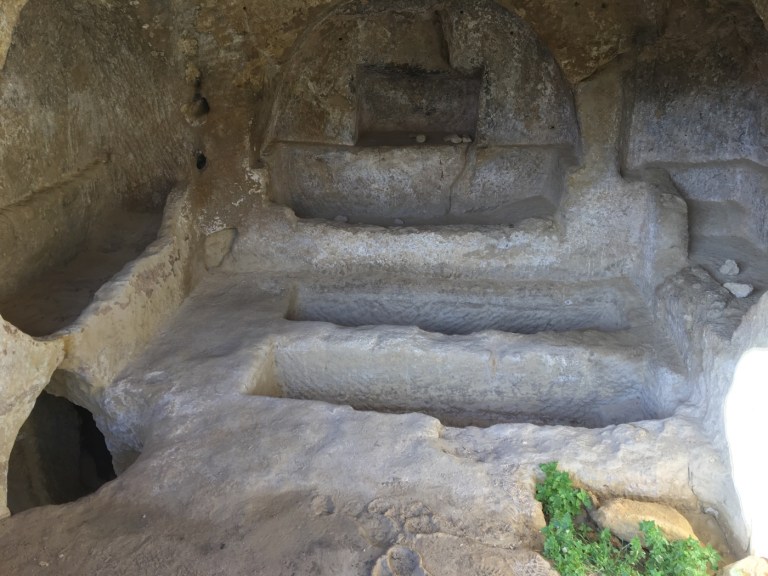
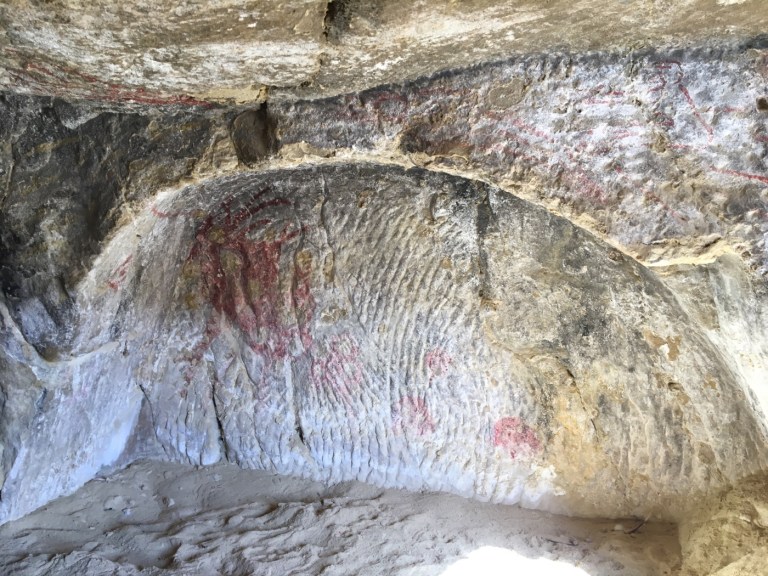
Joni Mitchell settled there after her break up with Graham Nash. She hooked up with an American camping in the caves and hung with him until she missed her comforts of home. Or so the story goes! Anyway the hippies hung out in basically free space in a small fishing town that hadn’t really seen tourists before.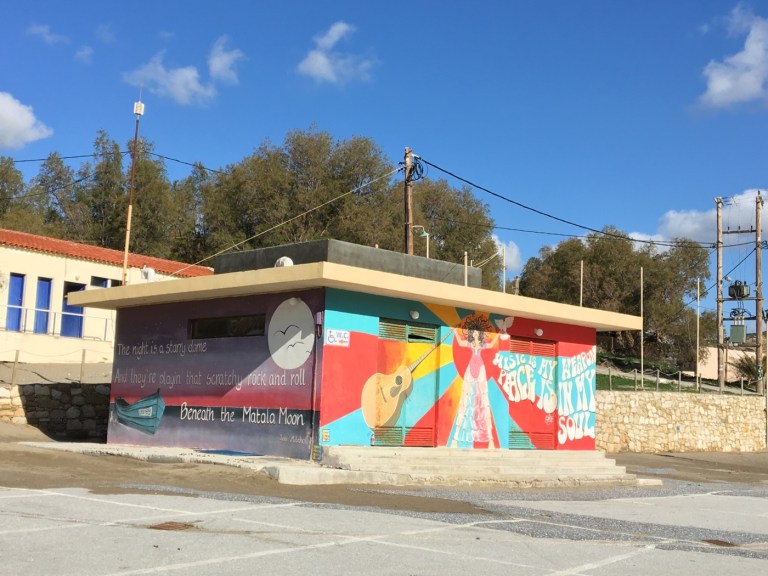
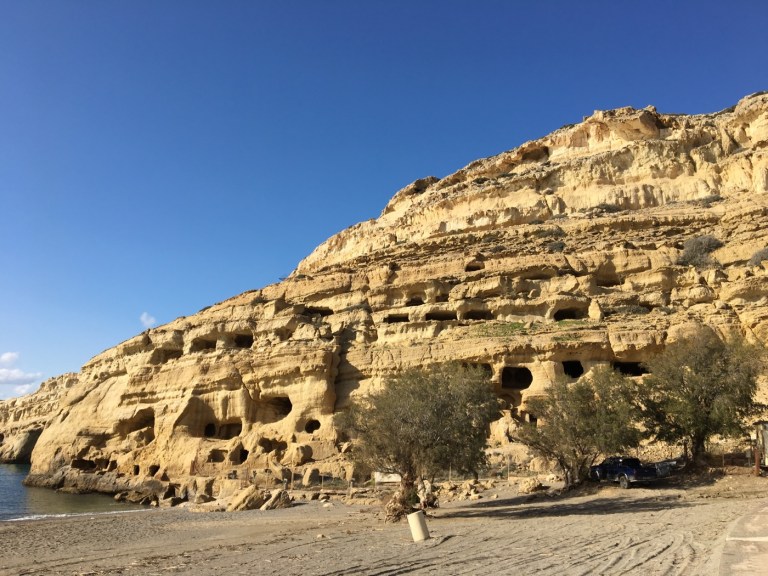
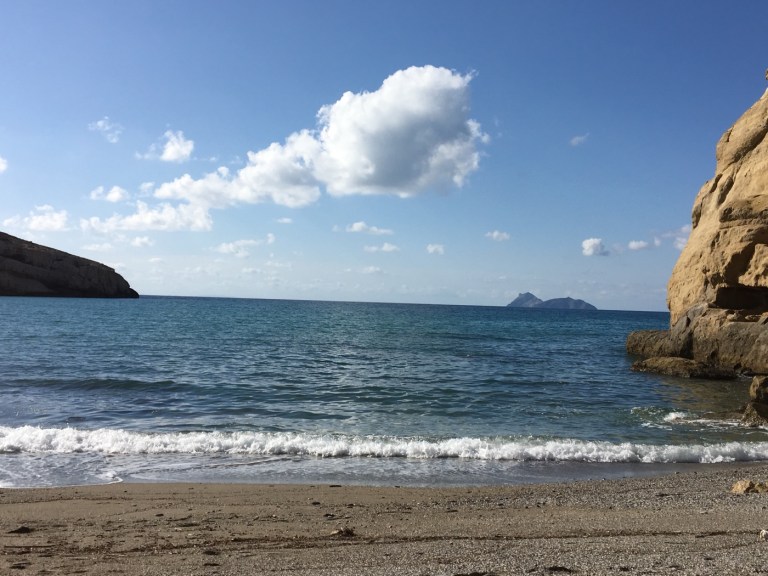
Now they thrive on tourism and hold an annual hippy music festival in the summer. It’s been a long time (?!) since I have seen so many peace signs and even a VW bus or two. And btw the water is warm! 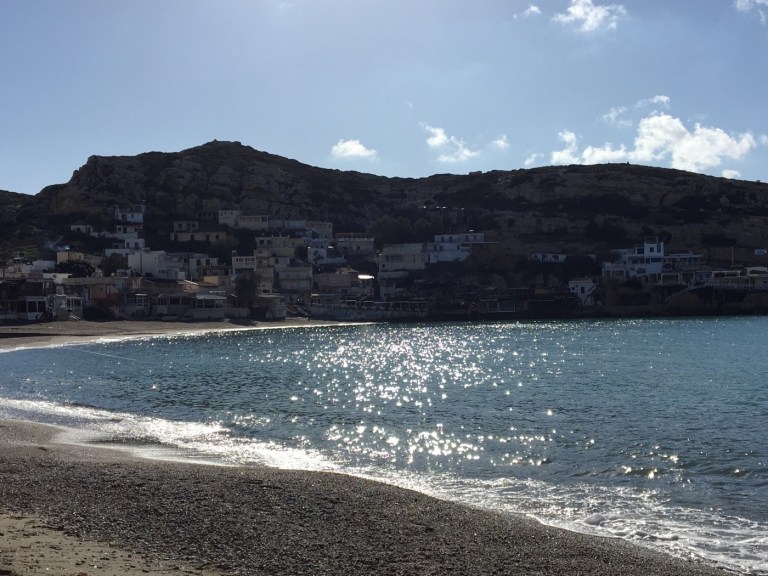
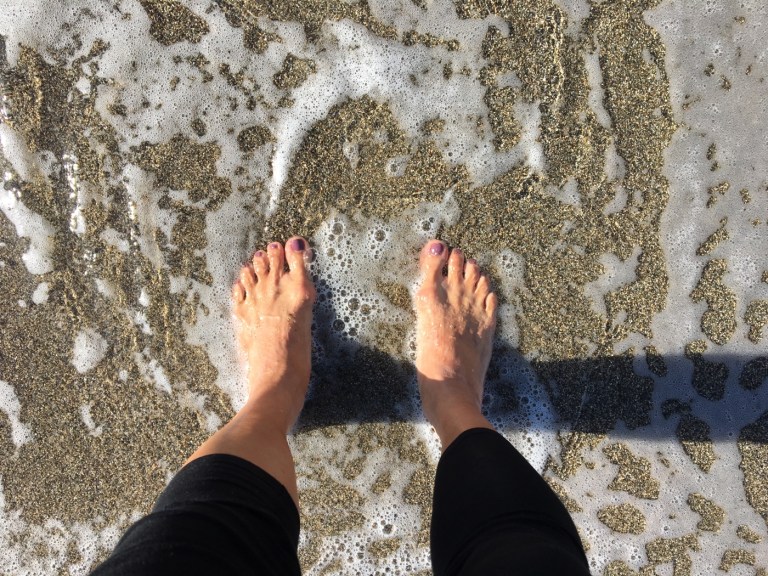
After looking at the caves and enjoying the sun on the beach, I drove back across the scary mountains that separate the north and south sides of Crete.
I’m currently in Rethymno, third largest city in Crete. I’ll post more about the city and things in this region soon!
 Cynthia's Trip