I’ve always loved Greek mythology. Zeus wasn’t my favorite god but since he was reputedly born on Crete, there are things all over here related to him or his sons.
First, there’s a ton related to the Minoans. King Minos, if you don’t remember, was one of Zeus’ sons. His mother was Europa, who Zeus kidnapped (in the form of a bull) and brought to his home island, Crete, where she bore him three sons. I thought this statue a bit amusing — from the eastern coast of Crete in Agios Nikolaos.
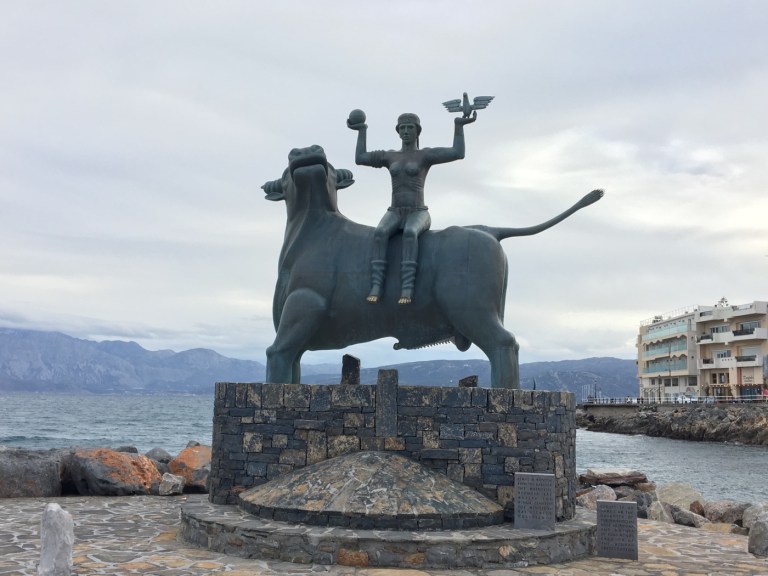
First, she’s like an Amazon. Second, what is going on with his saw-toothed penis? I’m sure there’s some reason the artist did this but it’s a bit of an oddity.
Anyway, Homer wrote about Minos, his Minotaur, his labyrinth, and the Athenian youth sacrificed to him annually (and one of the inspirations of the Hunger Games books). Theseus (one of my favorite Greek heroes) managed to defeat the Minotaur (with the help of a woman of course)…. And Sir Arthur Evans found the Minoan palace on Crete as Homer said it was.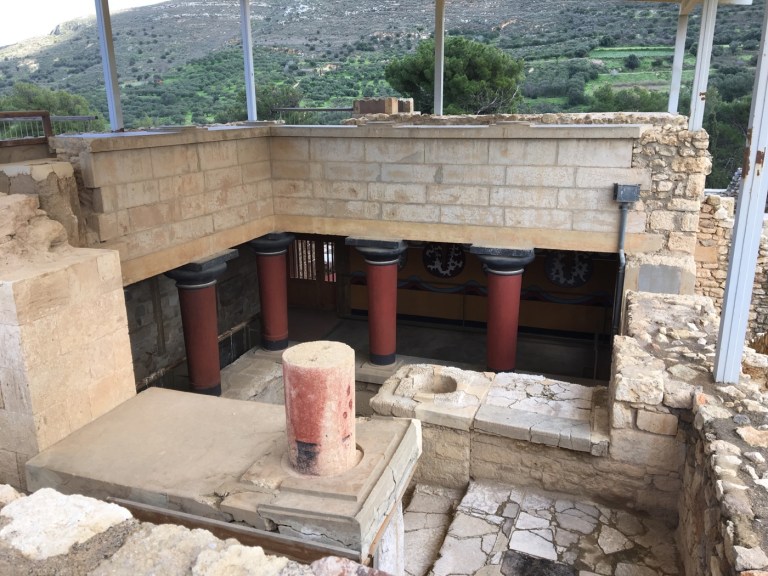
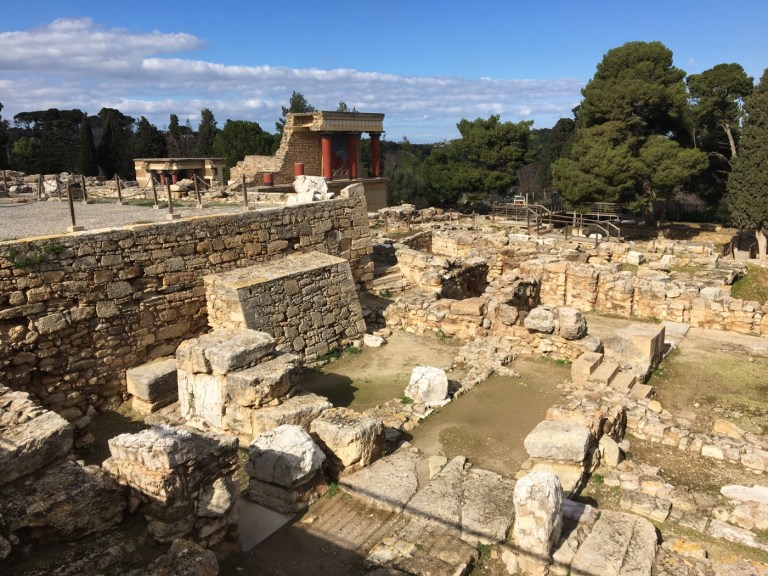
It’s Knossos. Kind of amazing.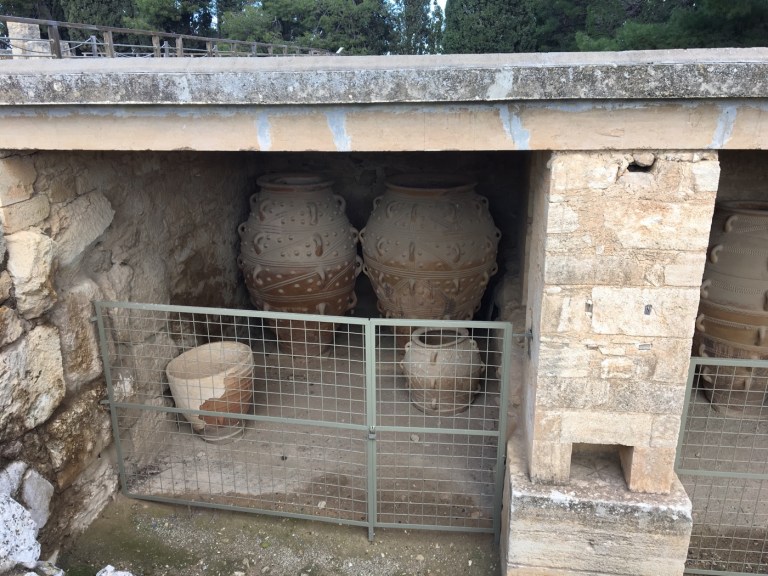
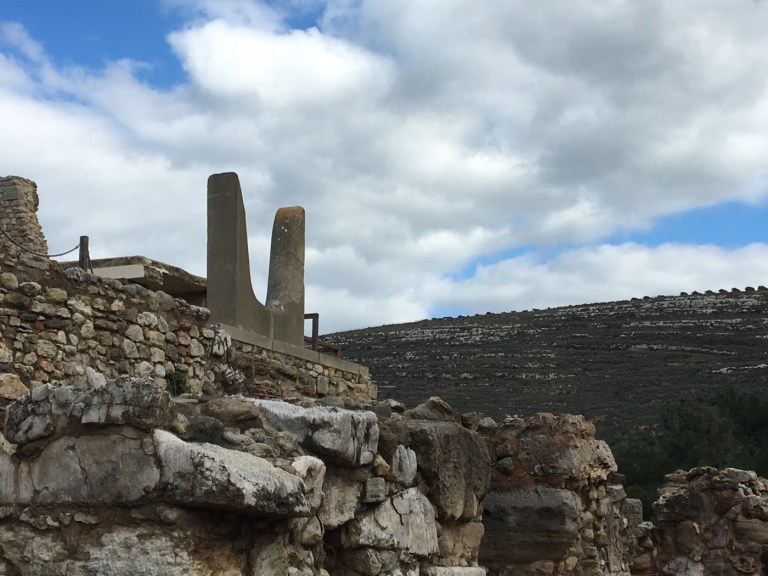
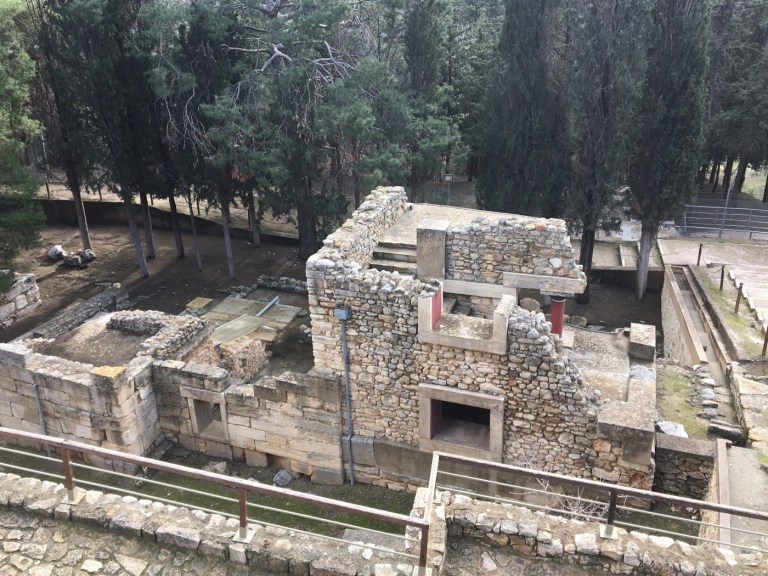
I was approached by a guide the minute I got off the bus but I’m happy I spent the money (though had to wait awhile until they found a few others to join — turned out to be a retired couple from Naperville!). She was an archeology student and provided context to the rubble.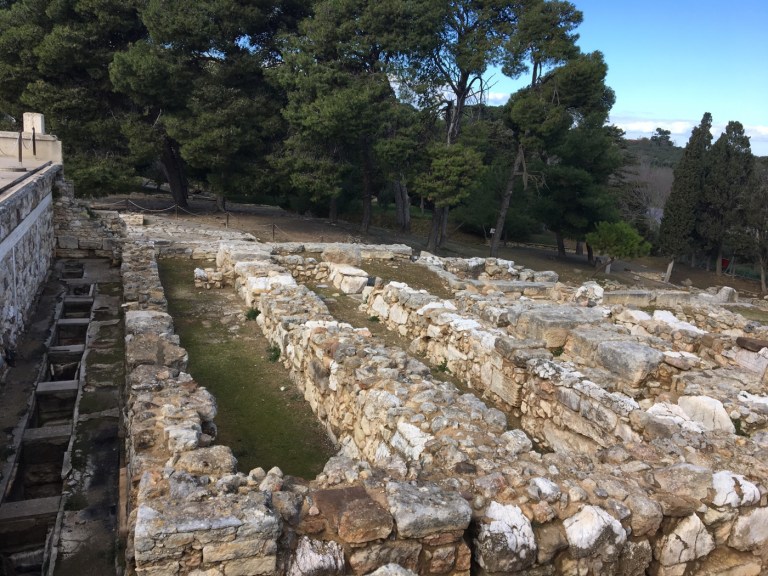
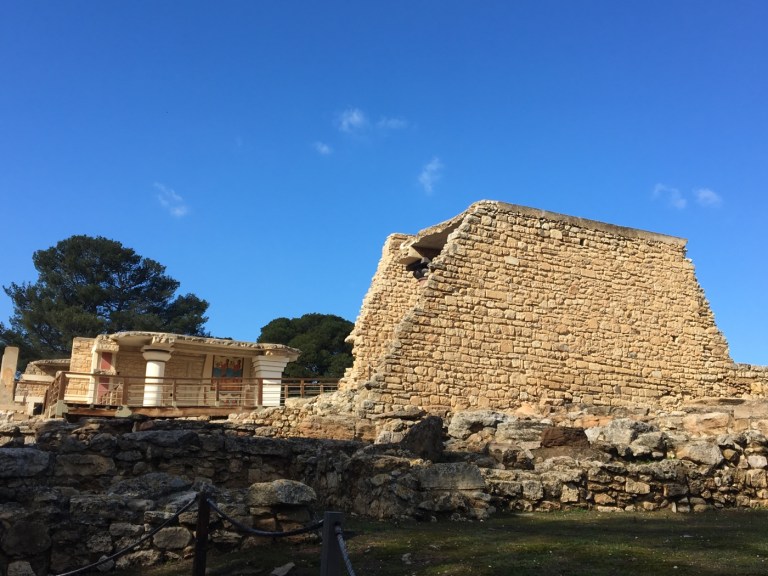
Meantime Sir Evans got a lot of flack for recreating a lot of the rooms — but he only did it in some areas (anything colorful is fake). For people like me who can’t really visualize the stuff from the rocks and words about it, it helped bring things to life. And the guide was great about pointing out what was original (to 1400 BC!) or redone in the early 1900s. There’s clear evidence of running water for toilets and purification, as well as for drinking.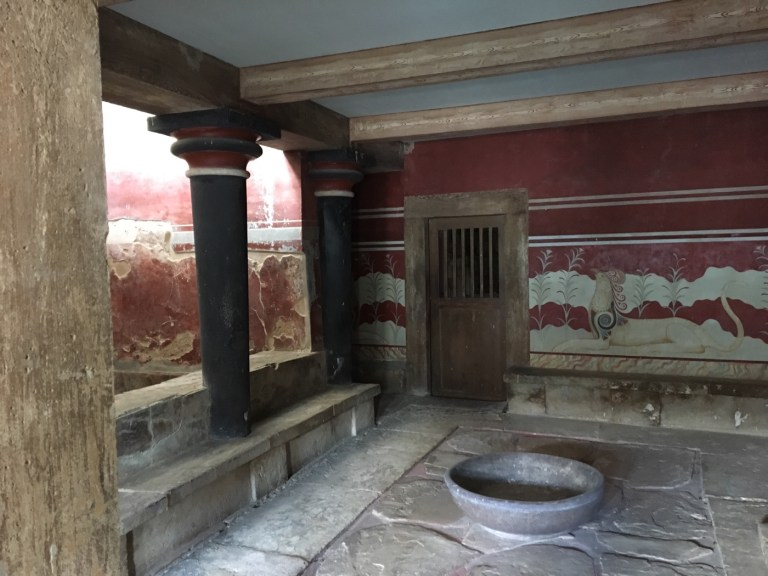
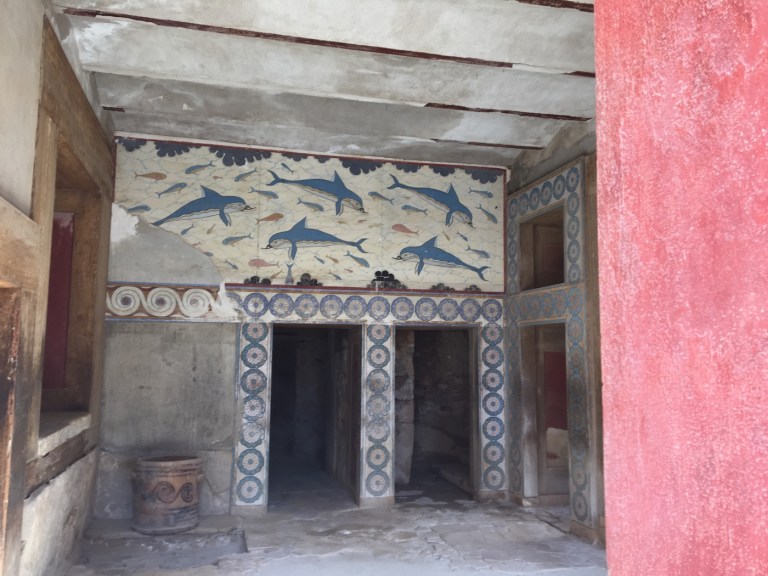
And evidence of advanced tools and craftsmanship. There are actually two palaces at Knossos, one purportedly destroyed in an earthquake (Minos’ palace) and a second built on the ruins, which the descendant Minoans lived in. This second palace was destroyed in a fire.
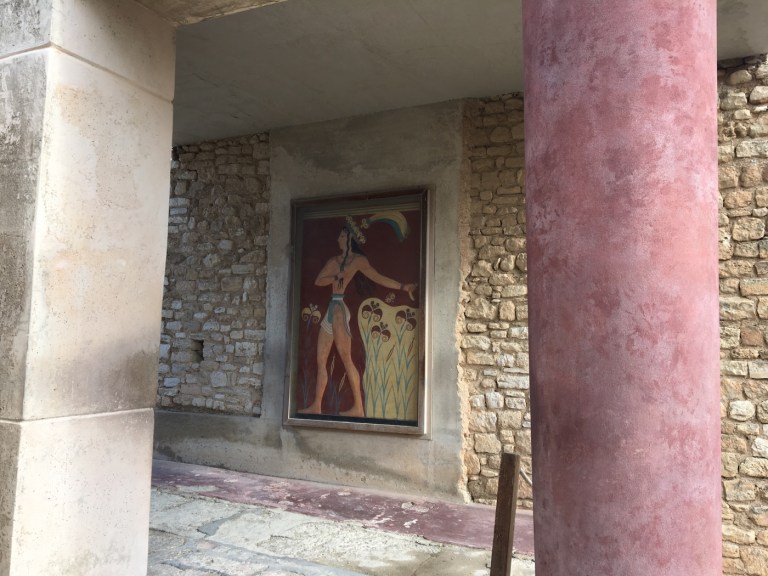
Anyway, the REAL surviving original artwork (murals and mosaics!), pottery, jewelry and such are at the Heraklion Archeology Museum. Both the items below were found at Knossos — at least partially. The first is a game board which I found fascinating. 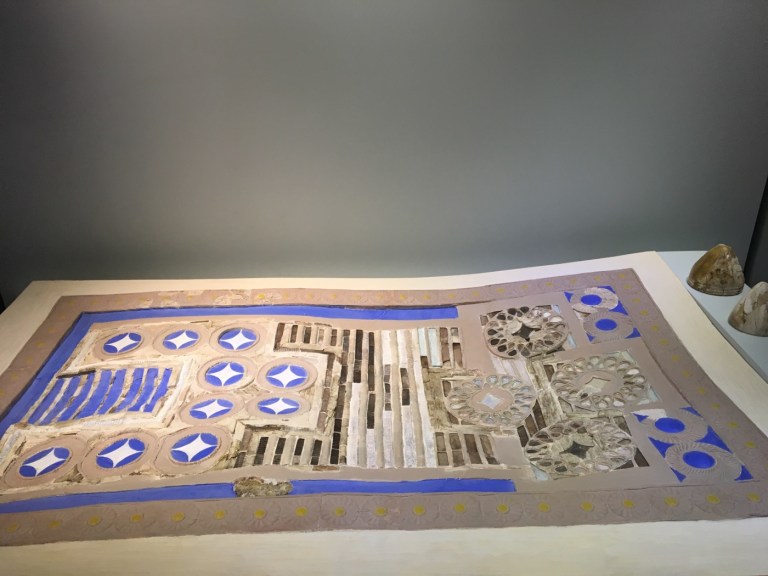
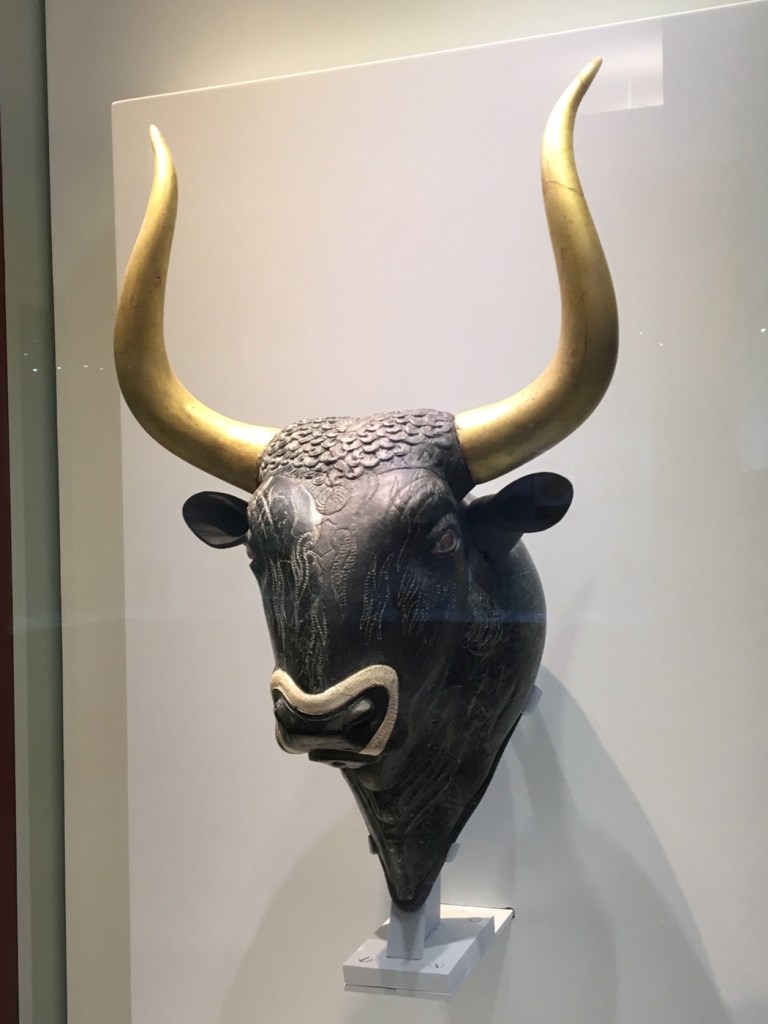
Another amazing place. I went there first to study up on the Minoans (plus my first full day on Crete was rainy, windy and even hailing at times). They had a model of the reconstructed Knossos which was helpful. There’s a lot of rooms in the palace laid out in a confusing way which is perhaps the basis for the labyrinth story.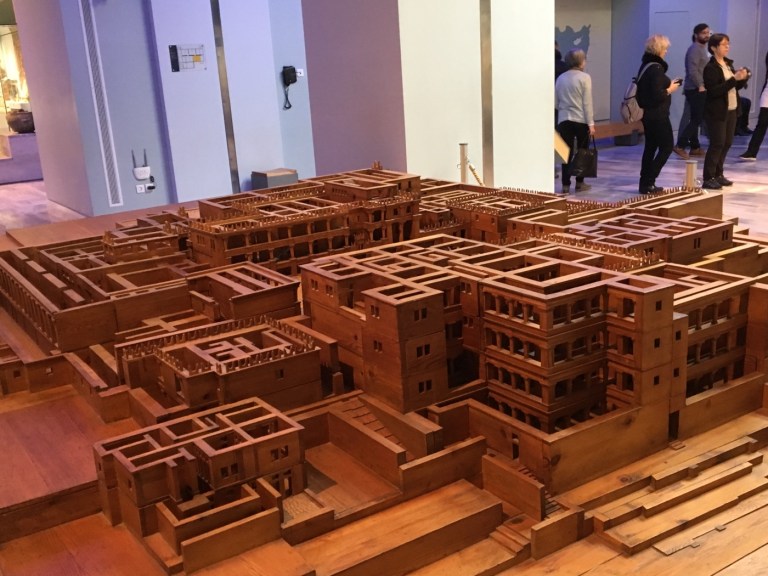
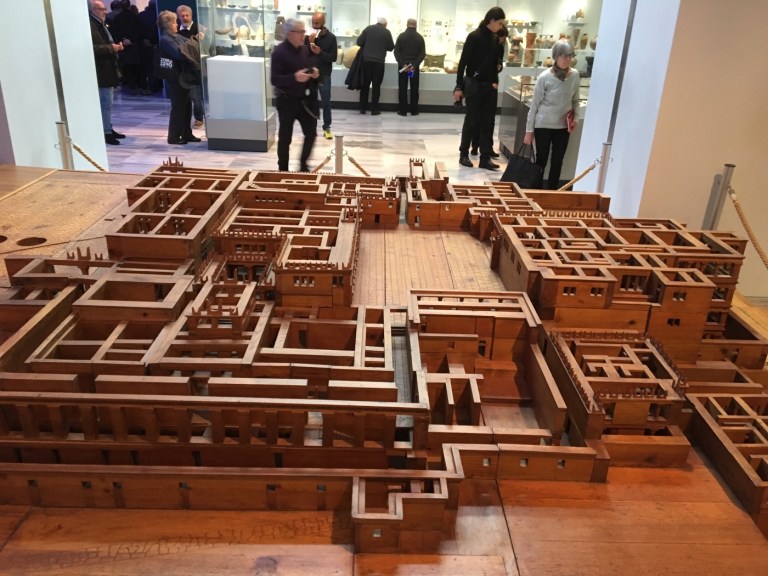
The museum in Heraklion is well known and I see why. The stuff is not only well curated but surprisingly complete. The stuff isn’t just tiny shards— there’s some of that but the pieces are often reconstructed to a whole so that the average layperson (like me!) can see the original piece.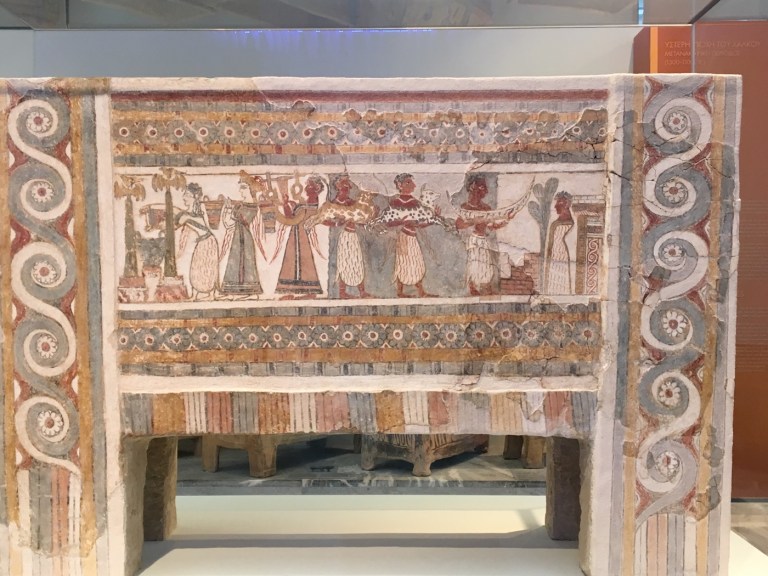
I usually don’t take photos in museums but was struck by a few things here. I wanted to photograph things I felt were unusually memorable. Turns out I must have an eye for things because several items I wanted to capture couldn’t be taken as they have not yet been published. I presume they don’t want some dumb tourist to scoop them. (Funnily — and sorry Francoise — but a French woman in the museum took a photo of a forbidden mosaic and was arguing with the museum employee that she had turned off her flash so all was OK. I think she didn’t read or understand English or Greek well – and why would she? She’s French — so was immune to the signs that clearly stated you cannot take photos because the things are not yet published.) One does wonder why things in a big famous museum have not yet been photographed and accredited to the museum in this massively digital age.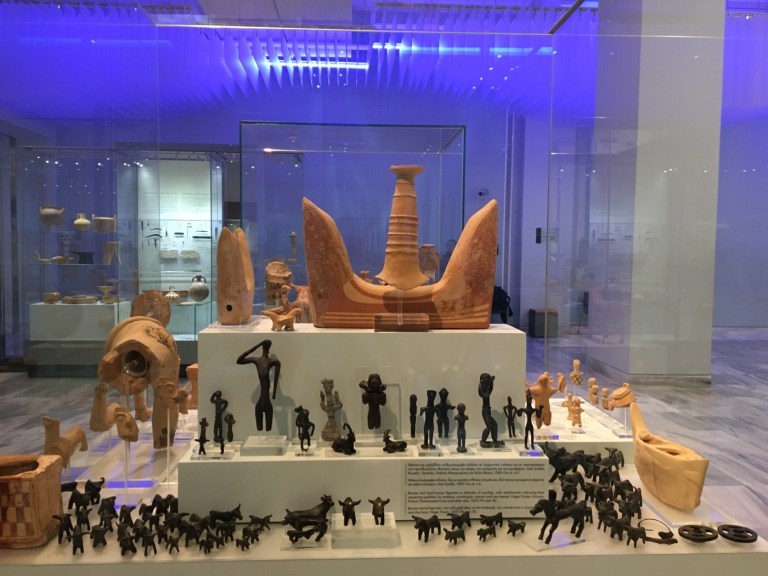
Anyway, it was things like the particularly complete mosaic floor. Or a bunch of little carved bulls they had gathered from various grave sites (Cretans definitely have a thing for bulls!)— though in a different era I found a similar display. Little structures built to pay homage to their goddesses. Things I hadn’t seen before.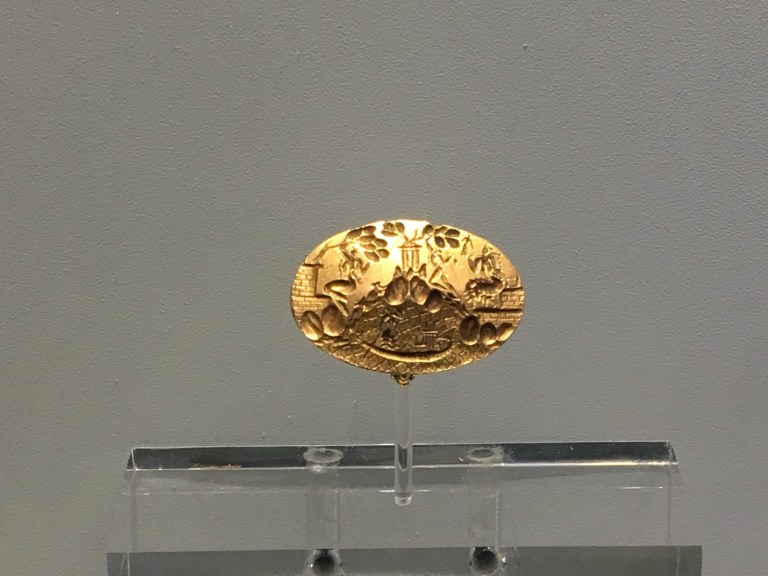
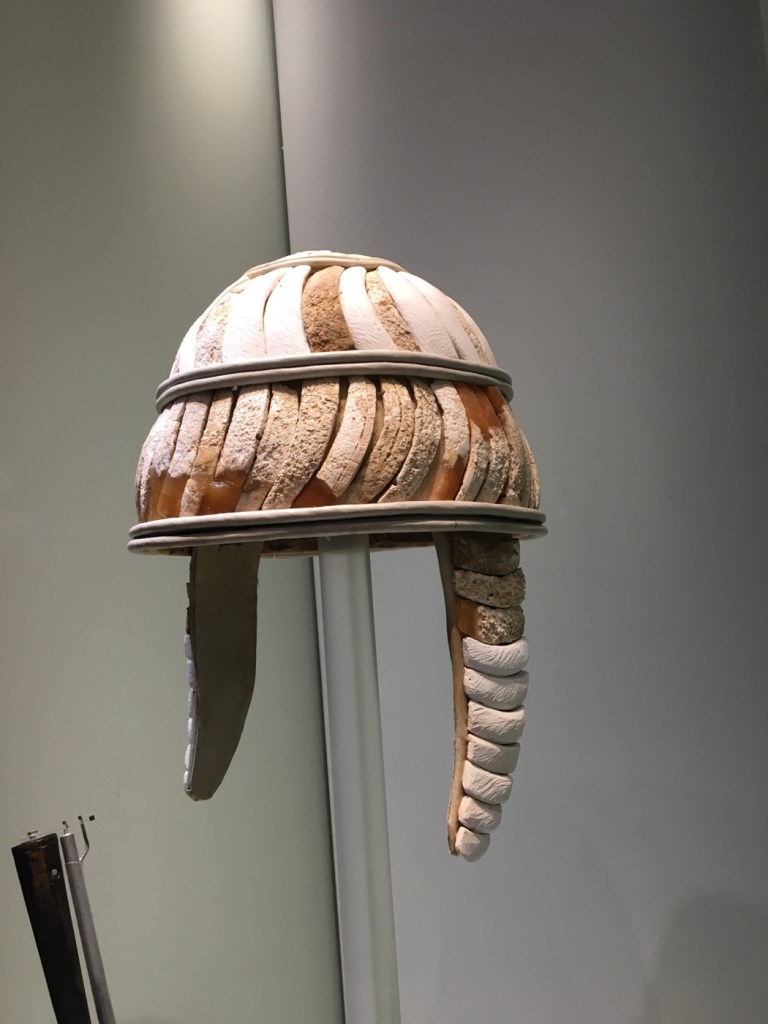
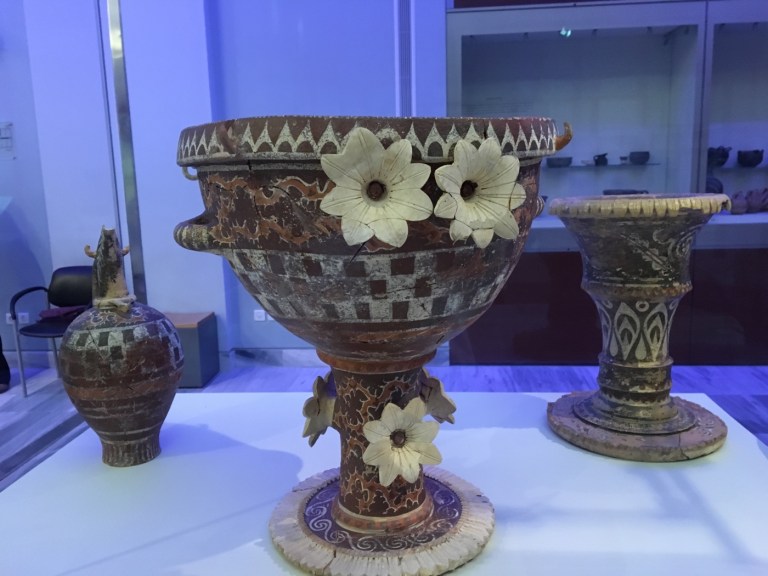
Oh well. It was a cool museum though I’m sure I’ll forget everything. They’re the experts on anything Minoan … though other eras were also covered. Unfortunately, they — and many of the tourist sites — have early offseason closing hours (3:30) and I didn’t get there until afternoon. So I was being pushed out at closing and missed one room on the Romans. Such is life!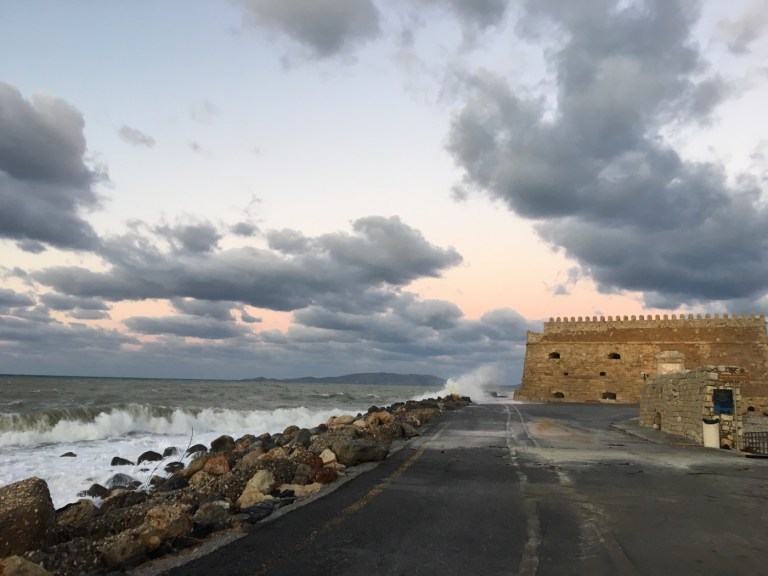
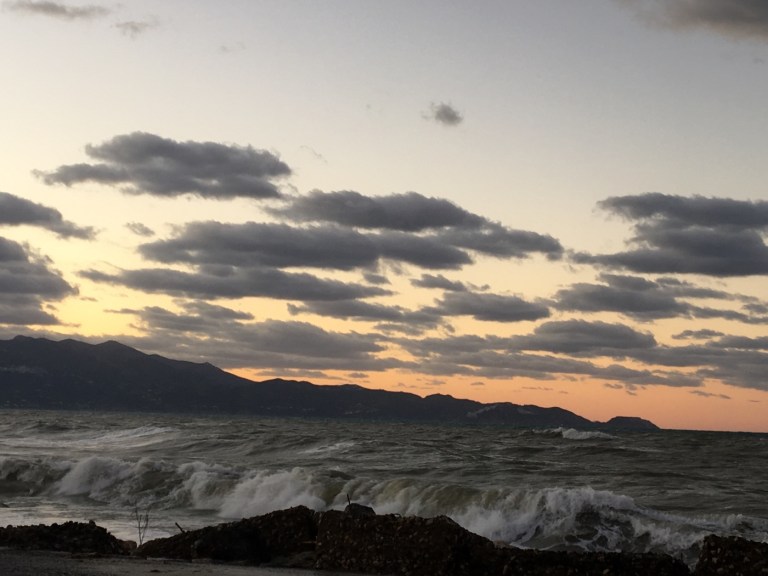
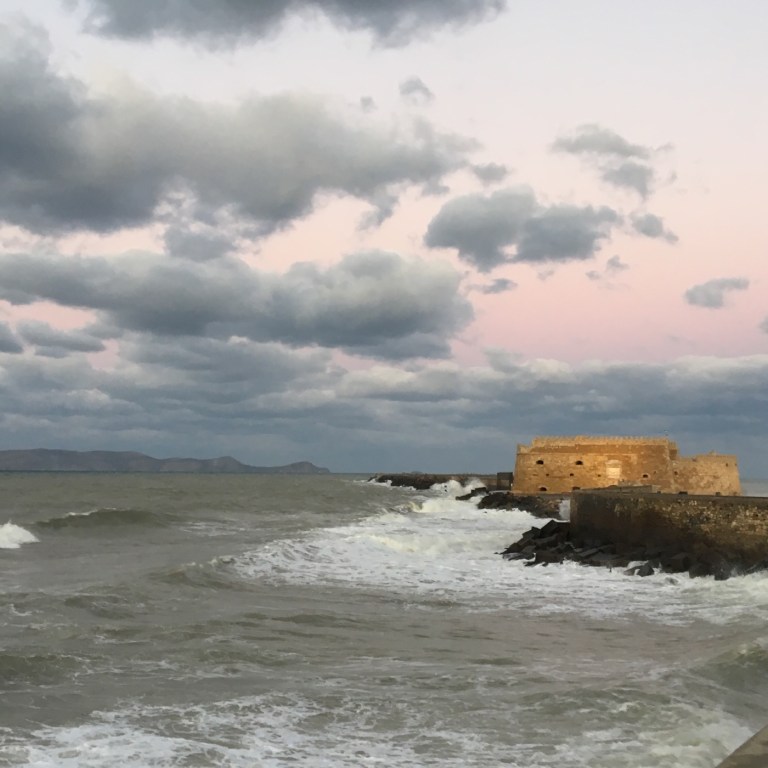
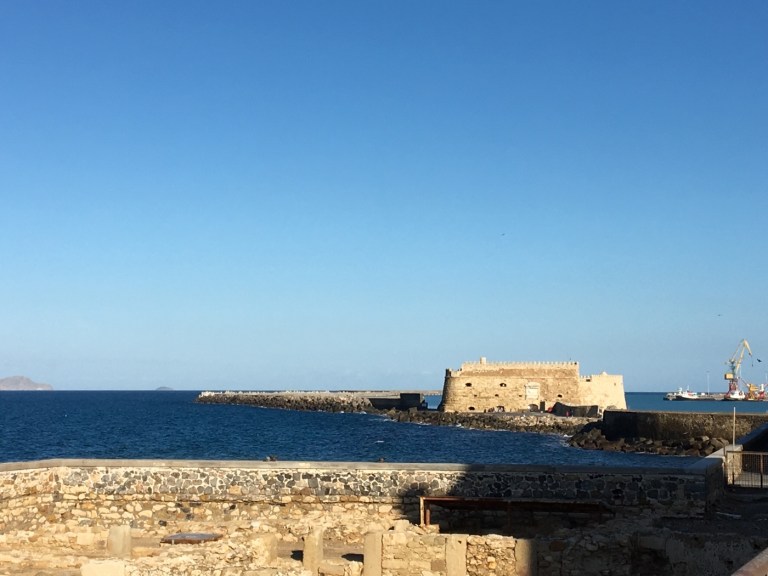
In Heraklion, I also ended up with a student tour group and saw the Cretan historical museum, town highlights, and the Venetian fort. Great views of the water — I went to the fort both on the storm day and the beautiful day after and you can see the difference!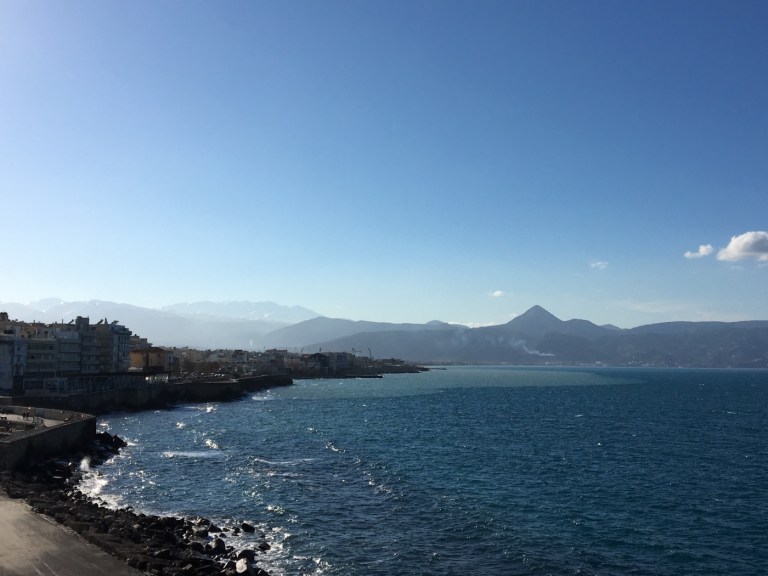
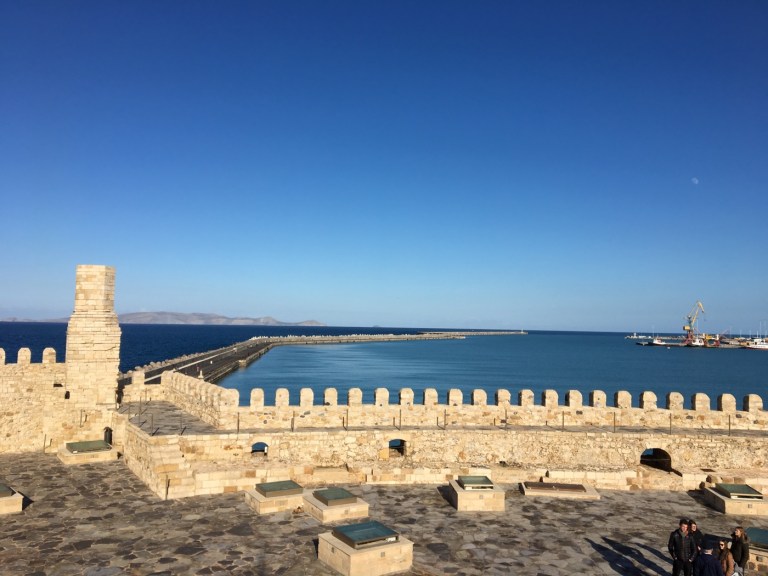
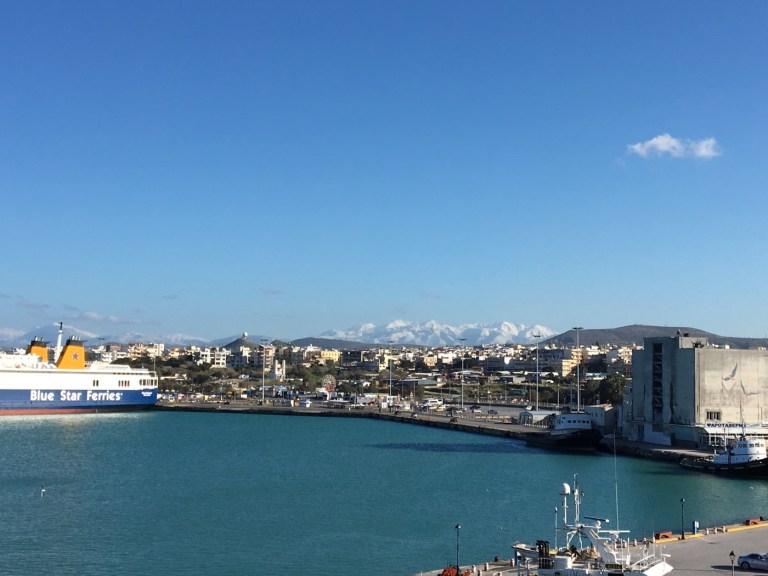
After Heraklion (Crete’s largest city and Greece’s 5th largest), I rented a car and headed east to smaller villages.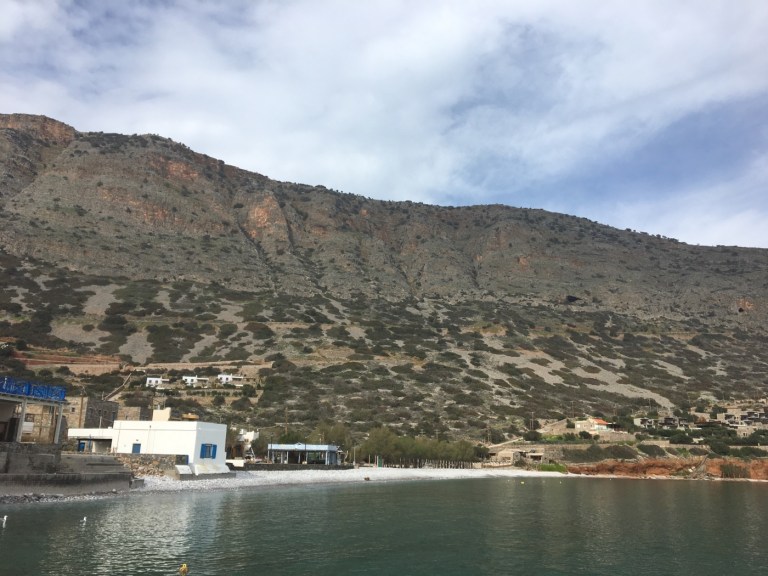
First I went to a village called Plaka, across from the little island, Spinalonga. Which I had heard is an amazing island to visit but of course was closed (or regular tours and boats going to it are closed) for the season.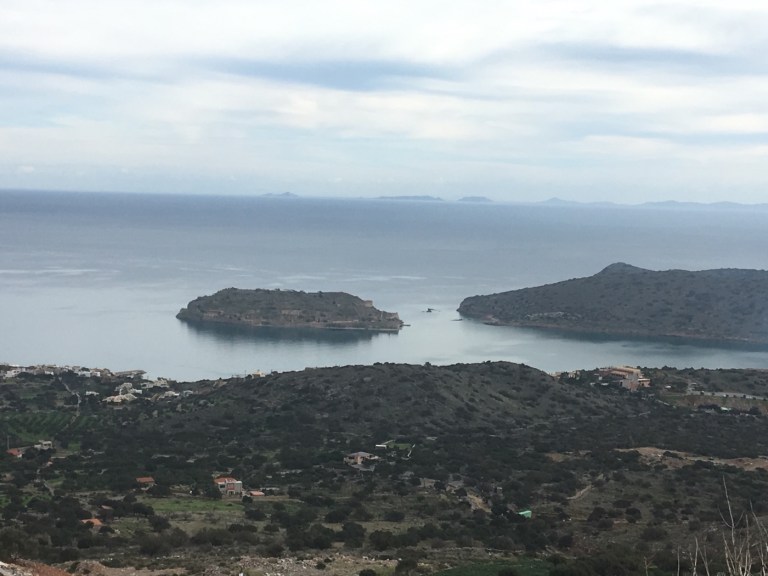
That said, its history is fascinating. It wasn’t an island originally (though in some of my photos it still looks like it’s connected to the larger island, Kolokytha). The Venetians separated it for better fortification.
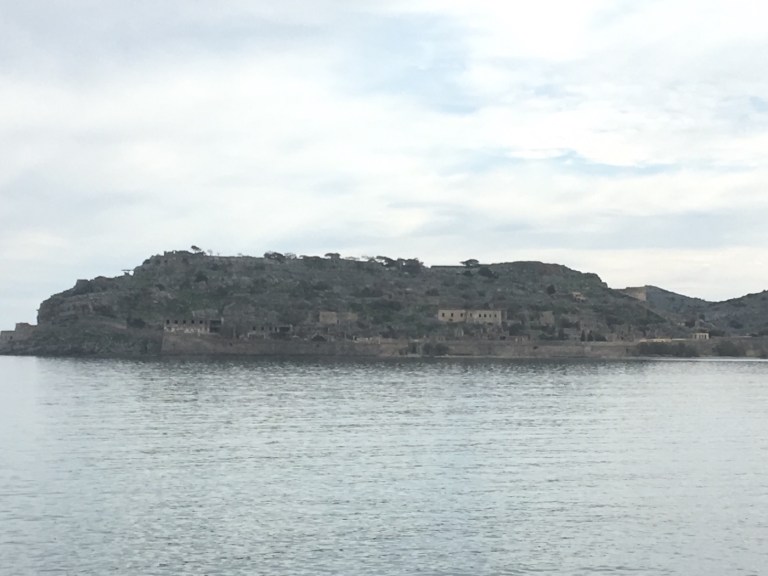
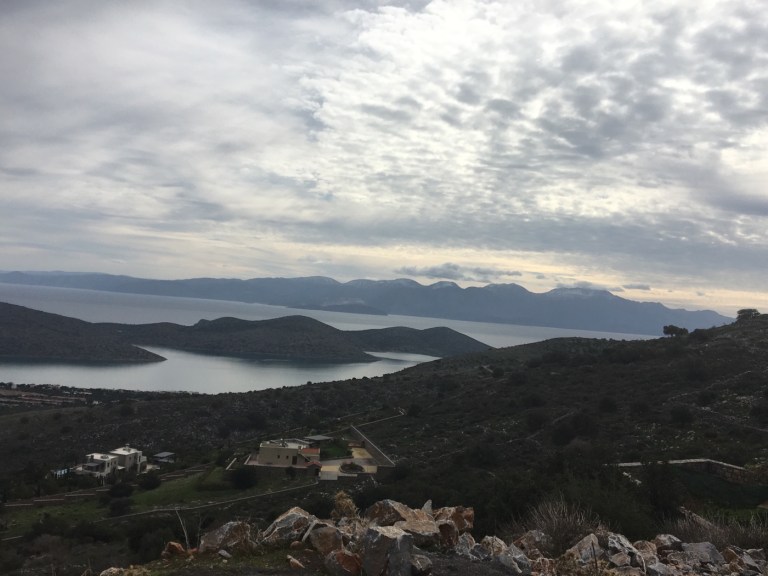 The islands sit just east of the northwestern point of the Mirabello Gulf and were well positioned to protect Crete. After defeating the Venetians, the Ottomans invaded Crete. They were later repelled; eventually Spinalonga had a primarily Muslim population although they were no longer in power or in the majority. So what did the Cretans do? They had a problem with leprosy on Crete and turned Spinalonga into a leper colony.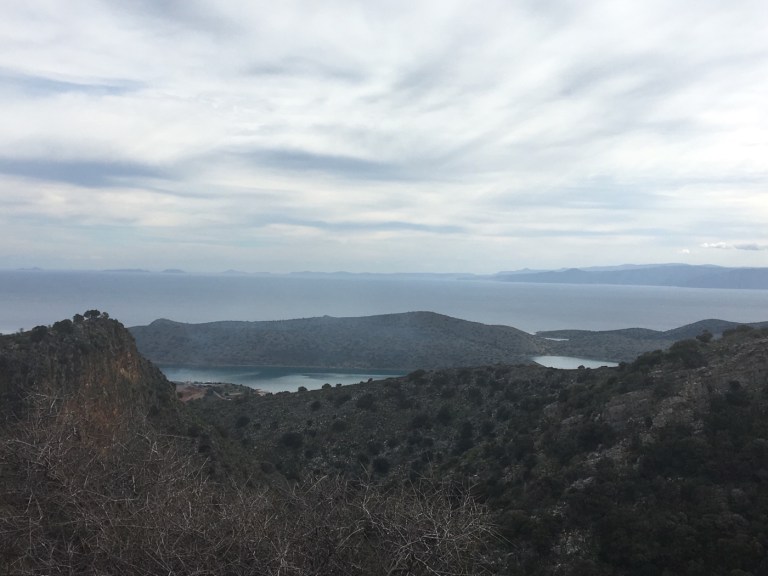
So today there’s a great interest in the archeology and history of the island. Sigh. I was close enough to see the various buildings but that’s it.
Oh well. As my blog well indicates, one must be flexible because nothing goes completely to plan! Since I couldn’t get to Spinalonga, I had time to drive back around the (very pretty) area.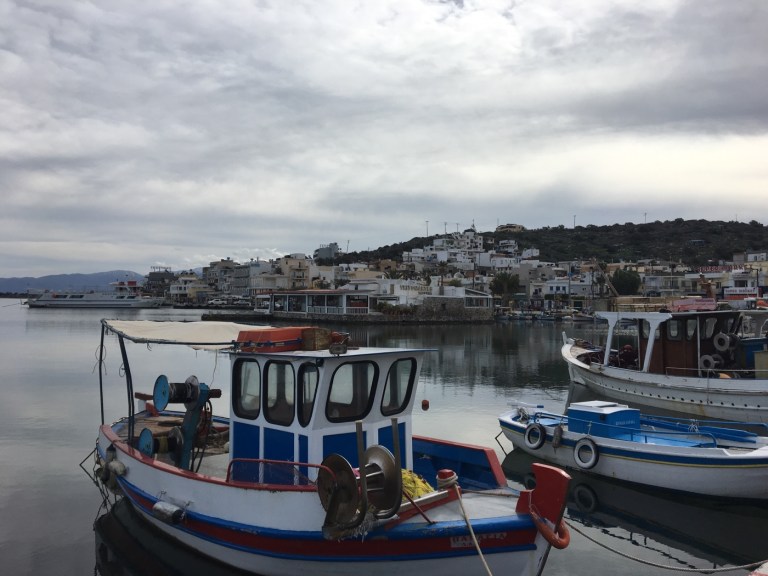
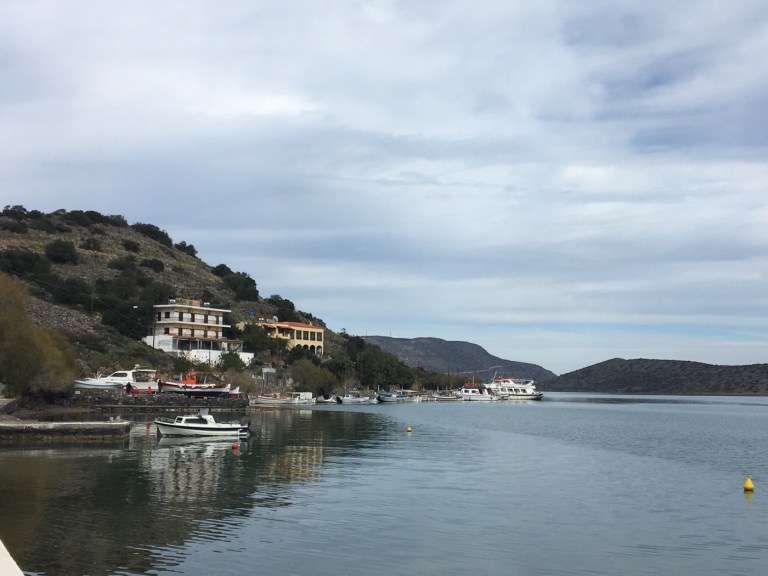 I went to the bigger island but didn’t go far as the roads aren’t paved and I didn’t want to mess up the car. They’re also single lane. Apparently people don’t drive much on Kolokytha.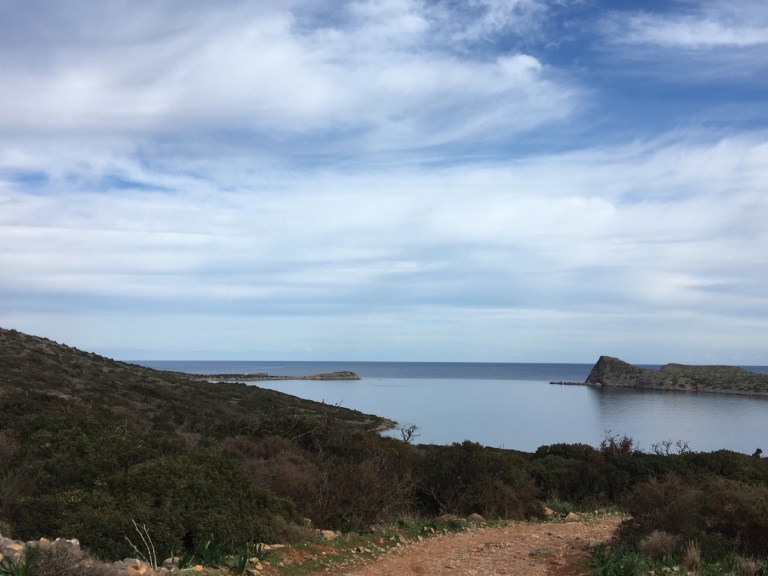
Lovely views. Greece is amazing because it seems there’s always another island or two on the horizon. Unlike in Portugal I don’t think you’d ever feel that you were at the end of the world here.
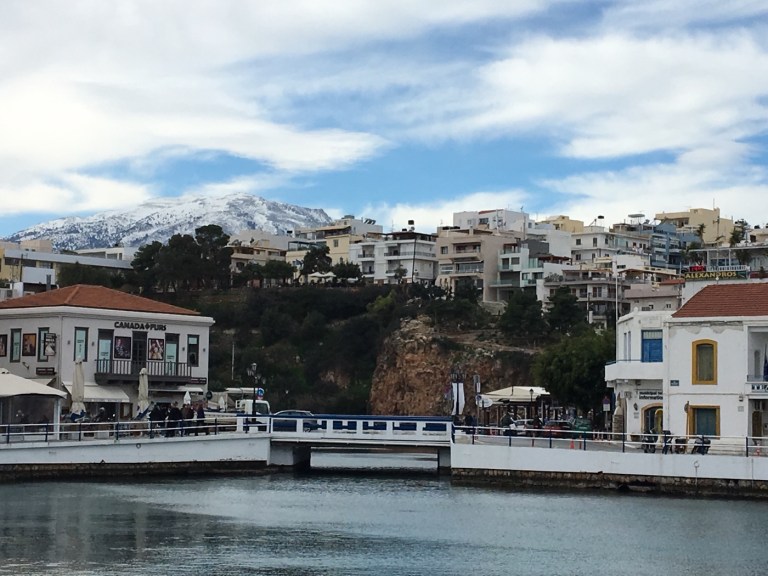
I went to Agios Nikolaos which is famous for having a lake that feeds into the sea. It was lovely. 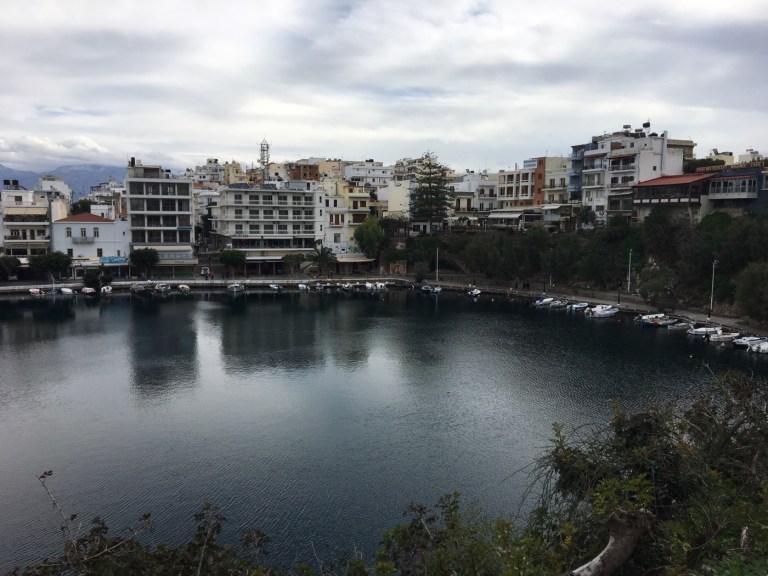
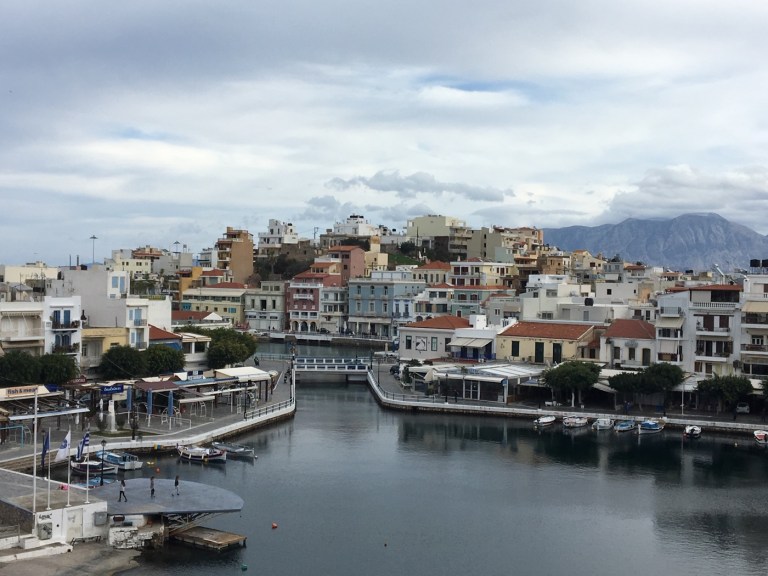
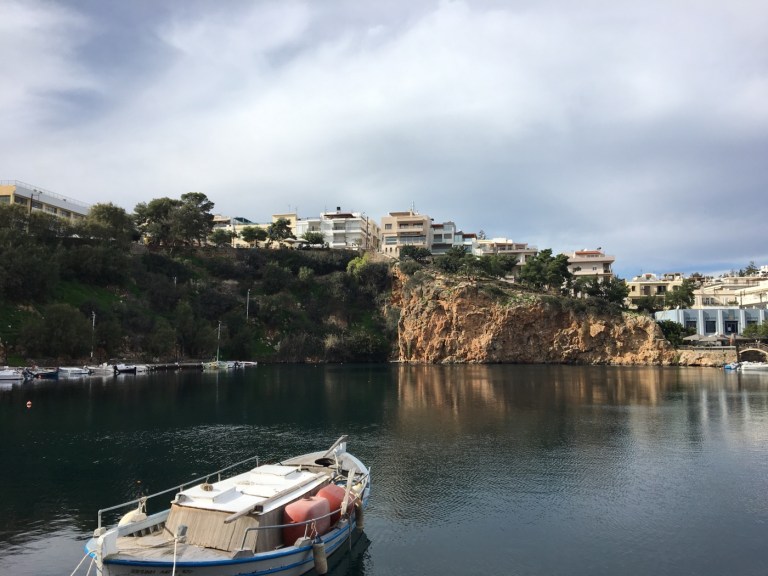
Though I managed to lock my key in my car (long story) and had to wait around for a locksmith who could break into the car so we could retrieve it. (I relaxed myself by getting a pedicure afterwards though I must say it wasn’t the best one of the trip.)
Speaking of views, here are some from the eastern area — I had two days to check out more Minoan and Roman ruins (but they really don’t photograph well) and several towns and beaches.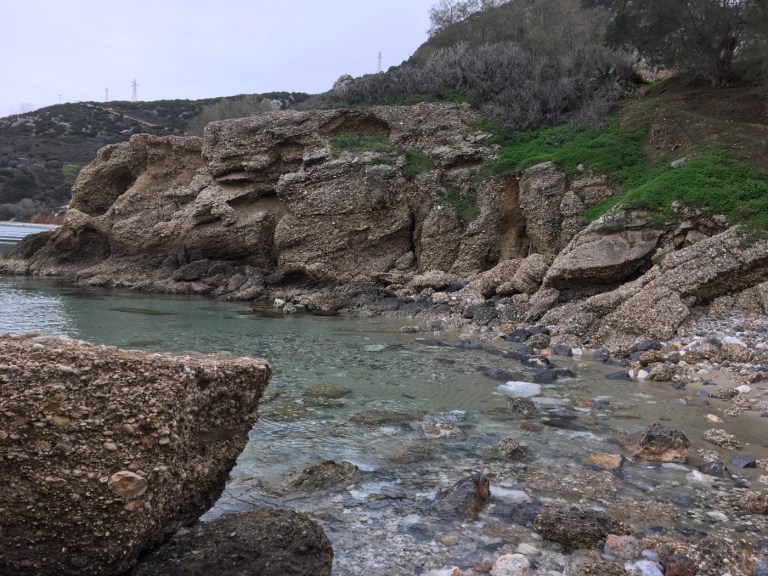
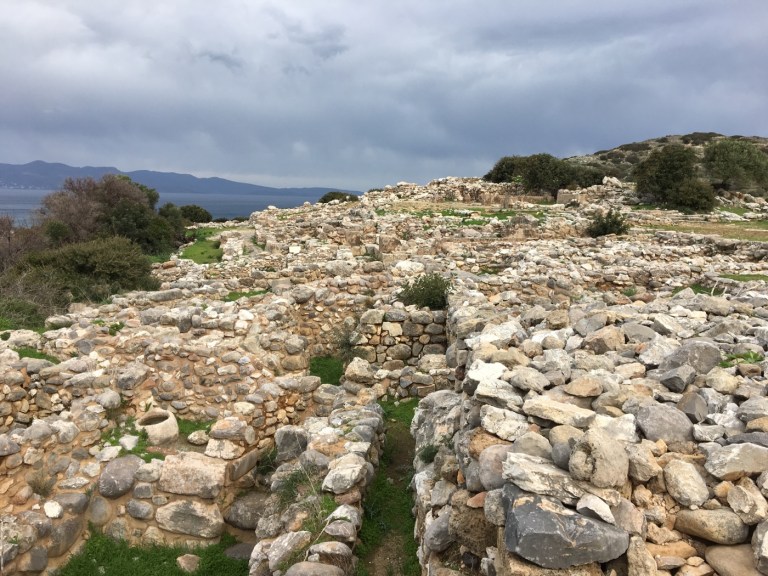
Towns like Makrigialous where I had a great Greek salad and avoided another rain storm.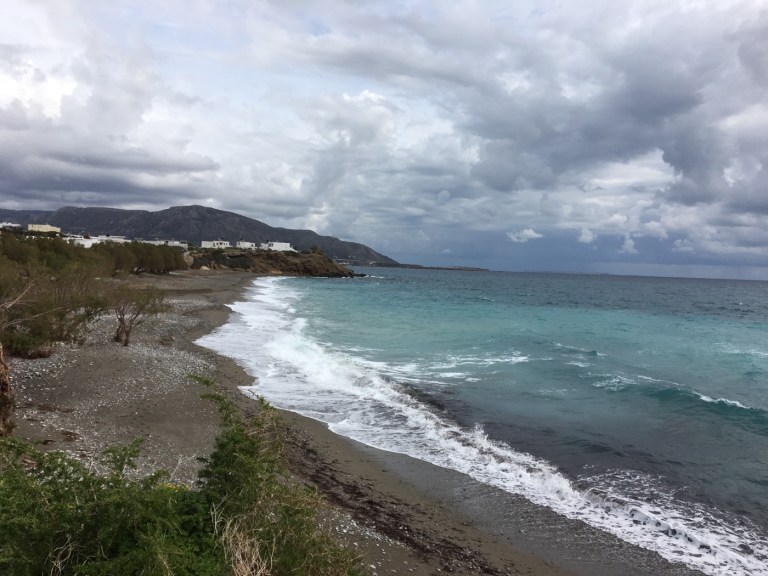
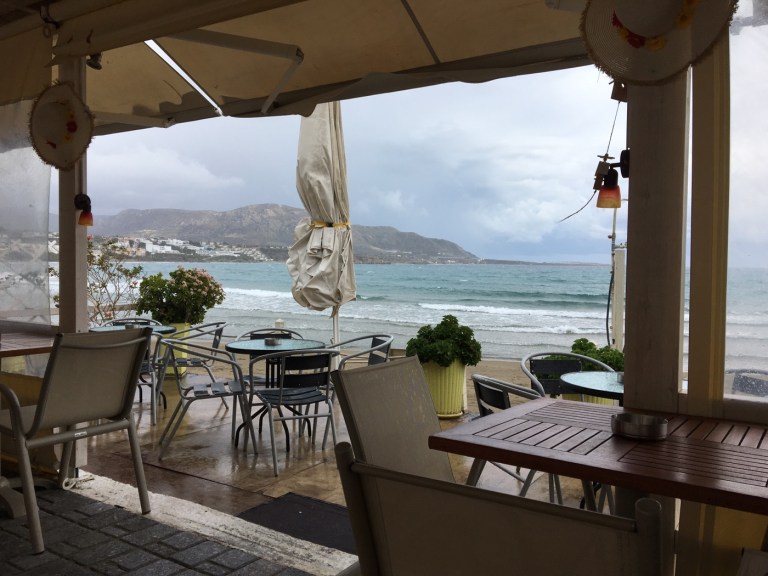
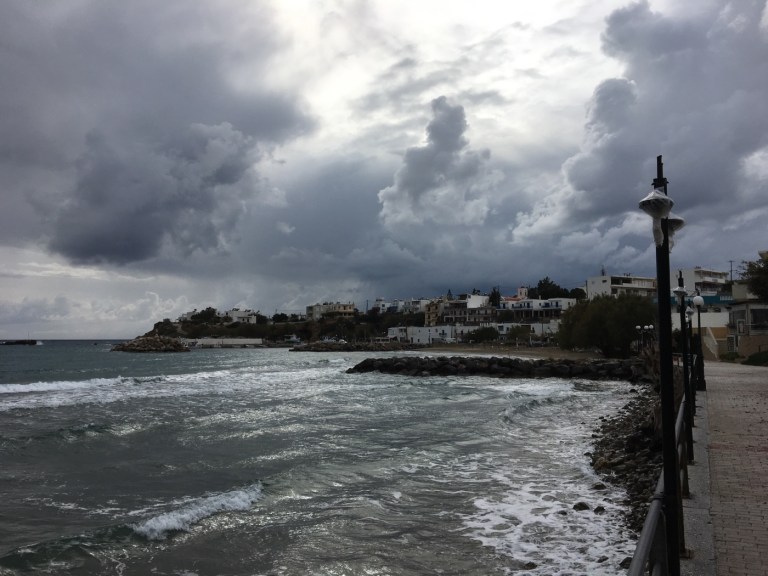
And Agia Fotia where I’m shocked I drove down because it was another really narrow road to get down a cliff. But the water was wild. 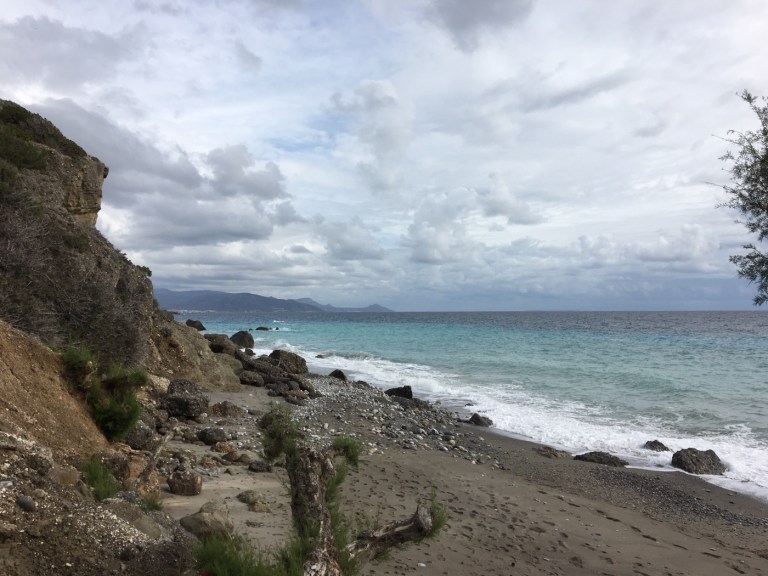
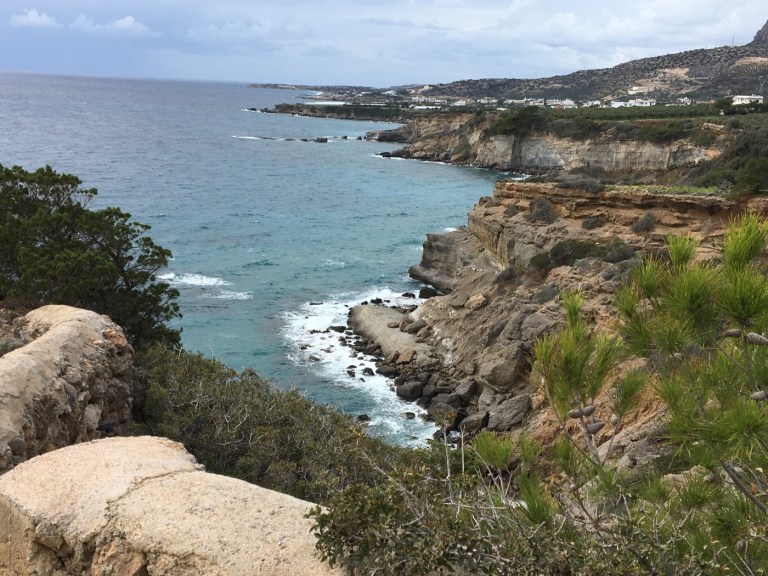
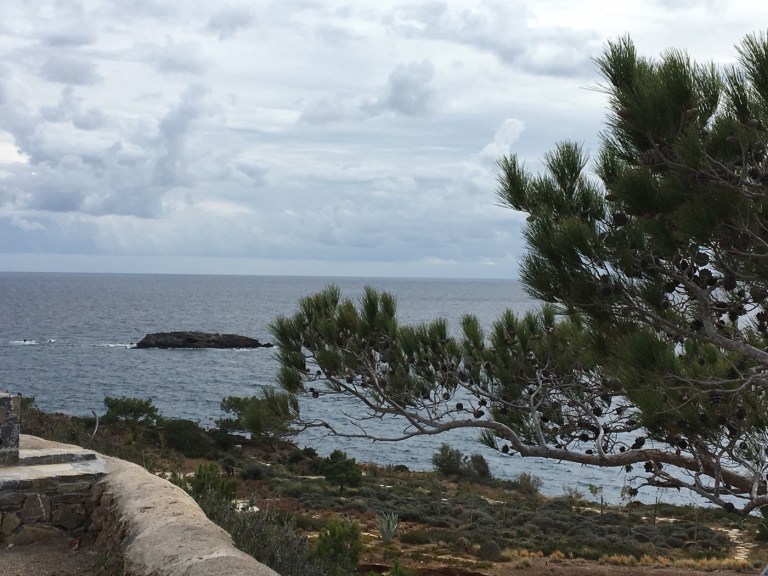
And Ierapetra, a larger city with a mosque that was converted from a church (quite the change from Spain where it was always the other way around) and another fort. (Though I didn’t take photos of either!)
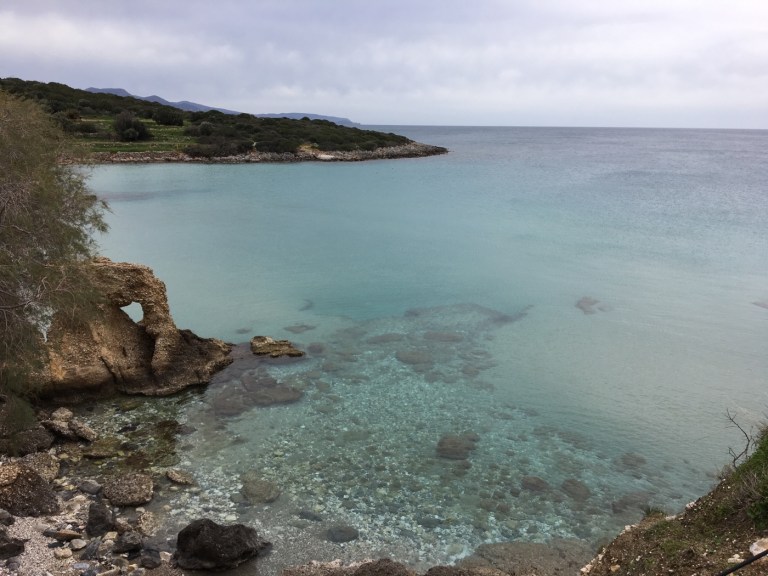
I stayed in Kalo Chorio, a small village with beautiful beaches. Of course it’s not the right season to hit the beaches but I walked down and put my hand in. In fact it wasn’t that cold – I had seen two women in bikinis in Plaka who were swimming!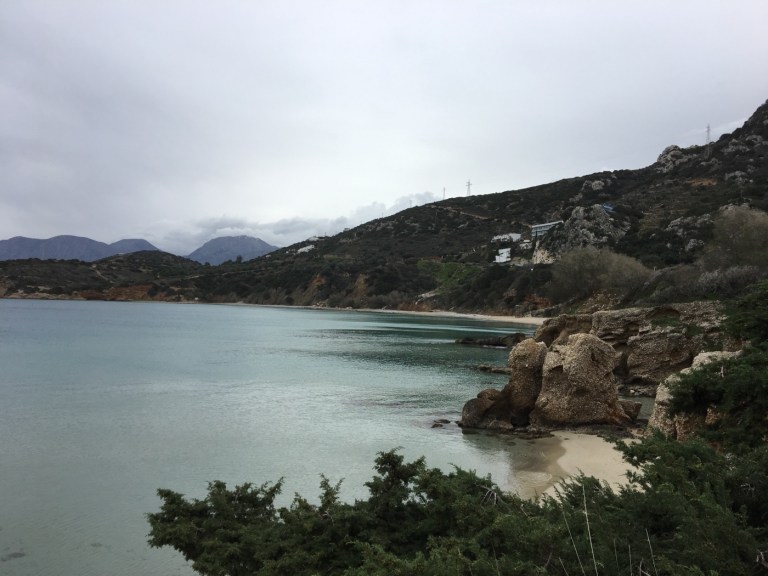
The people who own my Airbnb also own one of the two restaurants that stay open in town in the winter. One thing I must comment on is how incredibly friendly and hospitable all of the people I’ve spoken with are here. At the info center I think they were very pleased to see I’m genuinely interested in the history, mythology and archeology of the area and they spent a lot of time advising me on places to go across the island. And all the waiters and Airbnb hosts (so far!) have been incredibly hospitable.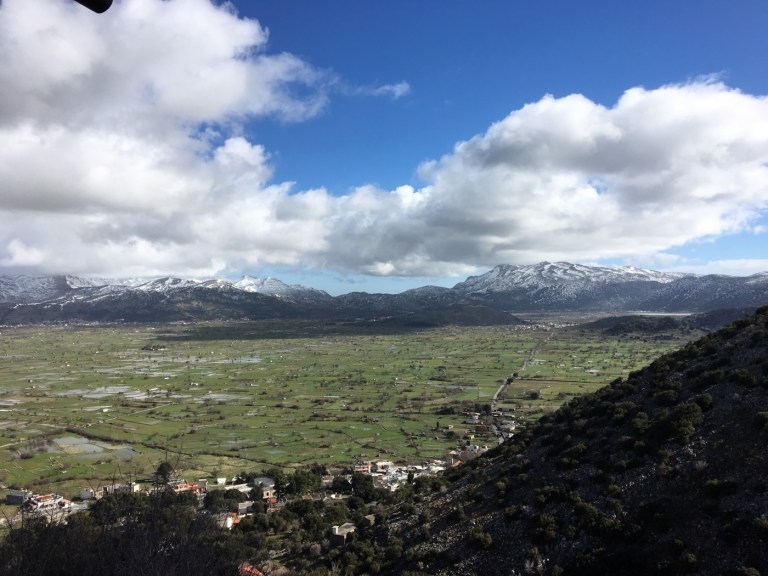
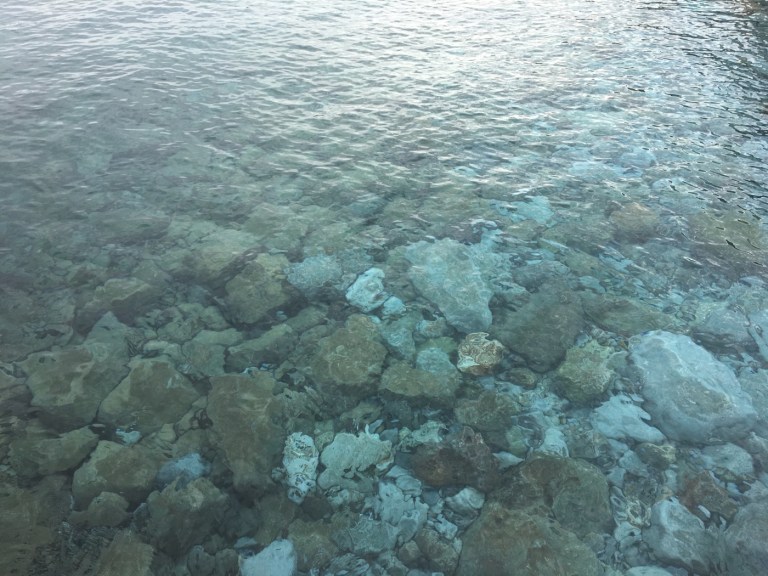
I think Crete is the next really hot destination. There are snow covered mountains (it’s a little unusual but it’s been a weirdly cold and snowy winter all over Europe). Beautiful beaches with the crystal clear, turquoise Aegean Sea (oops — just looked at my map. It’s actually the Cretan Sea here).
 A ton of history. Plus good food, wine and olive oil. I don’t know what else I could ask for. And it’s also pretty cheap once you get here. (Except my rental car and gas compared to Spain – but cheaper than the US or U.K.)
Perhaps it’s not the most effectively-run area … I have stories. But it’s off season so I’m sure that’s not helping.
Oh well, more Zeus and other Minoan ruins in the next few days. I’m late posting this but lacked WiFi at one Airbnb so it just had to wait. But more soon.
 Cynthia's Trip