Enough of the dead and ruined. Malta is really beautiful — for me, surprisingly so. The water, even right by the busy towns, is the amazing clear azure of the Mediterranean. Every bay (and there are a lot of them) seems to have a wide promenade alongside where you can walk with full views and no cars (that drive on the opposite side of the road, btw — a leftover of the British colonization), though dog poop does need to be avoided.
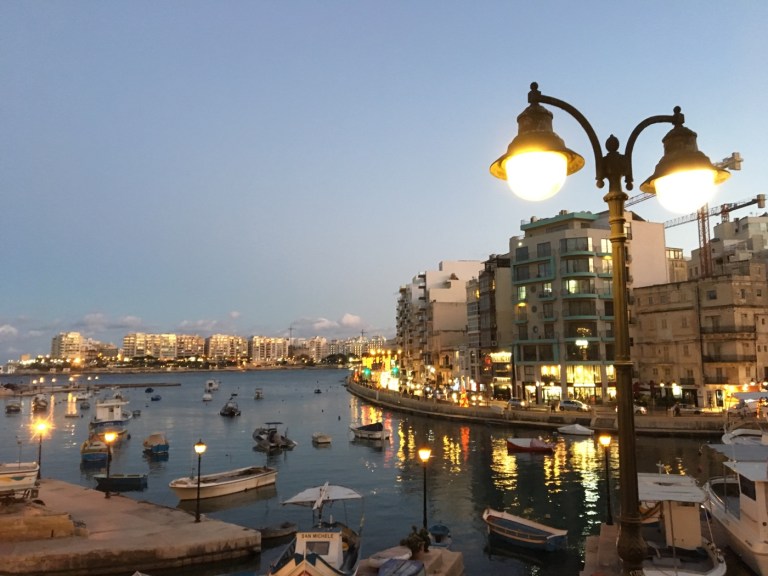
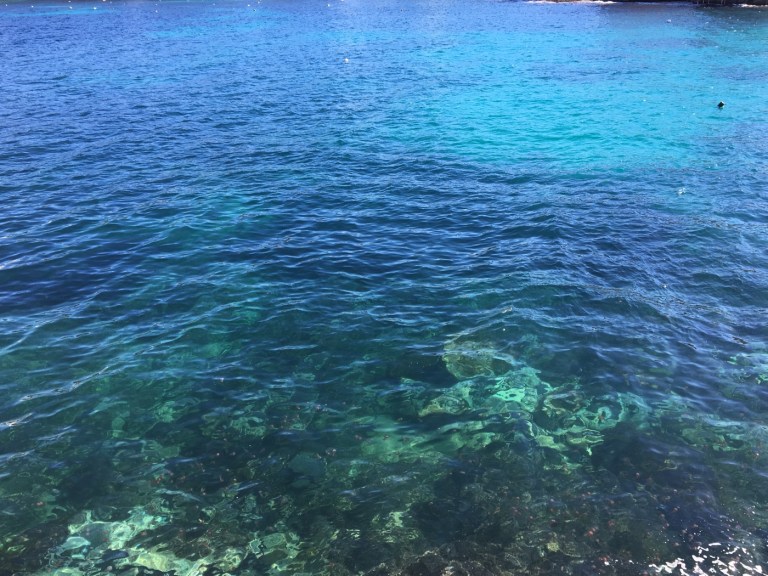
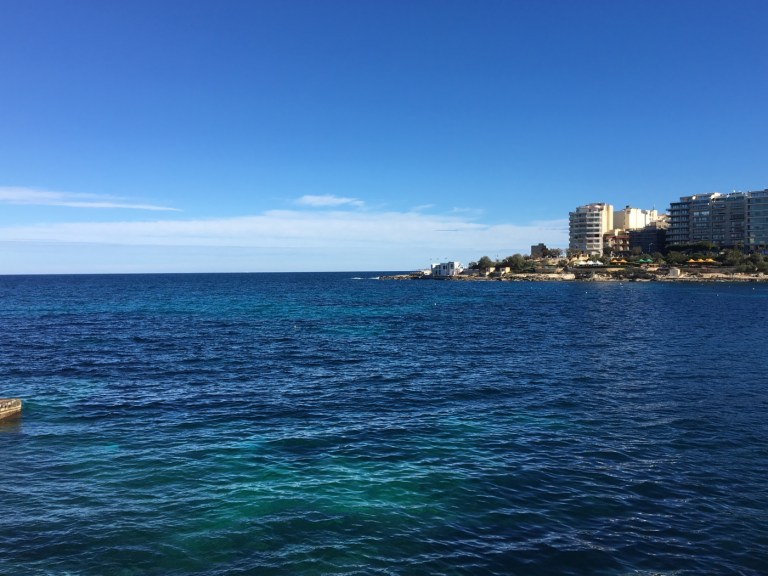
There are a bunch of short-distance, inexpensive ferries (if you’re following my blog you know how I love ferries even if I’ve had plenty cancelled since I also seem to bring wind with me) that afford great views of both shores.
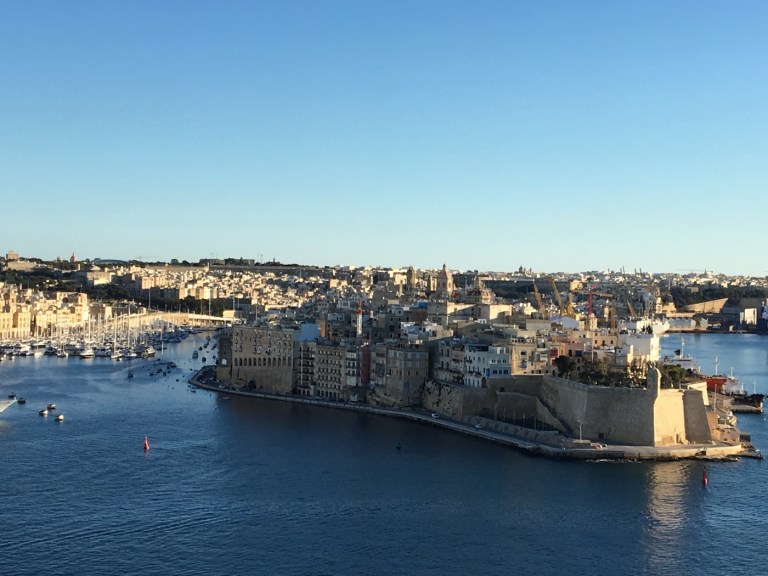
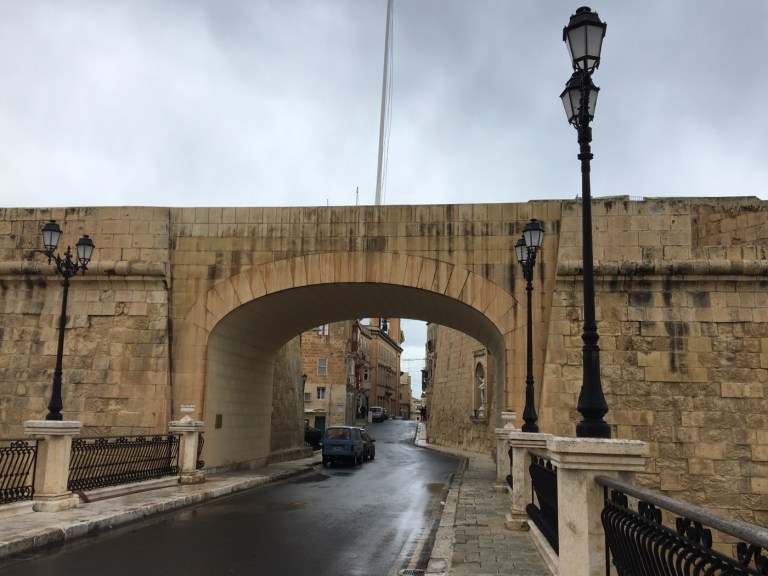
And the cities, which were burned, bombed, and laid siege to several times over, have been rebuilt. The historical walled cities are often baroque and/or medieval in style. Although there’s a ton of new and modern building rising in the “suburbs” or other outer areas where expansion can happen. (Hey one issue with a walled city is there’s no room for growth! I guess that’s why those old Portuguese towns knocked down their walls.)
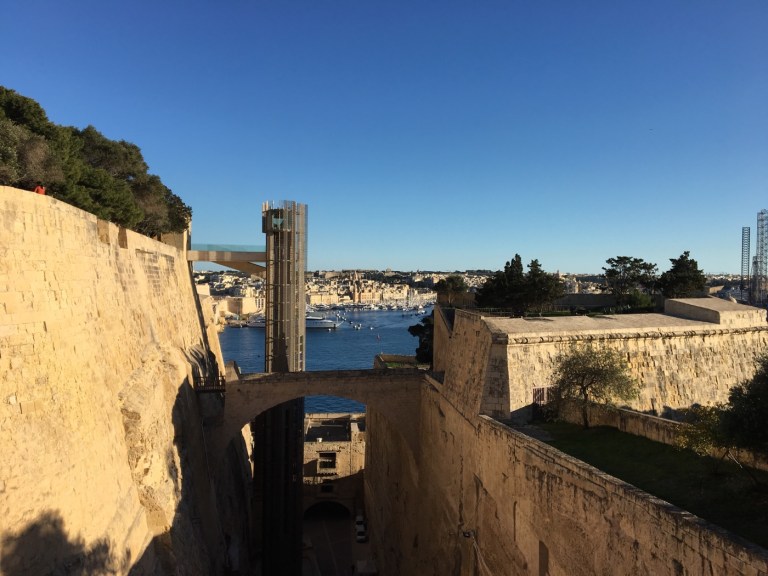
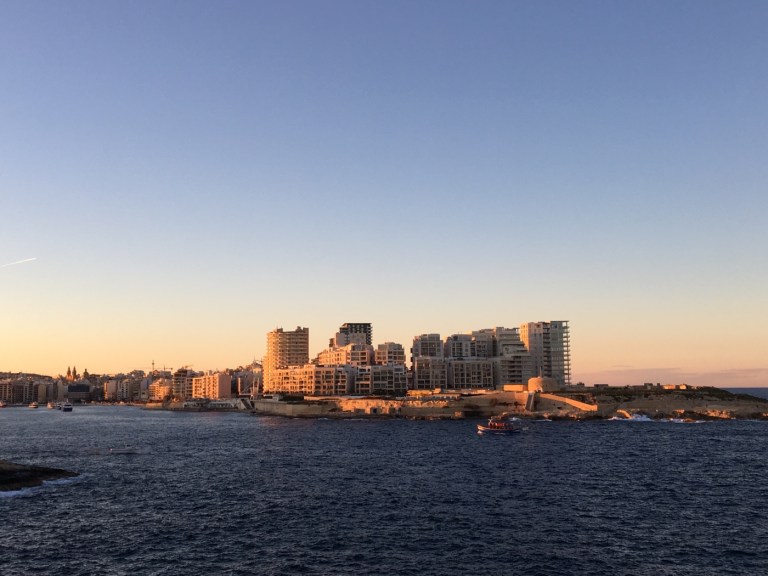
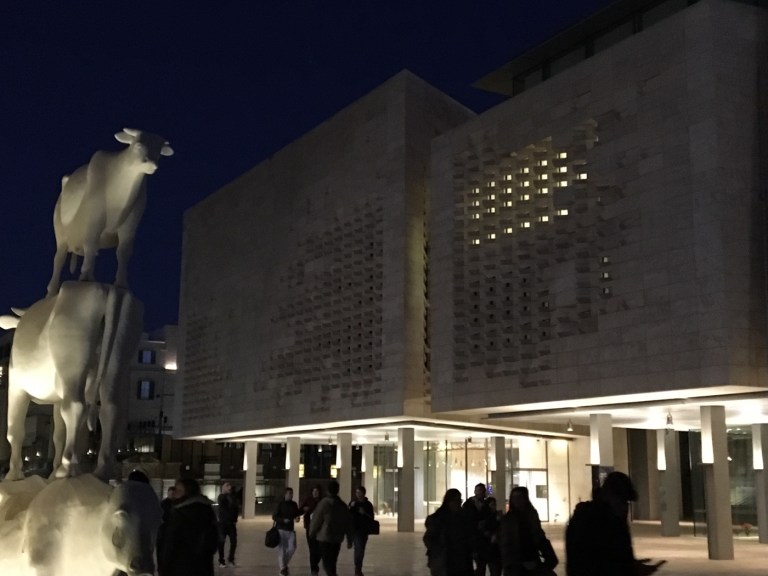
This last one is at the new entrance to Valletta — the wall, gate, entranceway and these parliament buildings were all designed by Renzo Piano to match the old colors but bring new style to the city. Of course the locals hated it all at first but are adjusting.
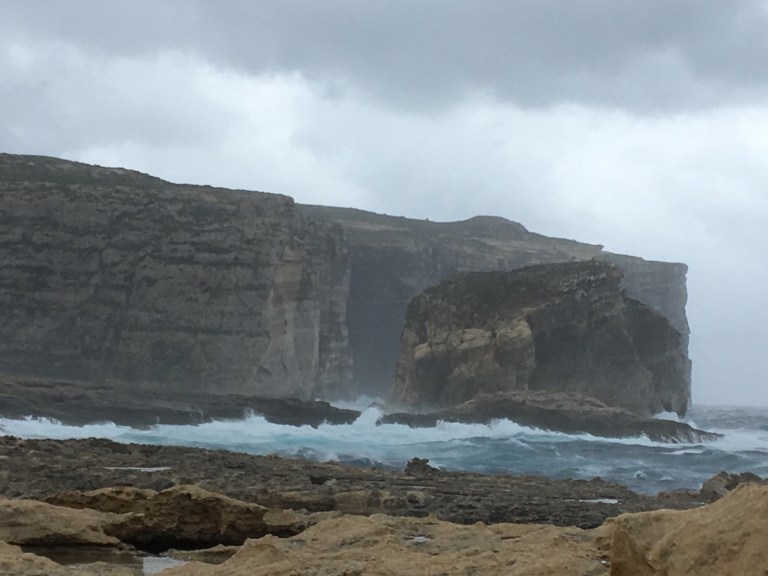
And though we didn’t spend time at the beaches, they have both rocky and sandy types that look stunning. Many blue and other grottoes. Diving is also apparently good on all islands.
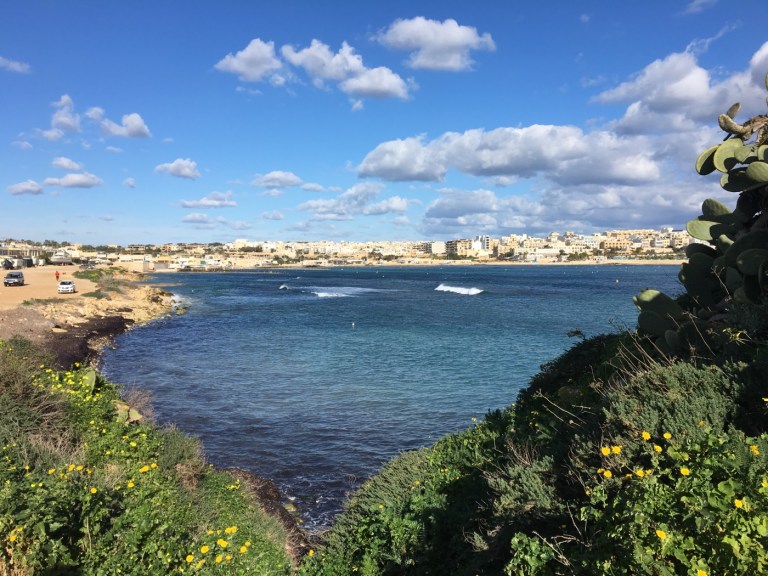
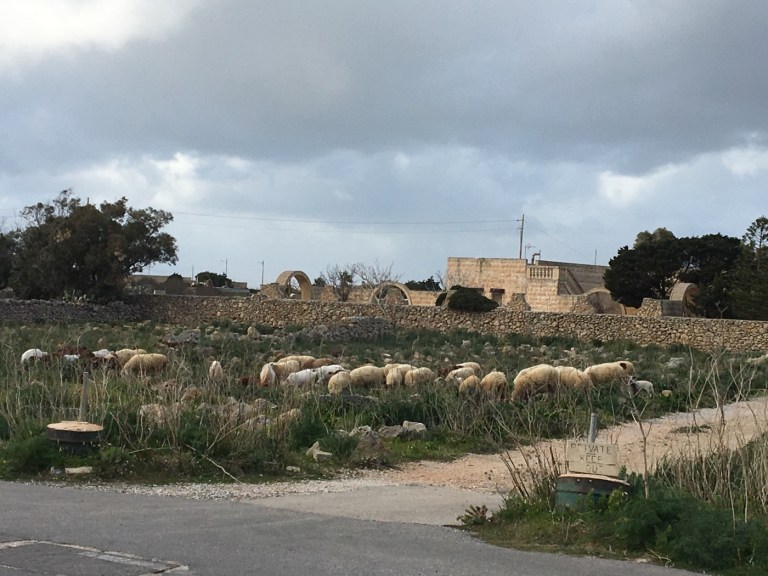
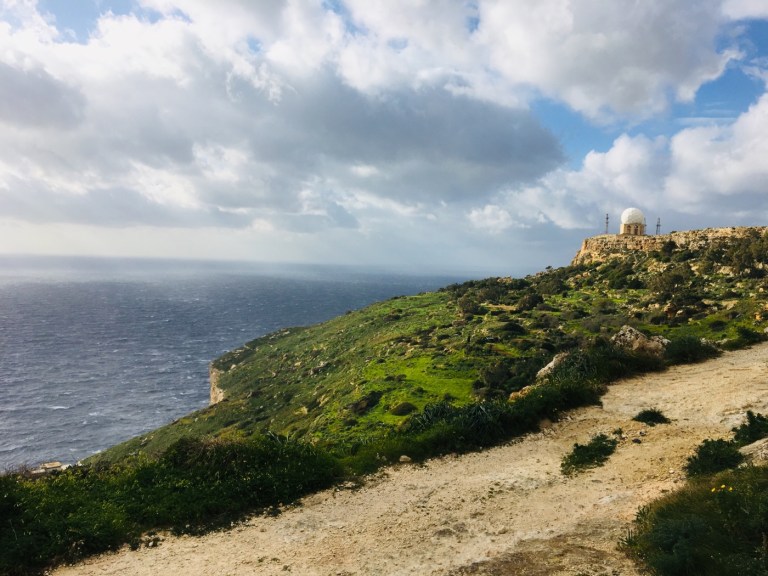
Finally, the rural areas are green (in winter — they say it’s so dry and hot in summer it’s more yellow), often plateaued and terraced, with olive trees and other flora and sometimes sheep and goats. Lots of picturesque stone walls (not sure what for but we saw a lot of them).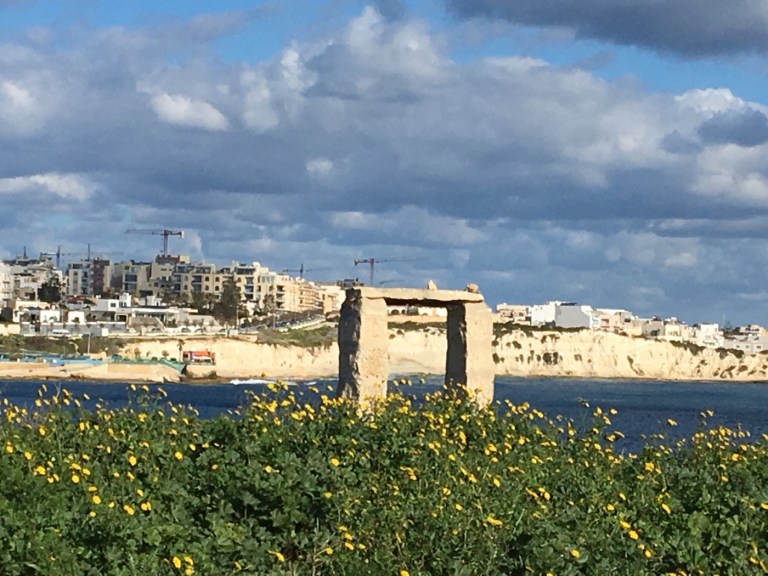
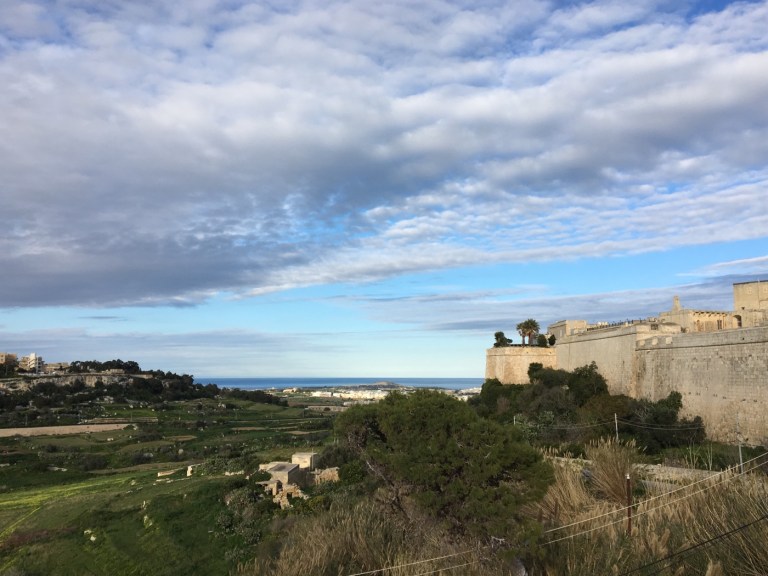
And considering Malta, the biggest island, is about 16 miles long by 9 miles at the widest, you’re never far from the sea. Or anything else for that matter. (Though if you’re only taking buses it can take awhile to get places. More on that later.) Hm. I’m looking at my photos and see I didn’t take as many of the green terraced areas with stone walls. Oops. I think I enjoyed looking at them too much! Oh well. You’ll have to google it — or visit yourselves!
So what did we actually do here? Before Carol arrived, I checked out ruins and cliffs, took the Sliema-Valletta ferry, scoped out some towns, and took a LOT of buses. And contrary to what I swore I would not do after my experience in Ljubljana, I bought an almost all-inclusive heritage sites pass that gives access to about 25 places over a month’s time. Though I had just over a week’s time and the desire to see only 10 of the places. Oh well. I saved a few euros with the pass but I probably went to half a dozen additional places I wouldn’t have bothered with had I not bought the pass. And only a few of them were worth that extra bother. (That said, the ones that were worthwhile cost more than the cost of the pass so it was ok. And I left it with Carol so she could use any I hadn’t used already in her final full day in Malta.)
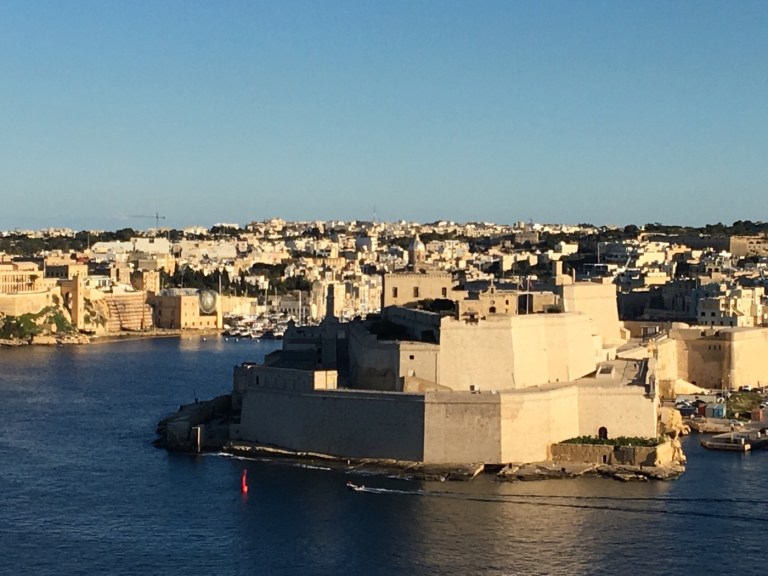
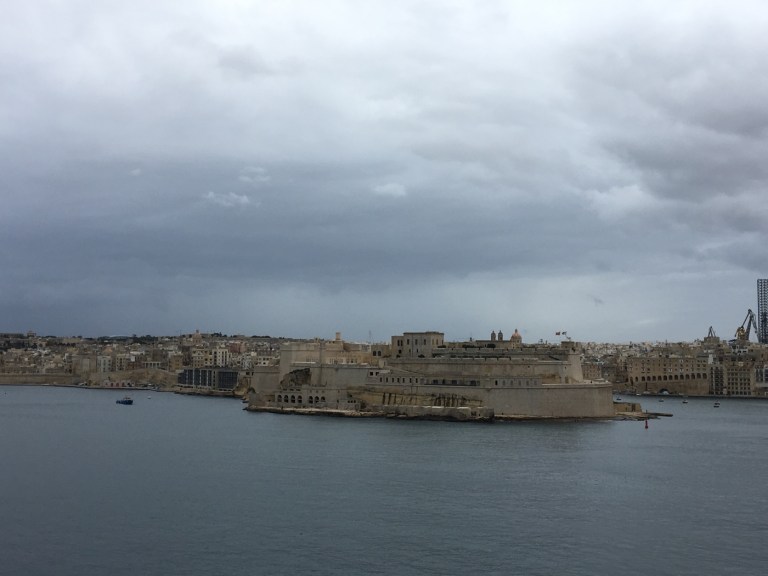
I visited the “three cities” (actually only two of them). Each city has two names — one from its Roman past and one from its Arab side. Sort of confusing but I’m not sure it’s less confusing to call them the Three Cities when Malta has way more cities (and there’s also a completely different area called the Three Villages. Seriously. They can’t come up with more distinctive and less confusing names?). These views back to Valletta and the neighboring two cities are from the Fort St. Angelo which is in Vittoriosa (aka Birgu) and is the fort in the picture above. 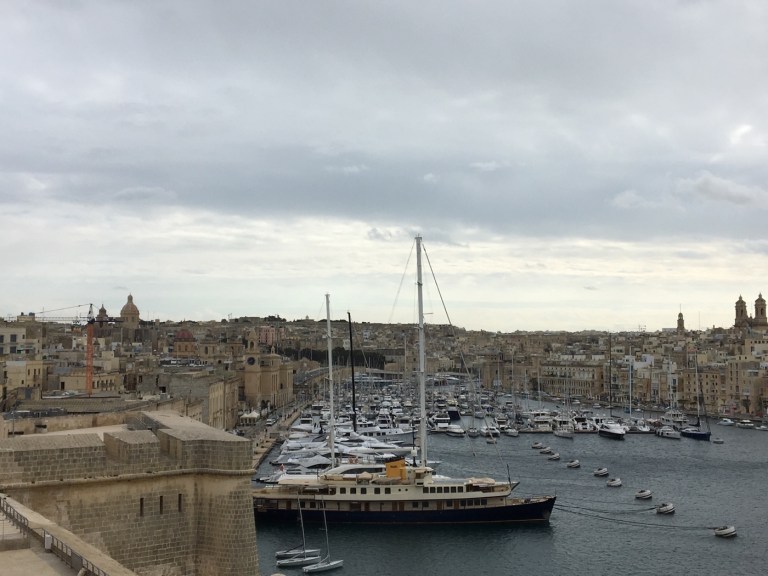
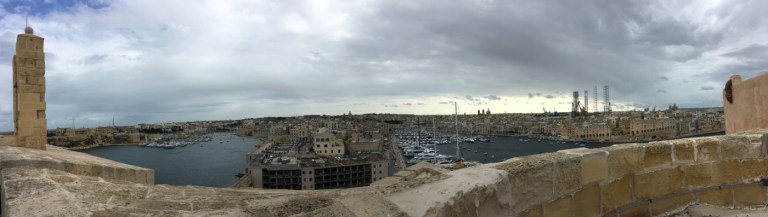
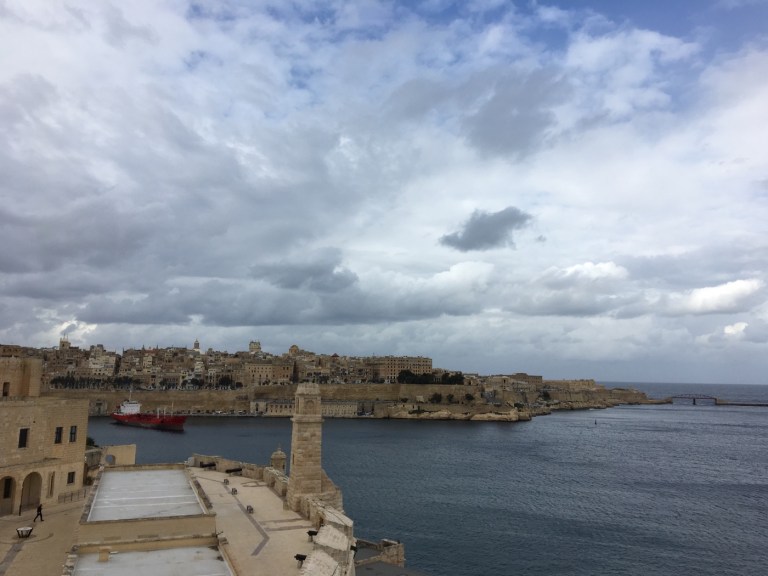
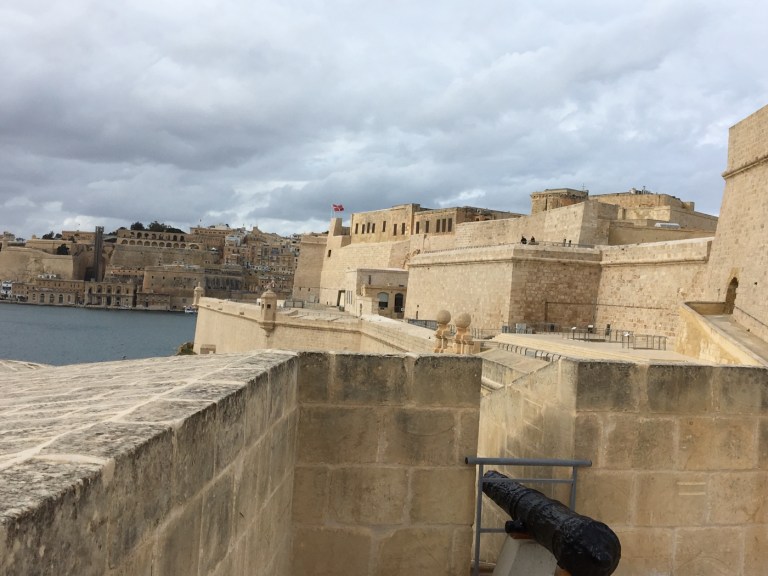
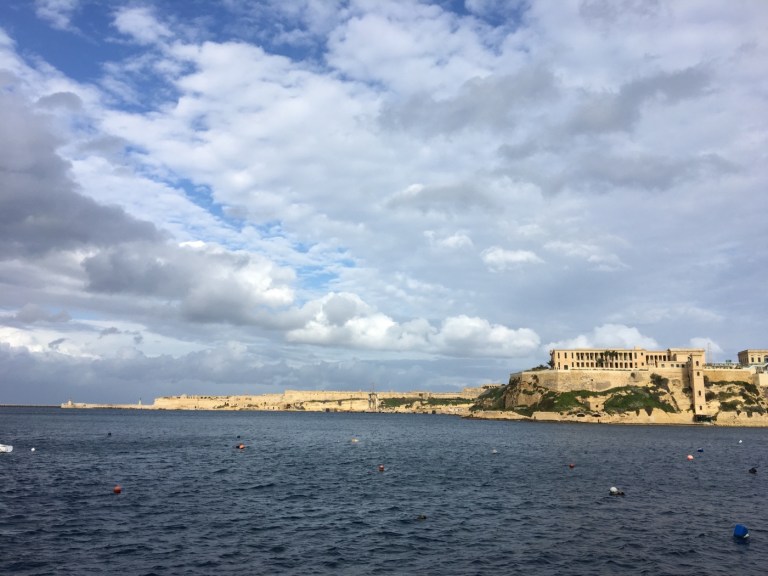
Below are shots of the town and a second of the cities, Senglea (aka L’Isla). See? It is confusing. Also they have three national languages — Maltese, English and Italian. And somehow Arabic is thrown in for names of things. It can be perplexing but since English is so widely spoken (and heard — mostly British but some American), it’s easy to get help even if you can’t read or pronounce anything correctly.
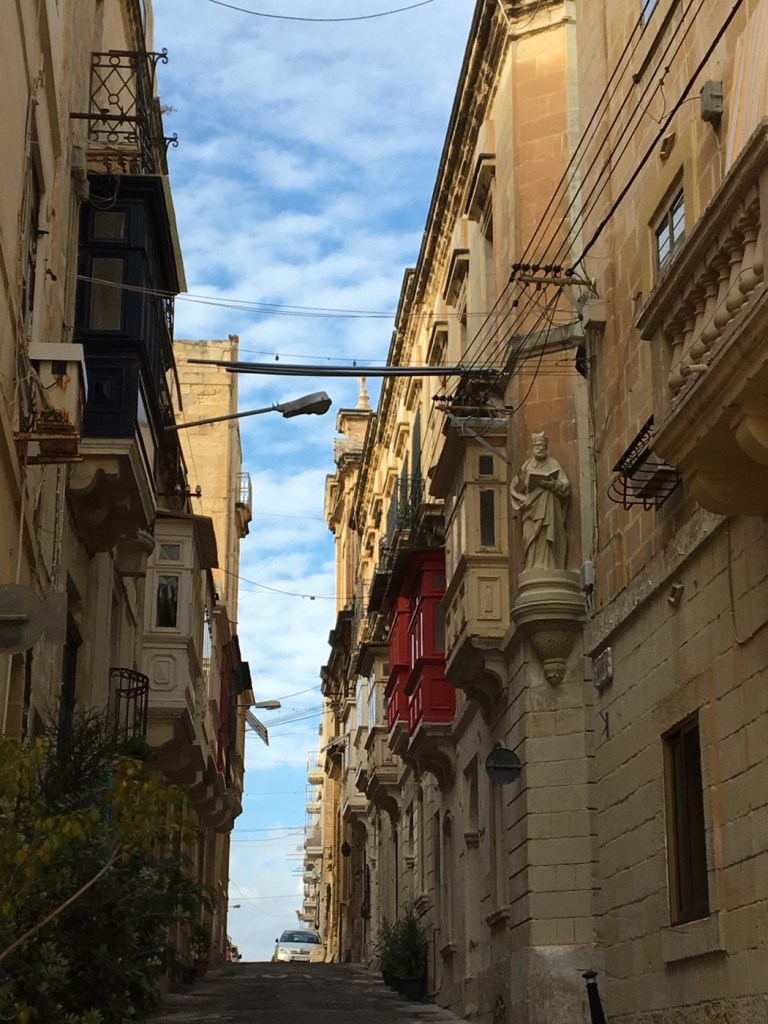
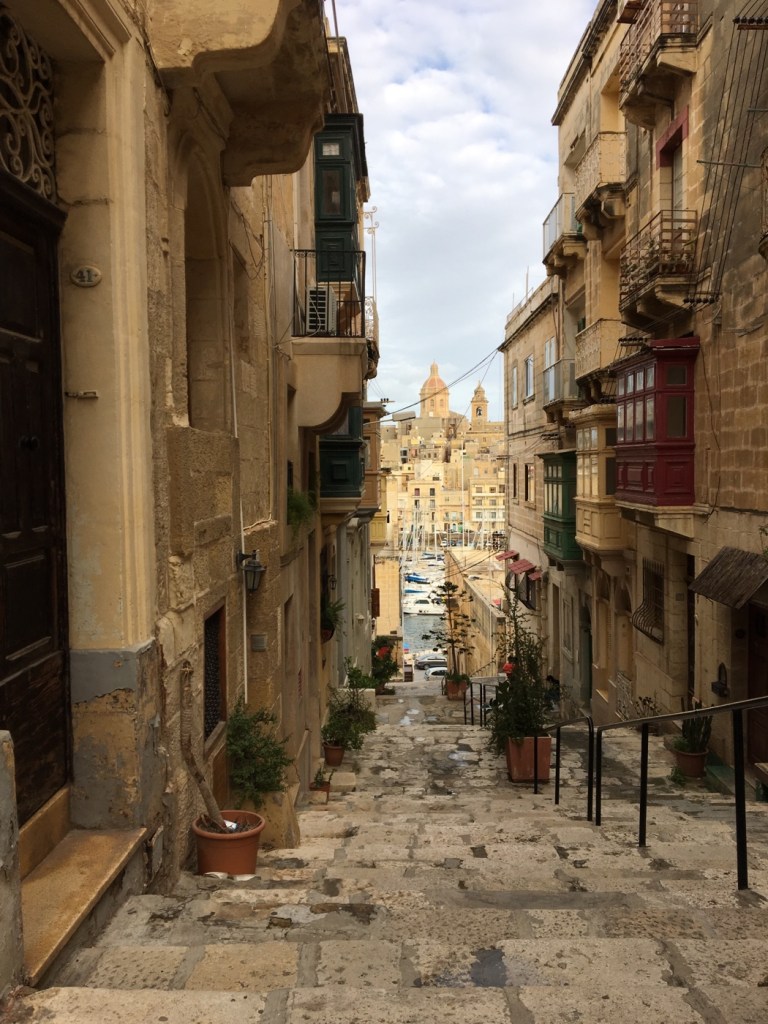
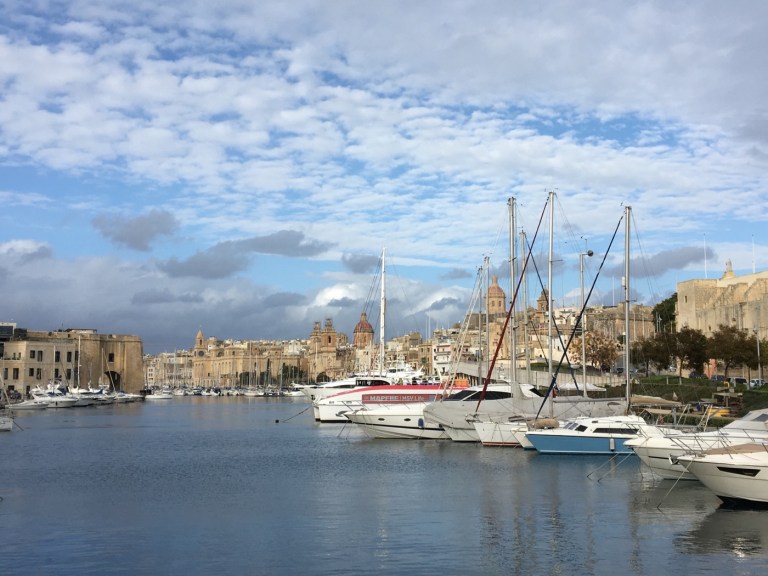
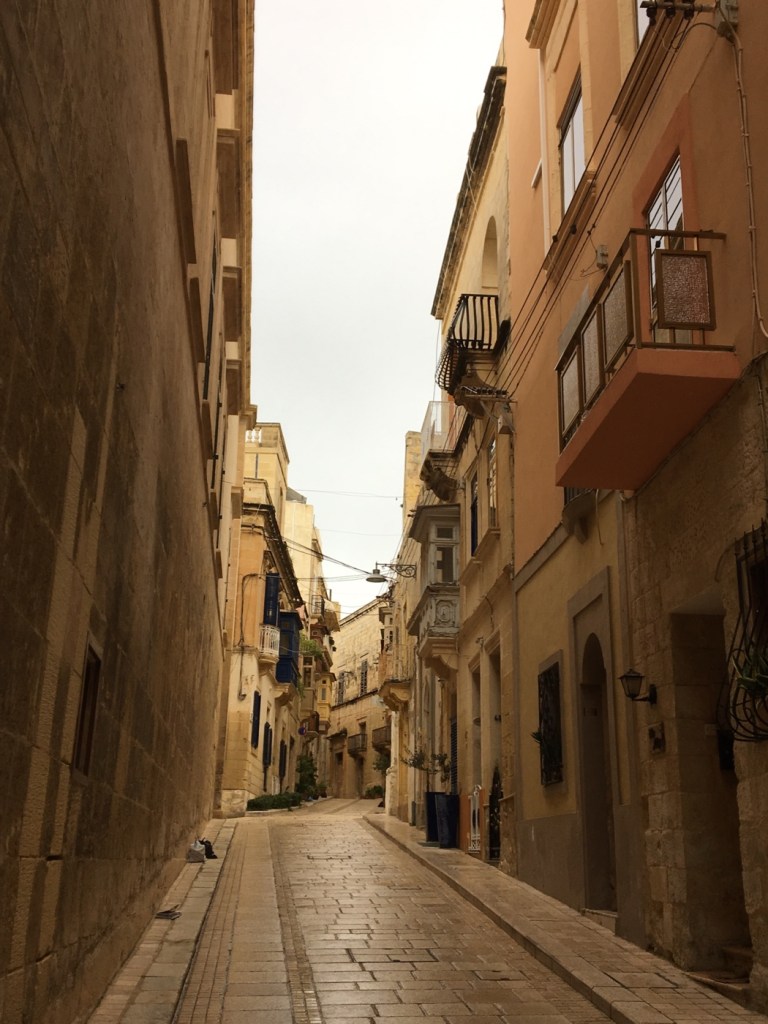
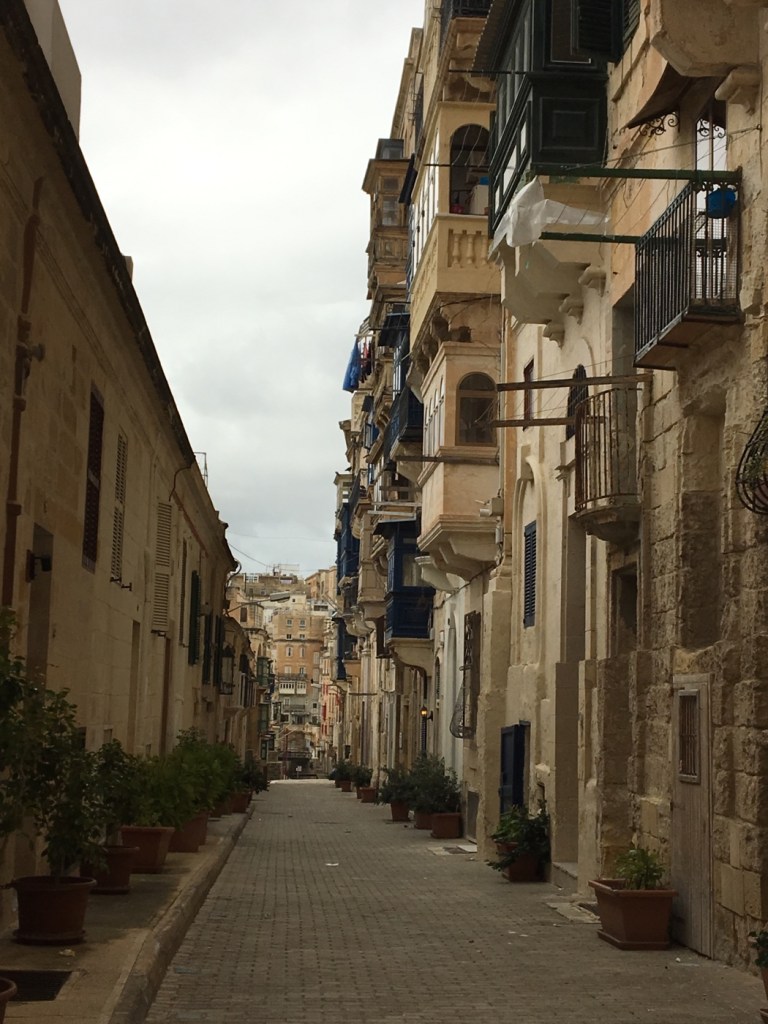
Most of Malta’s cities have these adorable enclosed balconies (in several of photos above). The story is (we took a free Valletta walking tour), one of the grandmasters, living (obviously) in the grandmaster palace, wanted to add details to the existing palace to distinguish it from those who lived there before him. His architect (or someone) came up with this idea to enclose the existing balconies. And it became a huge trend. You see them in every town. It’s really a Maltese thing. (Below is Valletta.)
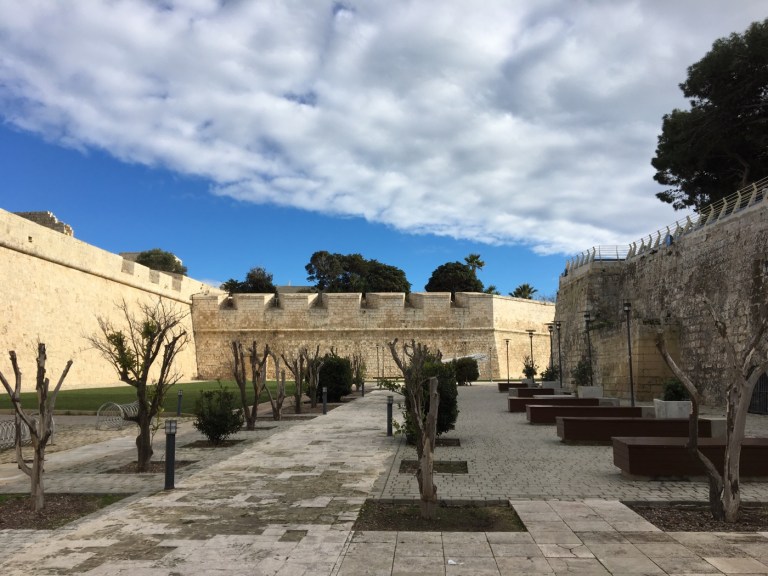
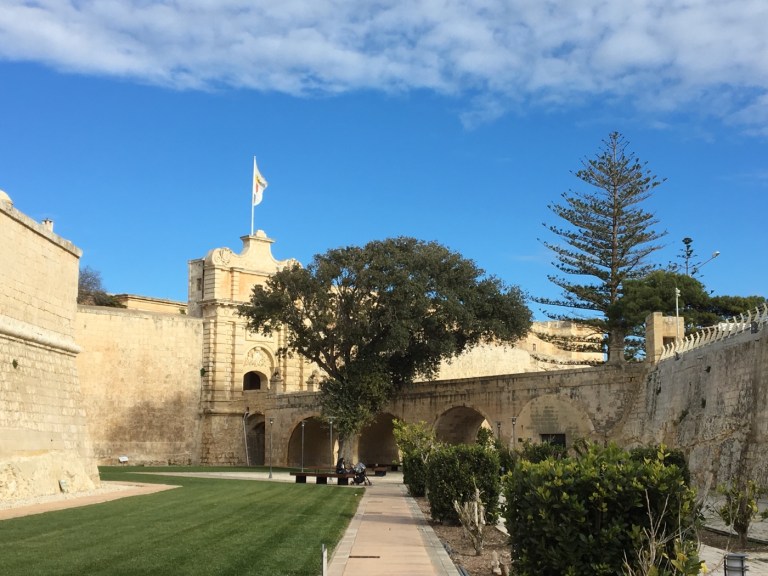
I loved Mdina. I went twice —alone and returned with Carol and we did the Roman ruins and catacombs (in the last blog). But the town itself is cool. Called the Silent City, it has a bit of a mystical feel to it.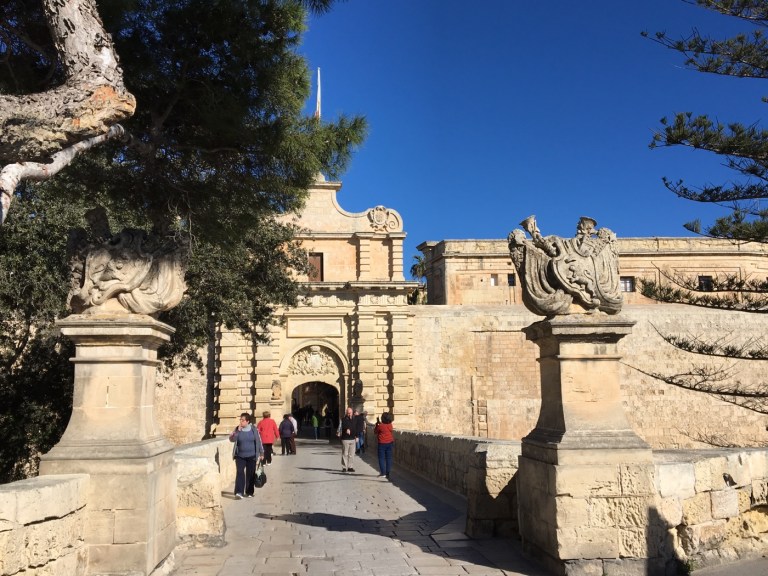
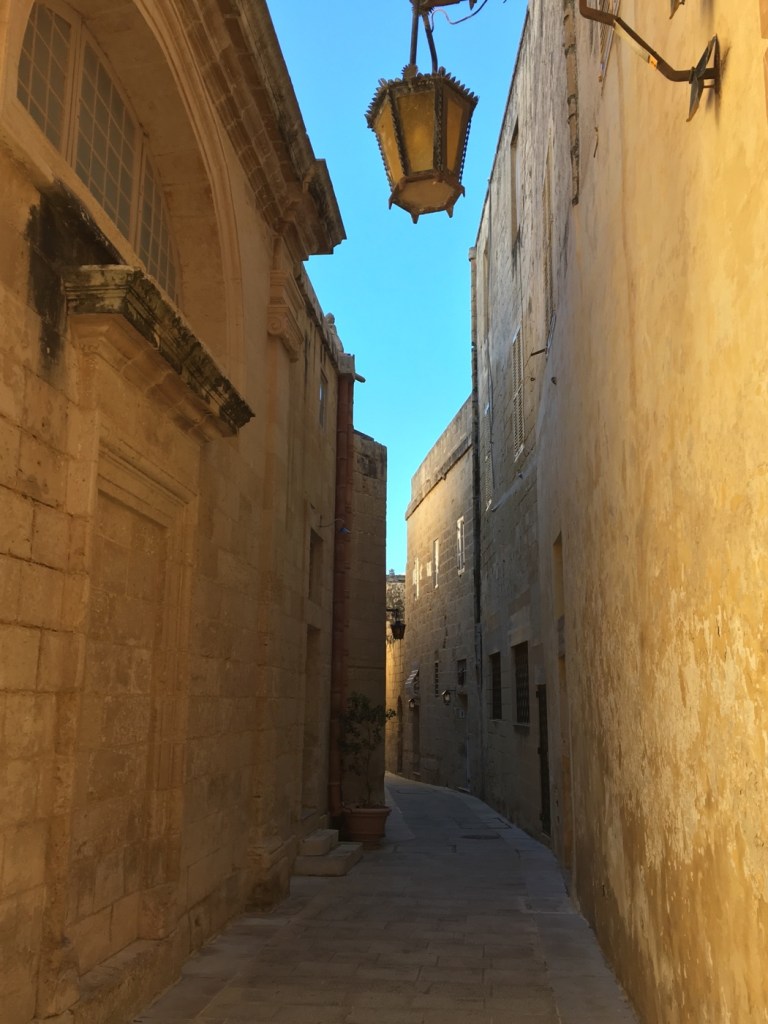
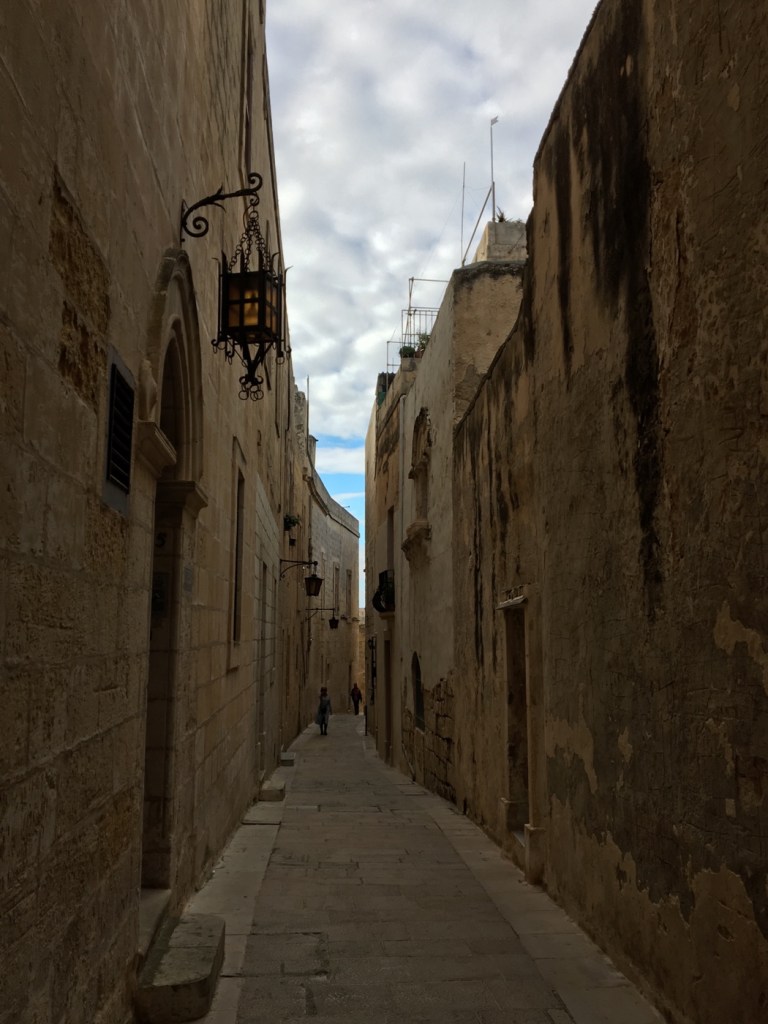
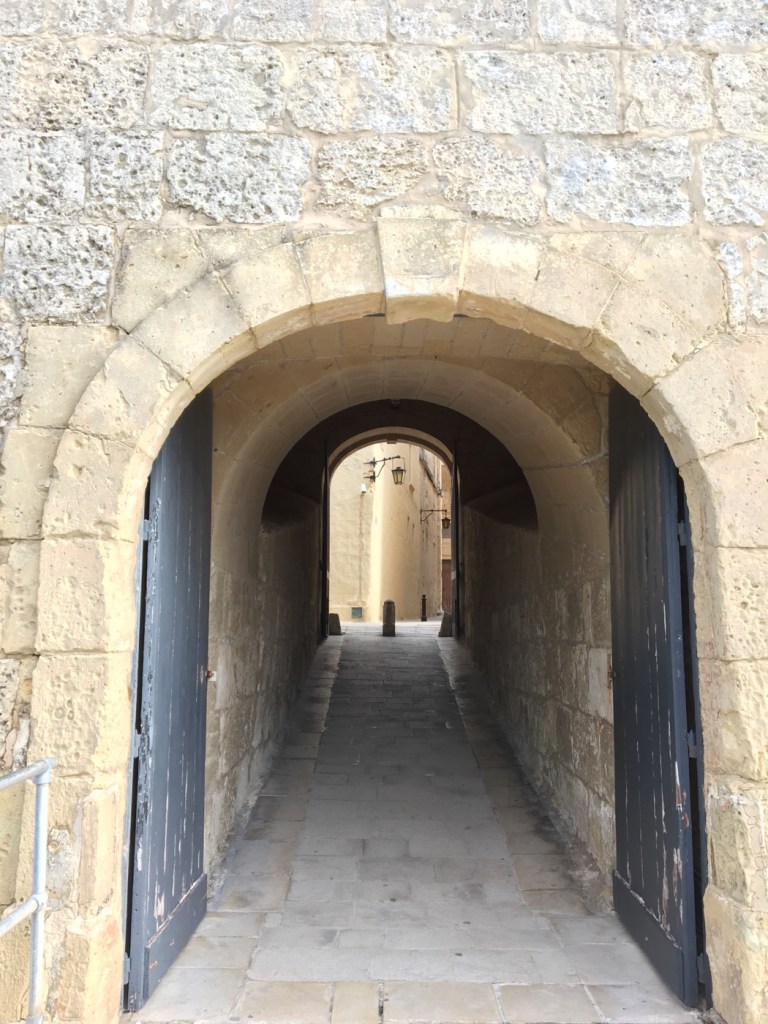
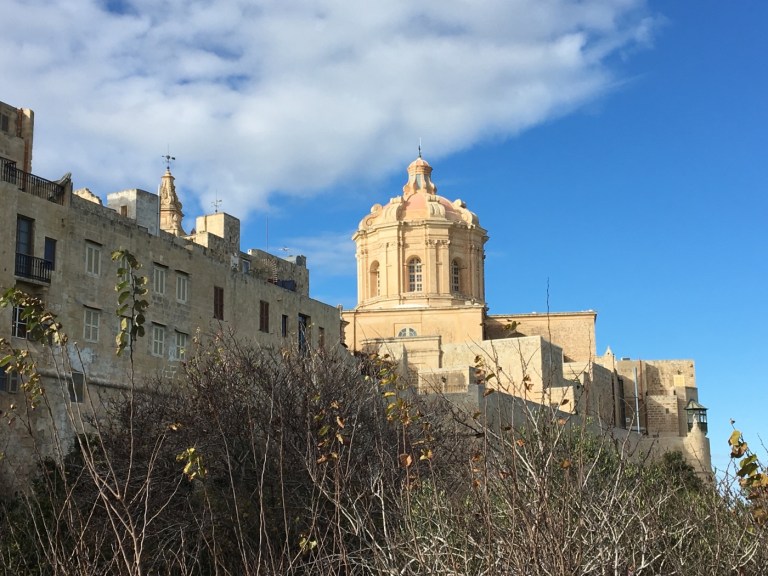
It was the original capital of Malta and was where all the nobility had their houses (still do). The Arabs fortified the walls and named it Medina but later when the Knights of St. John took over the island they built a new capital, Valletta, on the water since boats were a big deal to them. And so inland Mdina lost position and power and was silenced.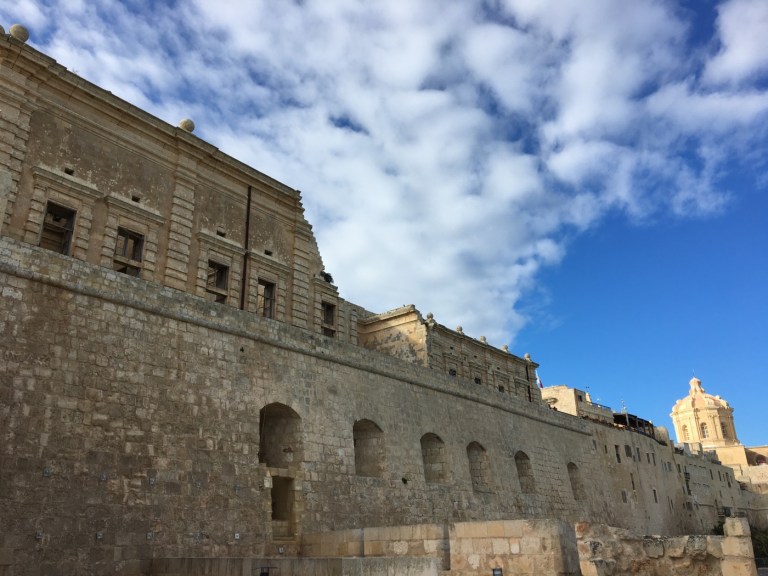
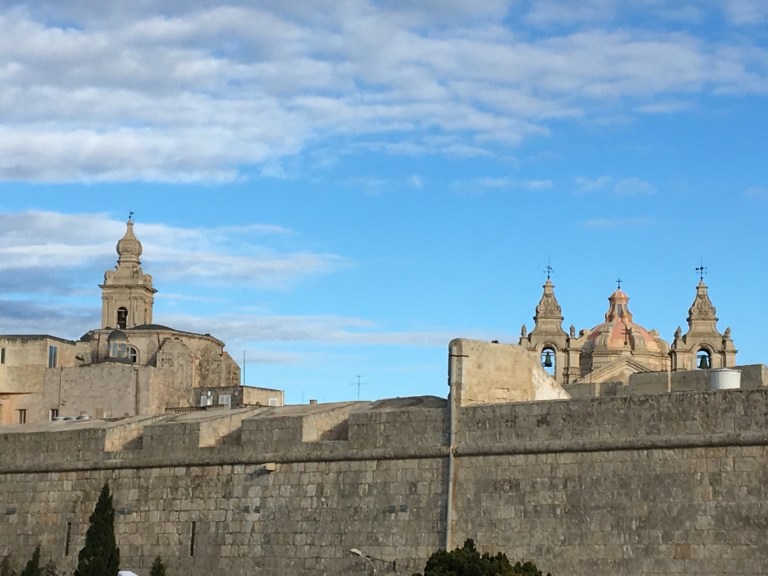
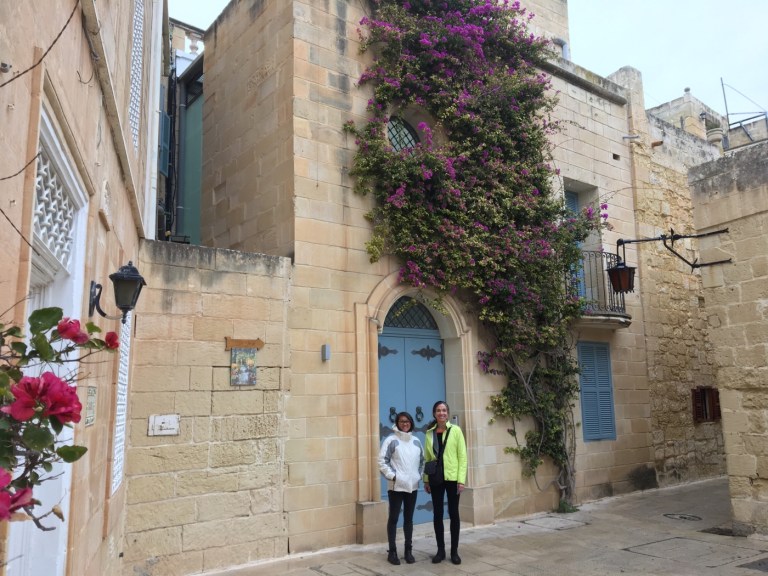
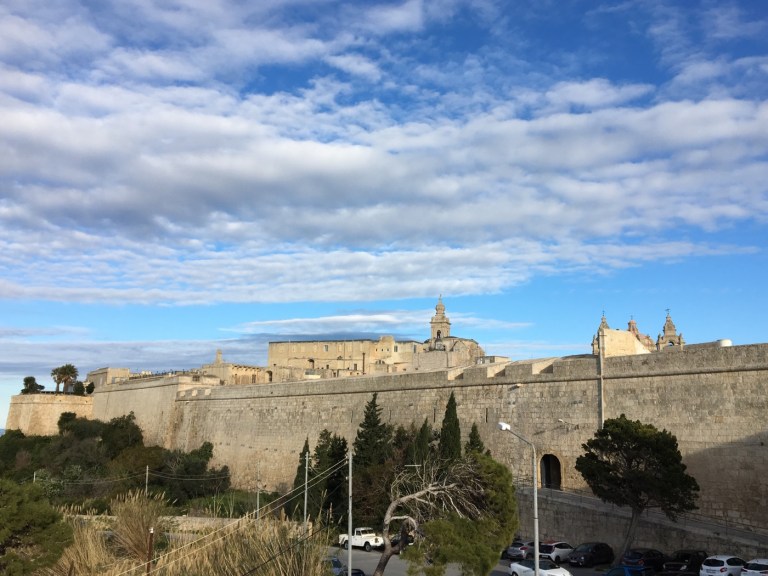
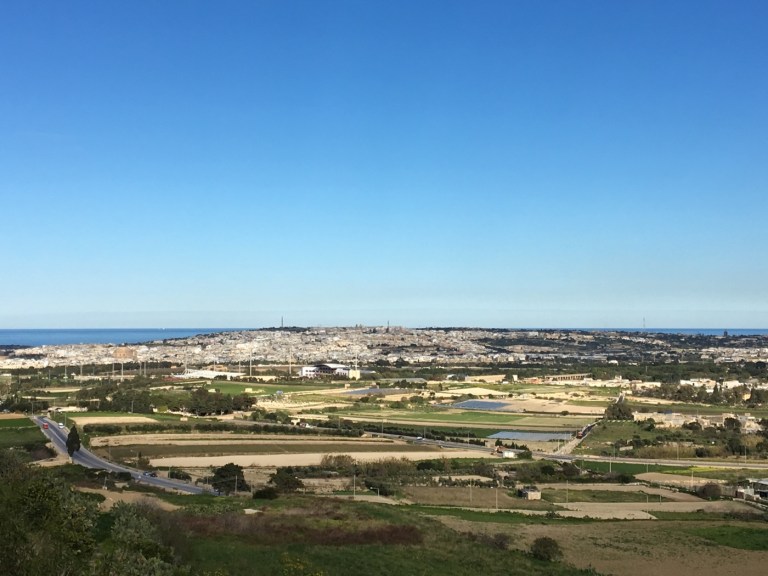
It’s still beautiful and has great views over the countryside. The walls (and moat) are massive. I loved that they made these beautiful parks (and parking) in the former moat space. And we had the best pastizzi (buttery pastry with ricotta, peas, or chicken filling— I’ve also heard anchovies but this place didn’t have that). There were locals and some tourists lined up all times of day in a tiny shack-looking place where €3.20 bought us a tea, coffee, and 5 yummy pastizzi to split! No wonder it’s so popular.
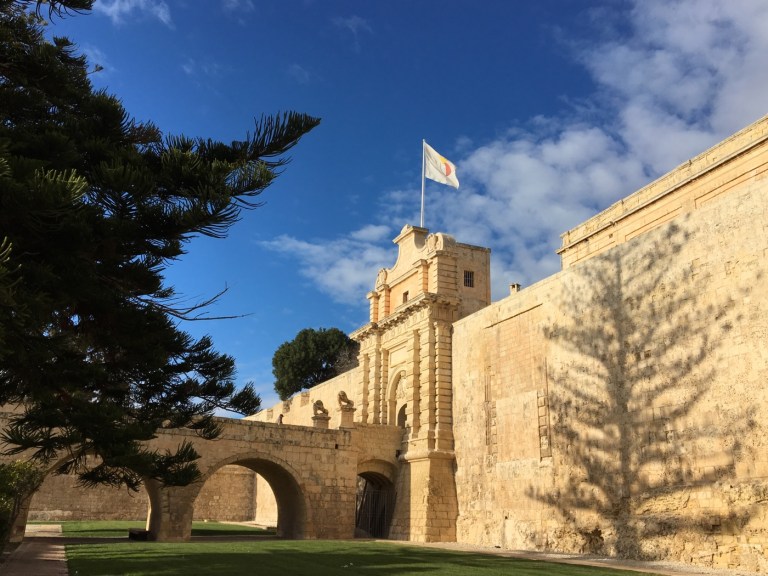
Valletta is also walled and the place with more museums and theatres. And forts. And churches. Carol researched a bit before arriving and saw there was an annual baroque festival starting our first weekend there. She found us nosebleed seat tickets to a “mandolin extravaganza” in the longest continually running theatre in Europe, Teatro Manoel. It was fabulous.
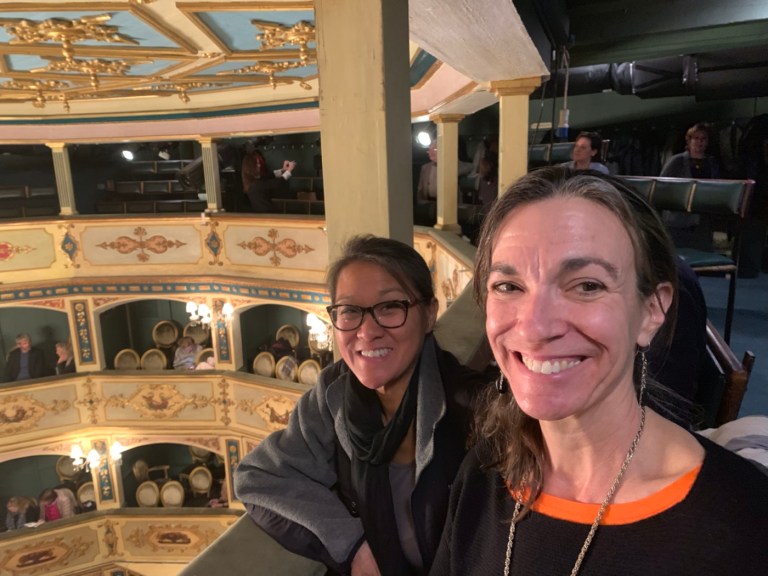
We were absolutely in the cheap gallery seats (4th floor up — on the last flight of stairs there was no carpeting! And we sat on hard benches rather that cushioned chairs). But no problem! We were front row, overlooking the balcony. The acoustics were great. We did see a lot of tops of heads but it was amusing to comment on dye jobs and bald spots.
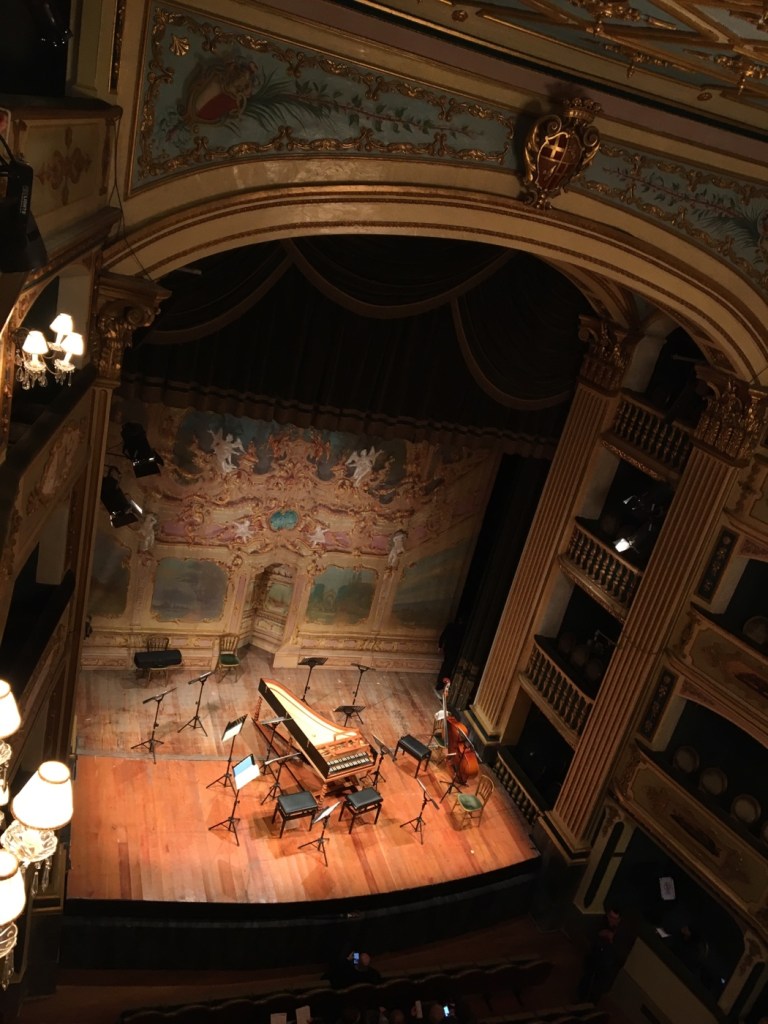
Being baroque, there was of course Bach (including one of the Brandenburg concertos — my family knows I find the harpsichord “tinky tinky” sounding particularly in those concertos but it was fine. And short). Also Vivaldi and Bartok. All good chamber music and in a lovely setting.
While we were touring the grand master’s palace we saw another group, with vocalist, rehearsing in one of the public rooms. The festival takes place across the island in churches and other famous buildings. Really fun! And I don’t know what it is but when I’m in the front rows in big or small theatres — where the performers can often see me— I always nod off even when I’m thoroughly enjoying the show. But when I’m in the nosebleed seats I’m wide awake — must be the thin air!!! Or some fear of falling (though I felt quite safe up there)?!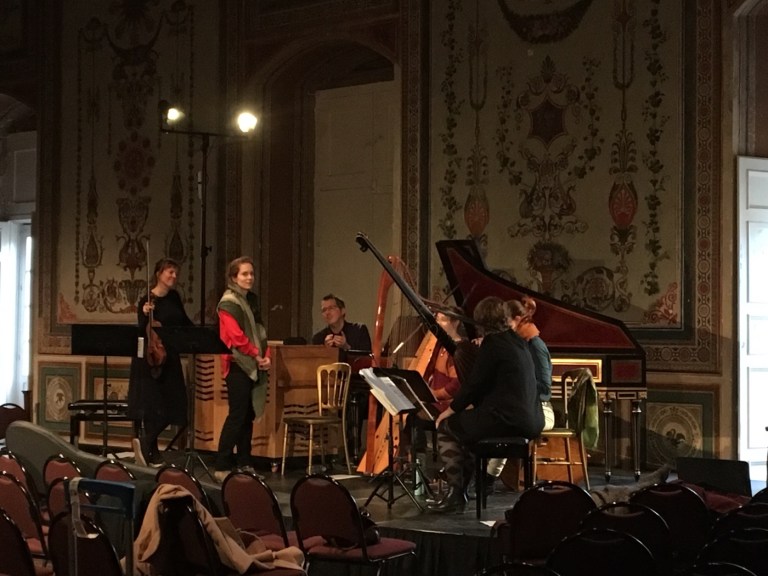
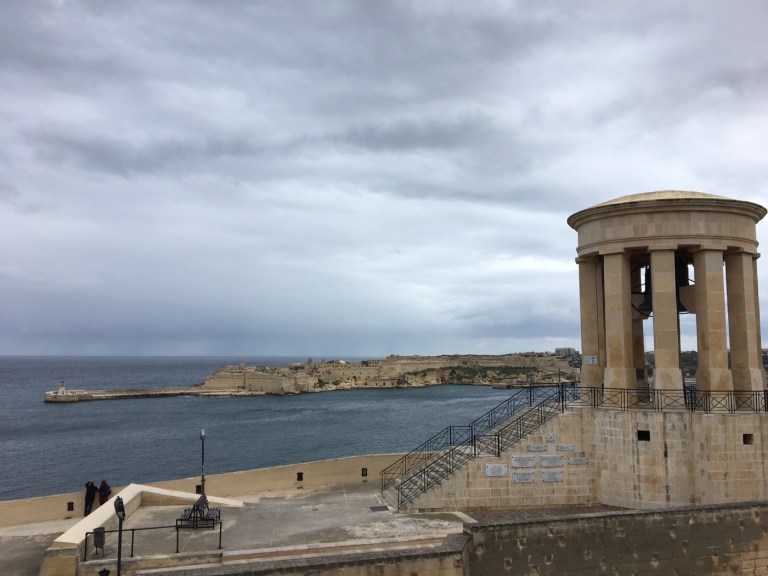
Back to Valletta. It was built by knights on a peninsula so had a lot of fortifications. And cannons. And forts. Every day, twice a day, they shoot a ceremonial cannon and I happened to be at the Upper Barrakka gardens a few minutes before one of the scheduled firings.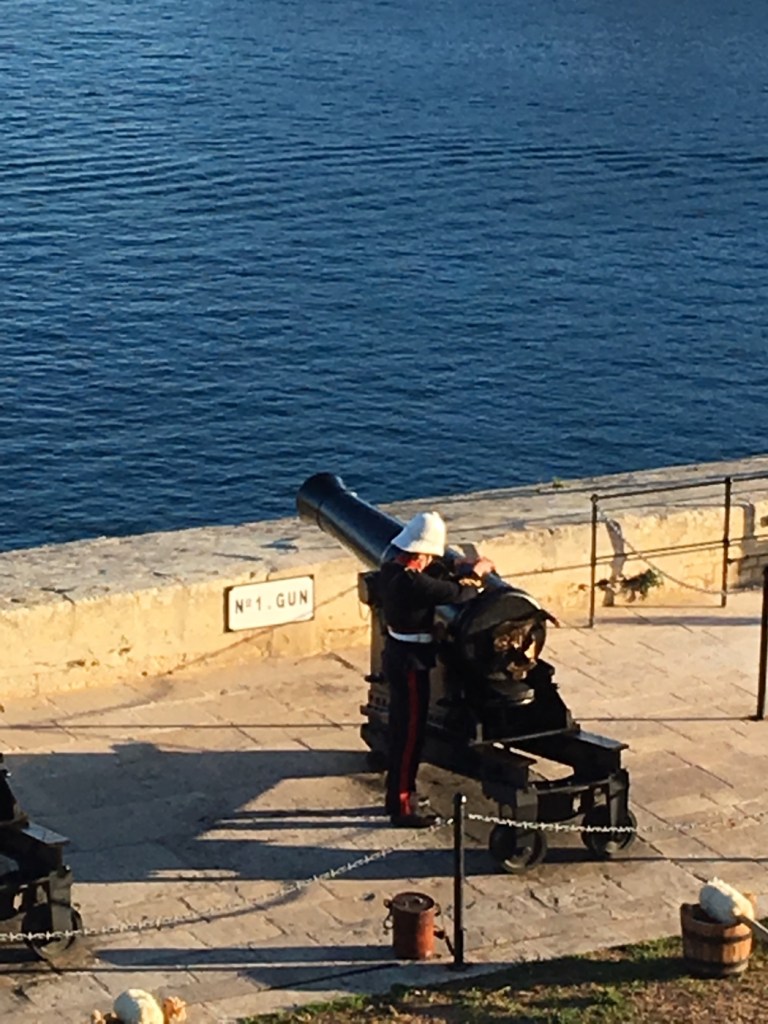
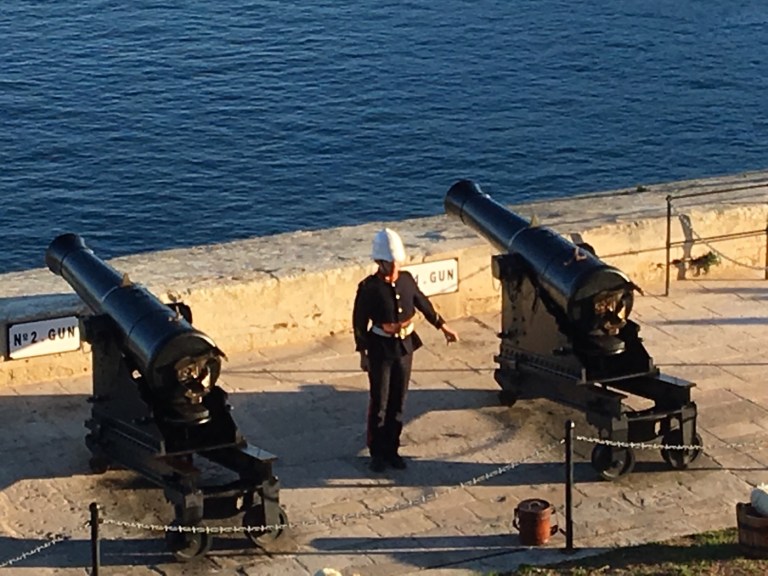
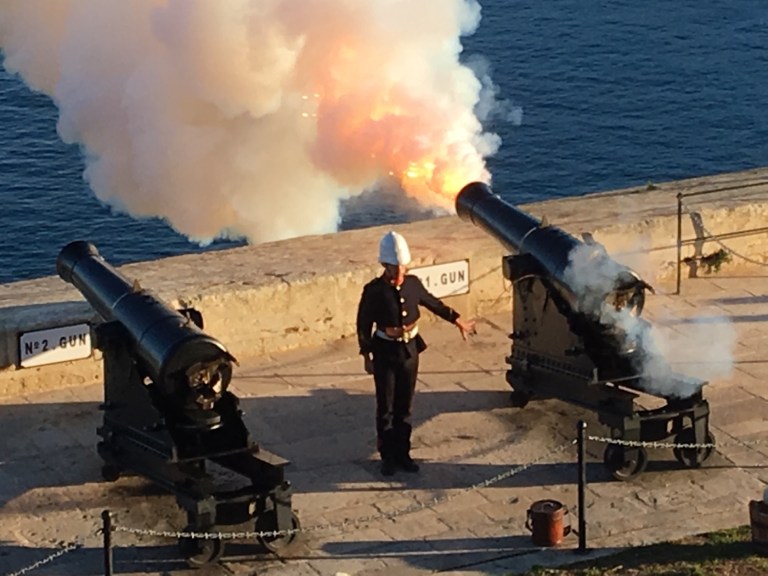
Amusing. Ritualistic. Loud. But fun. I was at the gardens because the views are supposed to be great (of the Grand Harbor and over to the Three Cities). So took lots of photos. 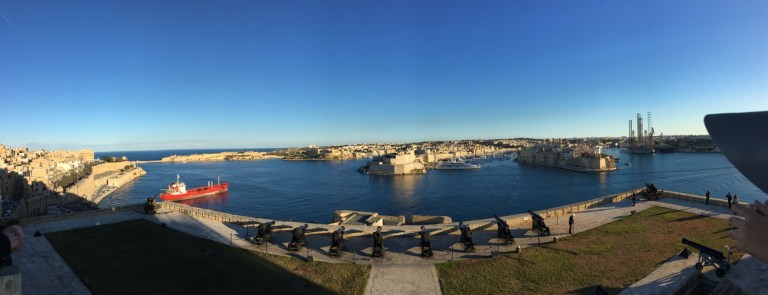
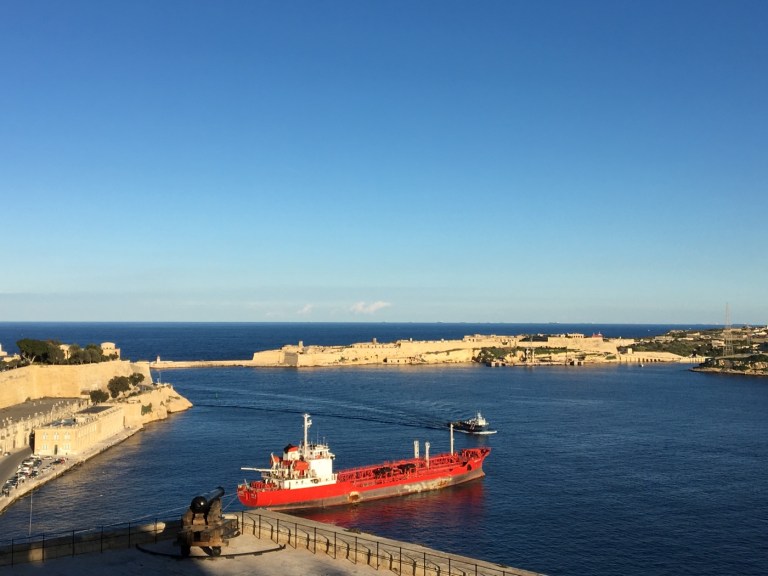
The views are also great at the Lower Barrakka gardens, which is at the endpoint of Valletta. (You can tell it was on different days and with very different weather!)
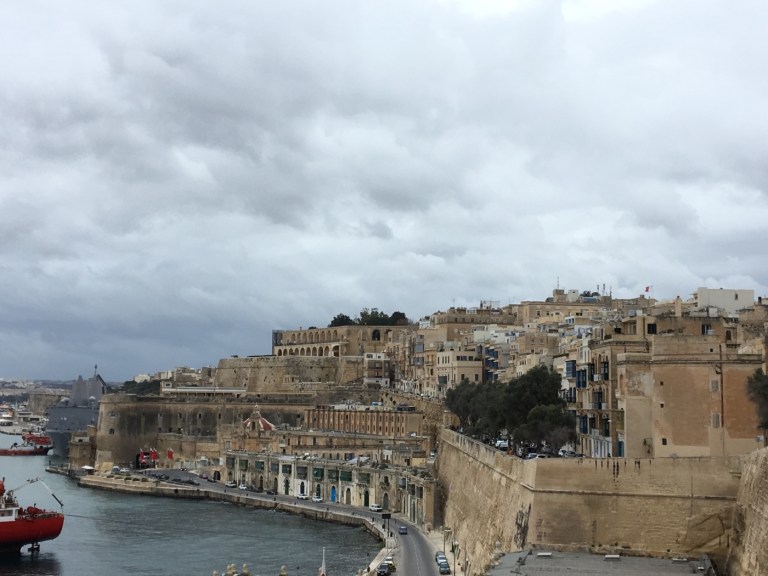
And before I leave Valletta I have to comment on the St. John’s Co-Cathedral (the other cathedral is in Mdina). It’s the church of the knights and there were chapels done by each langue. As well as the center altar and all that. It was pretty stunning inside with its baroque stylings. 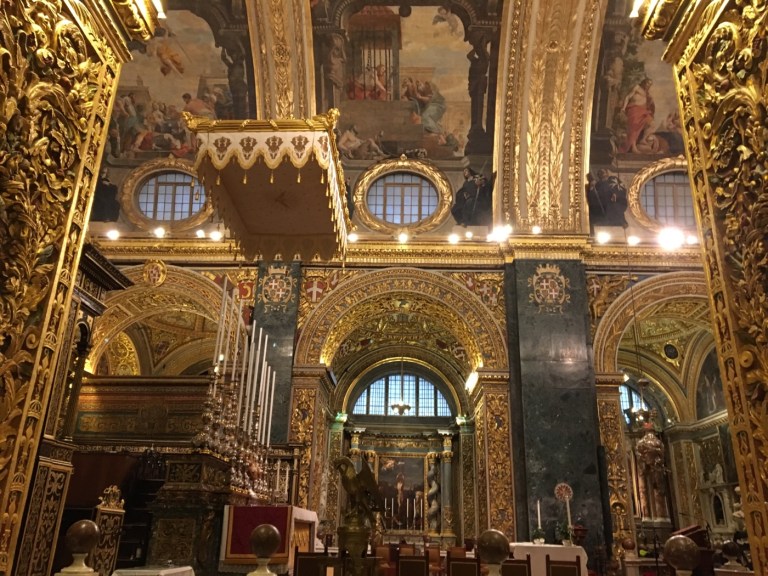
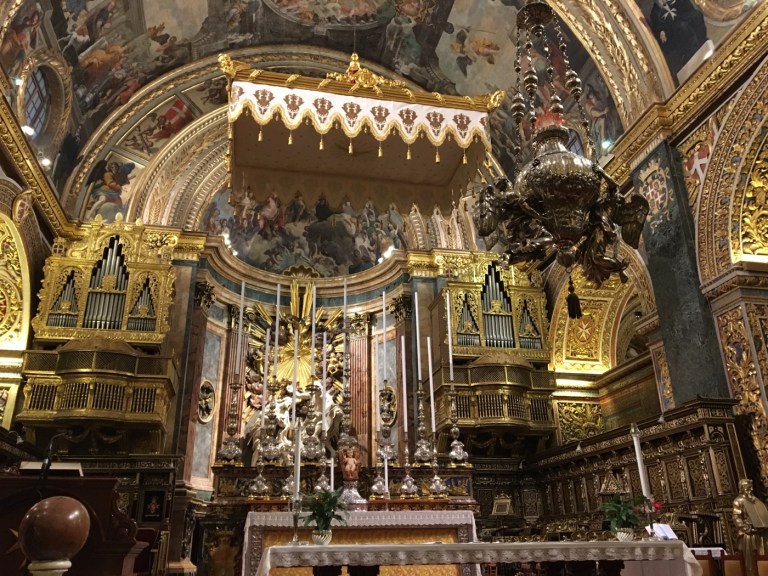
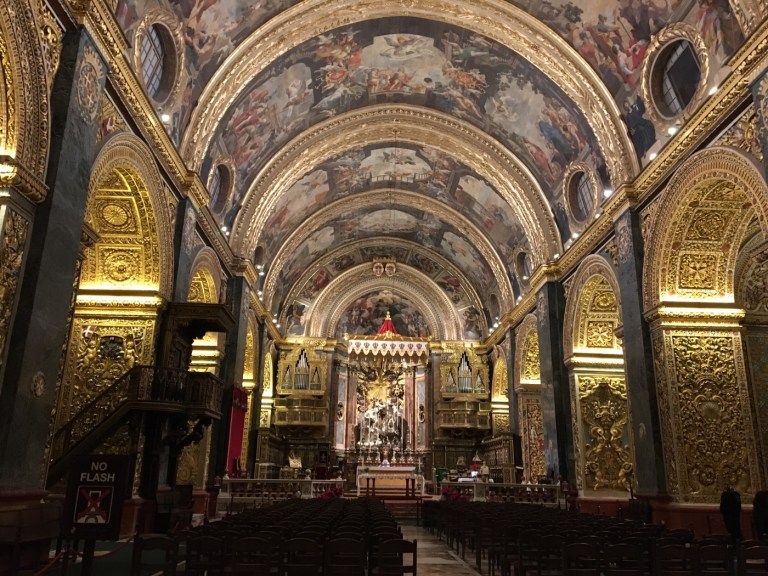
It’s also famous for its beautiful Caravaggios. (Three of which are no longer on Malta.)
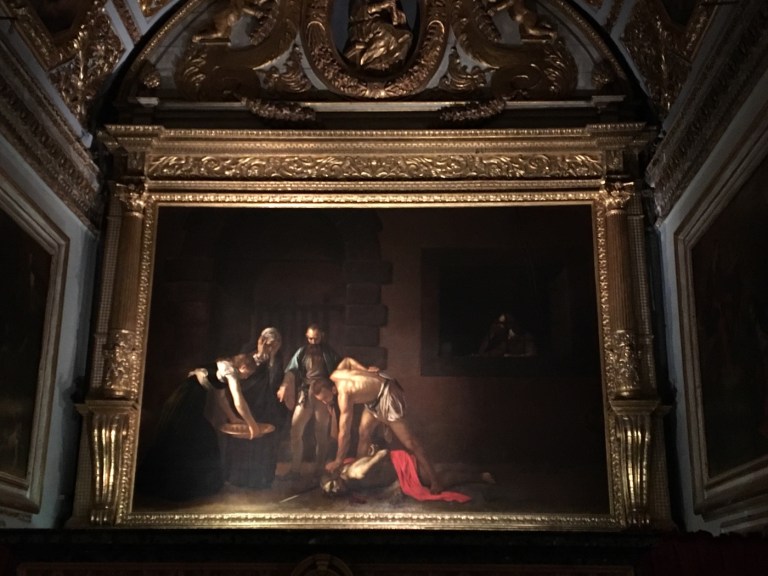
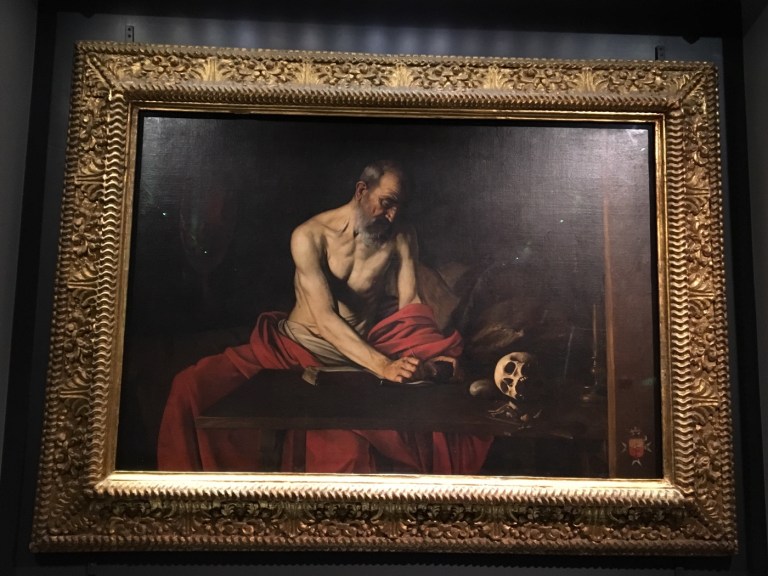
Caravaggio was a knight of the Order who fled to Malta for safety from imprisonment in Italy. But ended up getting imprisoned in and then escaping from Malta. Quite the life. The first painting is huge and shows the beheading of St John — commissioned by the Order — and is the only (?) signed Caravaggio. I had no idea he had such a relationship to the Order.
On the one really great weather day that Carol and I shared, we took a long walk along the eastern coast. There’s a Sunday fish and open market in a small fishing village (Marsaxlokk) and Carol had the great idea to precede our trip there with a 1.5 hour walk from a different village (Marsaskala) along the coast and through the countryside. (We had a bunch of maps for walks all over the island but only had time and weather for this one.)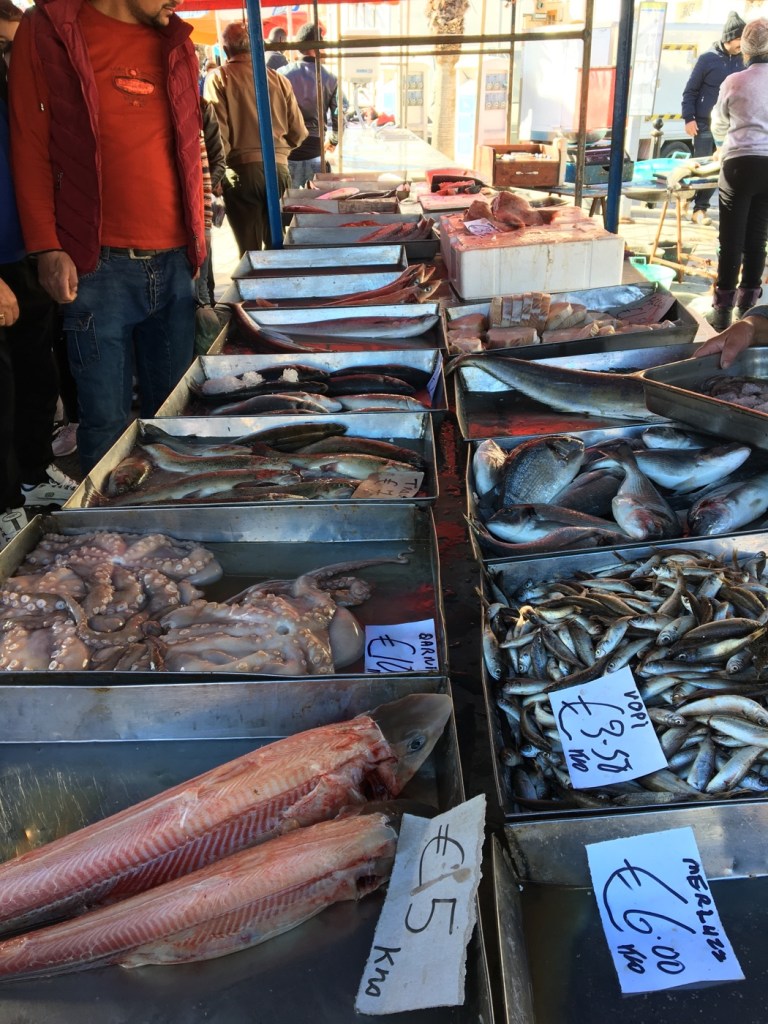
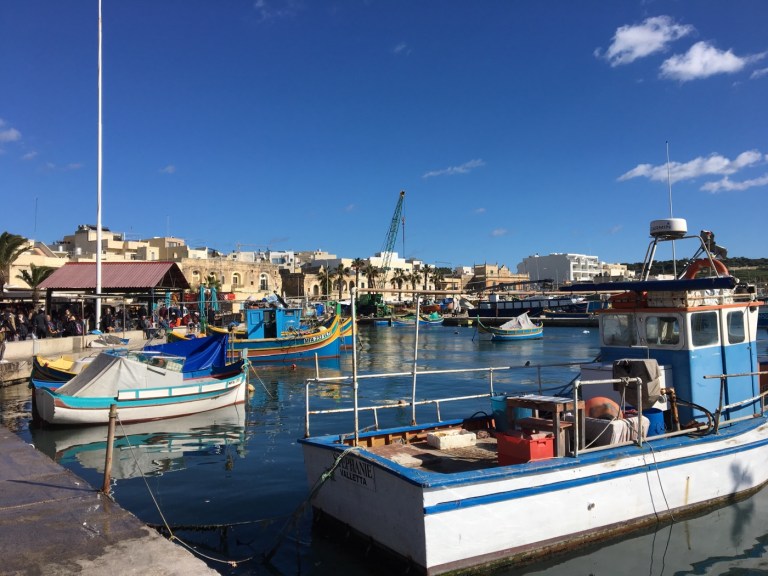
It was a perfect day. We saw salt pans and large and small boats (one large boat honestly looked like a small island out there it was so large. Well they also have some pretty small uninhabited islands nearby). We saw farmers and farm land plus beaches, cliffs, churches, and of course abandoned watch towers. And even an abandoned hotel, we think, with great murals of LOTR characters.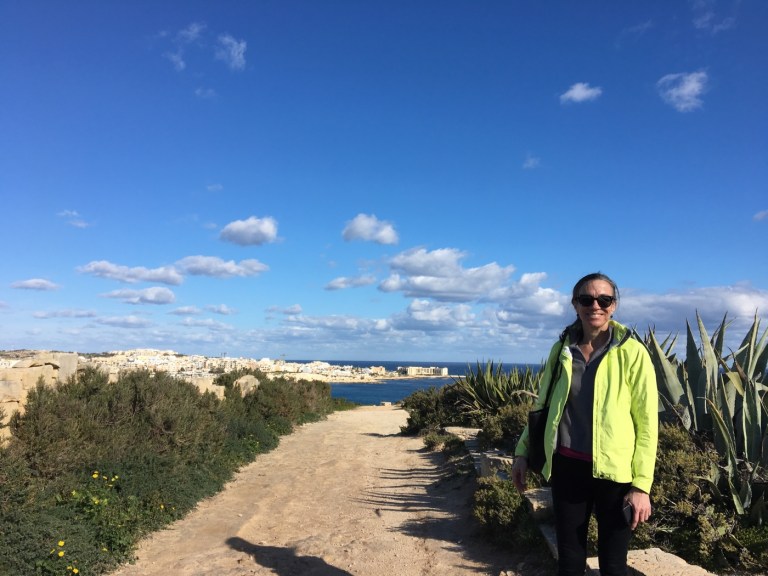
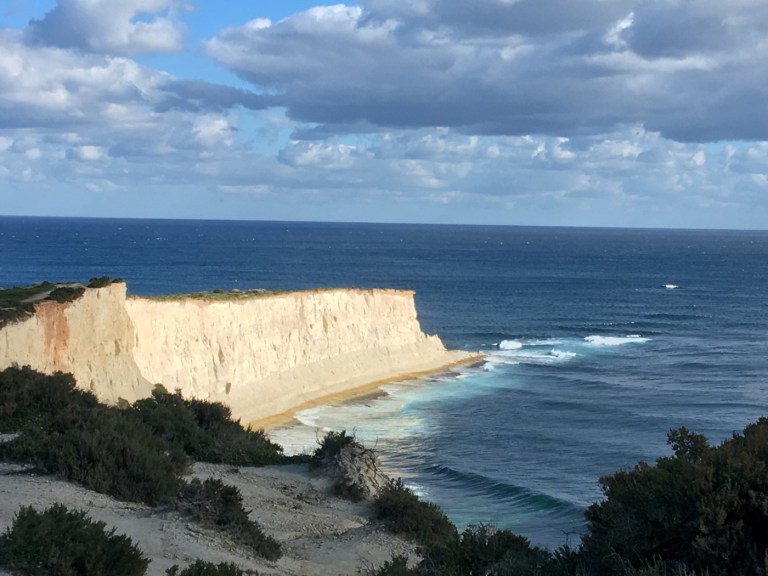
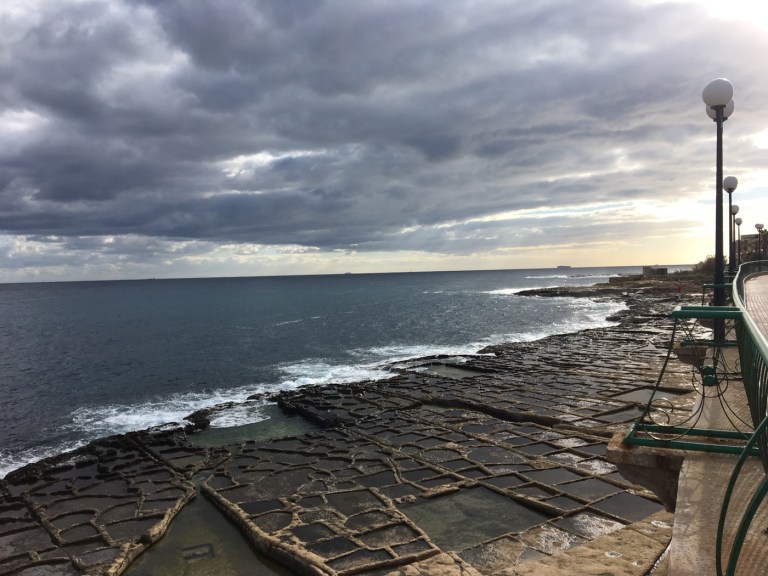
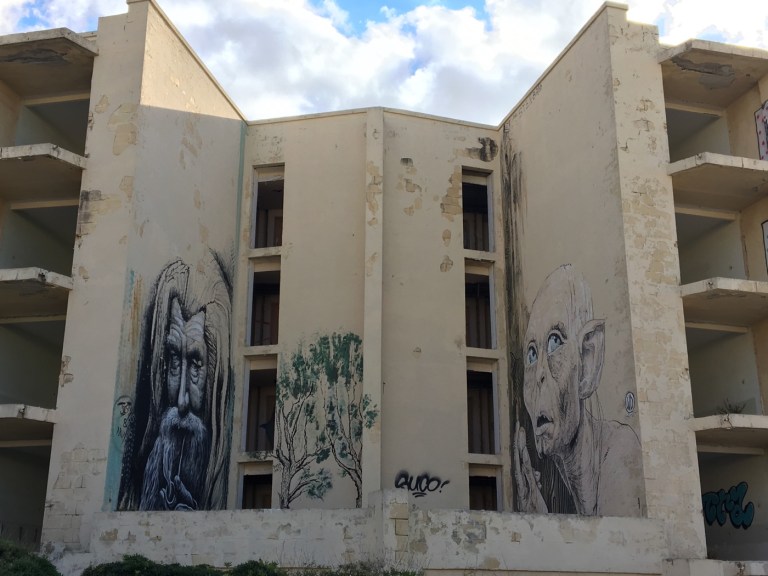
One of the highlights of the trip! The fish market was also cool and we had a great seafood lunch on the water.
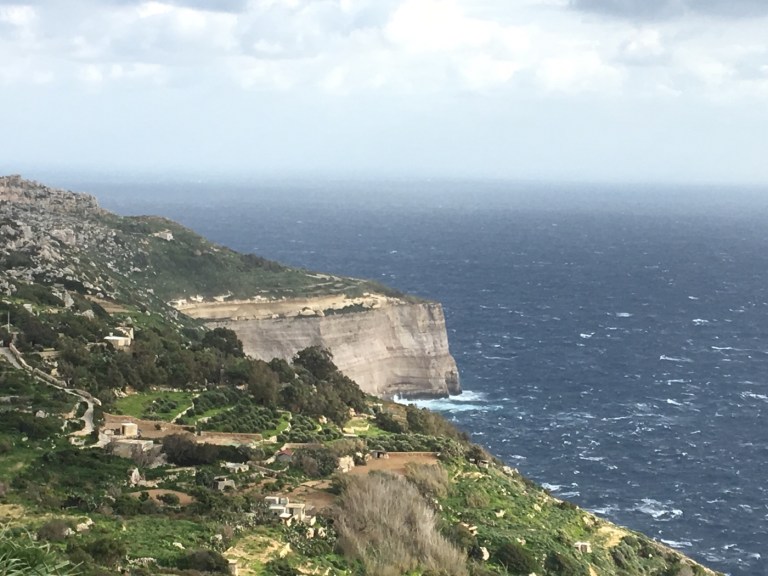
I’d also gone to a town called Dingli, which is the highest coastal point in Malta and famous for its cliffs (pre- Carol). And it was of course very windy and a bit rainy — I had to sit down a few times because I was afraid of being blown over. Though beautiful, having seen lots of cliffs near Lagos and other Maltese cliffs, it perhaps wasn’t my best outing.
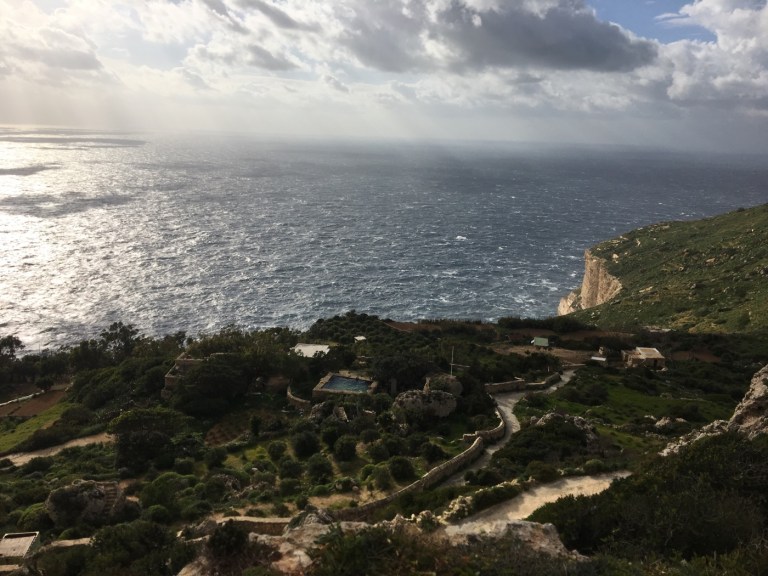
That said, speaking of rainy and windy days, Carol and I had our fair share of non-optimal weather. And on our last full day together despite there being a prelimary advisory of possible ferry cancellations, we decided to risk it and go to Gozo.
It’s the second largest Maltese island and on everyone’s best of Malta list. We had committed to a few things on our other joint days and found ourselves with only one possible day to go to the island together. Early in the week the weather forecast was great but of course as it got closer it changed to high winds and rain. But they didn’t cancel anything so we decided to brave it. We just wanted to be sure the winds weren’t increasing such that we might make it out there but not have a ferry to take us back!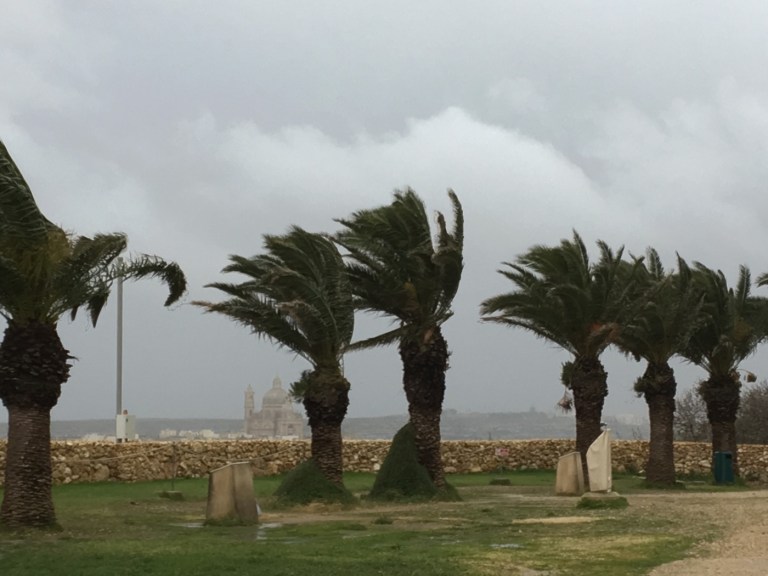
It was windy. It wasn’t supposed to rain much but it did — all day, off and mostly on. We tried to stay outside for the ferry ride out and looked like drunken sailors trying to get back to the door to get inside! It was pretty funny.
We opted to take Hop on – Hop off buses on the island to facilitate our trip. (Our unlimited weekly Malta bus passes work on Gozo but many of the highlights aren’t accessible by direct buses so it’d take a long time to get around.) It worked well once we abandoned sitting on the upper (covered) deck — the rain came in sideways. 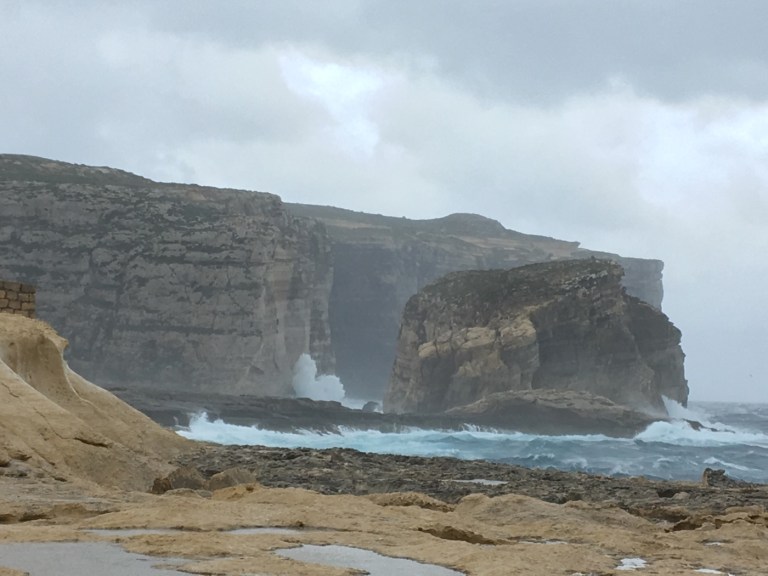
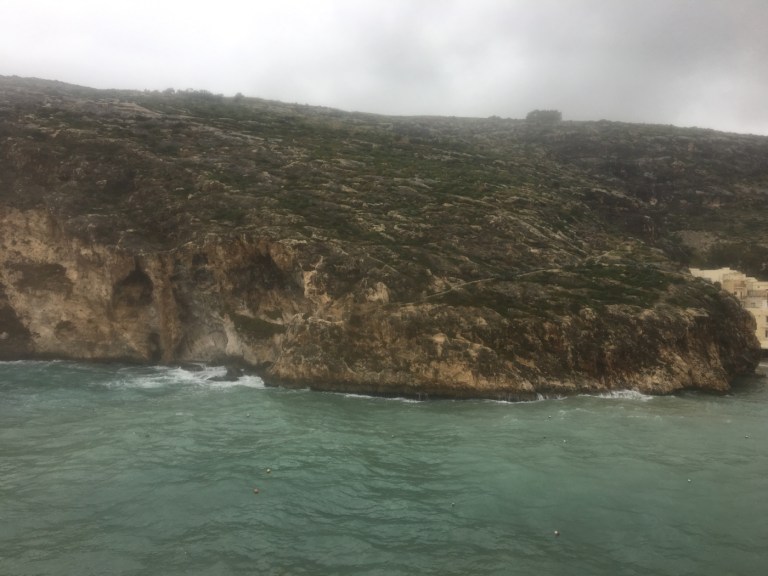
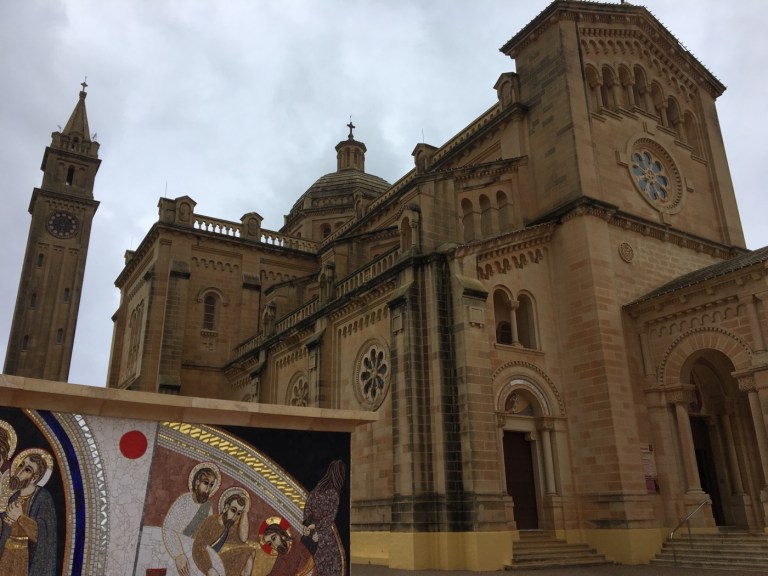
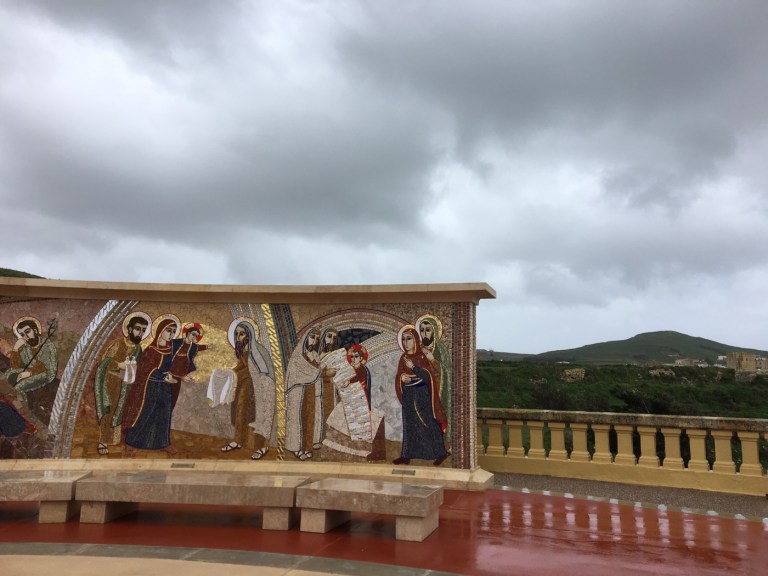
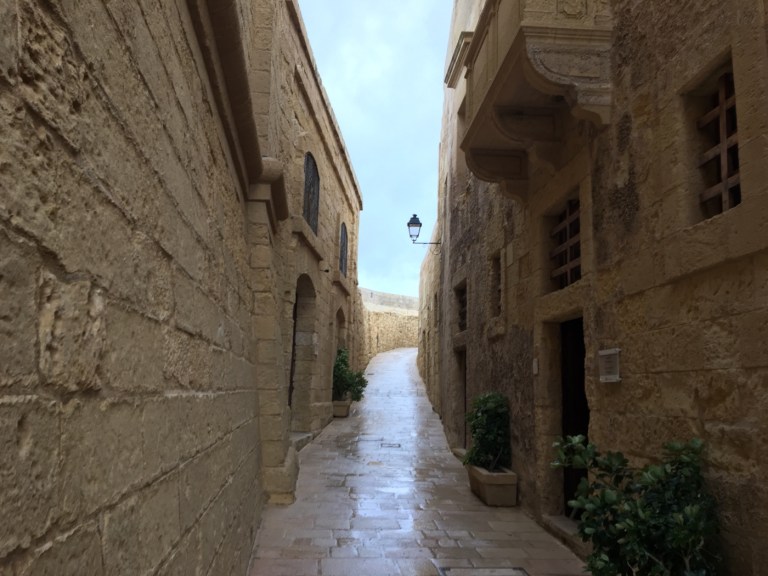
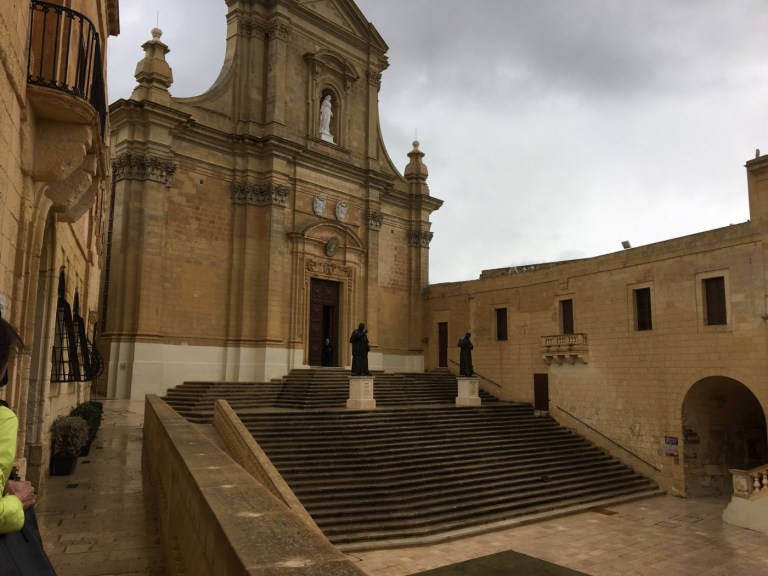
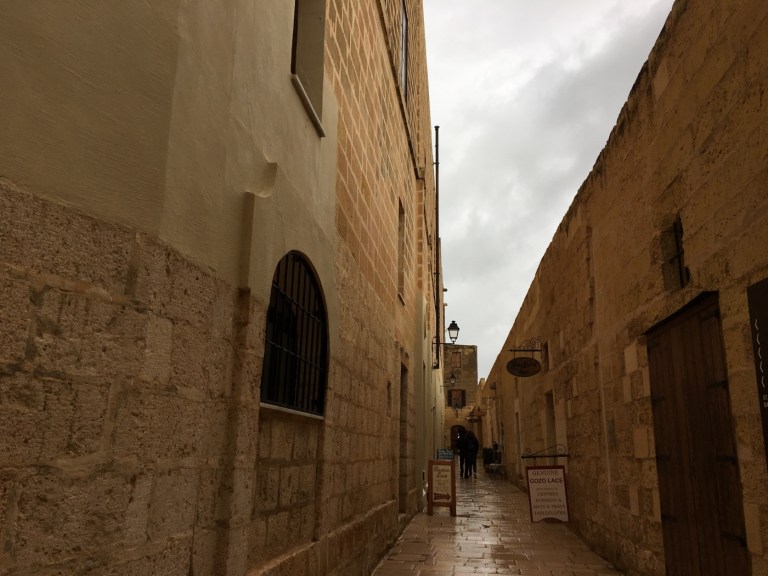
Anyway, Gozo is mostly famous for beaches, diving, biking, boating, and hiking. Grottoes. The sea. A few churches and such. The Ggantija temples (in the last post) and the citadel. So it wasn’t great to explore in windy rain but we were both really glad we went. I didn’t take many pictures as it was often pouring but here are a few. It doesn’t give a very good idea of what Gozo is about however. 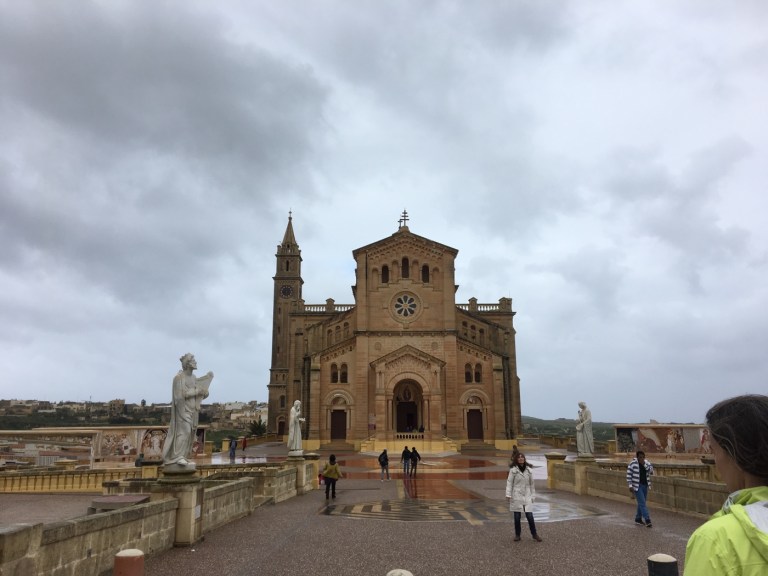
Wow! This is a really long post. I guess Carol and I covered a lot of ground in Malta! But as I began the first post with a Monty Python reference I feel I should close with another one.
With the heritage pass, I had access to an inquisitor’s palace (NOBODY expects the Maltese inquisition!!!). In fact they were part of the Roman inquisition and ferreted out sinners … Caravaggio was imprisoned by them, along with many other knights, and men and women ranging from Lutheran evangelists to doctors who ran afoul of the inquisitor. The prisons were semi interesting — and two of the Maltese inquisitors actually made it to be Pope so I guess there’s a future in being a Maltese inquisitor. Who’d have thought?!
I was going to blog about my adventures in Maltese public transportation. But this is long enough and that was pretty dull. And I’m rather tired. Suffice to say, if you decide to go to Malta and to take buses, talk to me before you go! The buses are great for the most part and run everywhere but there are things to know.
I’ve made it to the last major stop of my 4.5 month tour around Europe. I’m in Crete and will remain here for two plus weeks. I was hoping to be seaside and enjoy warmish weather but it’s raining, thundering and lightening right now. Fingers crossed the storms will cease and sun returns!
 Cynthia's Trip