Yes, Monty Python fans, I made it to Malta and my girlfriend Carol joined me after I was here 3 days. I had beautiful weather (sunny, low wind, 60), but it sort of fell apart as she arrived. Lots of wind, clouds, and rain. Oh well. We’ve still had a great time. 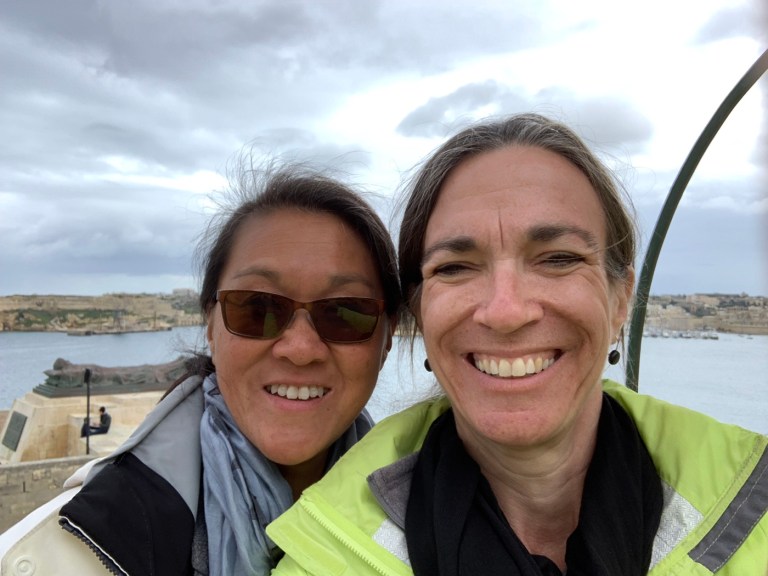
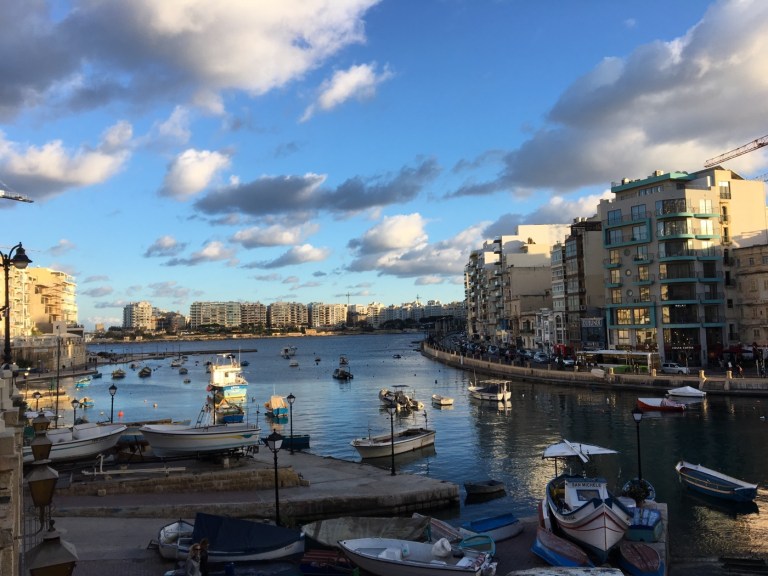
My biggest disappointment about Malta is not seeing any Maltese dogs. Obviously I haven’t had huge disappointments here! (Except perhaps the weather.) I mean I saw terriers (Scotties and Skye) in the Scottish Highlands and dalmatians on the Dalmatia coast, but no Maltese in Malta? I’m outraged. At least we’ve heard about Maltese falcons.
Enough silliness. I didn’t know much about Malta before arriving (it was on my list because I like islands — and it’s cool that it’s between Northern Africa and Sicily). But in my minimal pre-trip research I learned there’s been a lot of archeological finds here (of ruins older than Stonehenge, among other things) — dating from about 3600 BC. Pretty damn old.
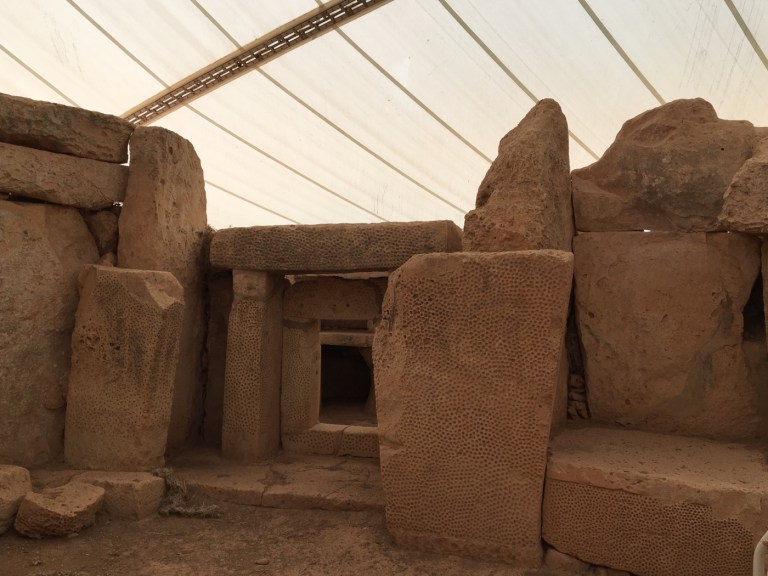
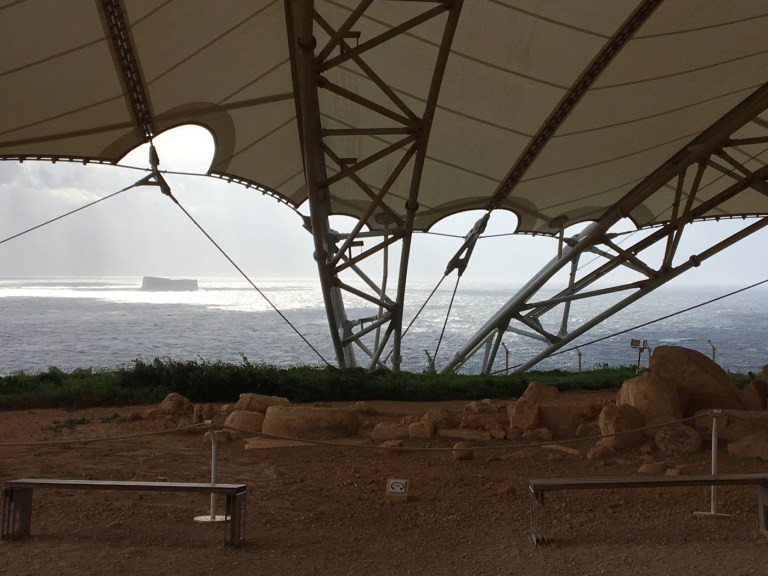
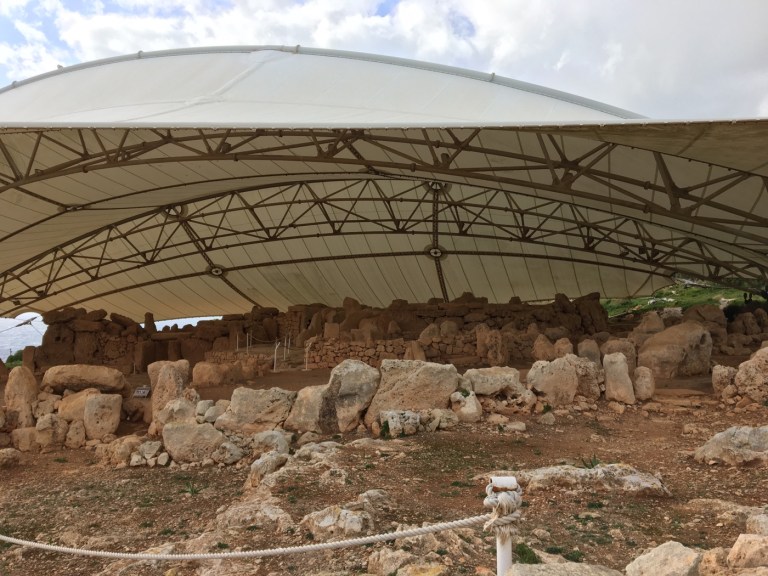
For the record, I’ve seen the ruins at Hagar Qim, Mnajdra, Hal Saflieni (hypogeum), Tarxien, and Ggantija — the latter three with Carol. They were erected in the 3600-2500 BC time period and the outdoor ones are thought to be temples; the hypogeum was a burial chamber. (Stonehenge was supposedly built around 2500 BC and I must say I found Stonehenge more majestic. Because the stones are just so massive. And the design so simple.) Like Stonehenge, the Hagar Qim and Mnajdra outdoor temples (below) were aligned with the sun — although with equinoxes rather than the solstices. Which was fascinating. They were also built very close to the sea (and Filfla, the small uninhabited island in the distance).
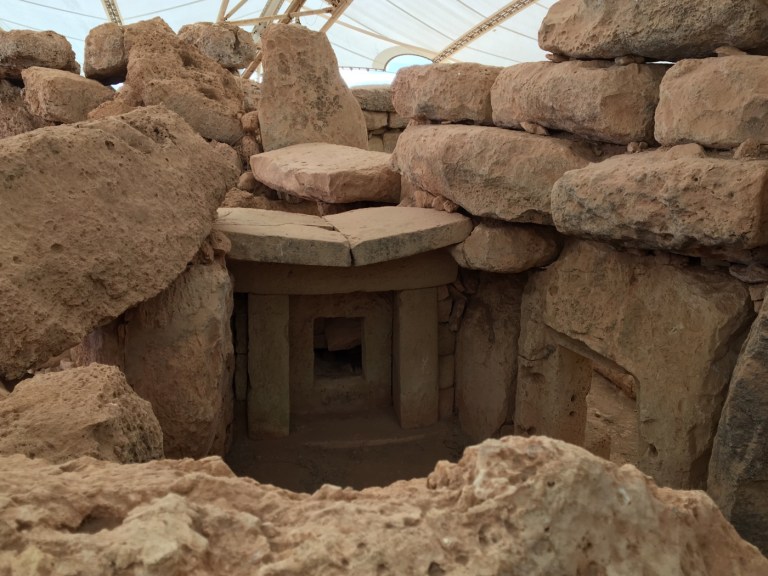
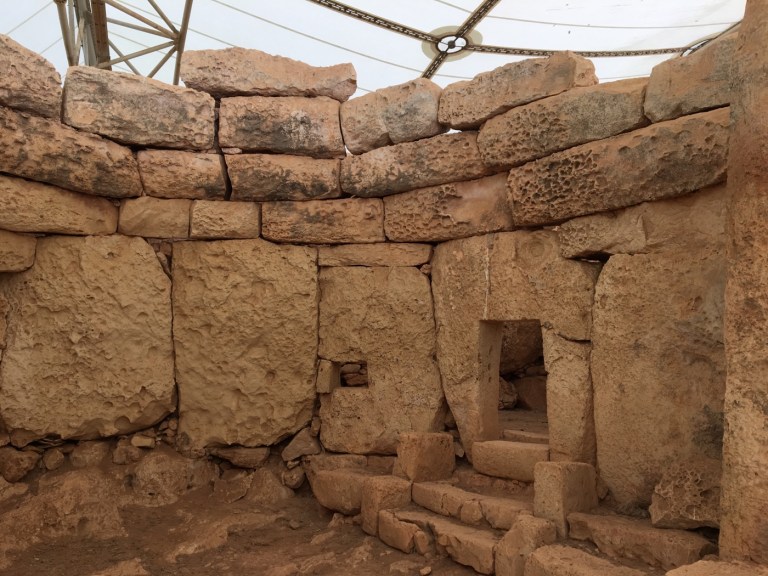
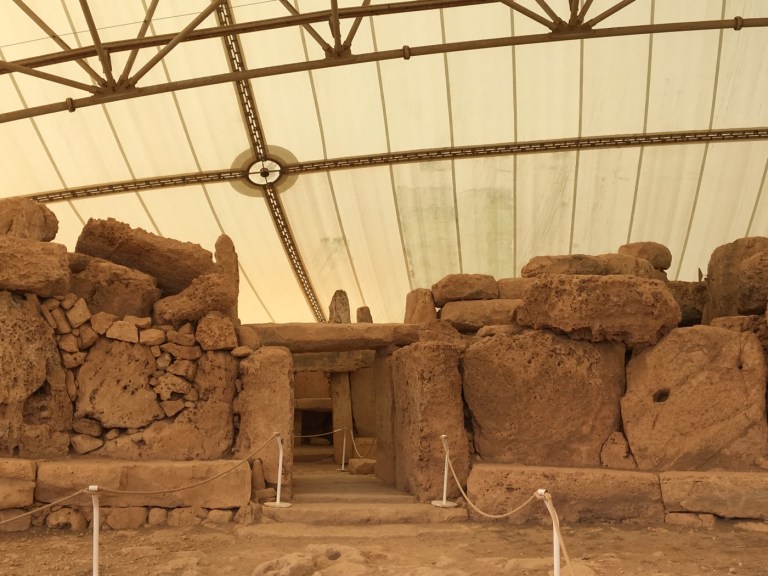
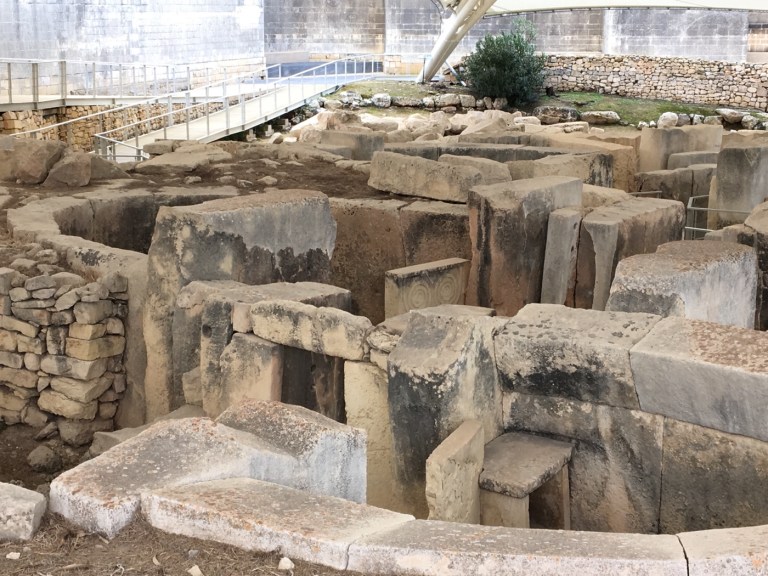
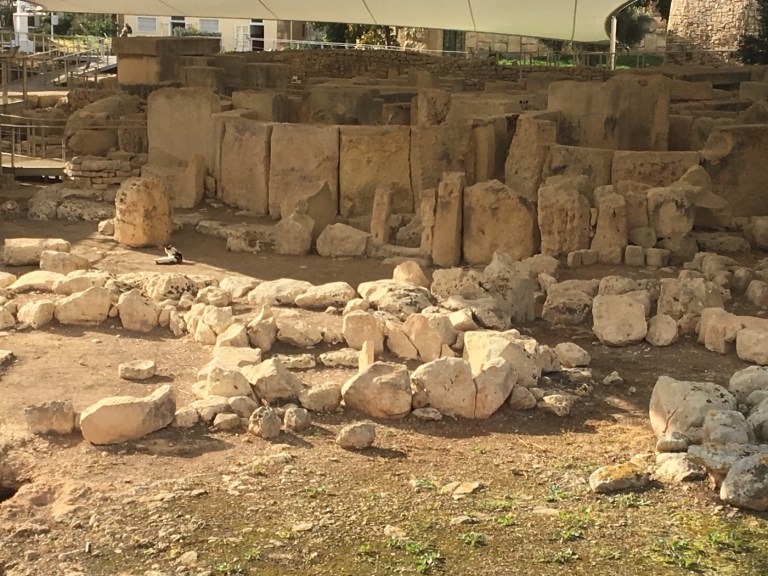
Overall, the Maltese temples had more monoliths, apses, walls, doorways, and what I’m calling windows (because the archeologists don’t usually but hello, what else could they be?). And roofs. Weird when you consider they have such good weather in Malta that they need stone roofs and double stone walls?! Yet it was cool to think these structures were built so long ago. (The photos below were the Tarxien Temples.)
Even cooler was the hypogeum (from the Greek, underground). It was accidentally discovered in 1902 when a worker was digging a cistern — and discovered a whole set of underground burial chambers carved into the limestone. Including painted ceilings, stairs, doorways, windows, arches, columns and roofs — all hewn from presumably pretty solid rock. We weren’t allowed to take pictures (and only 10 people are allowed to go below with a guide per hour) but I’m sure you can google it. There were areas carved out to look like entire buildings — pretty intense when you consider it’s all underground and they only had primitive tools to carve up the stone. It’s hard to explain but if you’re at all interested in archeology you should google it.
Perhaps we were being morbid but we also went to catacombs — more underground burial sites. They were really cool too although much newer (from mostly 3-8 CE). They had a similar look. Lots of burial areas with crypts, windows and doorways carved into the rocks underground.
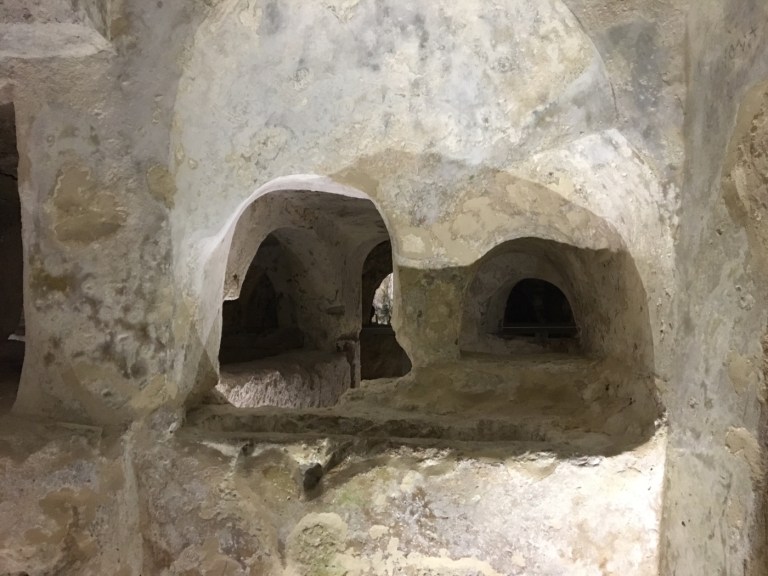
My picture doesn’t do it justice. It was the St Paul’s Catacombs in Rabat on Malta, which cover over 2 square km underground and had over 20 separate burial chamber areas. There were tables with built in rounded benches that were presumably for the family to have a meal to celebrate/mourn (?) the dead. And decorated (painted and carved) ceilings and walls, as well as identifiers for Christian, Jewish, or pagan burials.
Anyway lots of ruins plus related museums with shards (and sherds apparently) of pottery, tools, skeletons, jewelry and figurines. Plus lots of big and little rocks!
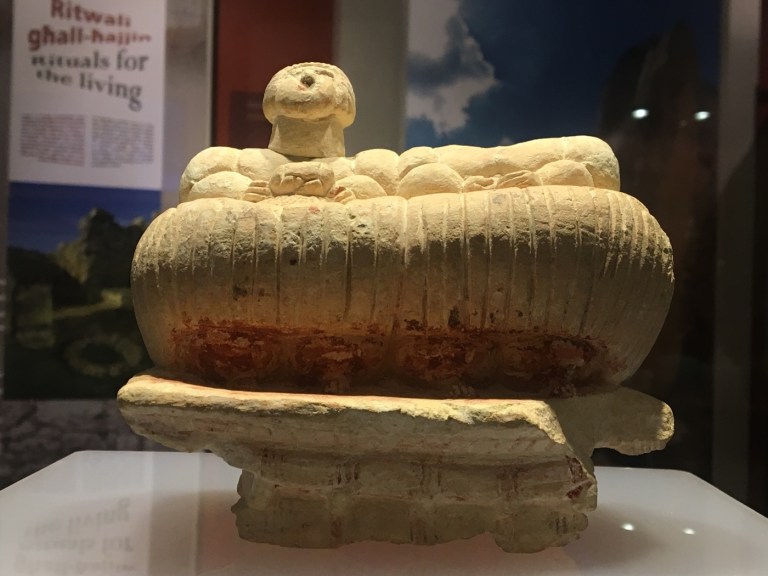
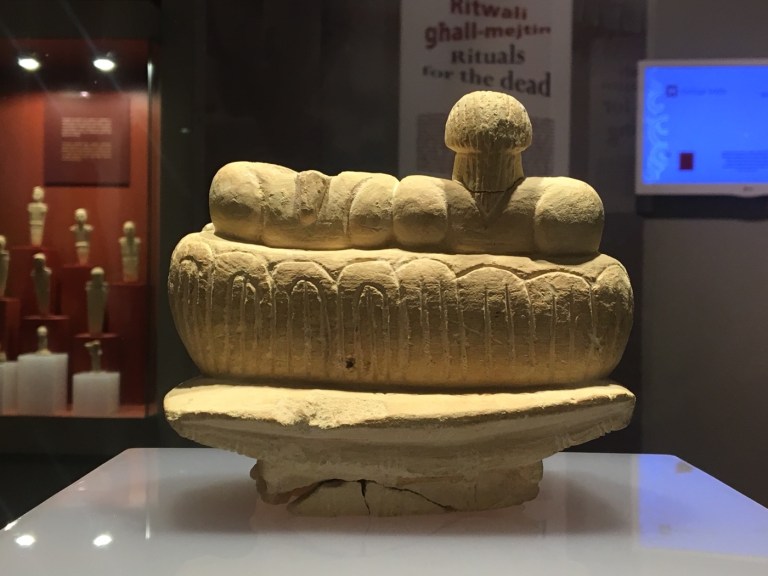
This figurine, the “mysterious couple” is circa 3000-2500 BC. I really love the back view where you can see the remains of a pony tail under where the head should be. Hard to believe they carved these with primitive tools. Funnily, most of the figurines found were of rather rounded people and the write ups called all of them corpulent or obese. But they reminded me of Botero artwork! Cute and curvy.
Finally, we saw Roman ruins … a domus (home) of Roman aristocrats in Malta. They found some almost complete floors which were quite amazing. It’s obviously much newer (ca. 1st century BC) but still pretty old.
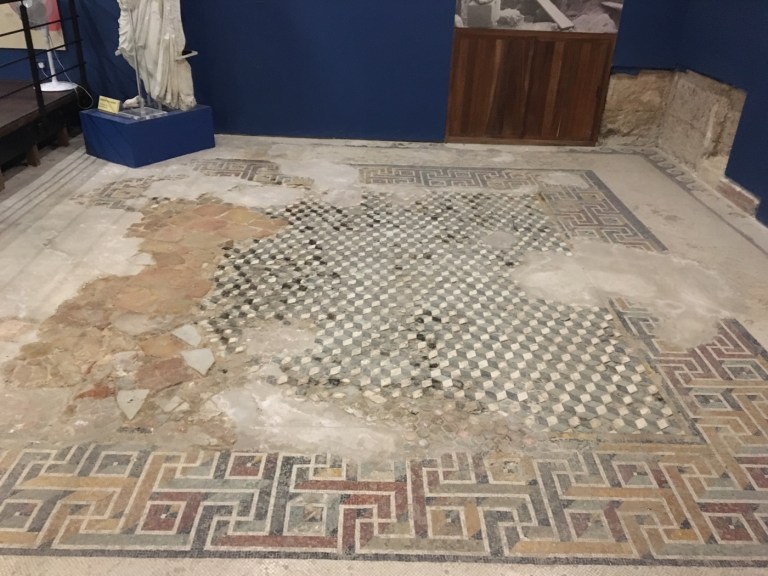
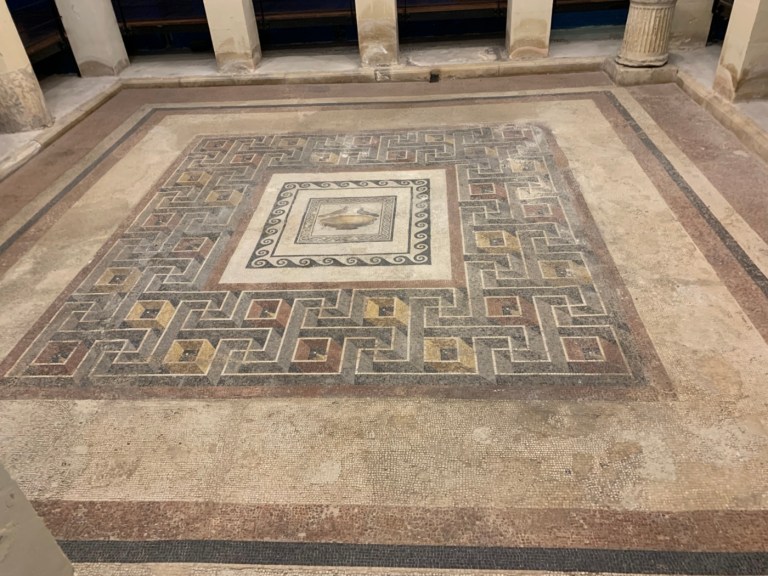 We were really intrigued with how they got the 3-D effect using little tiles?! It was pretty impressive. (And thank you Carol for the second photo since I neglected to take one myself!)
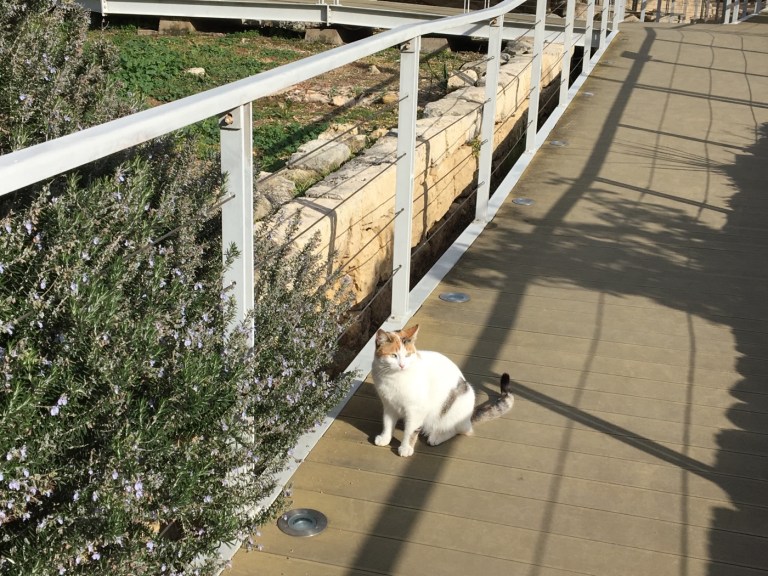
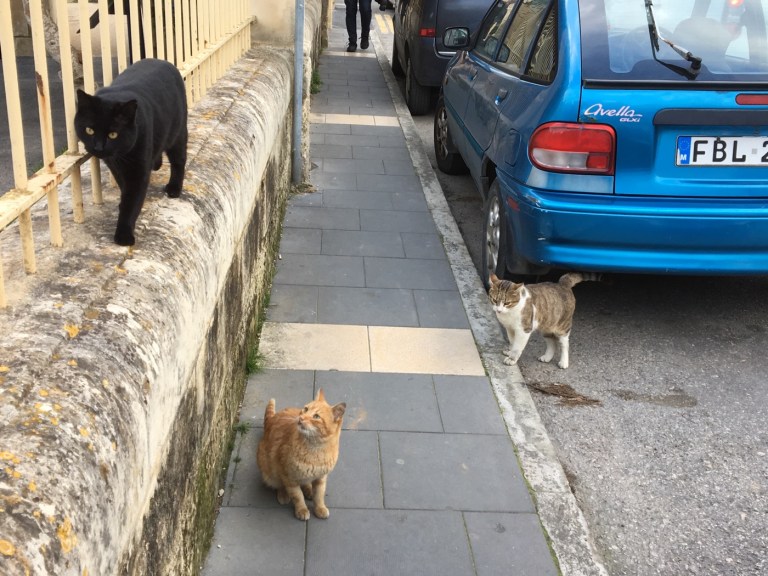
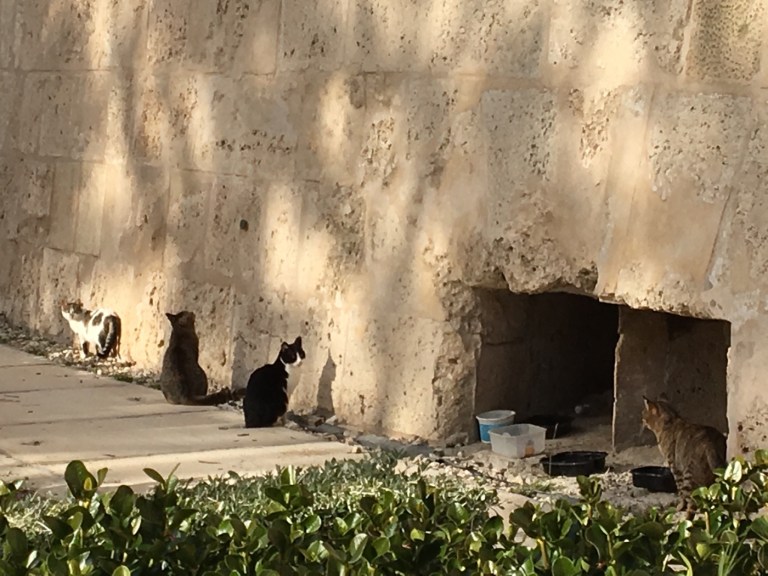
A final note. When I lived in Rome I always saw cats roaming around the ruins. They seemed to gravitate toward old stones. Well, no different here. I kept seeing cars prowling or sunning themselves near old rocks and I couldn’t help capturing a few for the cat lovers out there. (You know who you are!)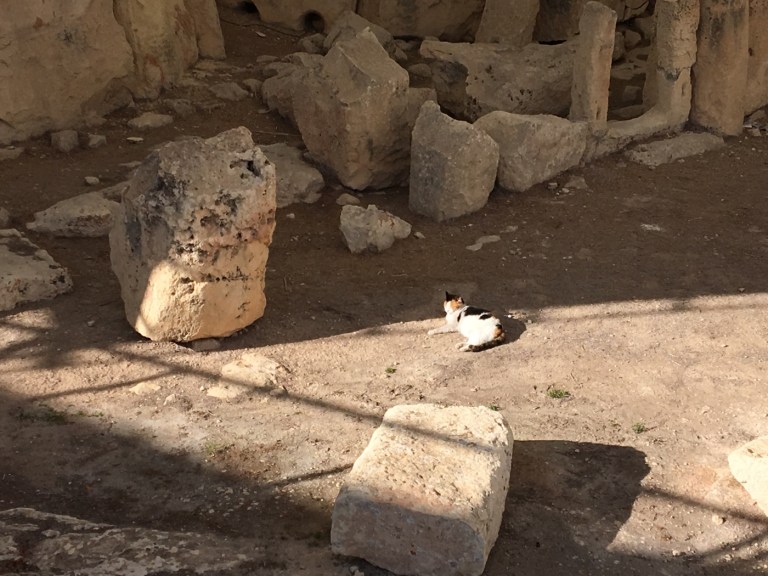
 We didn’t spend all our time with the dead or in ruins. But I’ll post about those tomorrow. I’ll have more time to write while taking (and awaiting) my planes and buses to get to Crete.
Good night for now!!
 Cynthia's Trip