There’s actually a highway that runs from one city to the other, showing these two cities as the end points. Perfect for my travels.
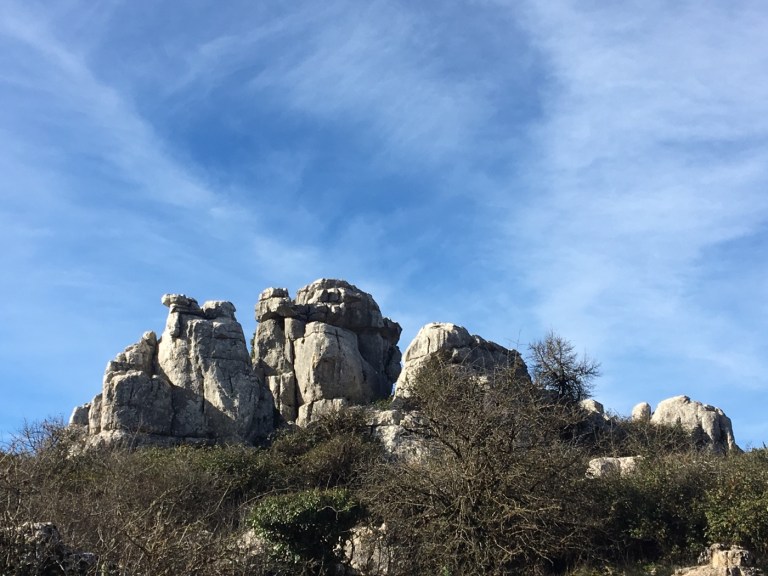
Antequera is a fabulous day trip from Malaga; Troy and I were taking longer trips and didn’t have time for this short jaunt. So I did it after she left on my way out of Malaga. It’s about 45 minutes directly, but I took a trip to these funny stone structures in El Torcal that are physically close (under 5 mi) but because of the very curvy and hilly roads, it adds about a half hour drive. I pulled over here to take this photo of what I kept seeing on my right hand side. 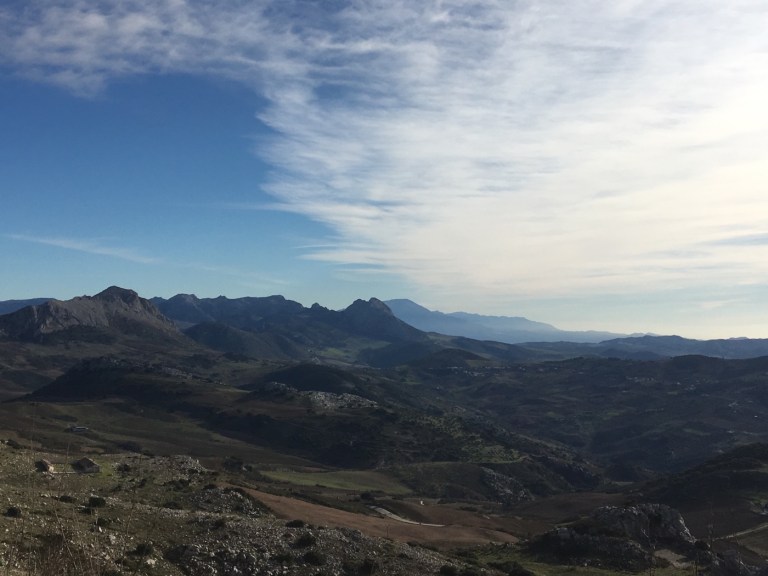
El Torcal is full of limestone rocks that have, over time, turned into giant versions of those rock stacks I started seeing on Skye and have continued to see this trip. Perhaps all those little rock stacks are trying to be El Torcal. Who knows.
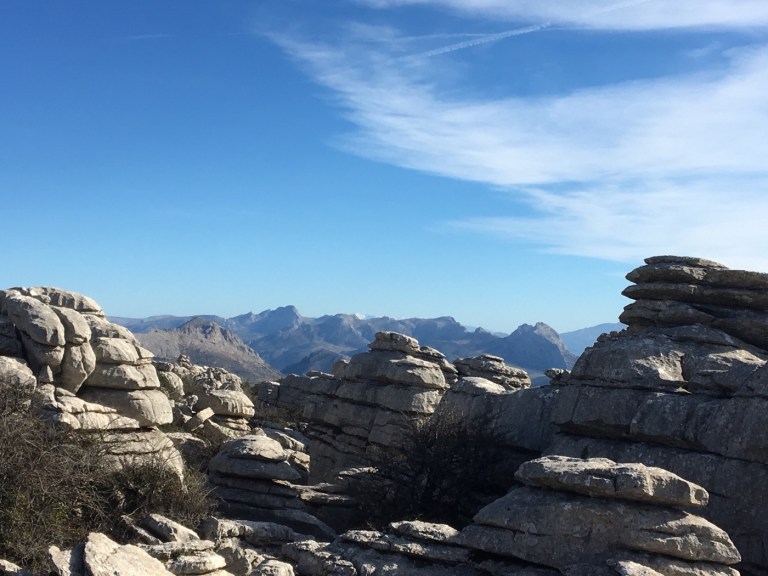
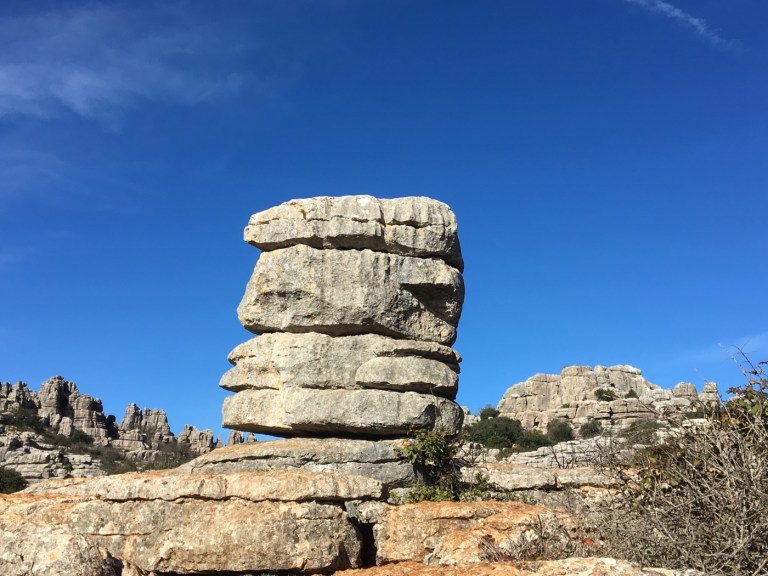
To get up to the rock formations there’s a long, switchback-full, at times single-lane highway. (Troy you would not be happy. Nor was I at times.) I was definitely white-knuckling it in several places. Why is it big trucks are always barreling down at you just when you’re on a very scary curve??! Oh well I made it. Not without some healthy swearing and unhealthy sweating. 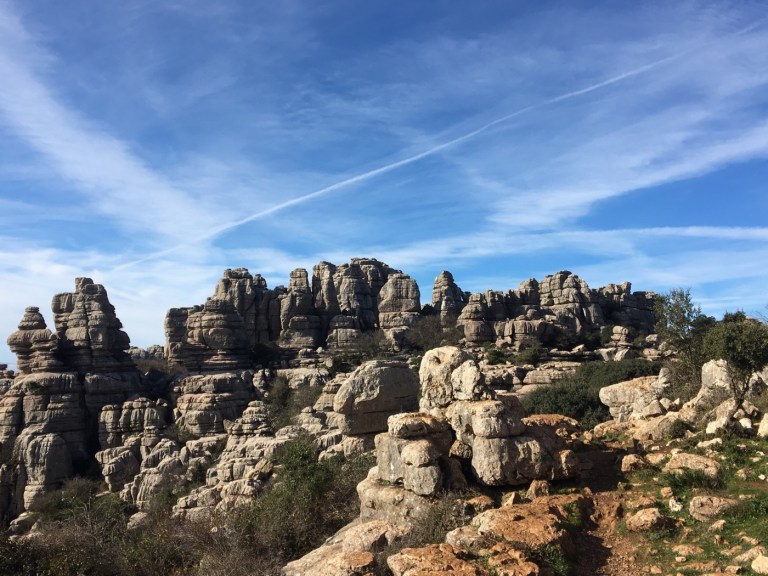
There’s a very nice park ranger person to greet you and tell you about the paths. (They’re all rocky like below — I saw a French woman in ballet flats and hose socks just let her husband go on without her. It wasn’t bad but I think you need the right shoes.) 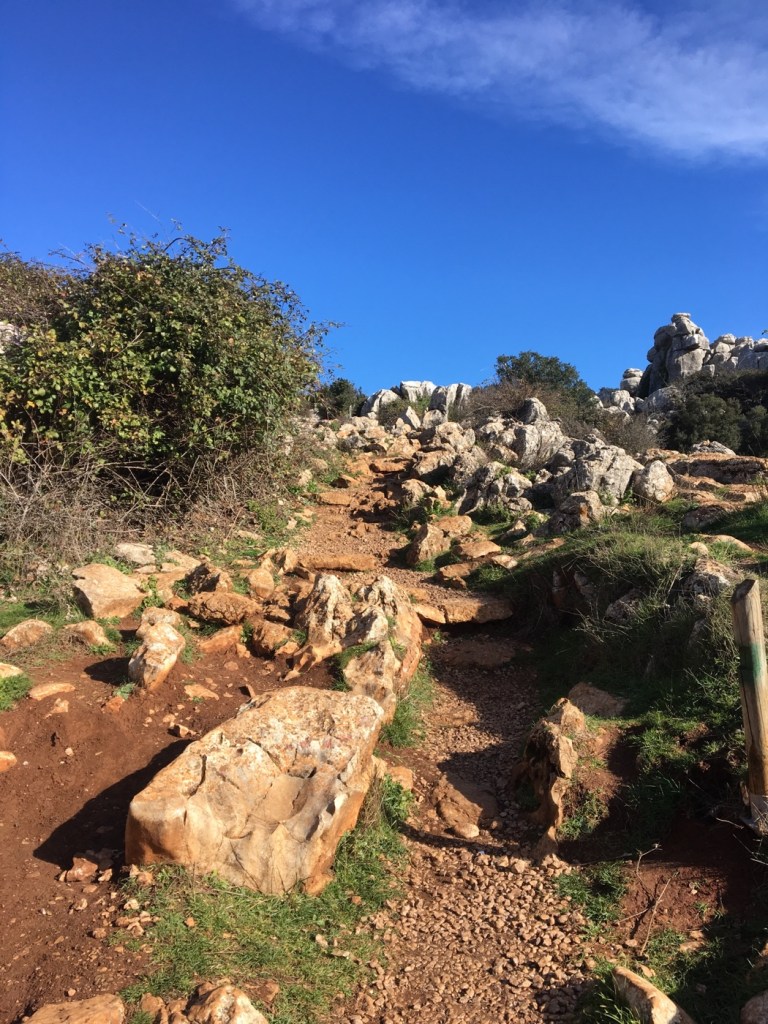 She also points you to the exhibition space that describes (mostly only in Spanish and somehow my Italian didn’t do as well with Spanish archeological terms) how the rocks were formed. (Where’s my translator when I really need her?) I started to describe here my version of the transformation but it’s neither brief nor possibly, correct. So I’ll let you look up limestone karst rock formations in El Torcal for more information.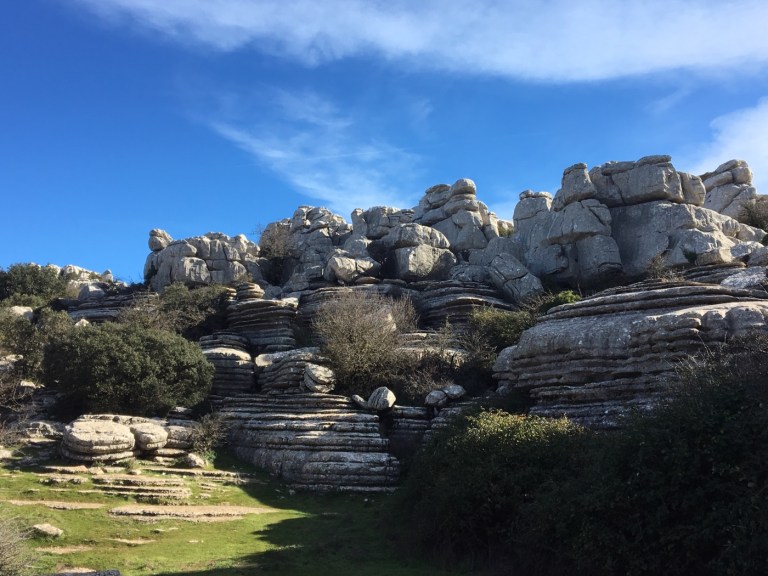
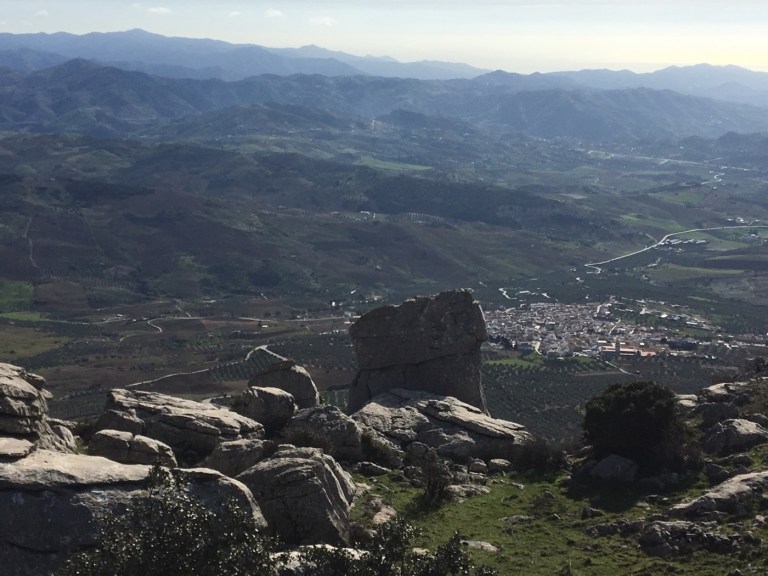
Needless to say it was cool looking and I took a brief snack break in the rocks (first photo was my view). Then it was on to Antequera (not second photo — that’s a different smaller town near the rocks).
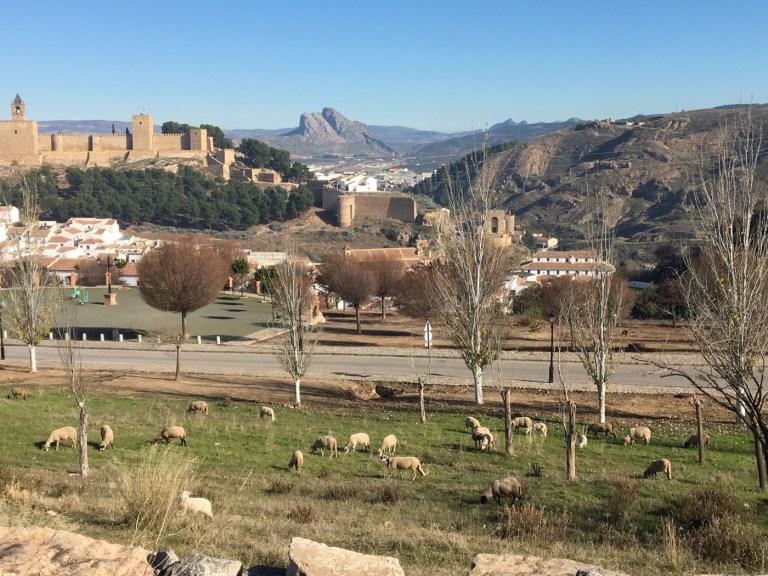
Before I got there I saw it from afar. It’s quite pretty and I actually had to pull over around an old shepherd with his bell and sheep to take the picture. It seemed postcard perfect though perhaps my photos aren’t. 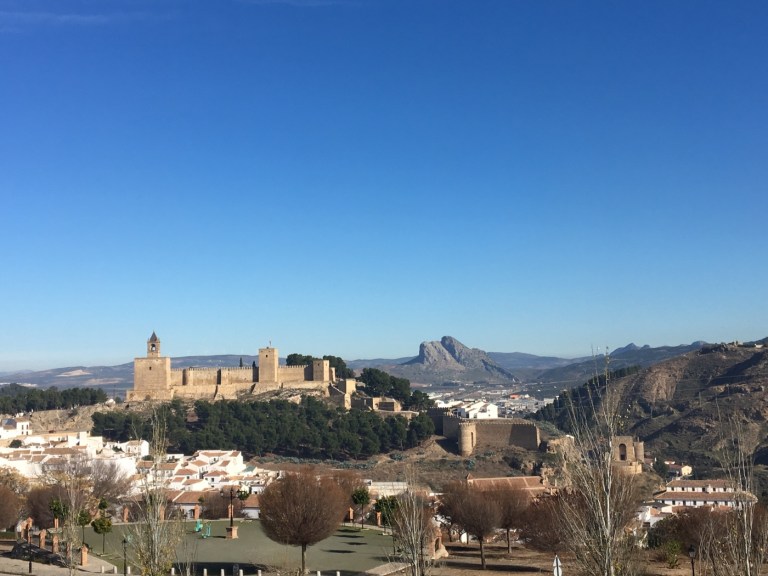
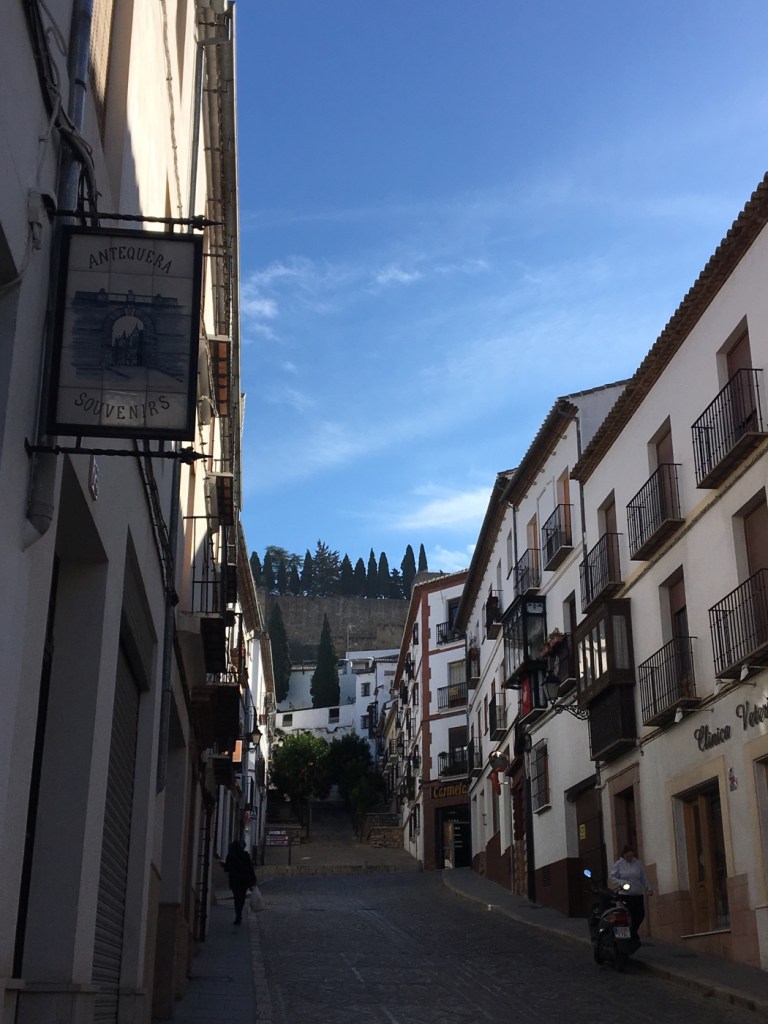
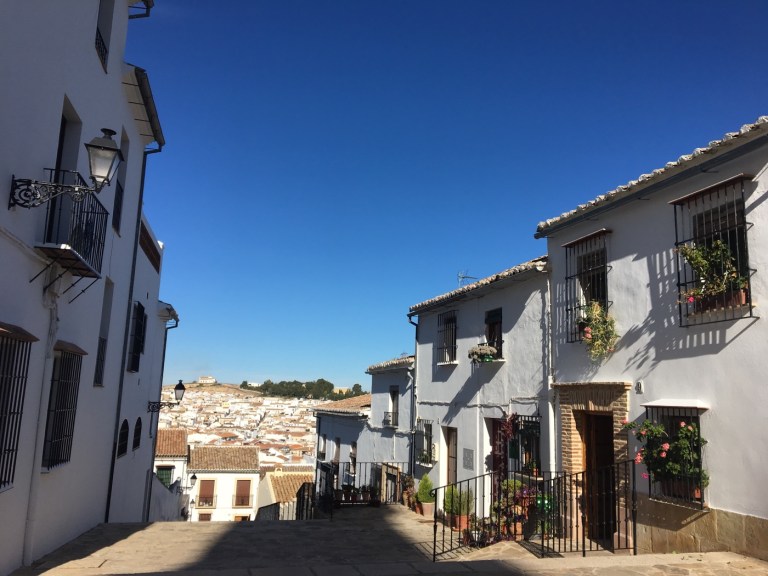
 And it’s really amazingly clean. It almost felt unreal. The whites were very white. And there were flowers in many places and for the first time I saw a lot of people’s doors open so I could see into tiled stairwells and flowered courtyards. Not sure it it’s because it was cleaning day or they’re just more open there.
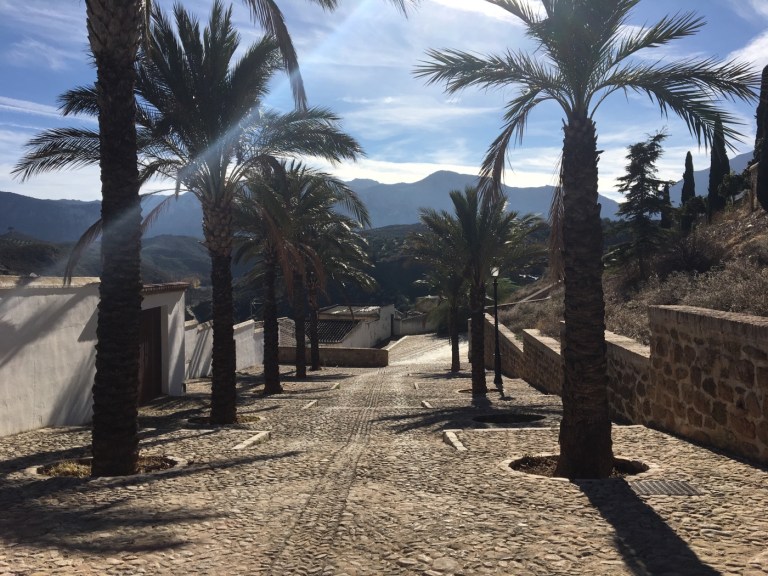
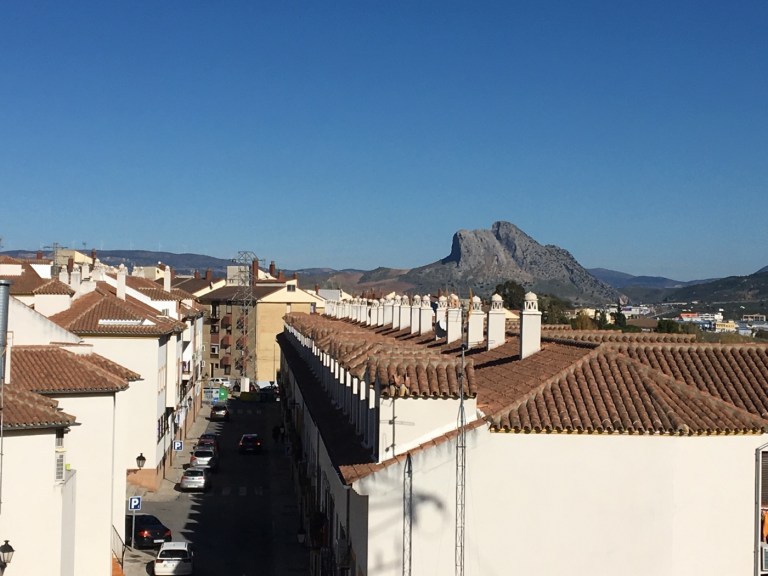
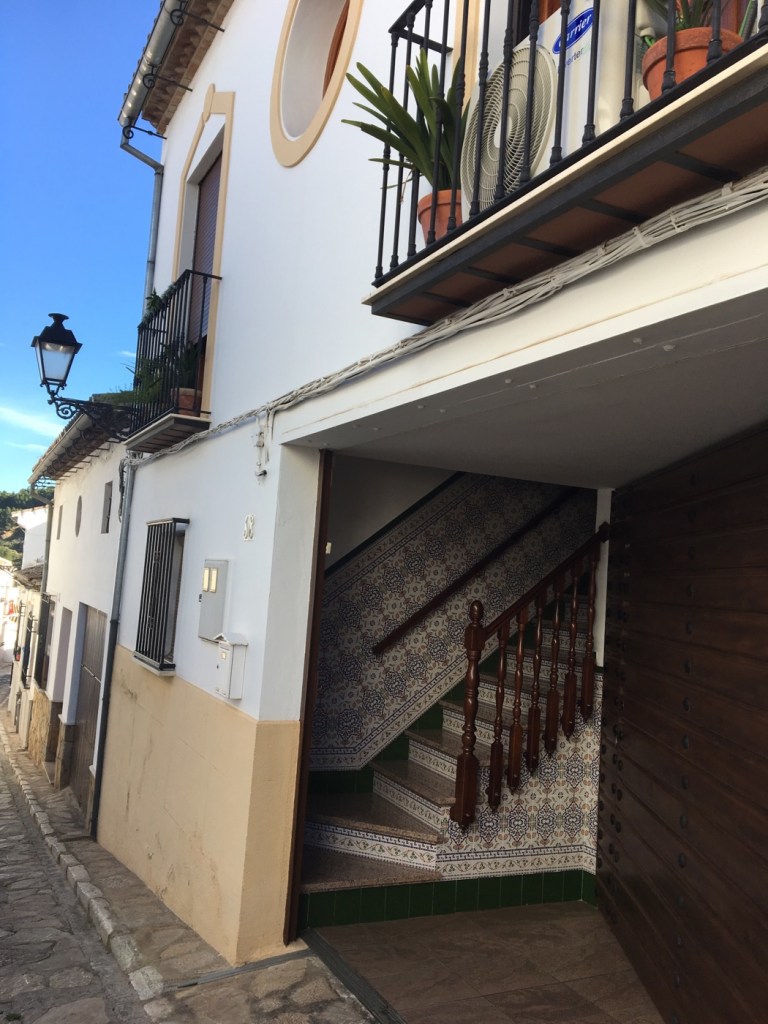 Below is one of the constant sights in Antequera. Called Pena de los Enamorados (lover’s leap) it weirdly looks like a mans head in profile. Even down to the neck. Pretty funny.
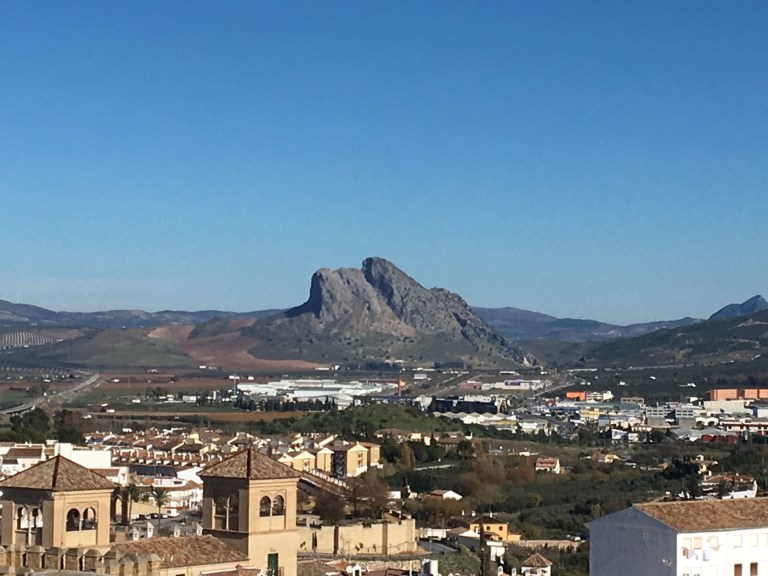
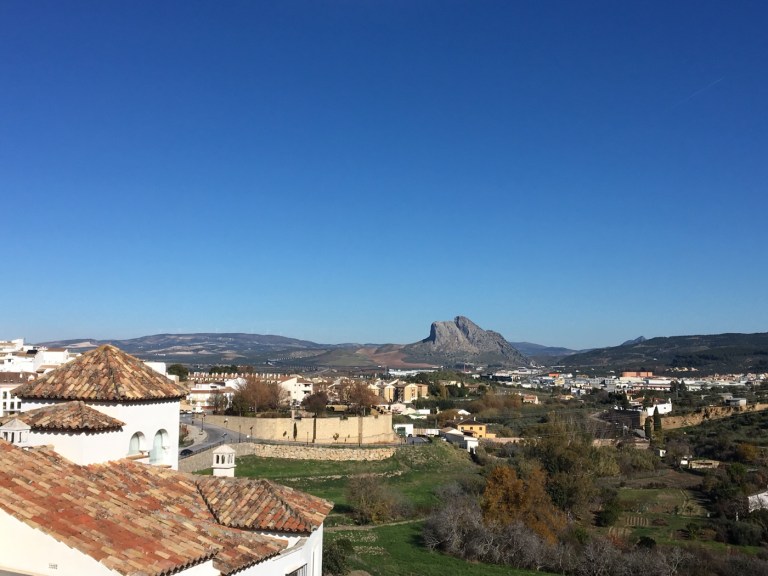
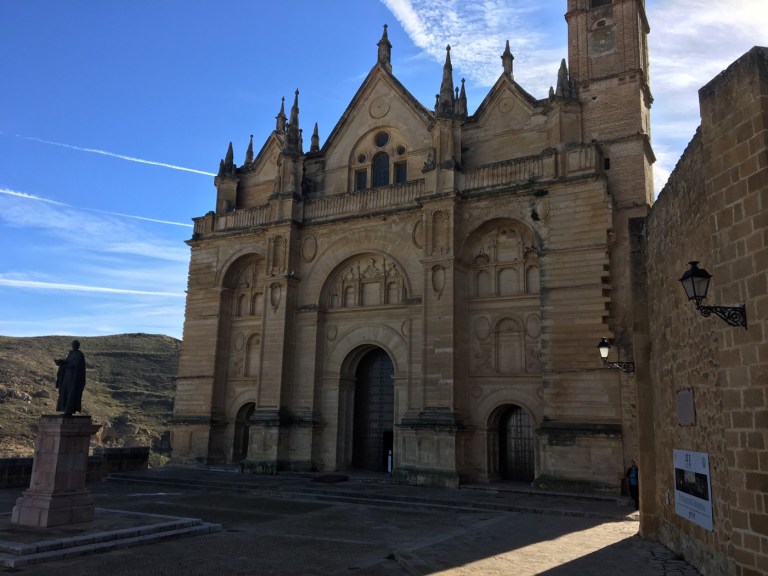
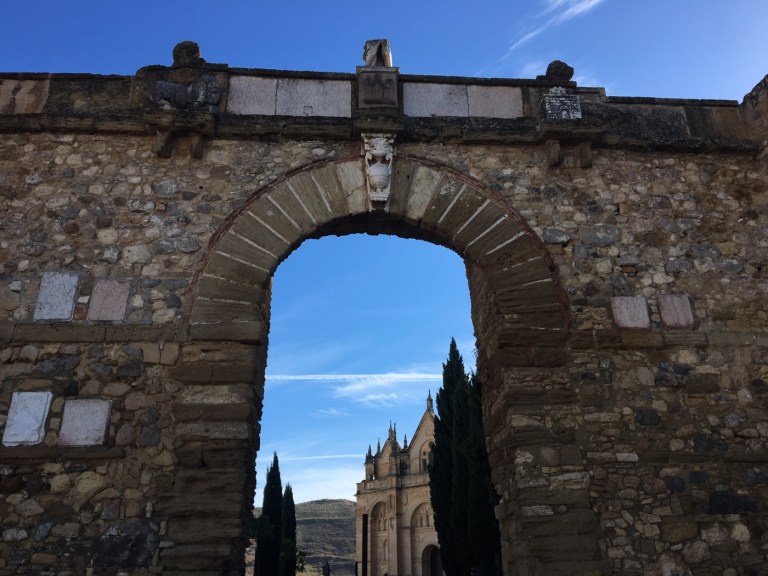
There are also a lot of churches, some Roman ruins and an Alcazaba (fortress/castle). So yeah, more Romans and Moors were here with the Christians. The Christians built this huge Arco de los Gigantes (in 1585)— sure it’s gigantic, but I think they just wanted to have something on the scale of the church and Alcazaba. 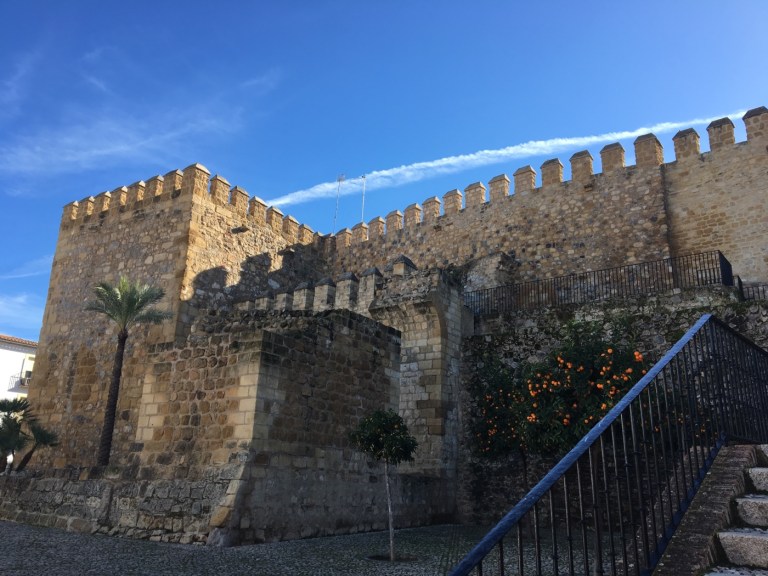
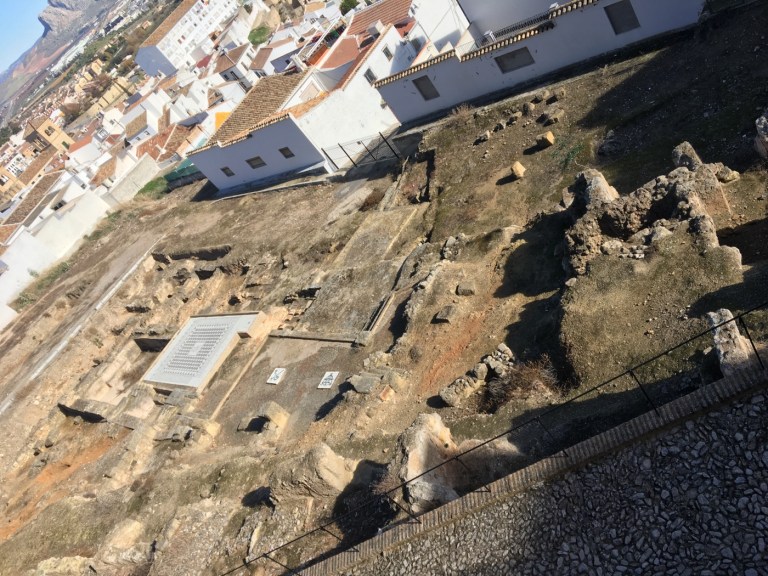
They also had these cool Dolmen burial chambers that sadly are closed Mondays — when I was there. Here’s my best shot through the fencing (it’s the mound over the blue sign). And I presume there’s more to see inside. I thought it was an outdoor thing but it’s a huge archeological center.
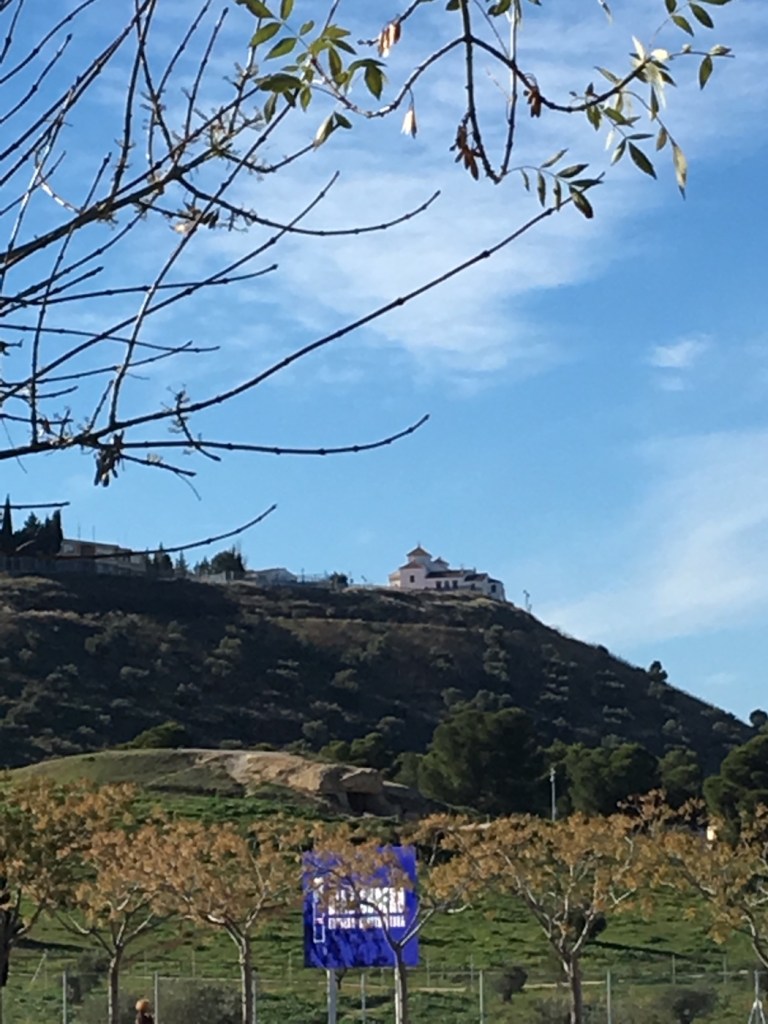
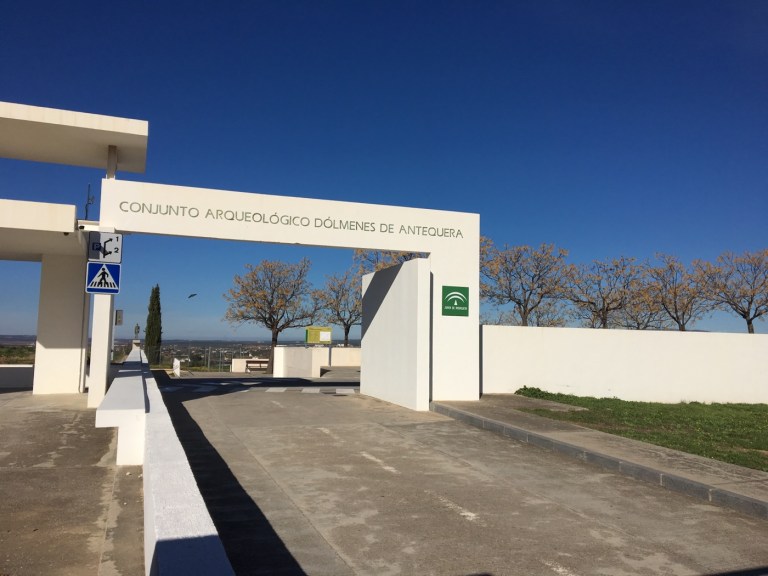 Oh well. Next time.
Then it was off to Arcos de la Frontera. Wow I’m really going to tire of typing that and I noticed they call themselves Arcos. Several towns in the area got the “de la Frontera” added to their names. As I understand it, it was during the reconquista — these towns were at the border of where the Christians reconquered the Moorish territory. Thus the name. Anyway Arcos obviously got its name from the many arches all over town. 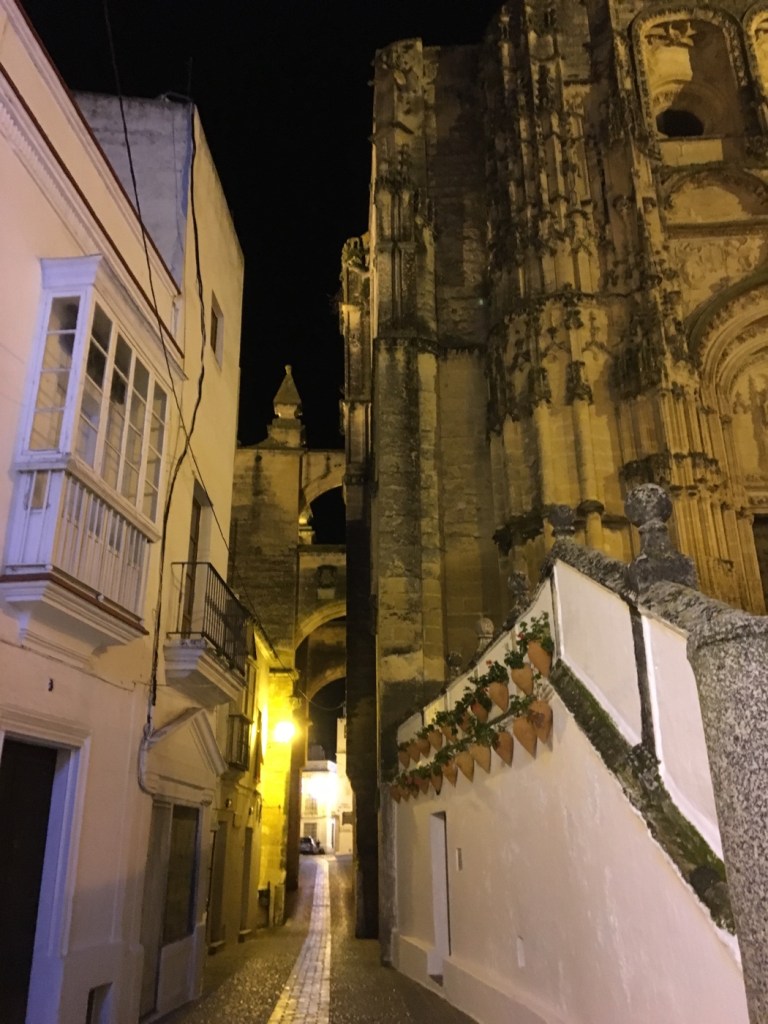
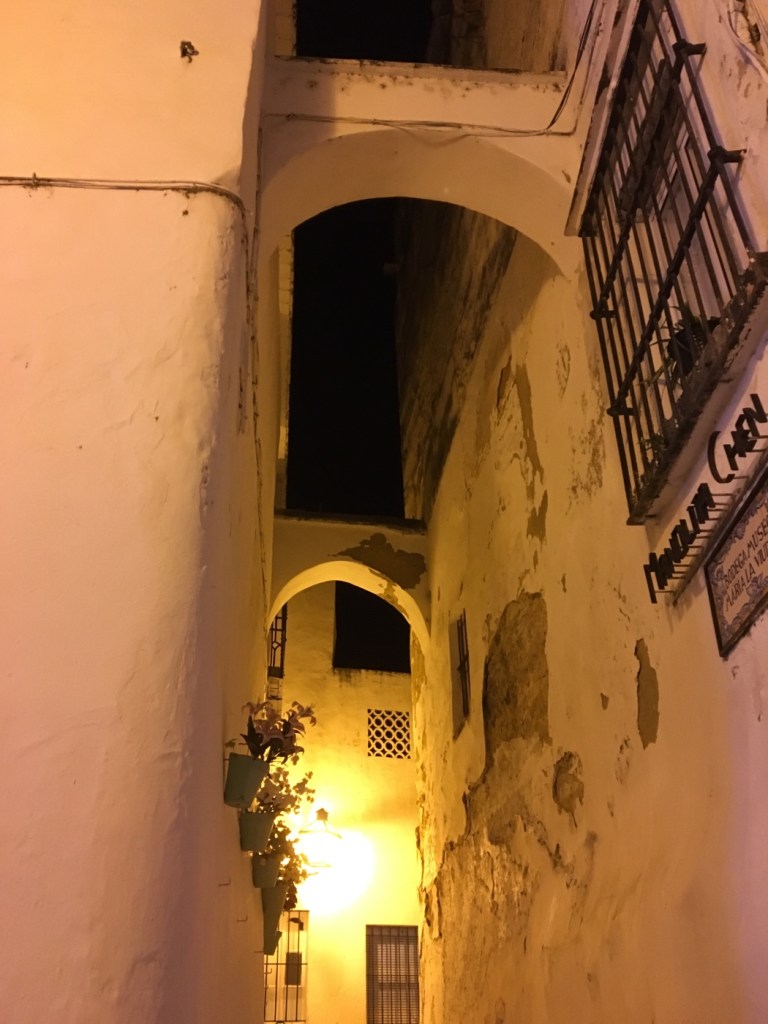
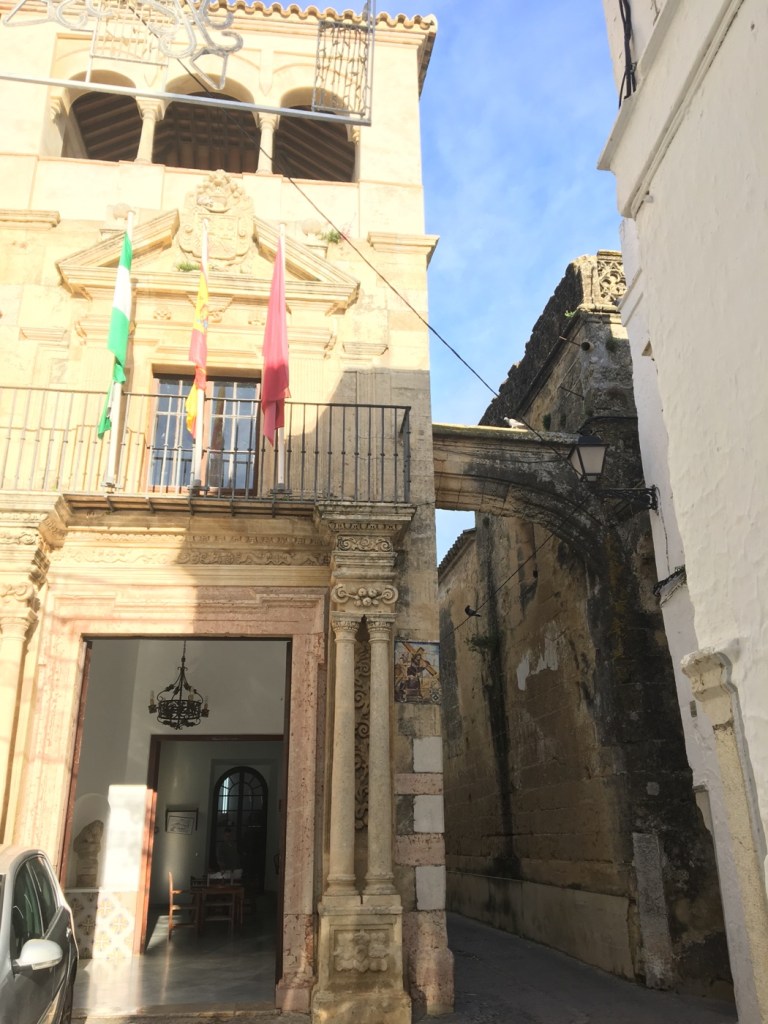
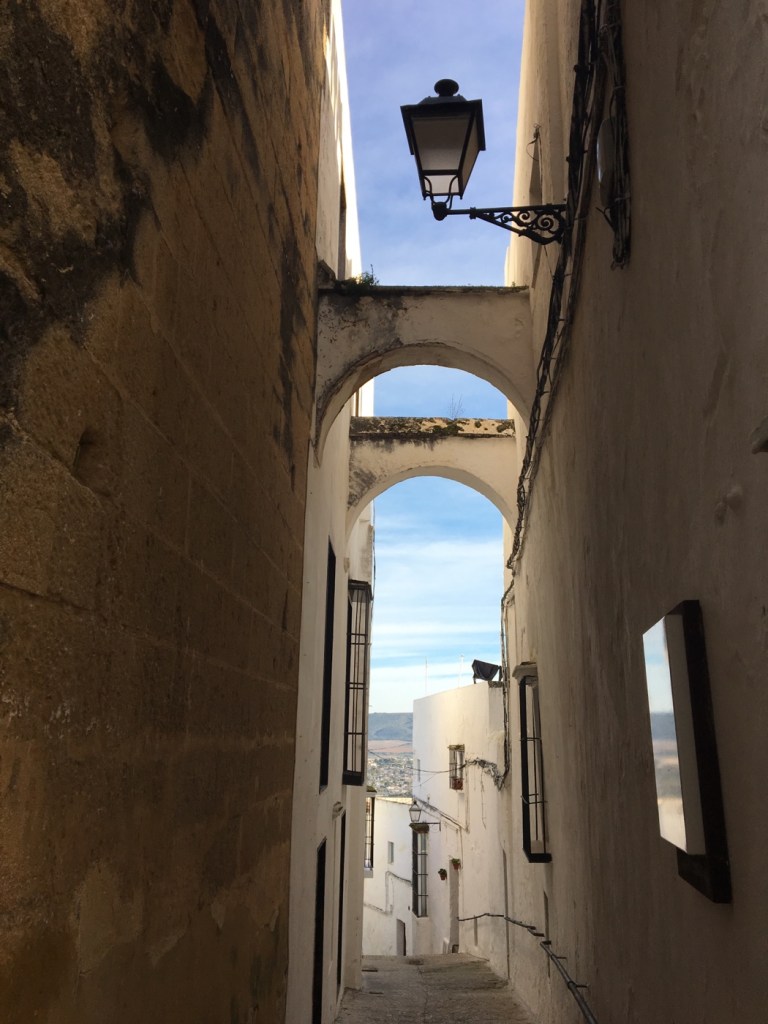
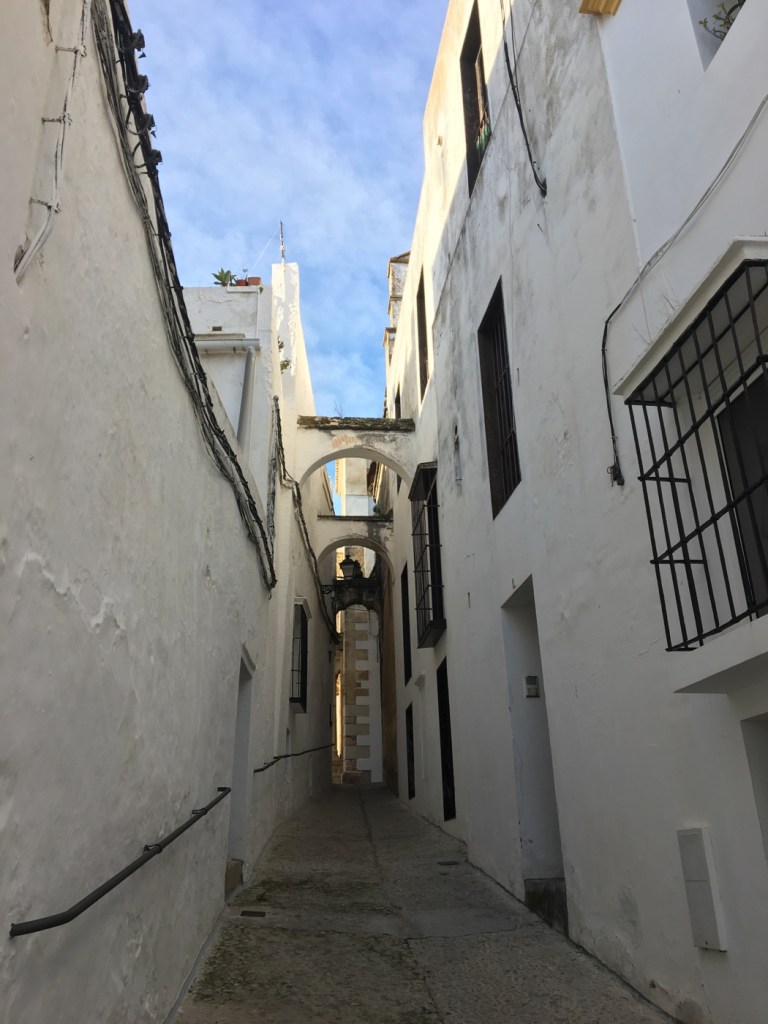
After the big tsunami of 1755 (post earthquake), they had to reinforce many of their buildings with buttresses and arches. The streets are very narrow and thus easy to span with the arches. It makes for nice photos and apparently good support!
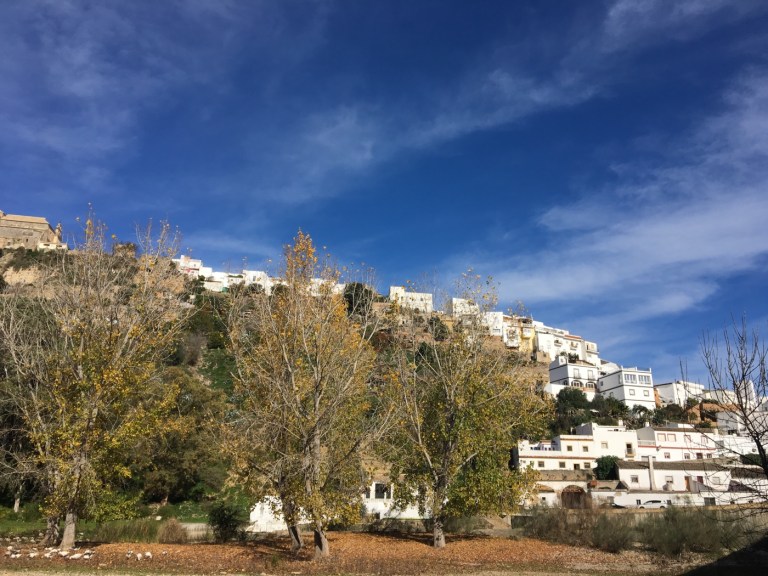
But the really impressive thing about Arcos is how it’s built, like Ronda and the other white hill towns (Pueblos Blancos) right into these high cliffs. 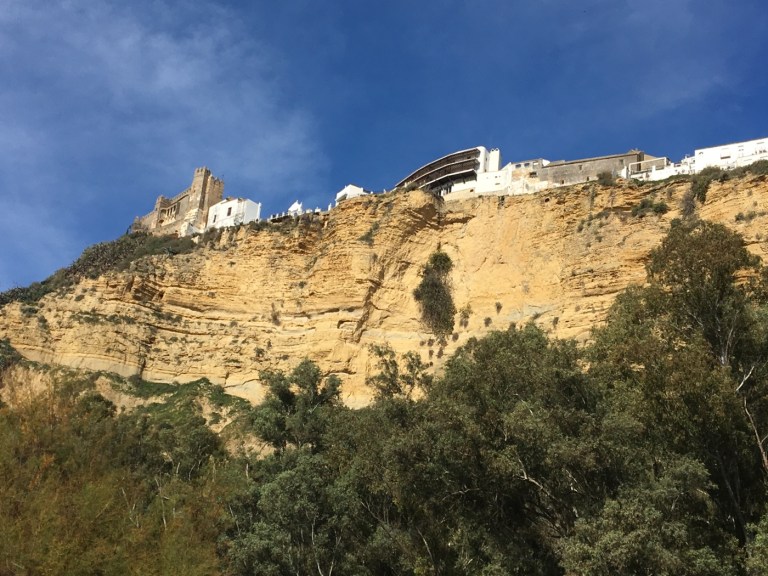
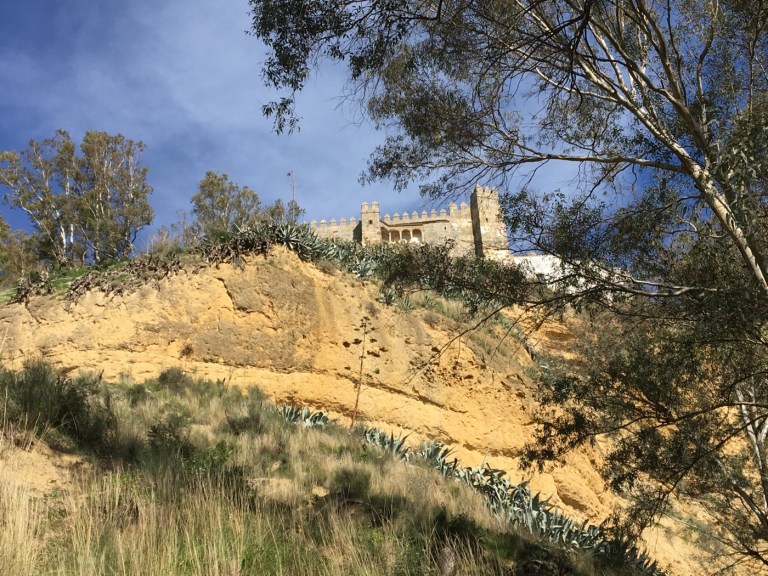
Our trusty Rick Steves says there was a time when the town considered creating an underground car park in the old town (parking — and driving and even walking is a tight proposition there). But they realized the land wasn’t stable enough. He also mentioned that one building just lost a part of their terrace one day due to earth erosion. I’m not sure it shows but I could see caves in areas under the buildings. I’m not sure when is the next cave-in??!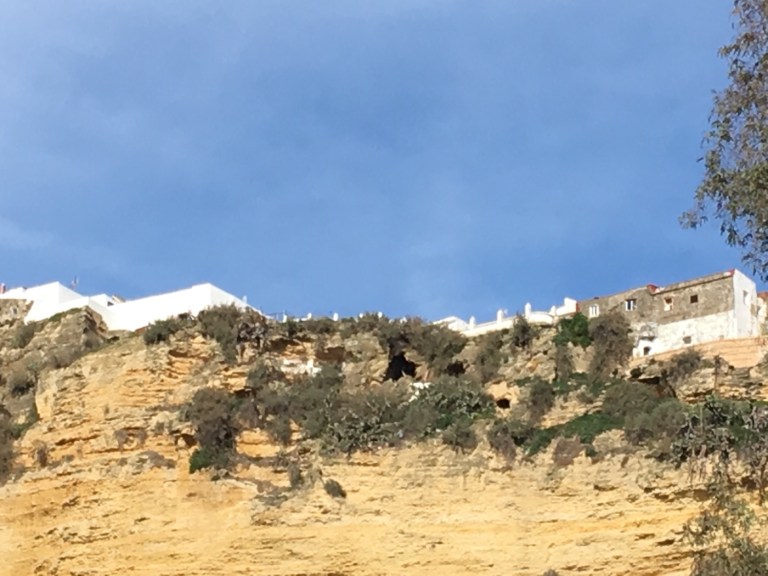
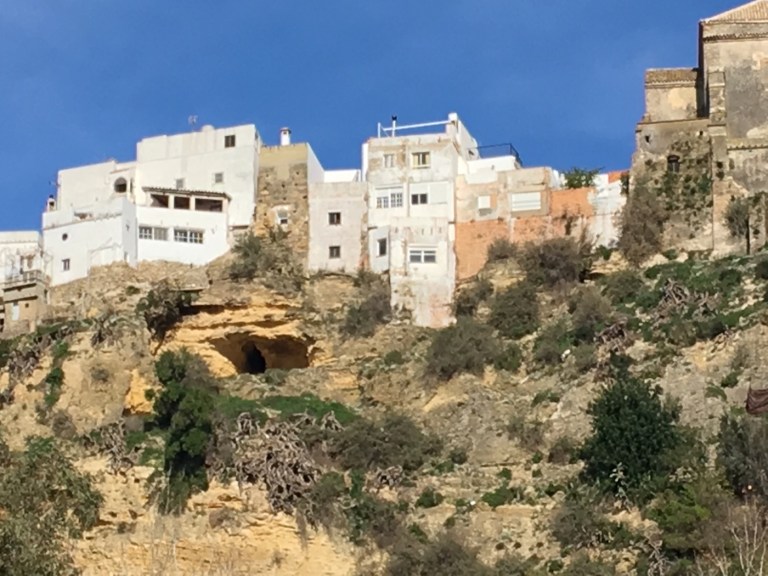
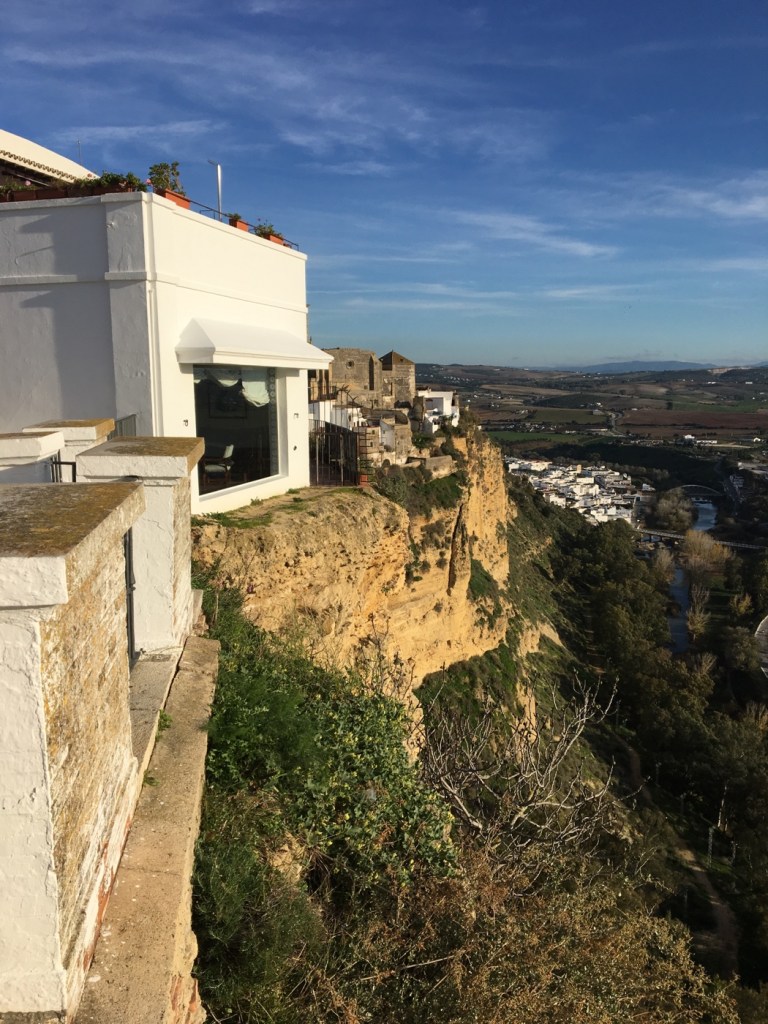 Yikes! I took a lovely walk (I did a lot of walking there. More on that later) along the Rio Guadalete. They have pretty nice paths that go 23 km (15 miles) around the river and town areas. I obviously did a shorter version but at the base you can really see the city on the cliff.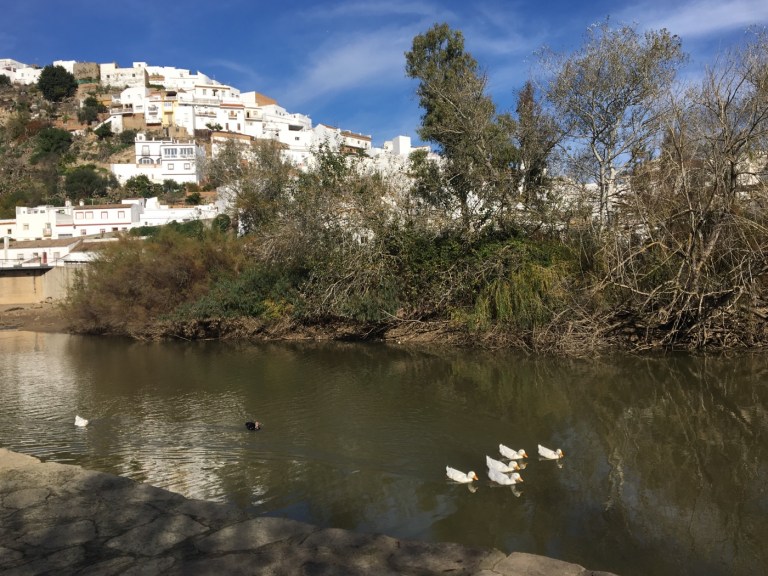
There were nice views off the walk. They also have a lot of miradours looking down to serve as contrast.
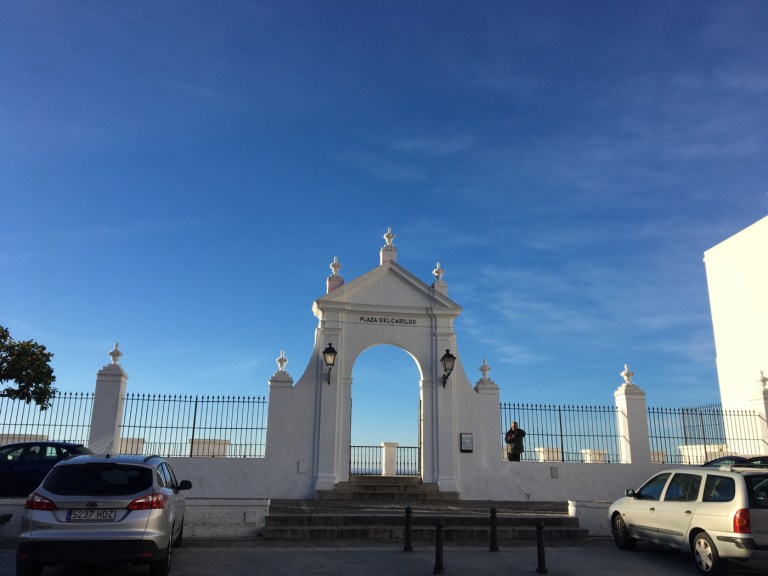
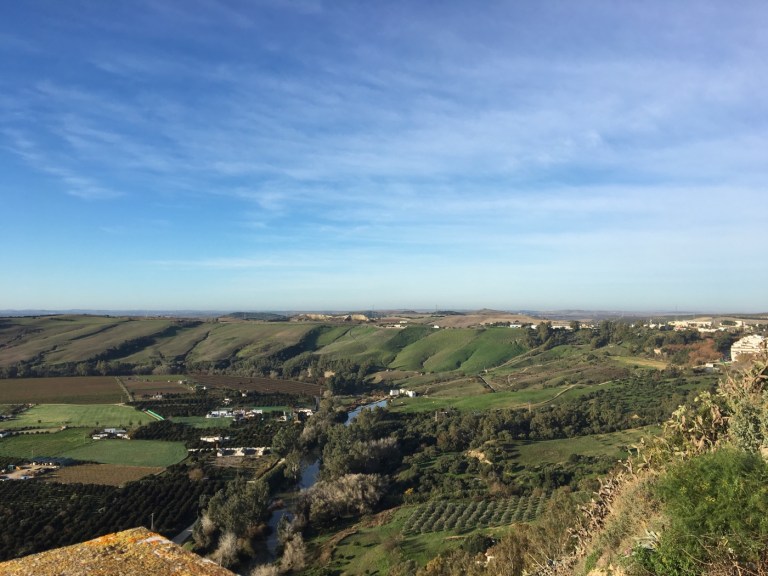
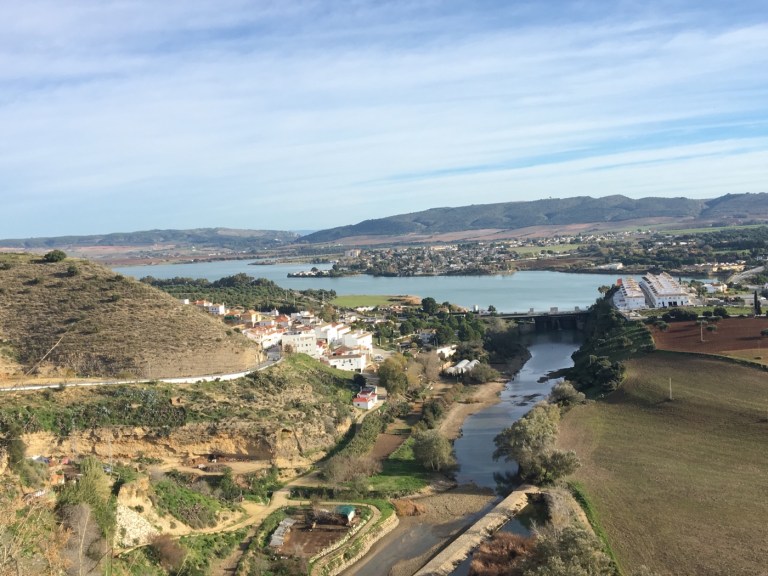
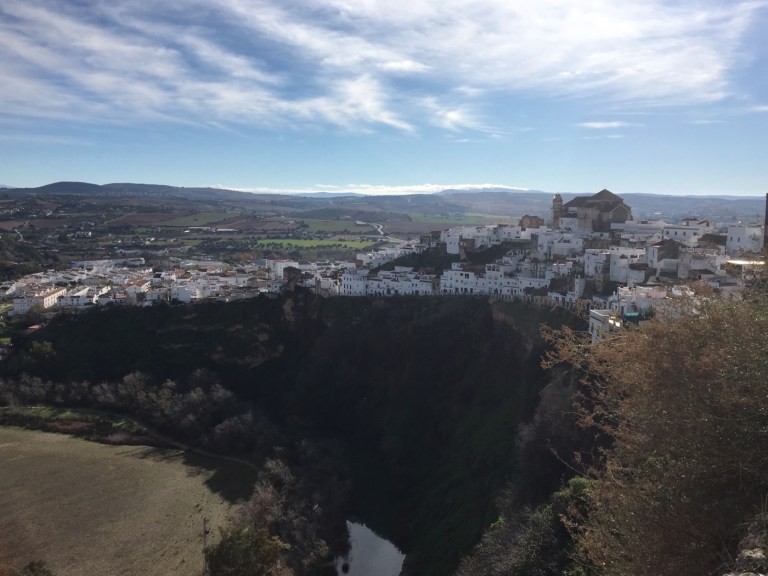
Considering I was up and down the hills for my walks — and I had street parking near my Airbnb in the old town area (downhill and of course then back uphill) and had to feed my meter every two hours, I clocked my third highest flight of stairs (122 floors and I think my highest number of steps at 30,000 plus). It was a lot of walking. And a lot of hills. 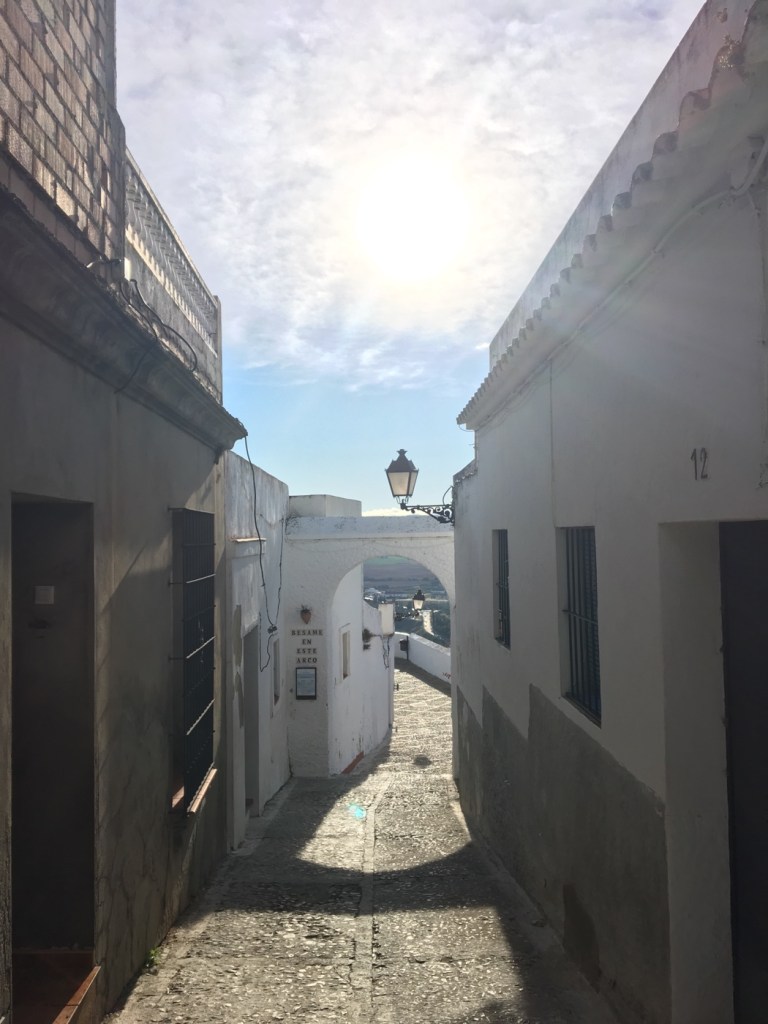
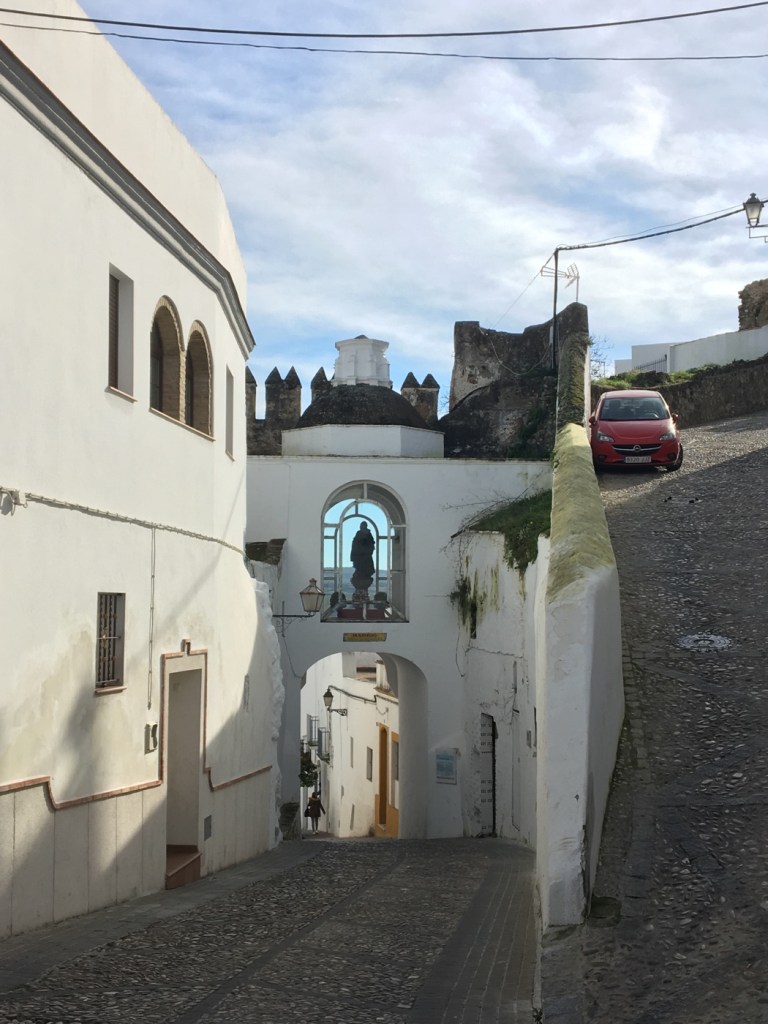
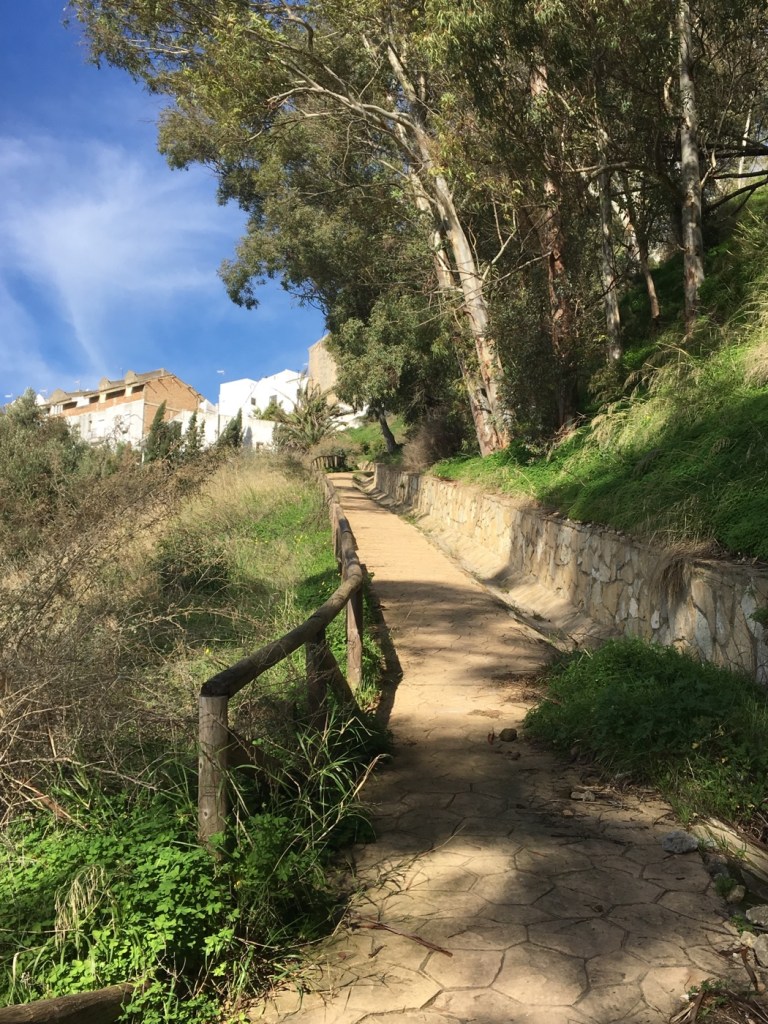
But it was spread throughout the day and perhaps I’ve gotten to be in great hills shape. I was never out of breath. This was the walk down to my car park. It’s outside the old town. 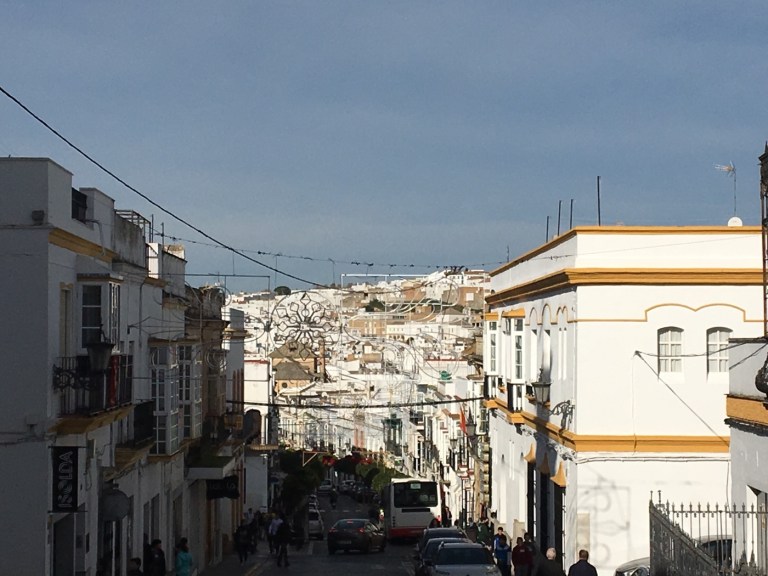
Anyway Arcos was pretty and worth a visit but two nights wasn’t necessary. It’s probably more lively in the summer. But as you can see there were very few people where I was! It’s off-season but Malaga was hopping at nights when I left and Arcos was quite dead at night and during the day as well.
I was trying to not have to check in/out of an Airbnb every day so I stayed two nights in places where I could arrive in the evening, spend one full day touring, and then take off the next morning.
Thus the day after thoroughly walking around Arcos, I headed to Cádiz, which is a port city in almost the southwesternmost point of Spain.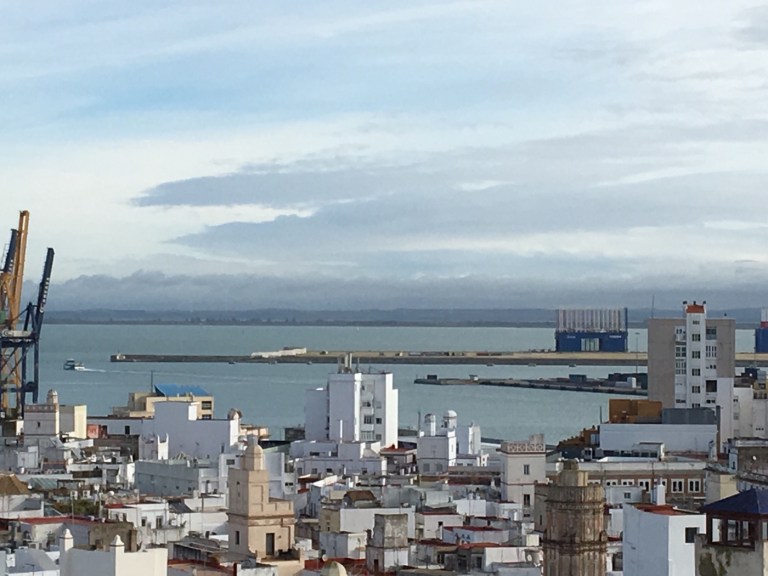
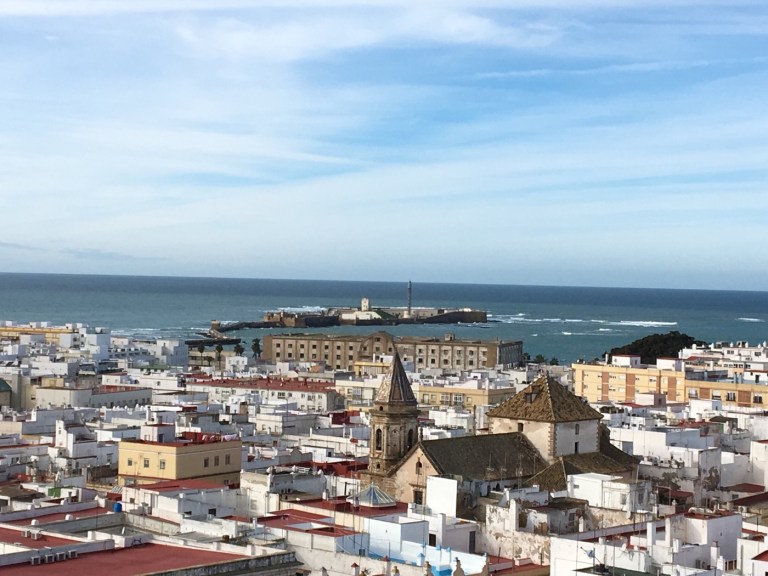
It’s naturally an island but they made it into a peninsula long ago — and have put up intense bridges to make it even easier to cross to the old city and port area. (BTW, the bridge I took above was 2 mi long and also scary.)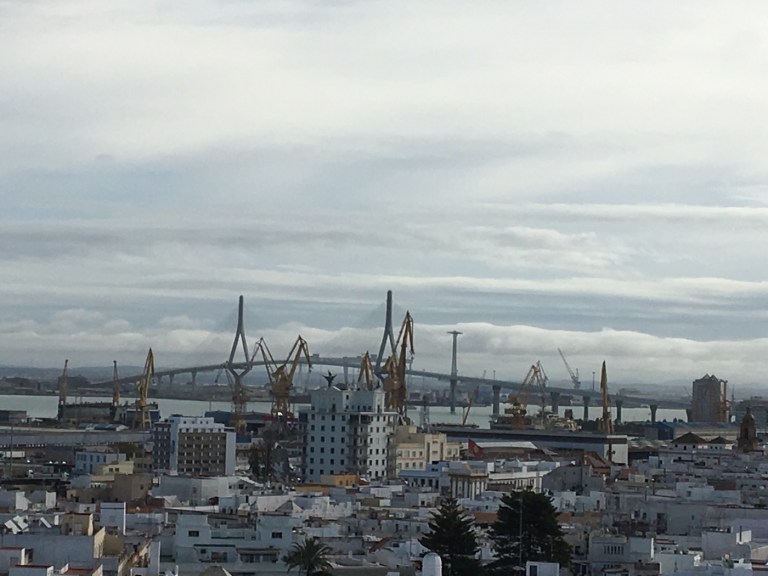
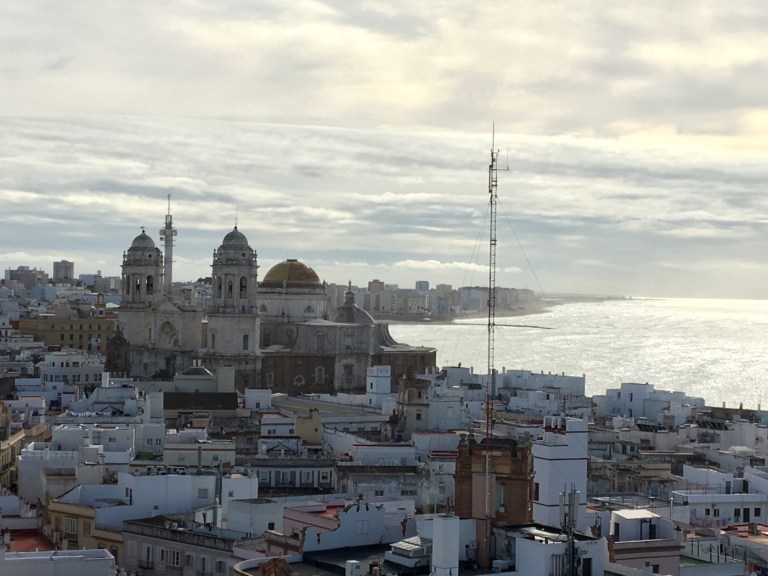
At one point the city was very wealthy and merchant ship owners built houses with towers (133 are still left standing). One, the Torre Tavira, now has one of the few cameras obscura in the world. Or so they say. Lisbon also has one though when Elaine and I went to the castle where it is, it was rainy (of course) and they aren’t usable in the rain.
It was pretty cool to see this one. If you aren’t familiar, it is the precursor to the first cameras. It uses a couple of mirrors, a lens, and a screen (a big concave white surface) — along with some kind of periscope thing I think— to let you see from a high point a full detailed 360 degree view in real time of your surroundings.
We weren’t allowed to take photos but it was cool to spy on what was going on in the surrounding area. And there’s a terrace on the tower to take real photos.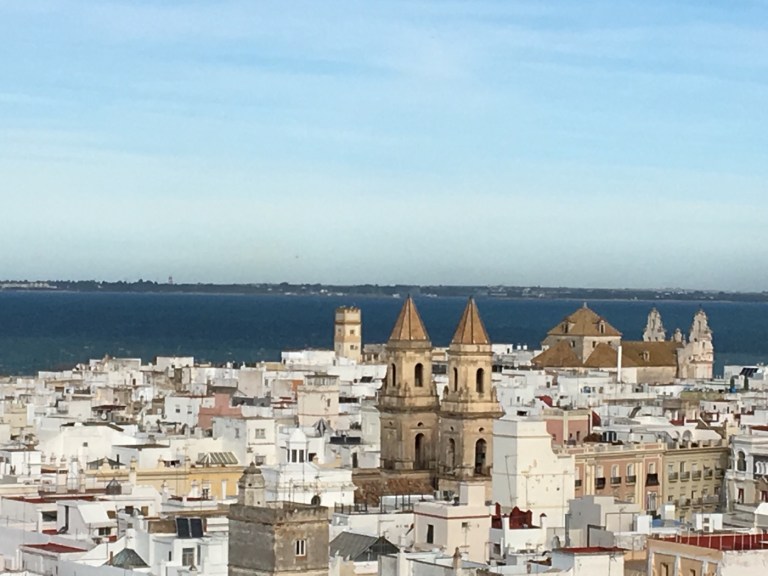
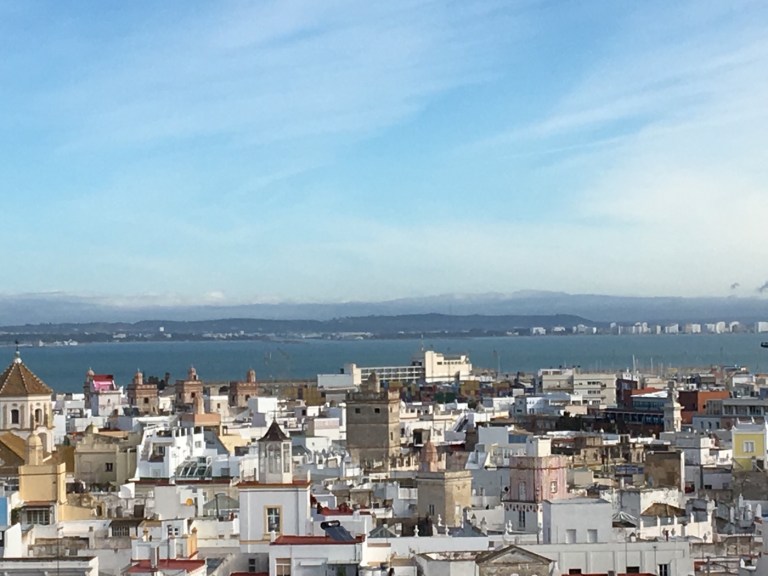
I was hoping to take a local tour of Cádiz but unfortunately it wasn’t held as they need a minimum number of people and we didn’t have it. The disadvantage of being off season.
That said I just walked around a lot. The old city is small. I was parked on one end and had to return to feed the meters (another long and painful story) and it was a 12 minute walk.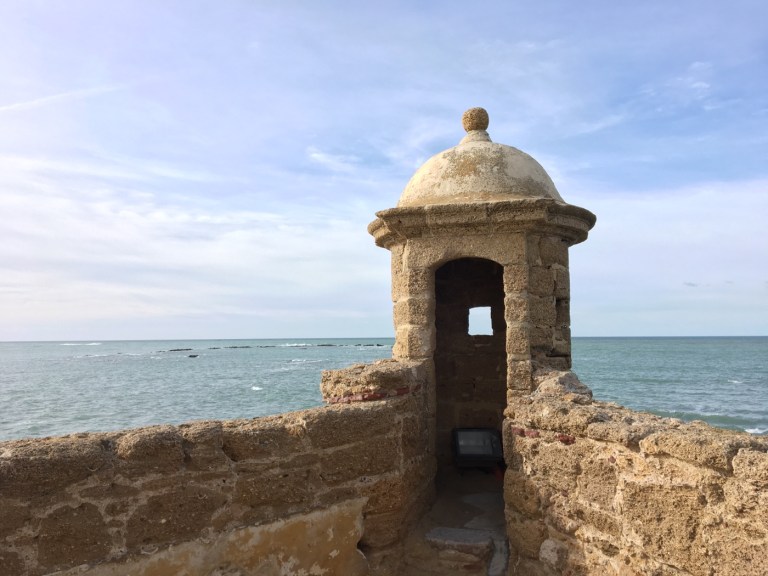
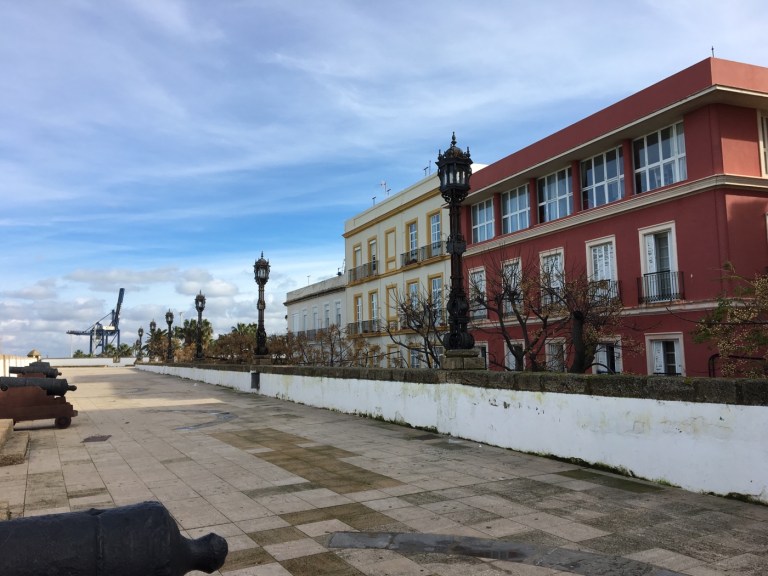
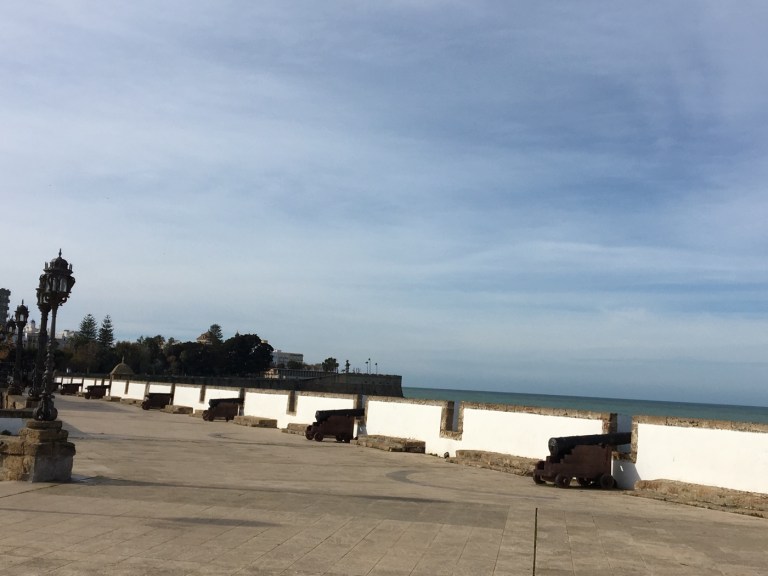
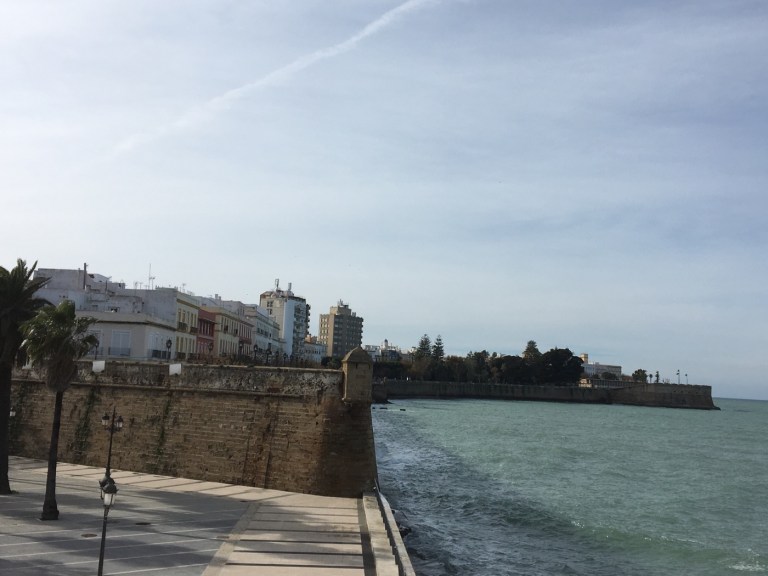
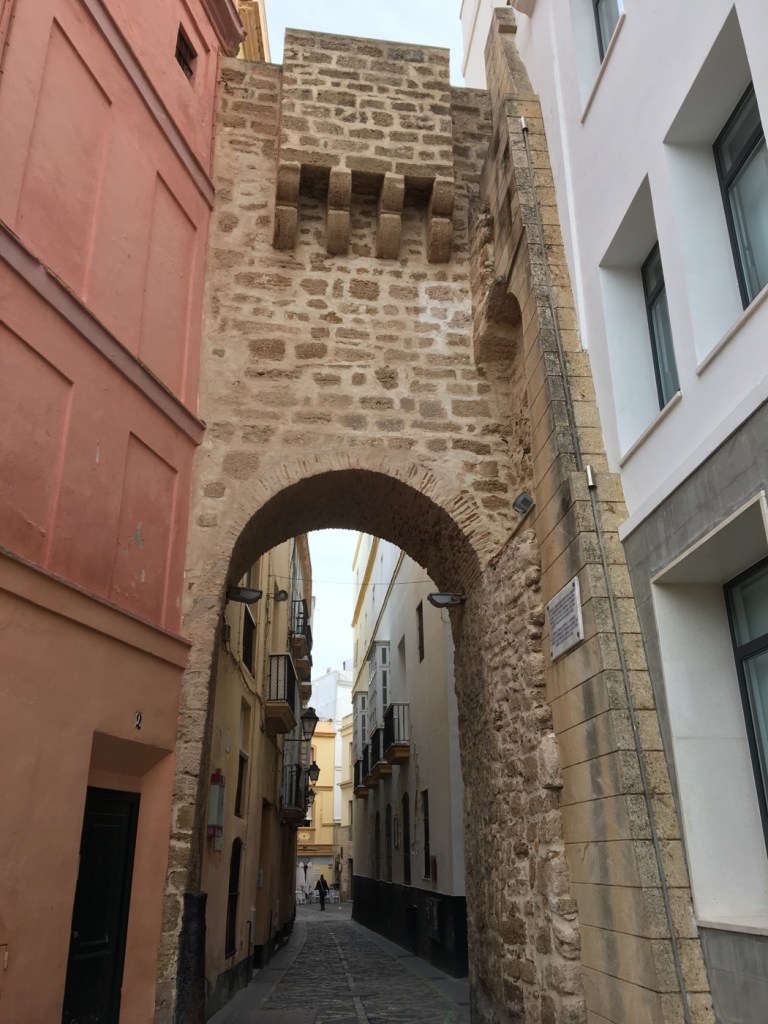
You can circle the old walls and go to one of several old fortresses. (As usual, there were Phoenicians, Romans, and Moors before the Spanish reconquered the city.) In Arcos, I was reminded that the Romans did not build high up. But they certainly liked port towns so there were ruins in Cádiz.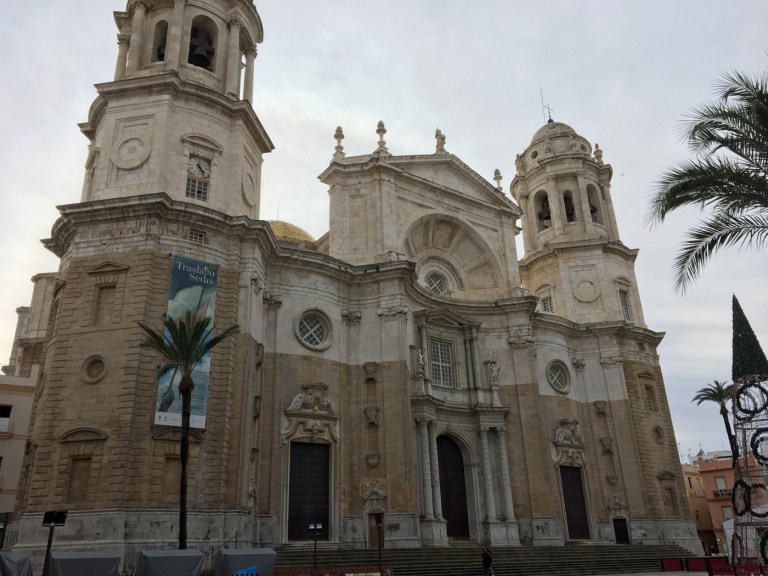
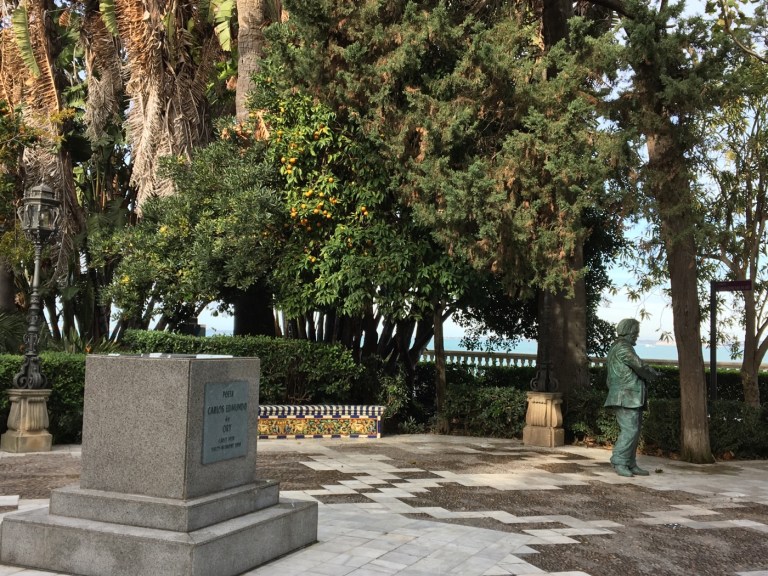
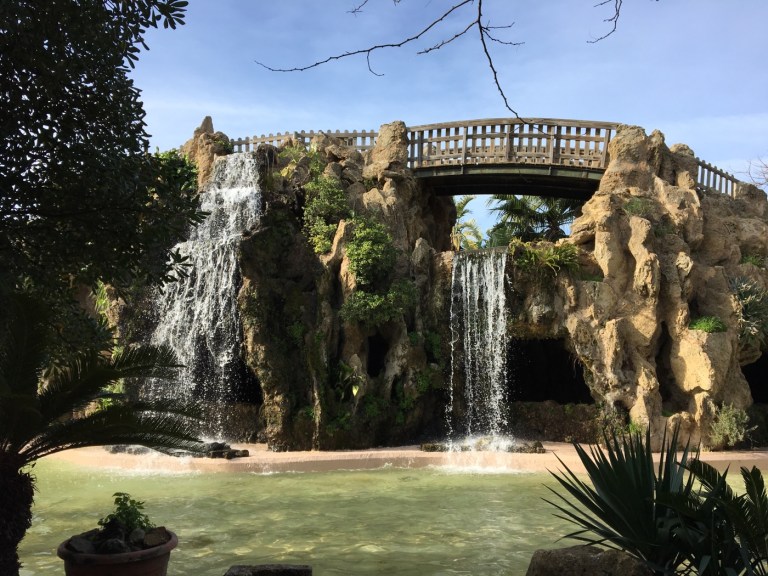
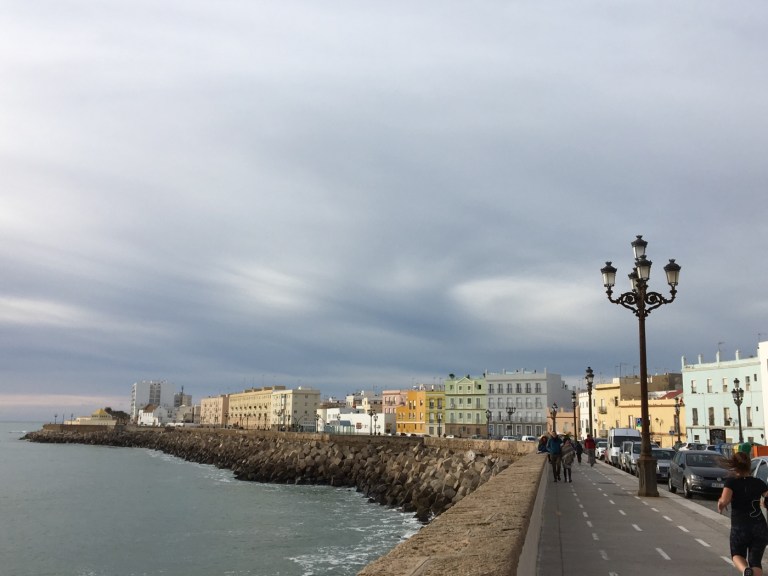
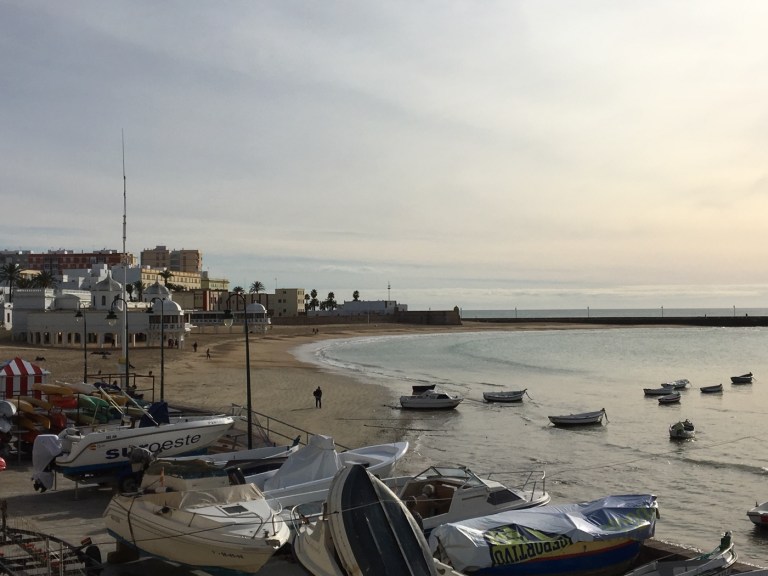
And a really huge cathedral. It’s bicolored because it started being built in gothic times but was finished much later in neo-Renaissance days. There’s also a botanic garden and parks I walked through that are along the water. I cracked up at one because the guy who should be on the statue is off the pediment — there are foot prints but you see him sneaking out of the park. No idea what it’s about but it’s funny.
I didn’t go inside many places. The day was beautiful and my timing was off. Though I made it to the market in the morning and grabbed a late lunch there after most stalls were closed except bar/cafe types.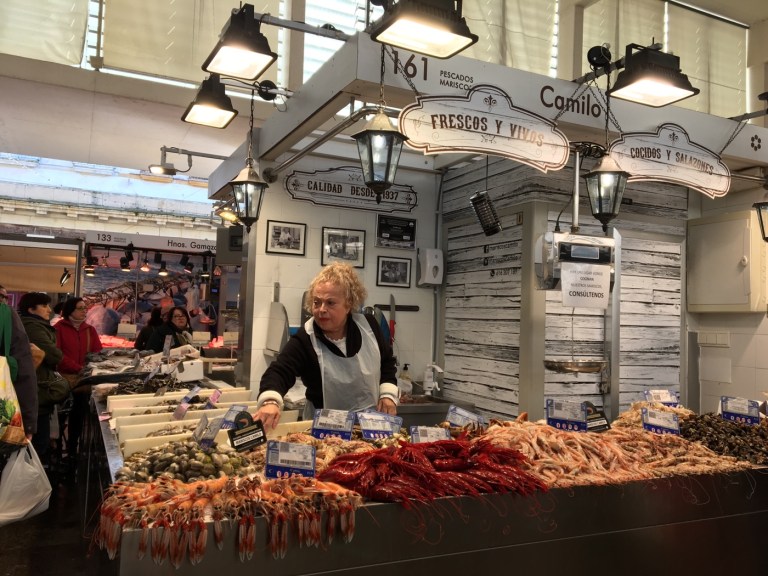
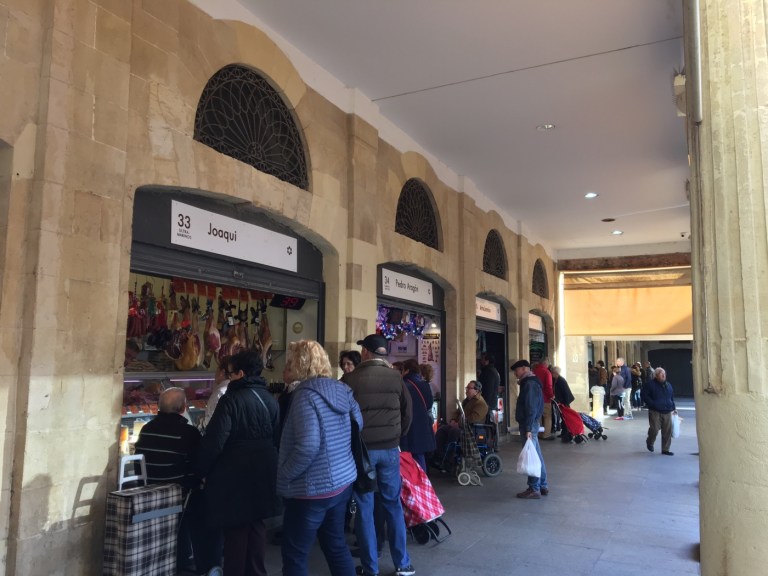 All in all, though Mr Steves does not even mention Cádiz, I took the advice of a Radhika and agree that it’s worth a quick stop. There’s also a lot of plazas, narrow streets, important looking buildings (though I wasn’t sure what they were about), and a ton of water views.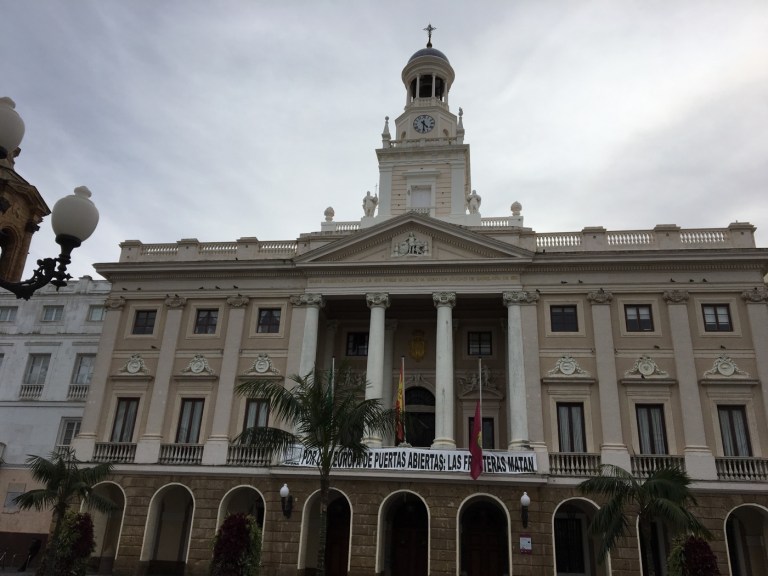
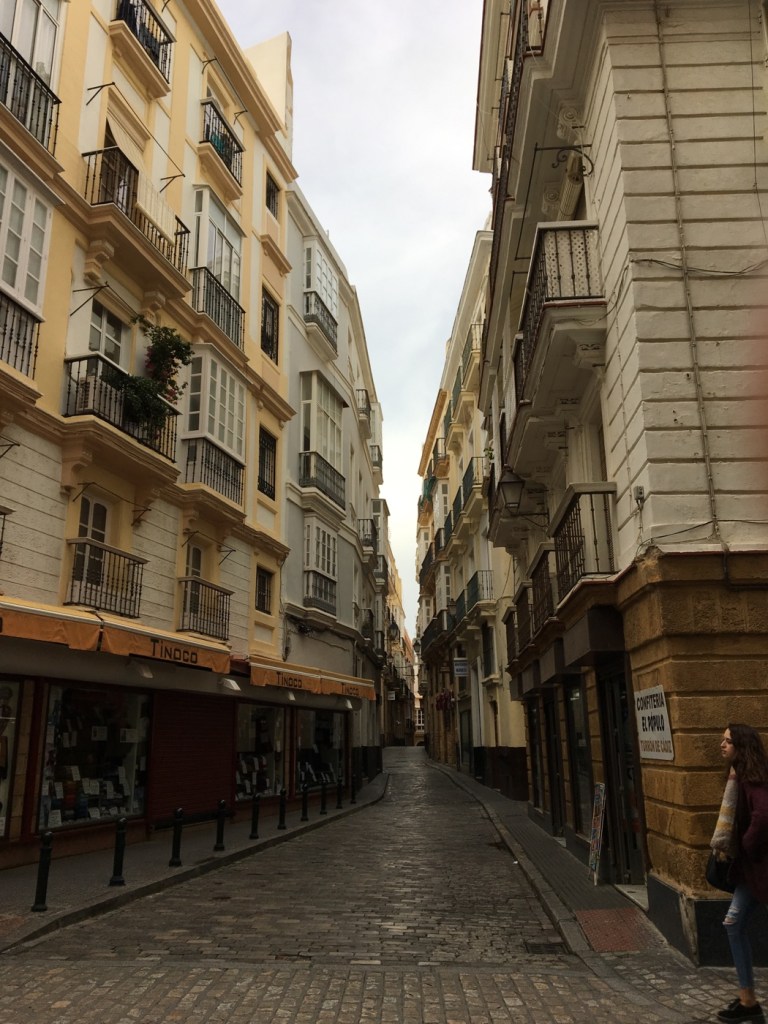
 I drove from Cádiz to an area, La Linea de la Concepcion (really a mouthful) to spend two nights. But I’ll leave that for tomorrow’s blog because I was there to be able to have an easy day trip to Gibraltar. And I feel like this blog covered a lot!!
 Cynthia's Trip