Obviously I’m still having a great time in Dublin even without Joy. But I couldn’t resist the puns (tee hee). Well, I’m at the airport now and will doubtless finish this on the airplane and post it during my layover in London. Then off to Ljubljana.
So in my non-Joy time in Dublin, I was checking out the older town areas. (I basically had one full day after she left and also a few hours another day because she hadn’t adjusted yet to the time change.)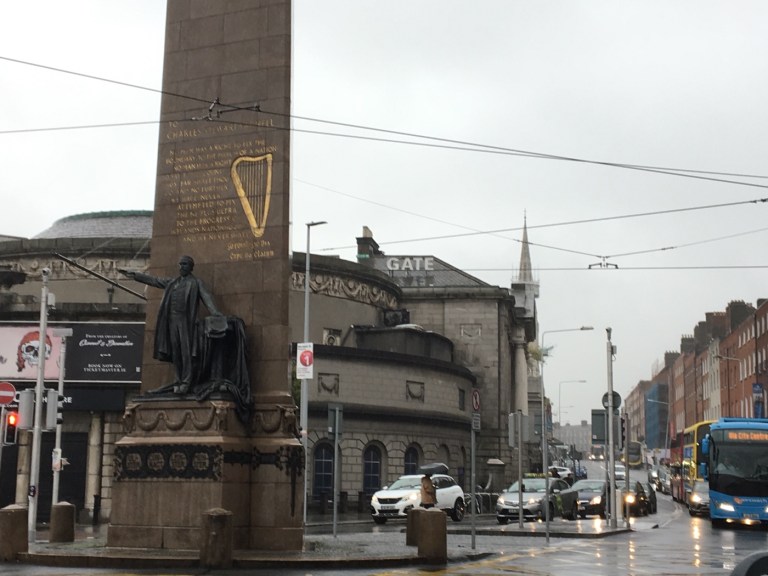
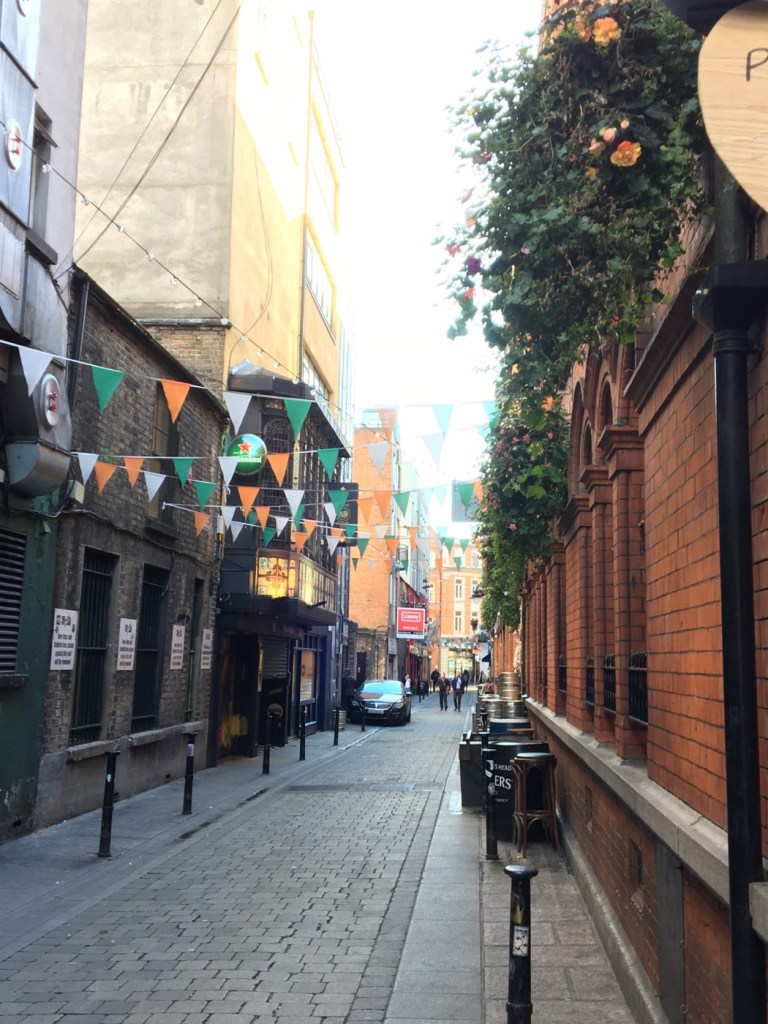
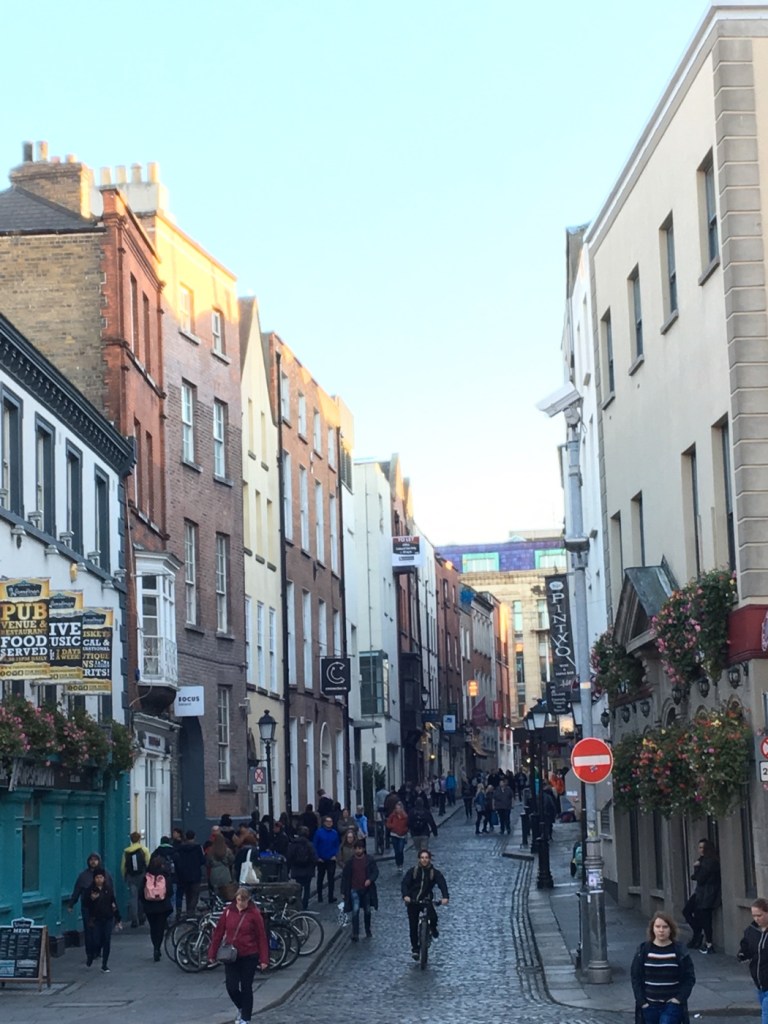
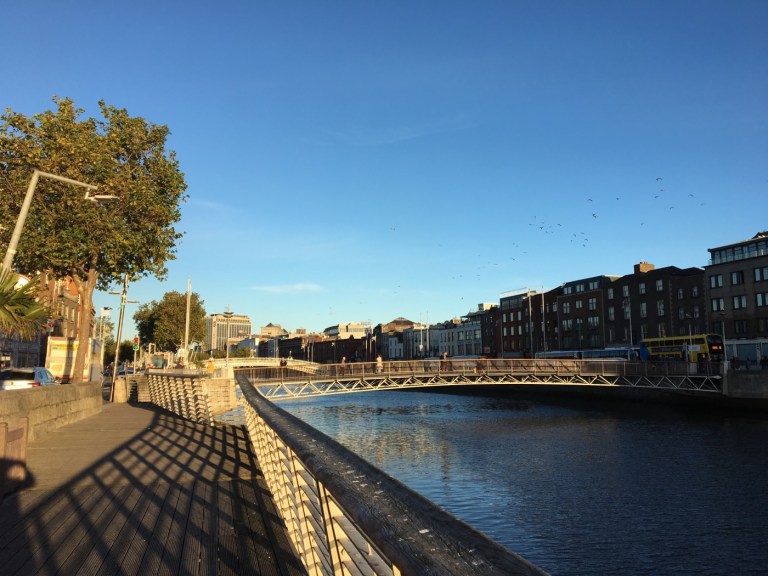 Mostly I was at the Trinity College to Dublin Castle area or walking from my Airbnb (in Drumcondra) to there, which is a few miles.
Dublin is I think slightly smaller than Glasgow though in my limited experience it felt busier. With tourists anyway. I heard lots of German, Italian and Spanish plus other languages I don’t recognize. And American English.
Anyway back to Trinity. If you didn’t know it’s the oldest university in Ireland and the most prestigious. Although I just read that it’s Protestant and until the 1700s Catholics were excommunicated if they attended college there. No longer. Famous alumni include Jonathan Swift, Samuel Beckett, Oscar Wilde, Bram Stoker, and according to their new iPad display at the Long Room, Hozier.
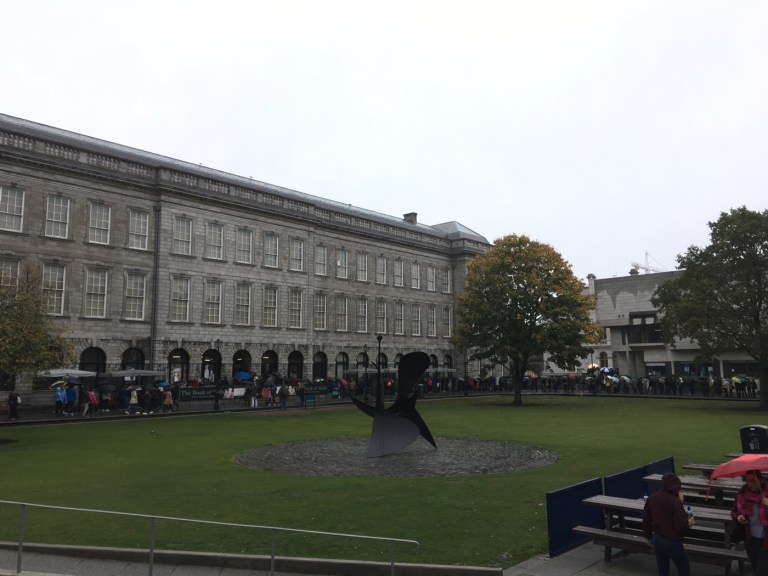
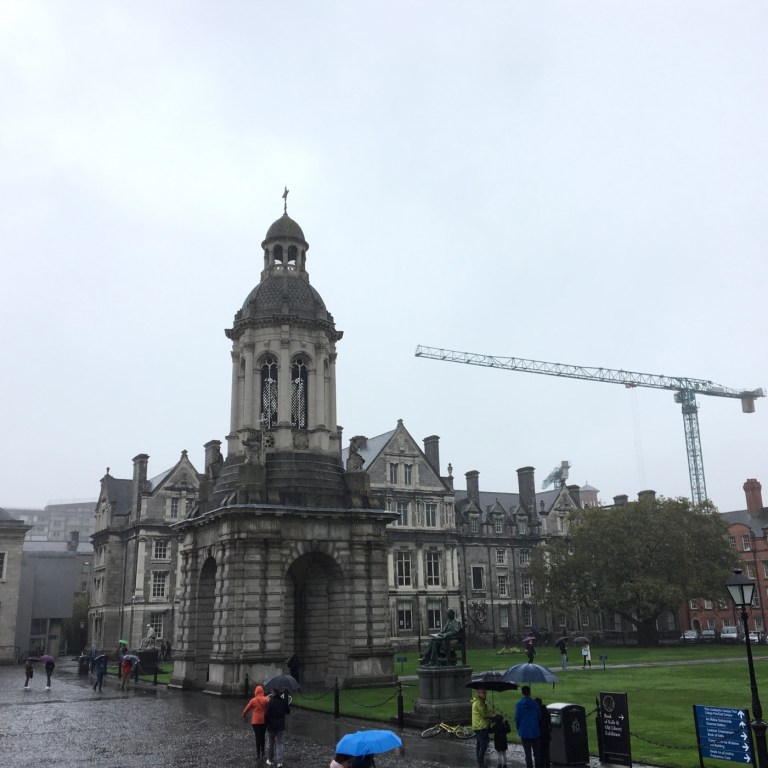
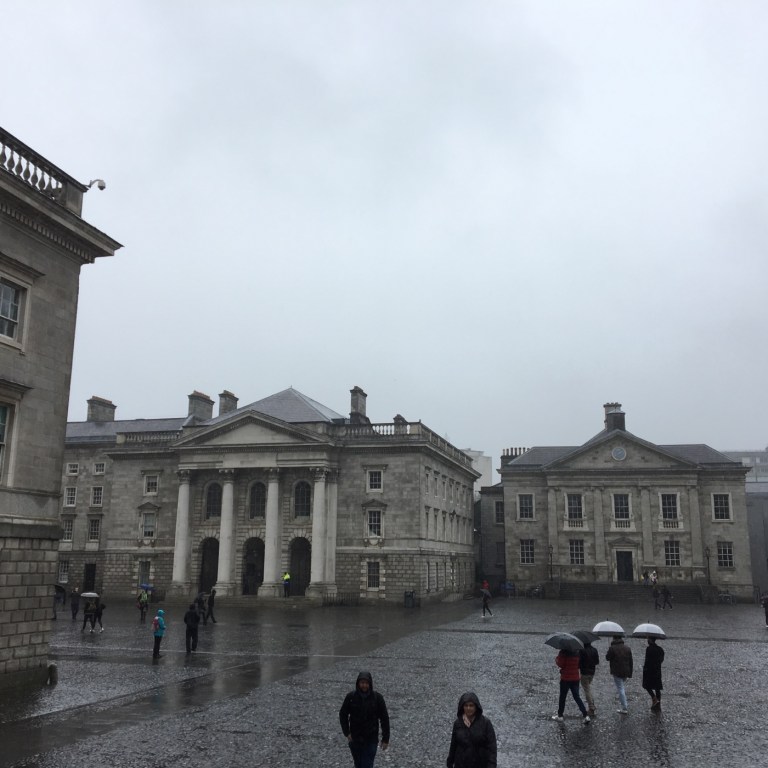
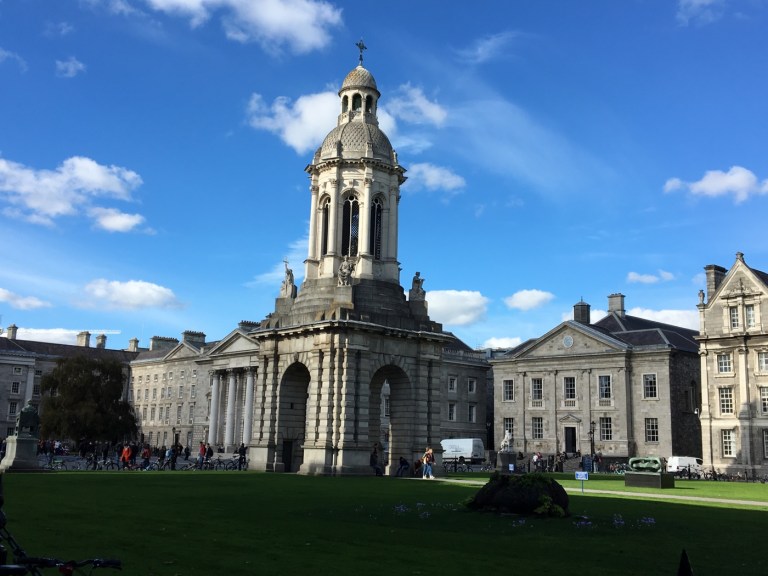 You can see it in both sunshine and rain since I was there during both.
I wanted to see the Book of Kells when I realized it was there (seriously did not research anything in advance)— if you read my Isle of Iona blog, you may remember my mentioning Iona Abbey, which was established by an Irish monk (St Columba there — meaning dove — but I noticed a totally different name here, Colum Cille). In any case at around 800 AD, the Iona monks started the Book of Kells in his honor (writing and illustrating the gospels). Or something like that. Because of those damn marauding Vikings, they sent it for its safety (with the monks) to Kells, Ireland and eventually it made its way to Dublin and Trinity.
It’s a pretty cool story. Of course you literally see 4 pages of it but go through a room of background info about how the pages, cover, ink, bindings, and pens are made. And even the little dots put on each page so they would write in a straight line. (BTW, the ink process is quite a pain and totally dependent on local minerals and plants — so much easier with crayolas or sharpies?!!) Plus info on the scribes and illustrators. And I’ll admit it, I found all that quite interesting. I do love books.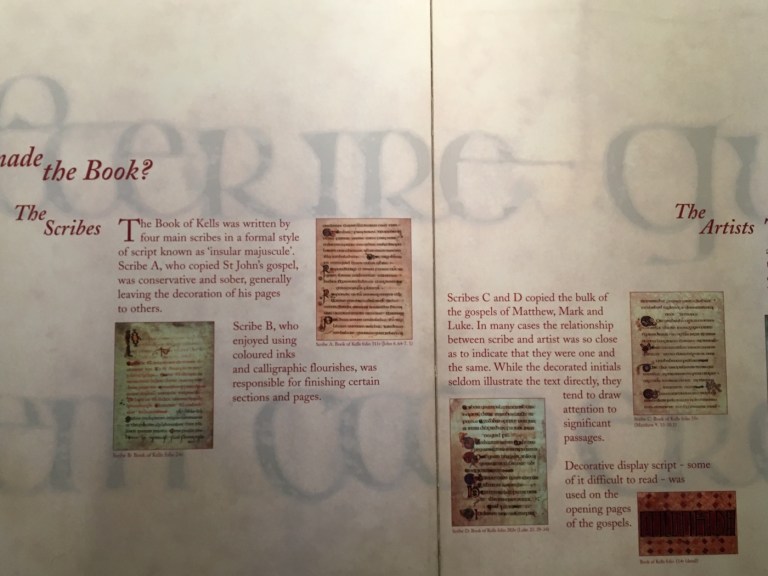
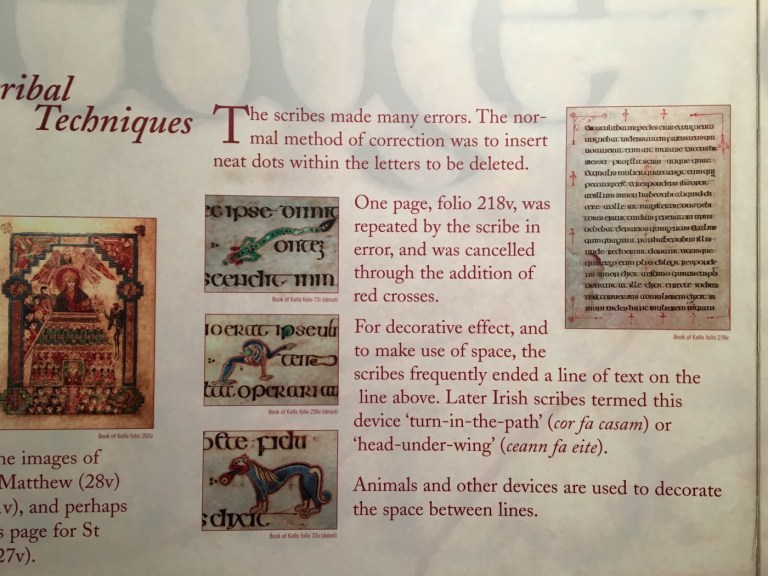 I’m now just going to put little red dots and crosses over my typos …. I love it that some scribe accidentally repeated a page but it’s not like he could erase it so he just put little red crosses on it?! I’m sure that caused quite the furor at the time. Or maybe not. This all clearly took a REALLY long time and they seemed to have a lot of it. Other wallboards had quotes from monks in the era who talked about writing all day under a tree. At Iona, which was beautiful and serene — so I’m thinking not a bad life, mistakes or no. With the exception of being attacked by Vikings, sounds calmer than writing this from the middle seat of a RyanAir small plane! (Also didn’t the monks have mead? And had the French monks invented and/or exported champagne yet? I’m doing this all on a couple of coffees and a short flight but long layover.)
Good thing Europeans hadn’t yet imported Chinese paper, invented at least 600 years before the book was written — it would never have lasted this long! Although vellum (calfskin) was another huge long process to create. It said about 150 cows were needed to create that book. Hardly vegan.
Of course we weren’t allowed to take photos of the books themselves. There’s also the lesser known, much smaller, and much less brightly illuminated Book of Mulling and one other that I’ve already forgotten. One of which had what seemed to be pretty tiny handwriting. But more on that later.
We were allowed to take photos in the Long Room, a still-working library that contains over 200,000 really old books. 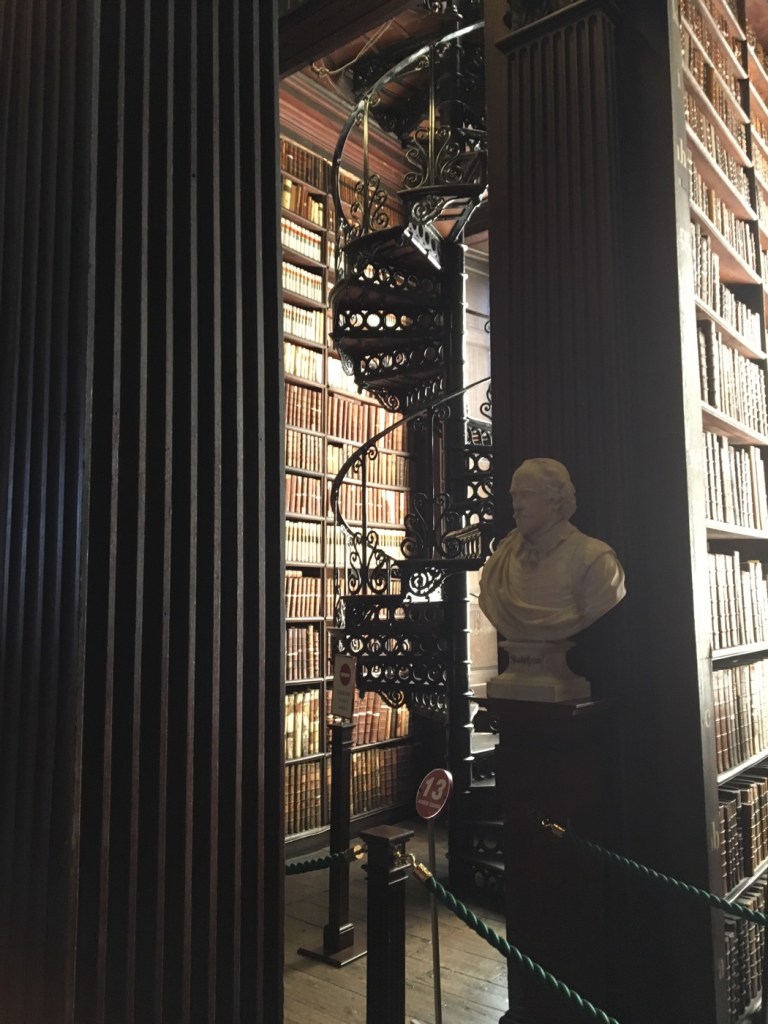
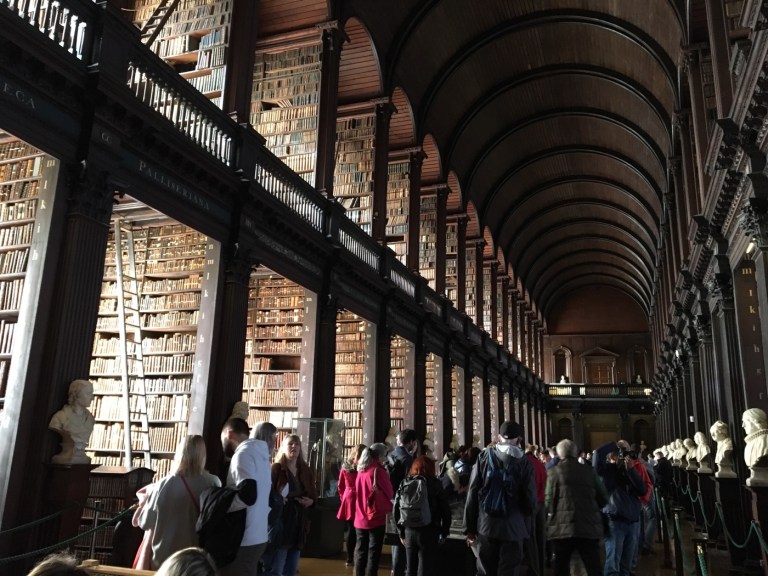 It smelled good. Like old book leather. (For obvious reasons.) I saw some workers at a side restoration room; they had to put on face masks, smocks, and gloves though a guy was handling a book not fully suited up. Tsk tsk. And for another small bit of trivia, there’s some British law from the 1800s I think that the college is entitled to a copy of ANY book that is printed in the UK. I don’t know where they put all the new books that keep pouring in but I didn’t see any card catalogs anywhere… (yes, Perry, our librarian, that was a joke.)
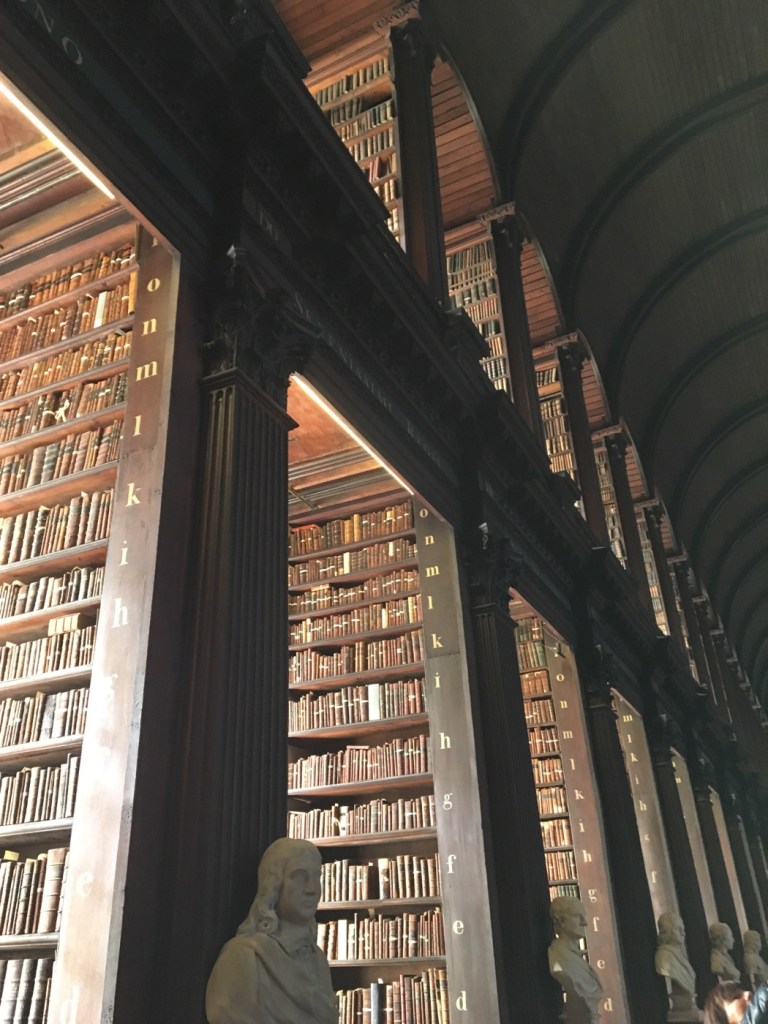 They have marble busts of famous philosophers and also alumni (or professors?) of the college. People seemed to like taking their photo in front of their presumably favorite philosopher?! And they have the harp of Brian Boru (there were some disclaimers about this), Ireland’s symbol.
 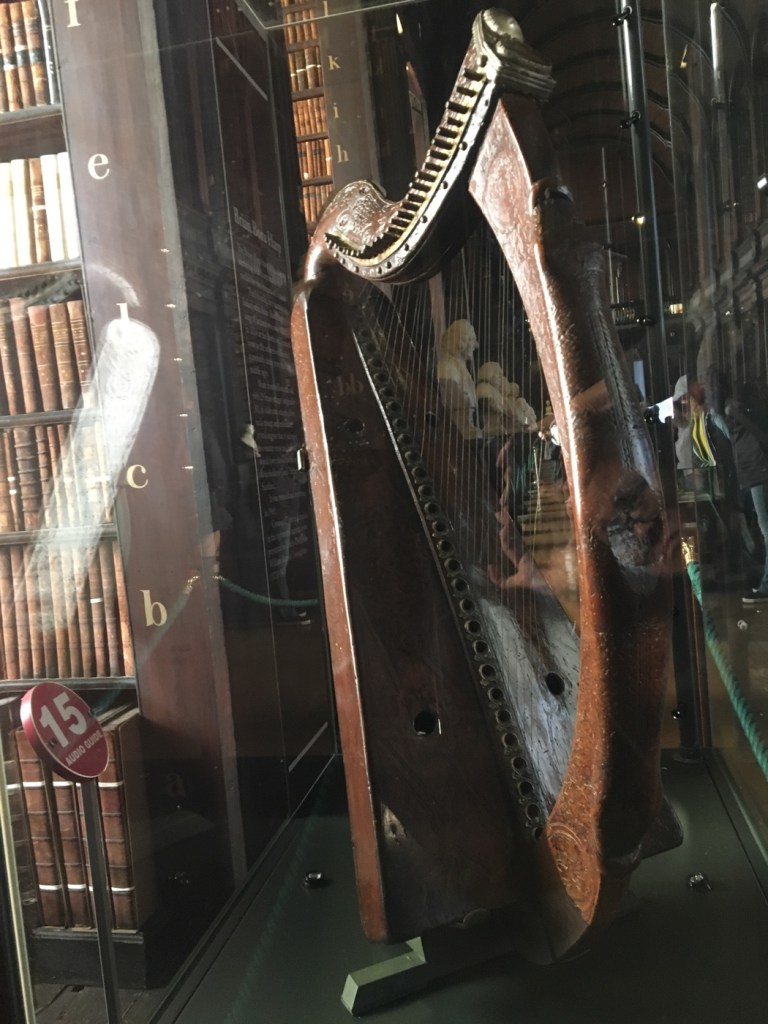 Anyway I enjoyed my time there in all the books. Of course it was my one really sunny Dublin day and I’m inside. But then I spent a few hours at the cricket field and walking around the area which was lovely.
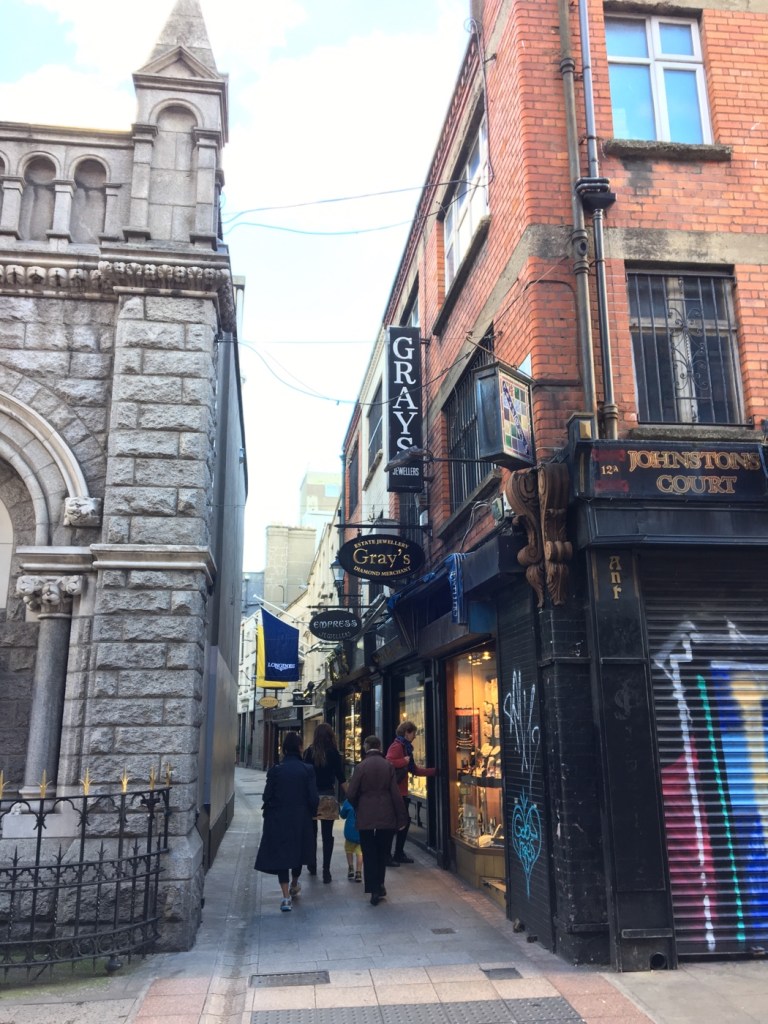
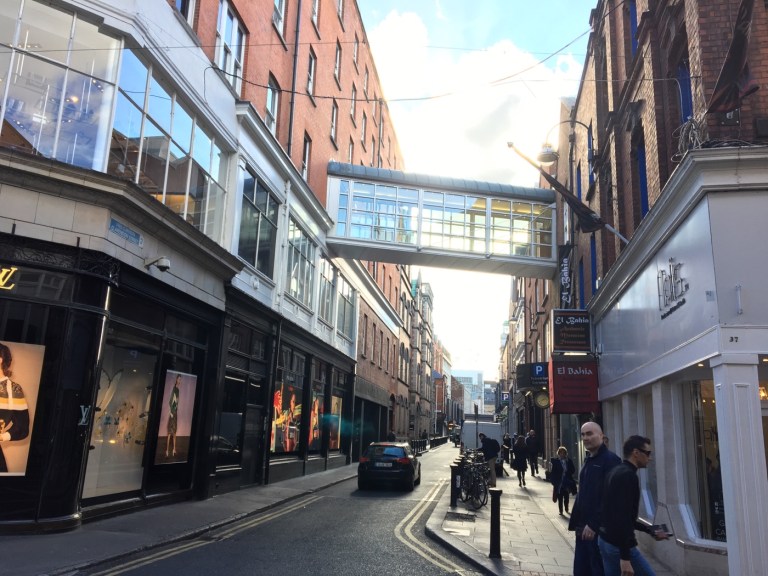 And if you can’t read that street sign, it’s Clarendon! A little more charming than my street. I never thought about Montrose and Clarendon being such British names.
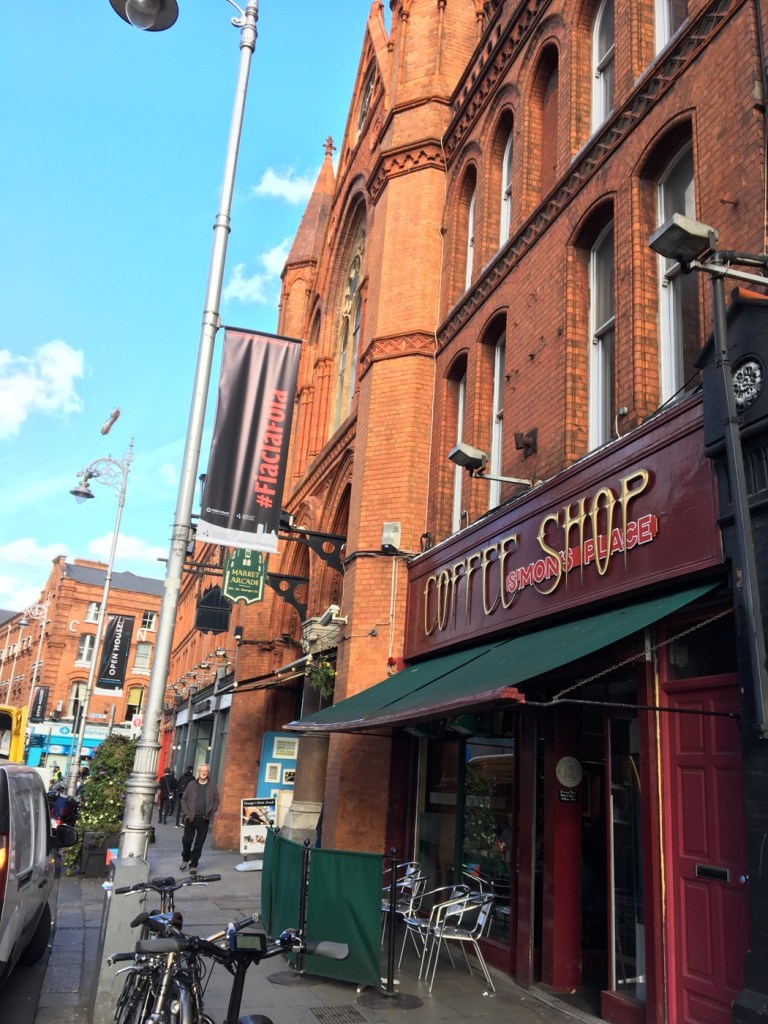
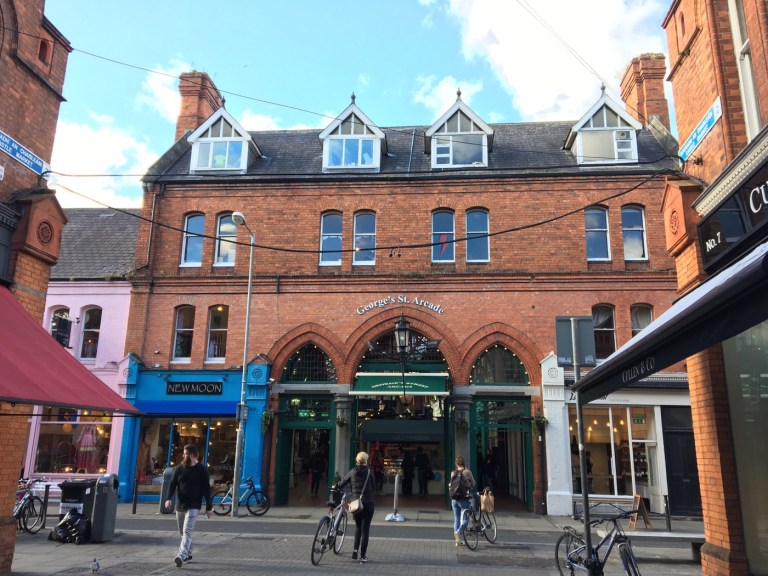 I ate lunch at Simon’s, which according to Yelp (or TripAdvisor?) is an old institution. And for my sister, something said that a scene in Once is set there. (I’ve seen neither the play nor movie so I’m just repeating what I read off the internet.) It was cute, inside an equally famous George’s Street Arcade (originally built in Victorian times but I think reconstructed at one point). Good soup and sandwich and although I did not try their famous cinnamon roll it smelled delicious.
My host said his favorite free place to see in Dublin is the Chester Beatty library. I found this odd but thought I’d check it out. Turns out it was a fantastic complement to the Book of Kells/Long Room visit. It was also all about books. And had ones even older than the Book of Kells (though admittedly not as ornately written and illustrated). But it also has ones prettier and newer (usually Italian). And works from all eastern regions — Chinese, Japanese, Indian, Turkish, Persian, Egyptian, Greek as he focused his collecting on the east. They actually had the earliest known bound books there. (I think maybe 300 AD? Certainly they had bits of writing dating from 200 AD but maybe the bound one was later.) Scrolls, papyrus, vellum, paper — bibles, Qur’ans, calligraphy, art … you get the idea. Really beautifully curated in glass cases so clean and clear I saw a man bang his forehead on the glass when he was trying to read something. I’m surprised I didn’t do it myself. And I took this — before I realized you’re not allowed to take photos there. Thankfully no flash.
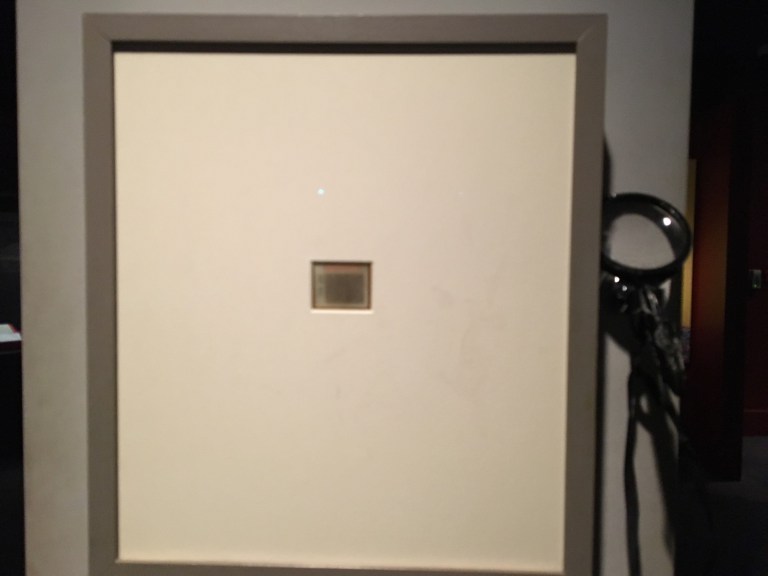
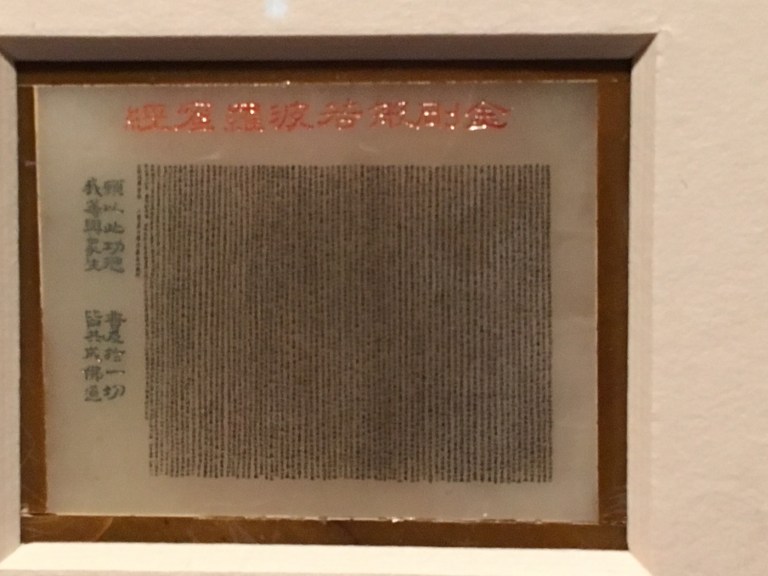 So I’m not sure you can tell how small this is — the first photo shows it next to a magnifying glass which you must use to try to read the writing. It’s significantly later than the Book of Mulling, but we were all marveling at how small the writing was in that book and using primitive tools. Well this item, from the 20th century, is by a Chinese man forced to work in the labor camps during the cultural revolution. He apparently also wrote on grains of rice. And did this all surreptitiously when he was supposed to be doing manual labor. (I’m sure of the farming, not calligraphic type.) Just a side note. It’s amazing what one can do when you put your mind to it and somehow have the time.
But back to Sir Alfred Chester Beatty, who got his start collecting books when he bought a beautifully written Qur’an in a Turkish bazaar. BTW, Sir Alfred (Sir Chester?) was a NYer, a Columbia-trained mining engineer who became a mining consultant (think gold and diamonds). He eventually settled in London and retired to Dublin (I’m guessing taxes) and in conjunction with the government, set up this amazing (it really is) center. There was also exhibits about eastern religions (and Judeo-Christian-Islam), a zen-feeling roof garden (in addition to the front entrance which is a garden) and a reading room that’s supposed to be amazing. It’s open for public use but you need to schedule it (like have a reason to use/access some of the collection). Anyway it’s nice when ridiculous amounts of money do wonderful things. The man died in his 90s (I want to say in the 1970s), was knighted by the Queen and was the first American to be made an honorary Irish citizen. 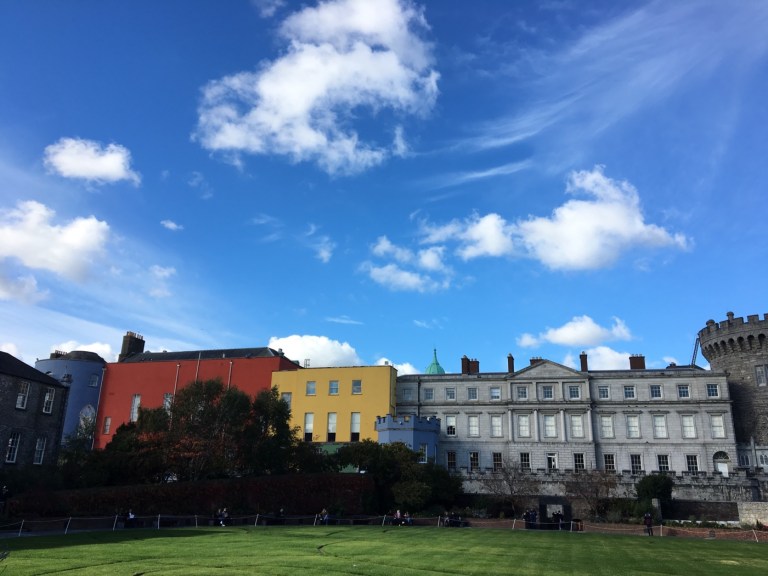 This is the garden area where the library is set. It’s next to the Dublin Castle (mostly a government building I think that I heard was actually built by the English).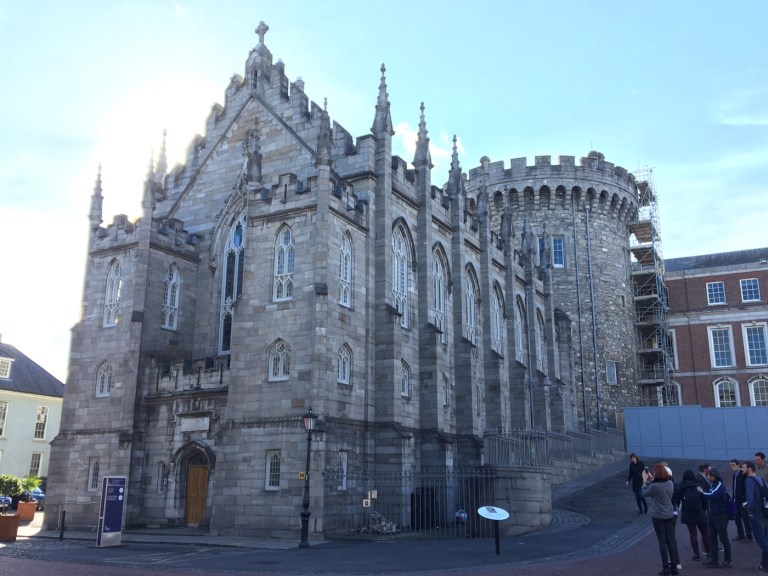
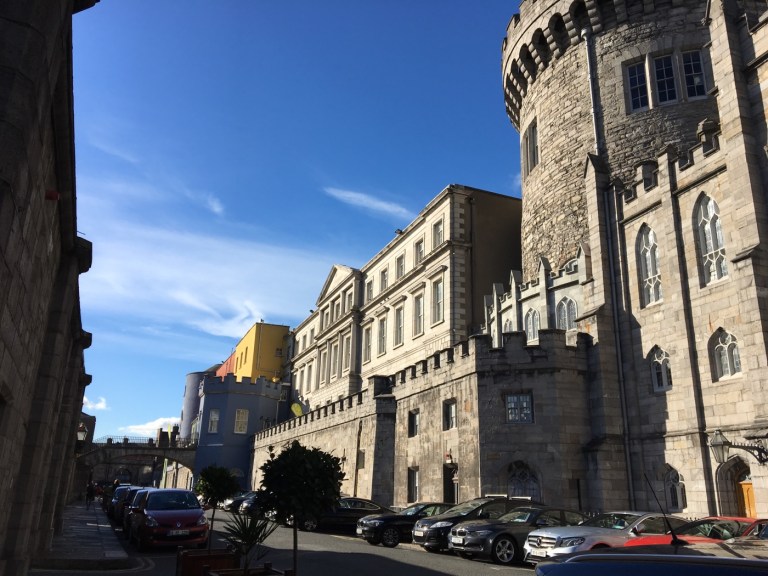 Anyway, I highly recommend this library if you’re into books and/or eastern philosophies. The only thing that negatively affected the experience was that it’s apparently a magnet for school groups. Makes sense but first a bunch of French middle/high schoolers erupted into the space (even though the teacher tried to shush them he was waaaay outnumbered) so I left to go to another floor. They followed. I returned and there were a new set of Irish high schoolers there. Oh well. They were a smaller group thankfully. But sort of ruined the sanctuary feeling.
I need to wrap this up soon! So quickly — I then walked to Dublin’s St Patrick’s cathedral (when in Rome..) although I wasn’t able to go inside as it was too late. 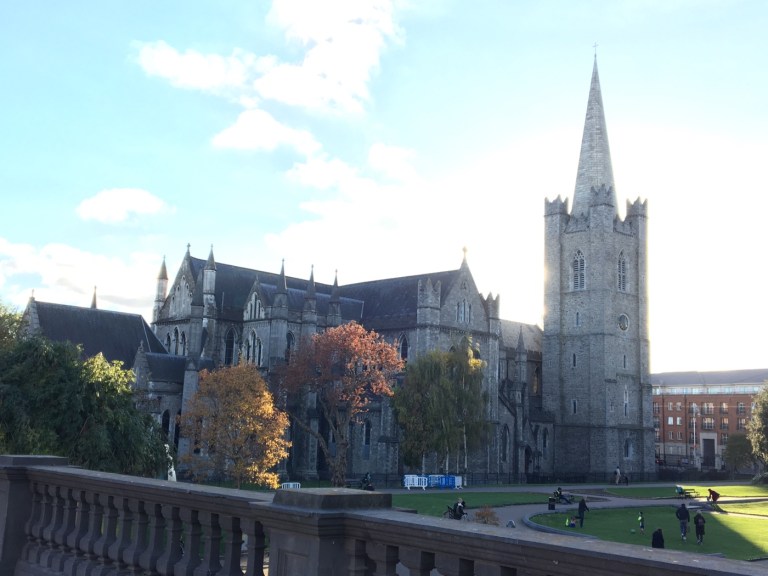 On the way over, I saw a bunch of carvings over doorways in a small complex that were similar to this.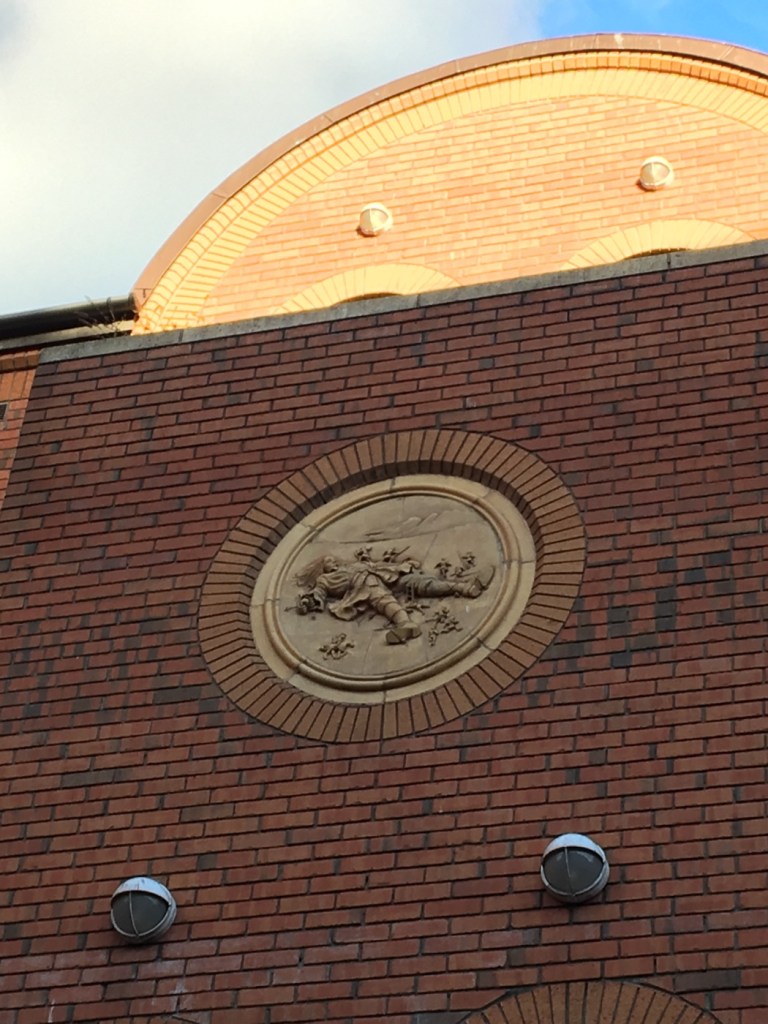
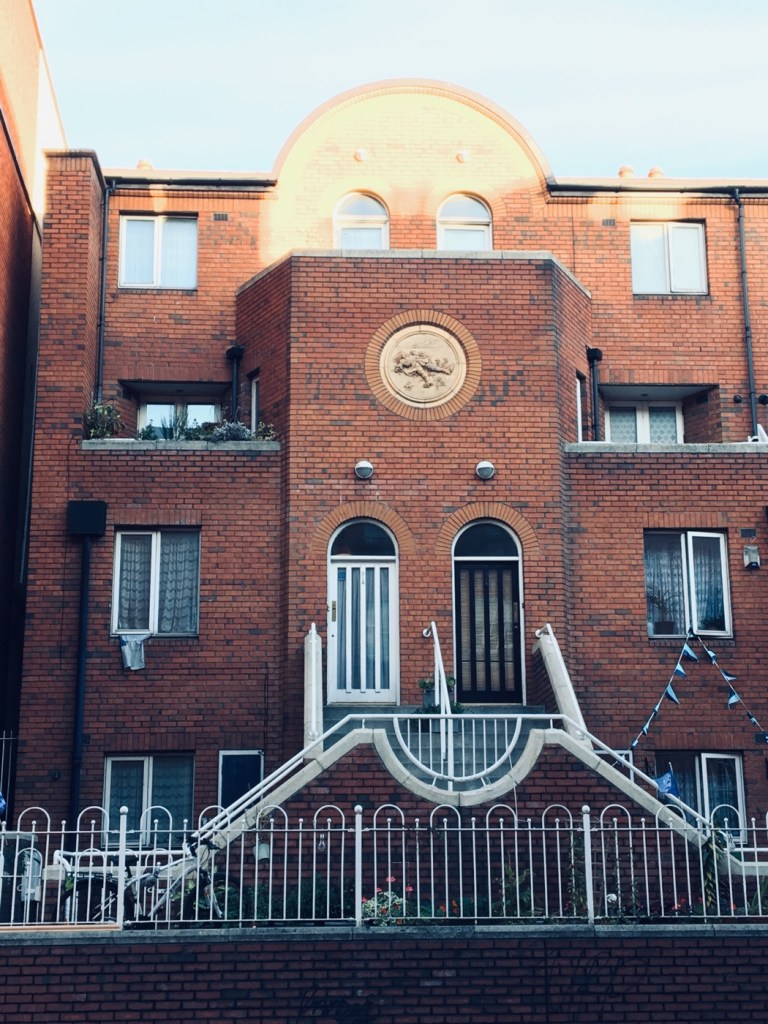 So Jonathan Swift was either born, buried, or lived somewhere near here. Or possibly all three. I had no idea he was at one point the Dean at St Patrick’s cathedral (down the street). I must say I’m surprised but maybe it was during the period it wasn’t Catholic? (I may be going out on a limb here.) Anyway I carefully canvassed each of the carvings to try to find yahoos since it’s one of my favorite expressions (thanks to Haim I now remember it’s from Gulliver’s Travels). But it was all Lilliputians-related. No Houyhnhnms. Oh well.
Fnally, just a note on Ireland vs Scotland. They’re all Celtic and speak Gaelic. (And it would seem equally dislike the English — and Vikings. Oh, I went with Joy to the National Museum of Ireland – Archeology which had a whole thing on Viking influence. A small but nice museum. And free.) Maybe it’s unfair to compare since I spent so much more focused time in Scotland but absolutely people are more aggressively friendly here. (That sounds kinda negative. Maybe I mean outgoing??!) Or maybe they were just more drunk. And maybe because I was out later and it was a weekend? I don’t know. That said, people were very friendly and sweet in both places. Yet in Scotland I had many random conversations, usually with women, and they were more reserved. And overall things felt more respectful. Even my cab driver to the Dublin airport was a funny radical who was pretty aggressive about how fucked up government is everywhere. And he’d have supported Trump, whereas no one I talked to in my Scottish travels had any liking for him.
Just an observation from my three weeks out here …
 Cynthia's Trip