Yesterday was rainy and cold in Glasgow (my hosts are making fun of me that I basically bring the bad weather because it’s been especially rainy lately even for Scotland — and when I was in Arran where it wasn’t supposed to rain but did, it was a beautiful sunny day all day in Glasgow!). In any case it makes for moodier, more desolate photos.
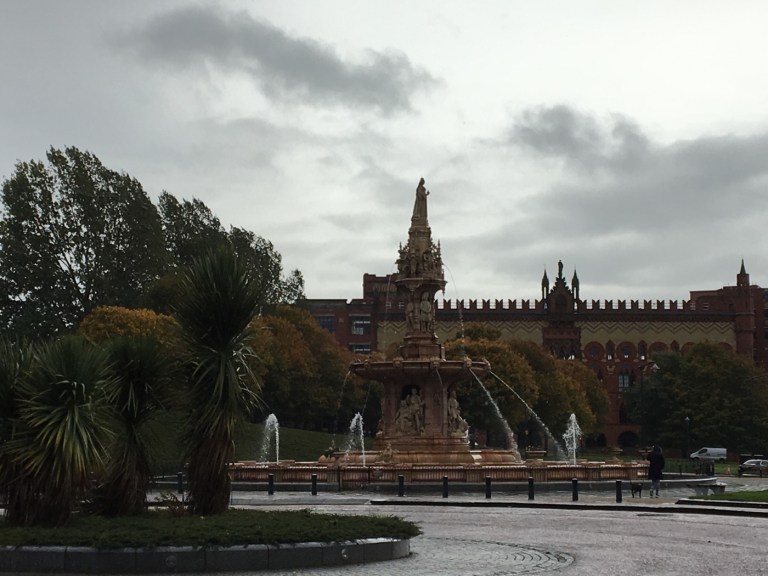
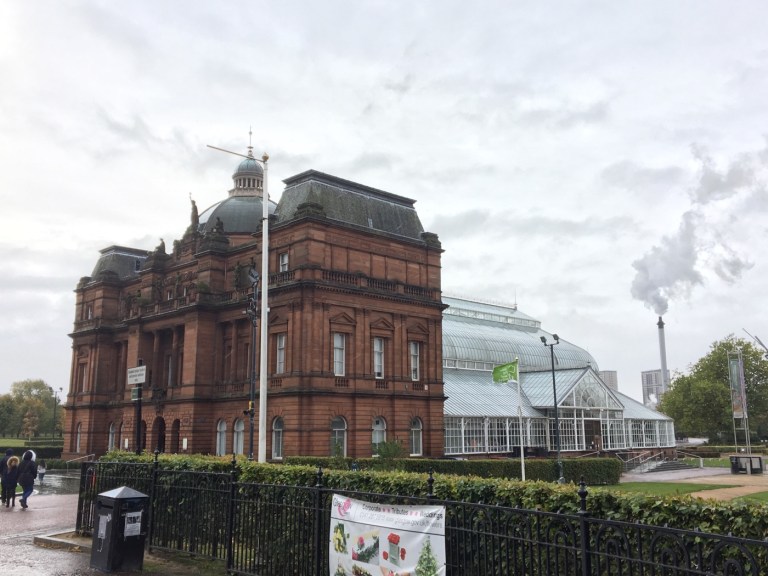
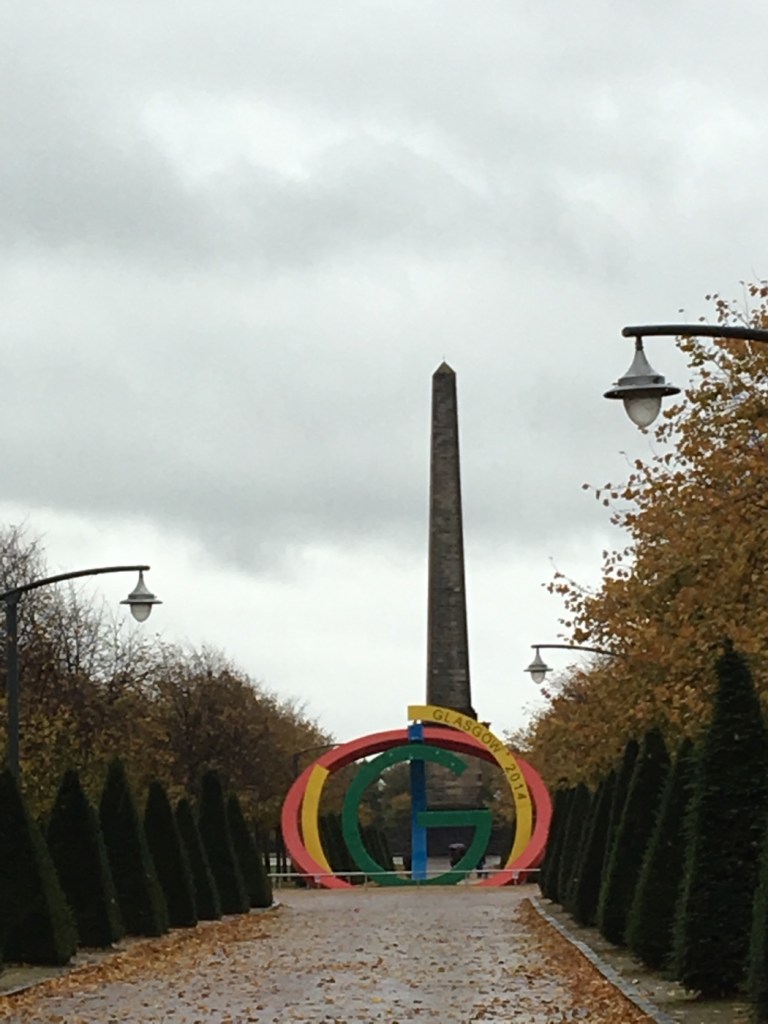
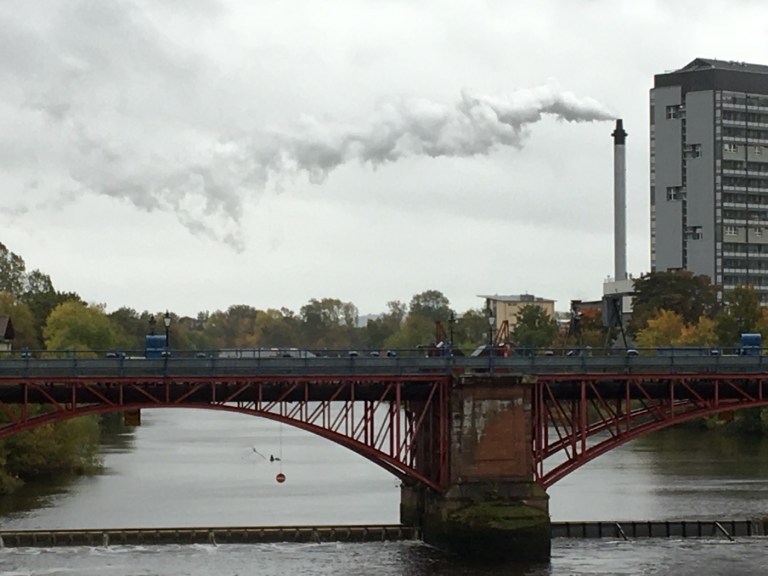 Also the train tracks in my area were being worked on so I had to find alternate forms of transportation. My hosts kindly gave me a ride in to Glasgow and I had a new bus adventure (much longer and no cheaper) to get back. It was the scenic route. Anyway the plan was to see the People’s Palace and Winter Garden and Glasgow Green, which were created to be open for the pleasure and gathering of the public.
 I also stopped at the Barras, which was a famous flea market in the area. It fell into some disrepute at one point (most of the stuff sold was illegally obtained) — and after police crackdowns it hasn’t quite been the same. Although the city is trying to clean it up and bring it back. Glaswegians (and Scots in general) are famous for liking to get a good deal!
After the museum I headed out to another Mackintosh-designed building, the Scotland Street School. Sadly the public transportion between the two isn’t great so I decided to walk. It was across the River Clyde and there are a ton of bridges.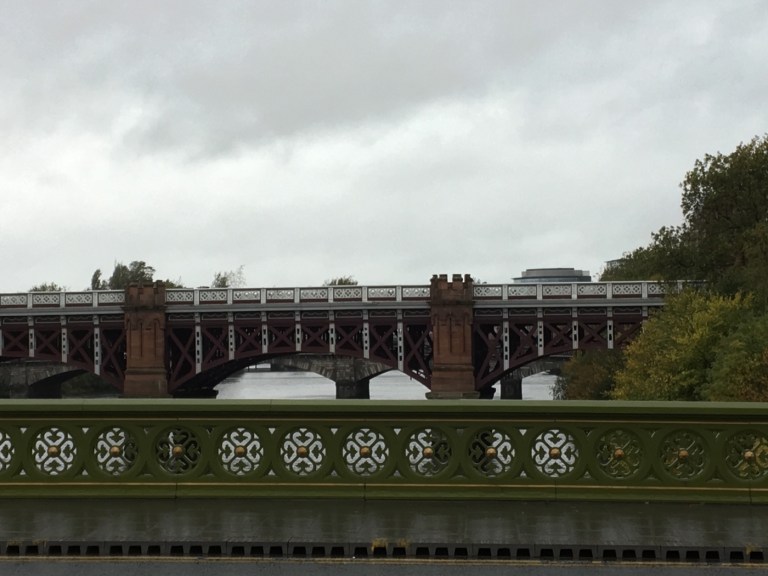 In the cold rain it wasn’t terribly pleasant— but there was also a Glasgow football (soccer) game about to start near the where I was headed and the guide at the People’s Palace thought the subway would be jammed with overly excited fans. (They’ve been on a losing streak though apparently they won that game.) And I don’t know what it is, but I neglected to take any photos at the school — here’s a link to see what it looks like. https://goo.gl/images/J4D4su
It’s a cute little museum but a bit out of the way. I don’t know if I’d highly recommend it but I’m honestly running out of tourist things to see since much is shut or burned down and won’t be ready for tourists for some time — and I’ve seen a lot here! It wasn’t my best tour day though I enjoyed the museums — amazingly they’re free as well which I have to admit changes one’s expectations of them.
Today was also forecasted to rain all day but at least it was warmer (mid 50s while yesterday felt significantly colder) and the rain was off and on instead of the pretty steady downpour yesterday. I actually saw some sun in the distance today! In any case I’m very glad I headed up to Stirling, which has a historic position in Scotland. It’s situated near where the River Forth could be crossed and was called the “brooch” that held the highlands and lowlands together. The earliest records of a castle there was in the 1100s but they think there were other buildings on the site earlier. I was taking a picture of (yet another) rainbow — the good thing about rain is you get lots of lovely rainbows — but you can kind of see the river and lowlands here. 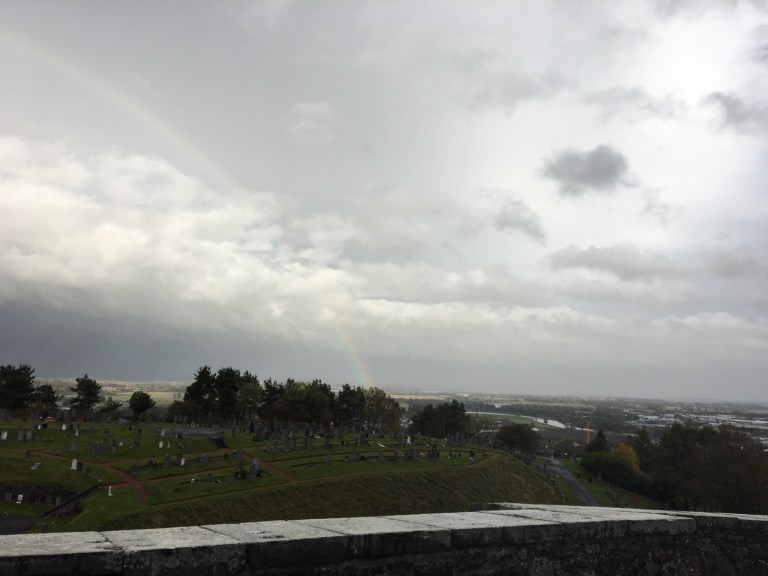 The castle itself is on a huge rock outcropping which made it basically impenetrable. It’s been attacked a lot but usually can’t be conquered with weapons — they have to lay siege and starve the people out. Mary, Queen of Scots and other queens have taken refuge there when their husbands died young as they felt safe there.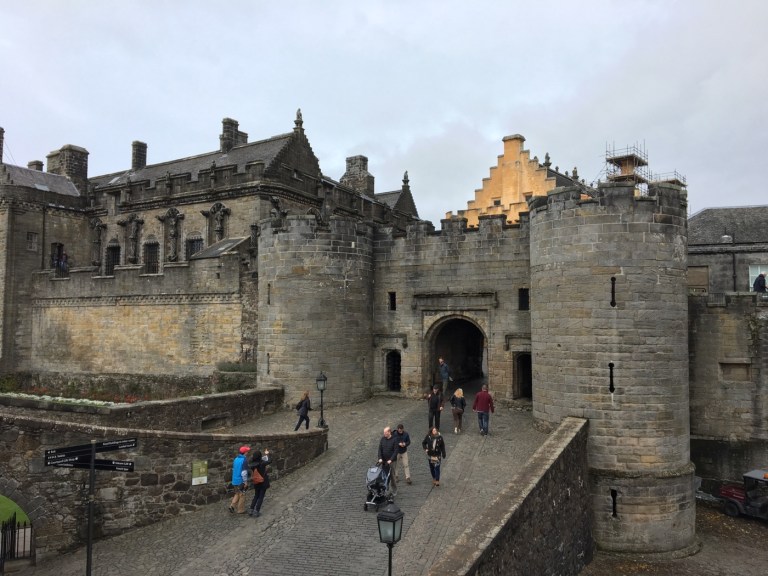
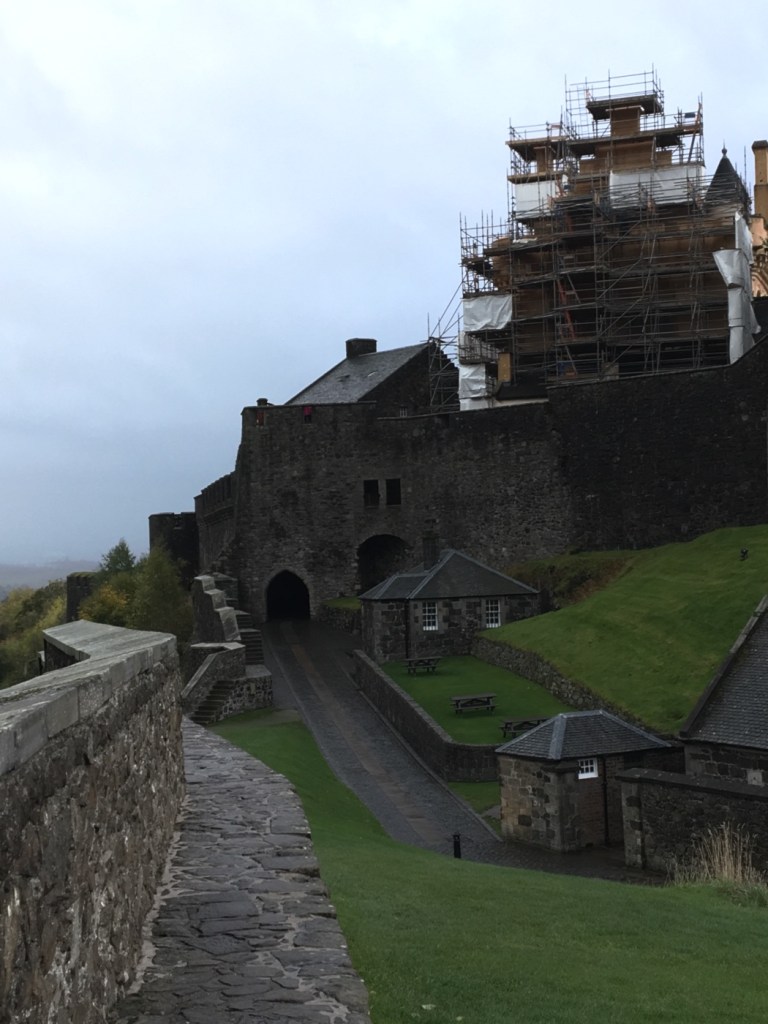
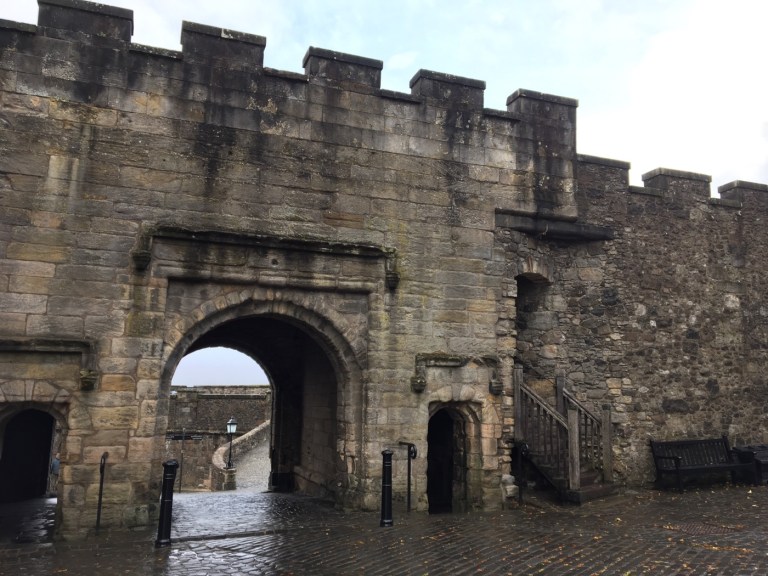
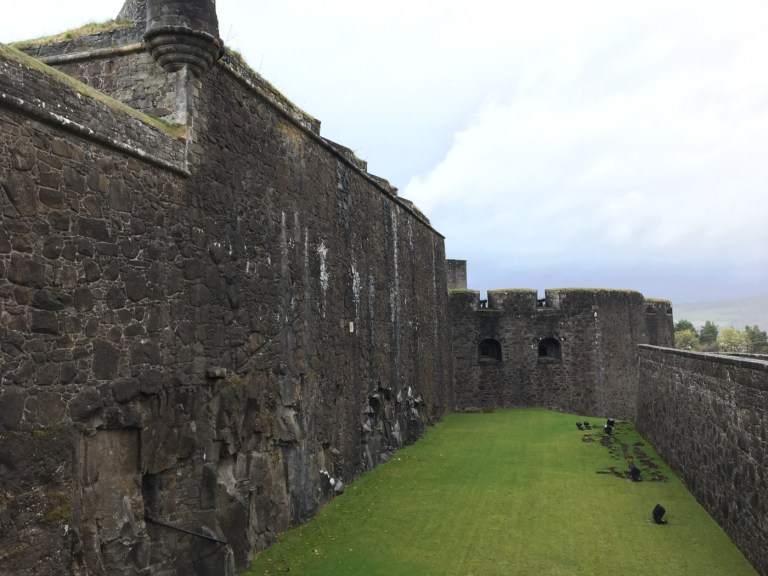
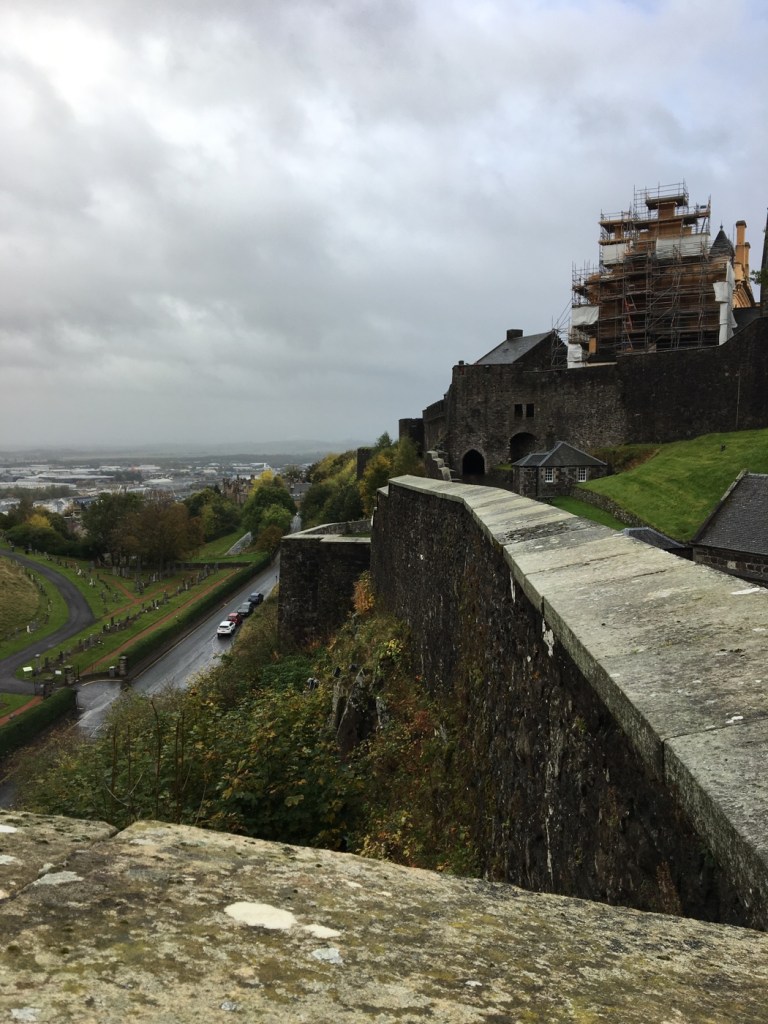 These pictures don’t even do the craggy rock that it sits on justice — I was never on the ground below that shows that angle – these are the more accessible (but controlled) gates where people could enter. To see the rocky site, check out this photo I found: https://goo.gl/images/Q3TDih
And oh as usual there was some scaffolding going on and a few things closed off but it wasn’t bad. Note on the yellowish building — they believe this is how the original sandstone was colored in the medieval 1500s — a bright “king’s gold” color. It’s a relatively new (20 years) discovery that many locals aren’t thrilled with — they’re used to the grimy looking color. But historians contend it was done on purpose to show off the riches of the king.
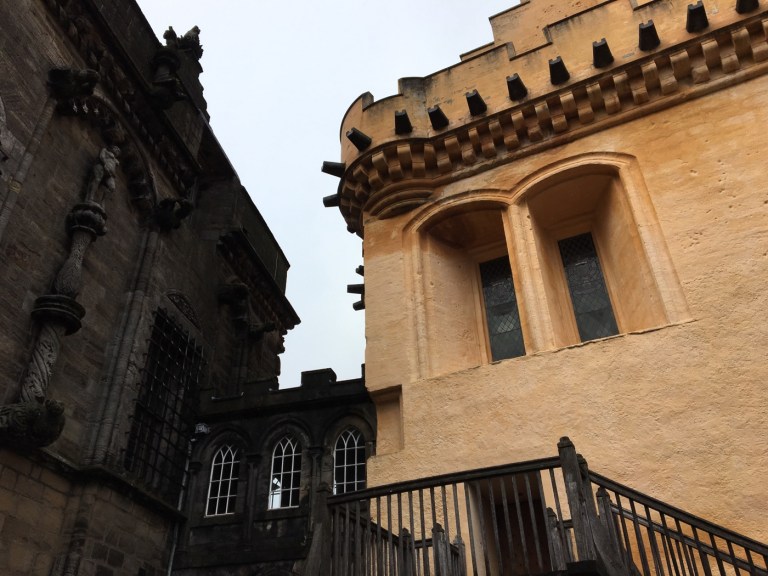
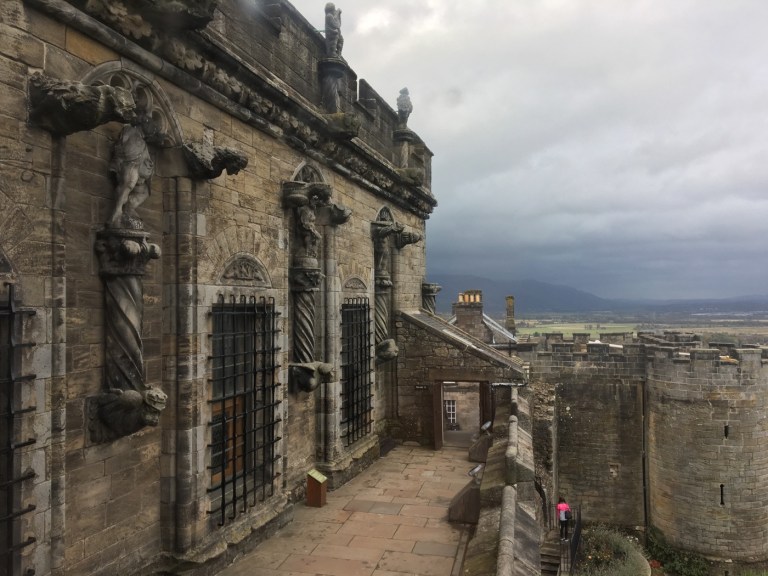
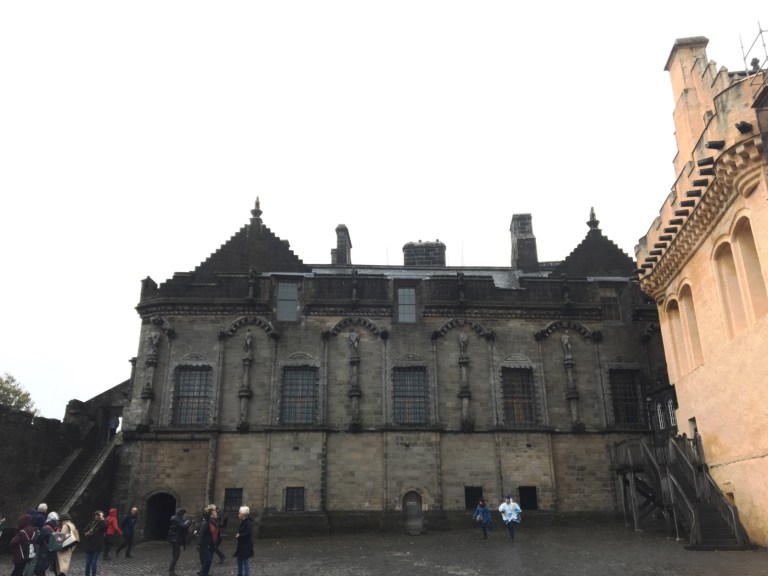 They had a lot of exhibits and reconstructions of what they thought the interiors were like in James V’s time. (Mary Queen of Scots’ father, he was the one responsible for putting in a lot of the sculptures and buildings that made it particularly famous.)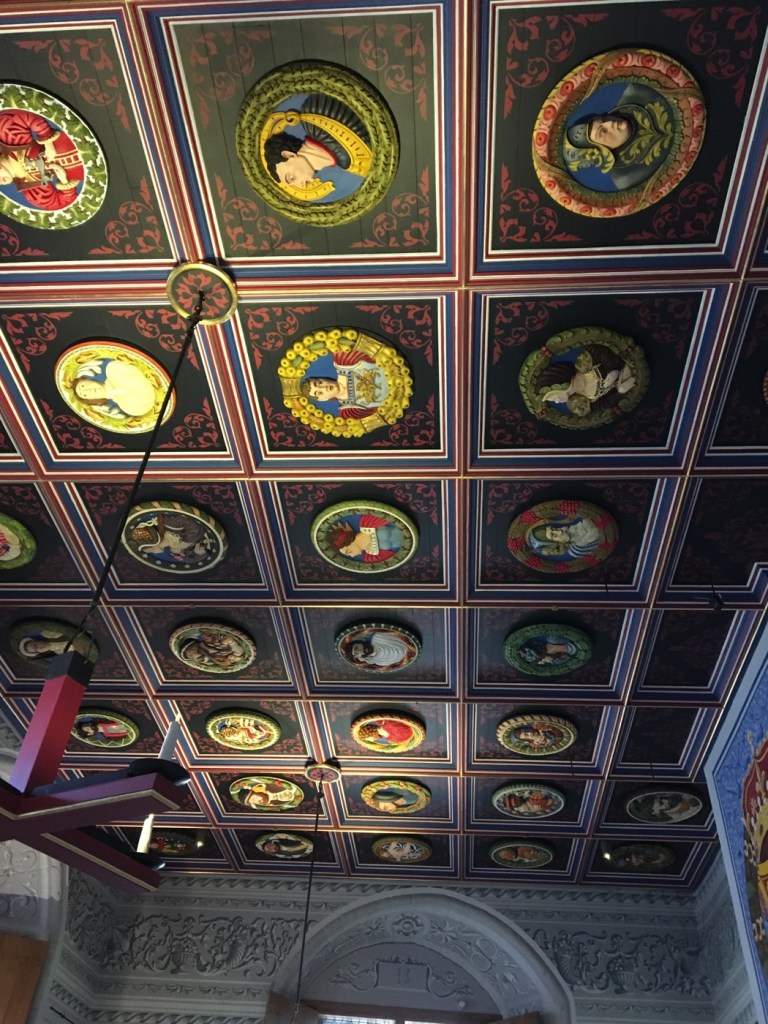
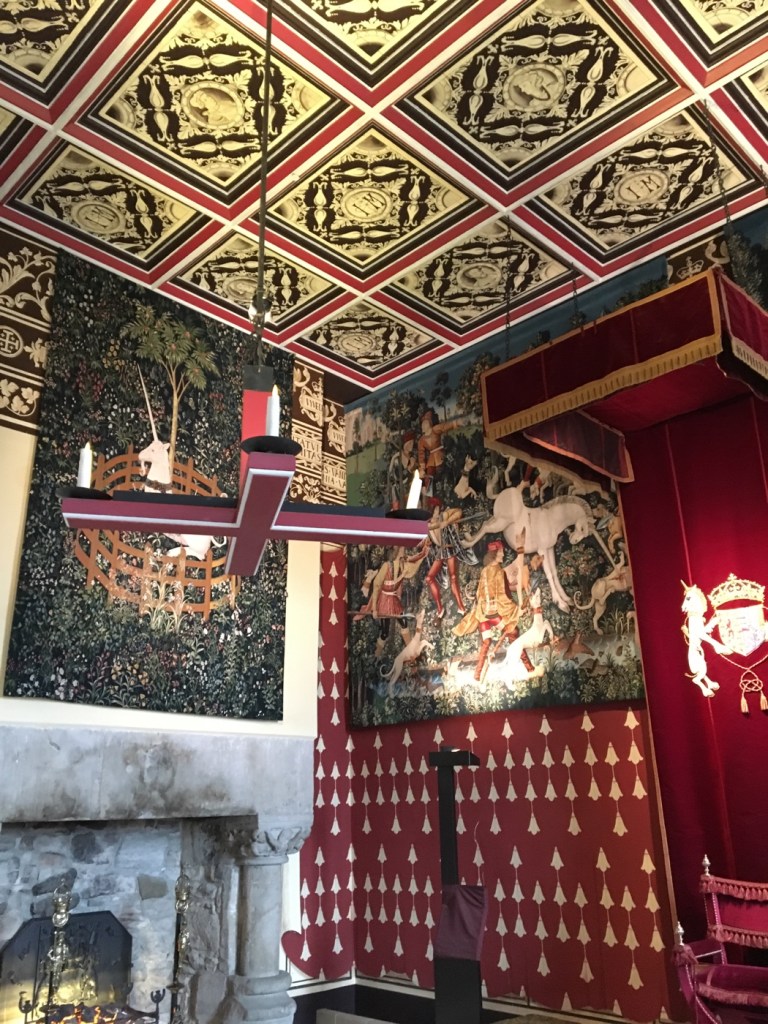 I’m finding the Scottish approach interesting — a lot of the houses are having work done to show it in full original color/style. They’re recreating the tapestries, murals, furnishings, or woodwork using old-fashioned techniques instead of leaving original pieces untouched (and therefore faded, cracked and broken) as many historical sites do. That said, I think most of the original work has been removed from these castles to other museums already.
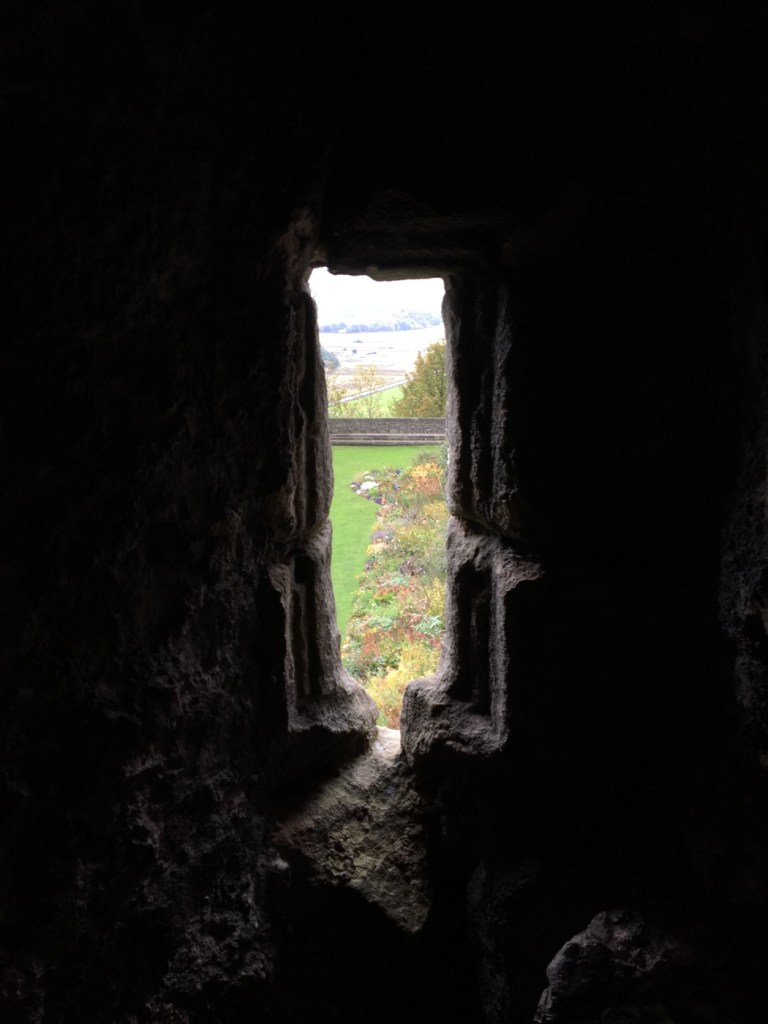
Anyway what I really found interesting was the surroundings and all the fortifications to ensure they were impregnable. I was a big fan of the arrowslits — or maybe they’re just narrow lookout windows that face every direction in the turrets. 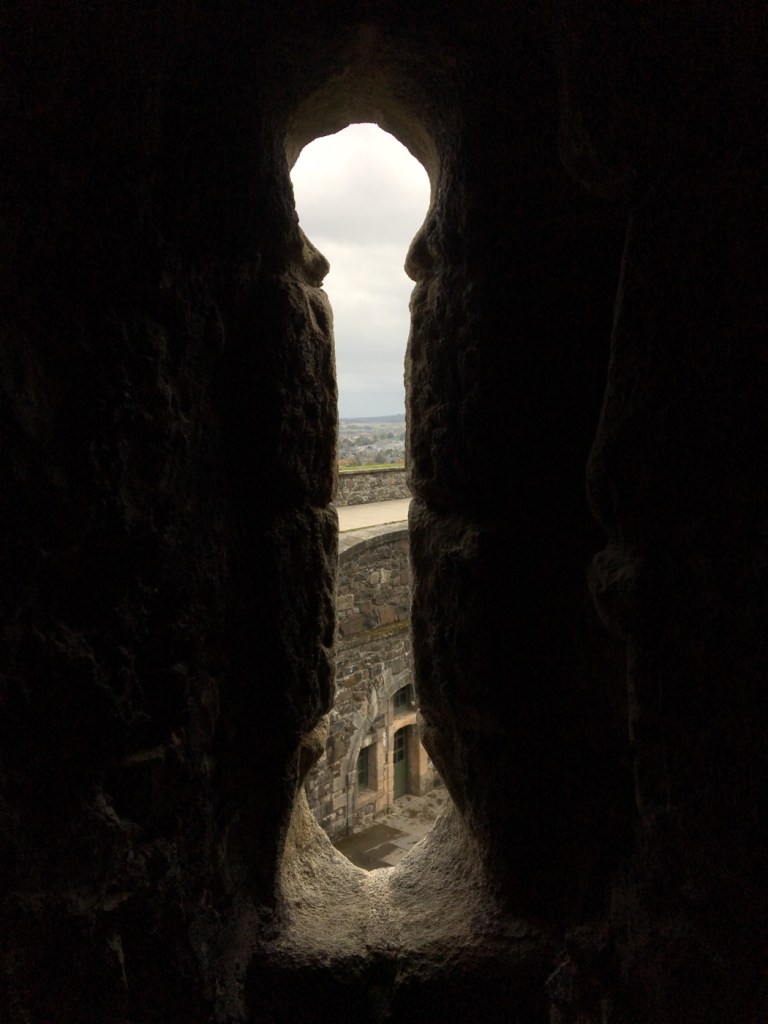
 And of course the cannons.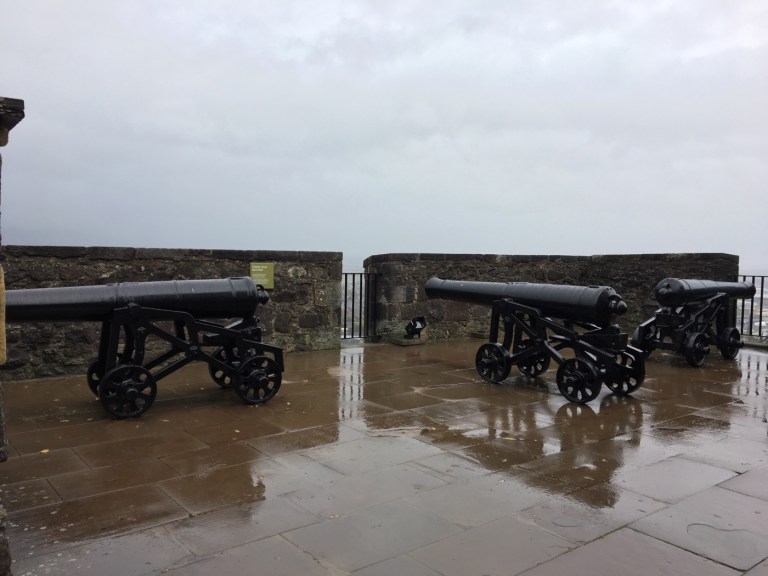
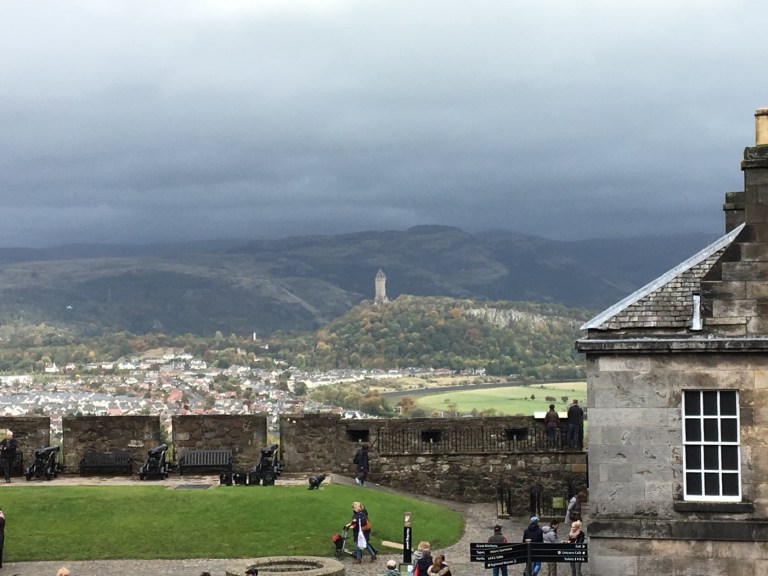 (note: In the last picture you can see a tower in the distance which is a monument to William Wallace.)
There were several walls around the castle — it was almost like a village although there’s also a medieval looking village below the castle. It reminded me of Winterfell (although it’s clearly not as this is much bigger), where there’s obviously room for blacksmiths, soldier barracks, armories, and of course kitchens, a banquet hall, and chapel. 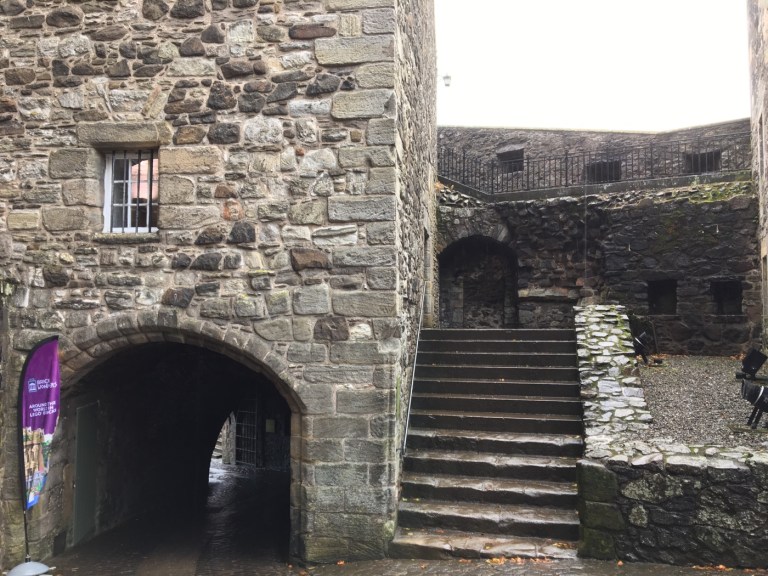
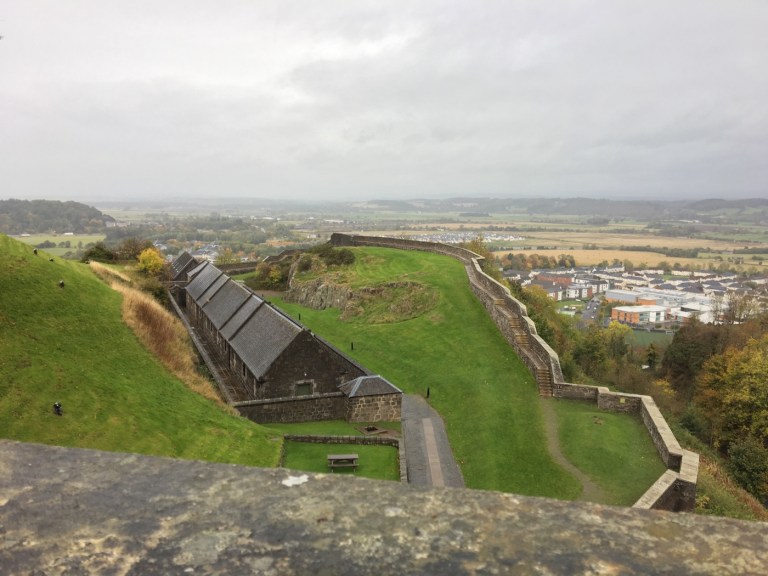
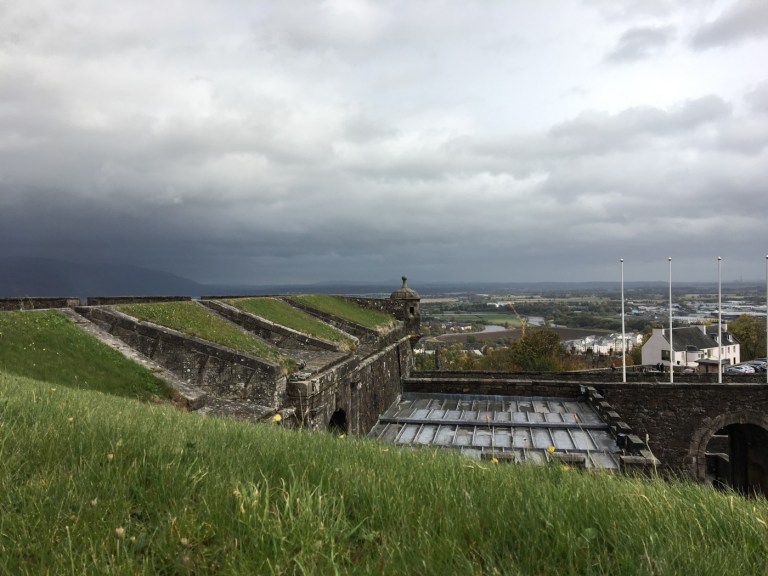
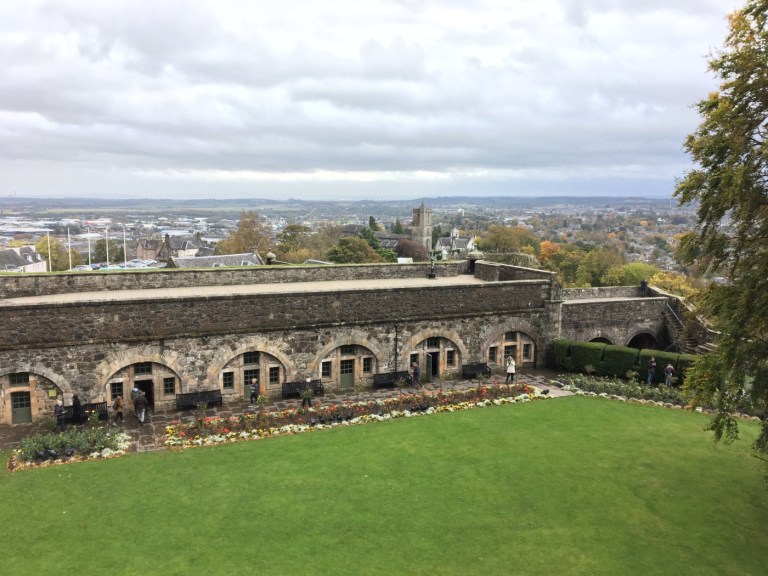 And unlike Winterfell there were gardens (though not a ton — it was a Palace but definitely also a fortress).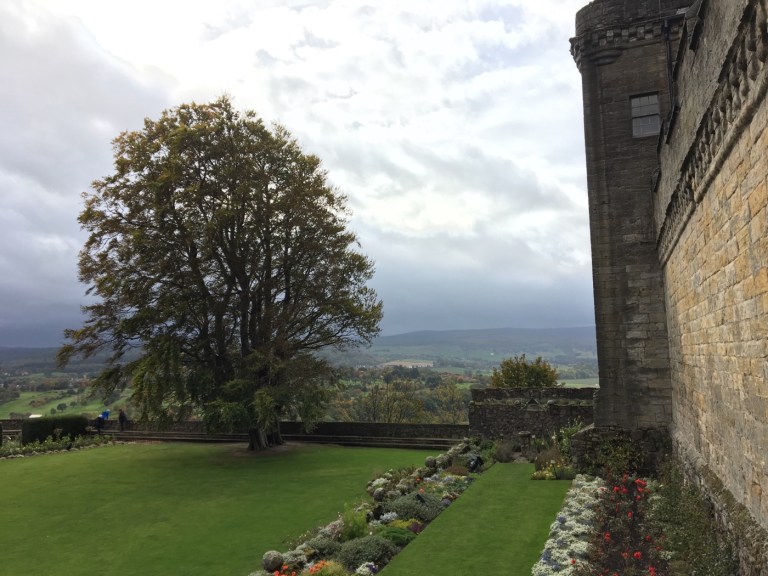
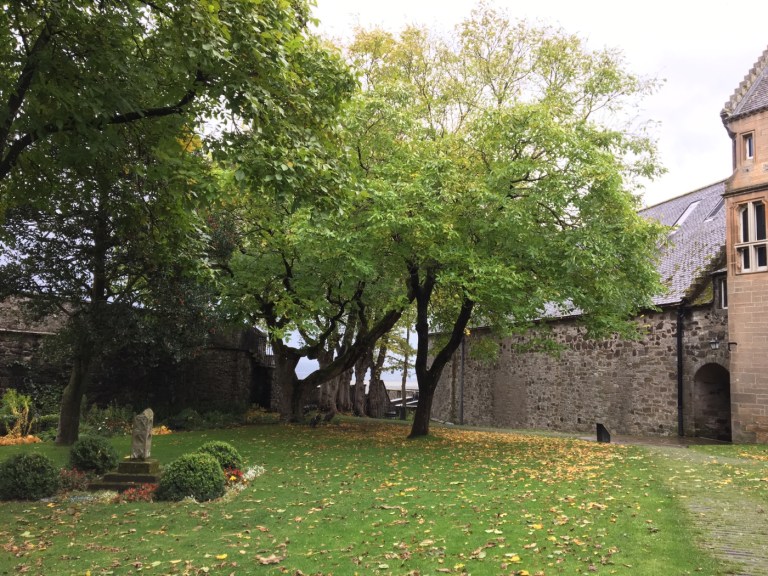
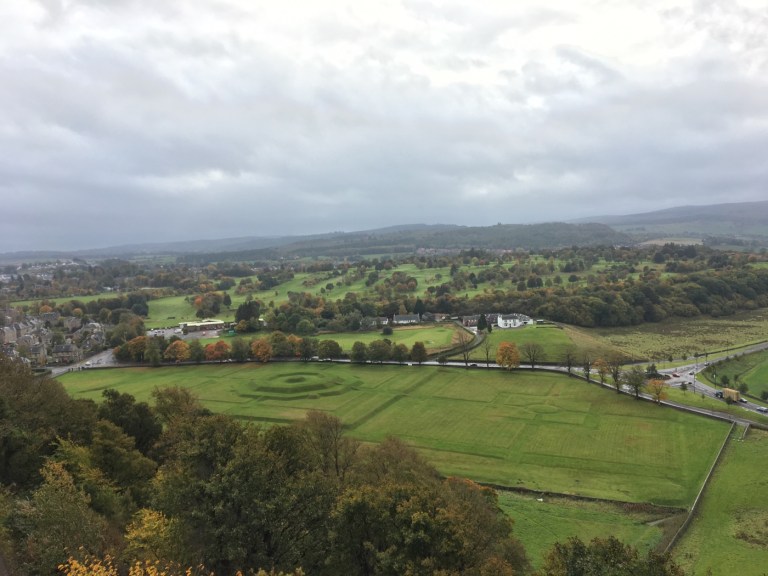 Anyway I have a lot more photos but won’t put them all here! The last items to note were all the Scots and Englishmen who tried to conquer the castle. (Interestingly the Romans left Stirling Castle alone, preferring to inhabit Duone Castle — which was only 8 mi away but I didn’t have a car or I’d have visited it. Definitely worth a trip in the future — it was the castle used in Monty Python and the Holy Grail and was also actually Winterfell! It’s also been used in Ivanhoe and Outlander.)
Stirling was attacked, held and/or lost by William Wallace (think Braveheart), Robert the Bruce, Bonny Prince Charlie, Oliver Cromwell, and of course the various Stewarts related to Mary, Queen of Scots. (Btw, I was informed today that Stewart is the appropriate Scottish spelling — Mary became Stuart when she was in France and her son, James VI of Scotland/James I of England and Ireland kept the Stuart spelling.)
Enough of Scottish history and castles for now! It was funny to go from modern and democratic to medieval and feudal in a day. But I’m exhausted!
 Cynthia's Trip